
Brompton Pannier Racks
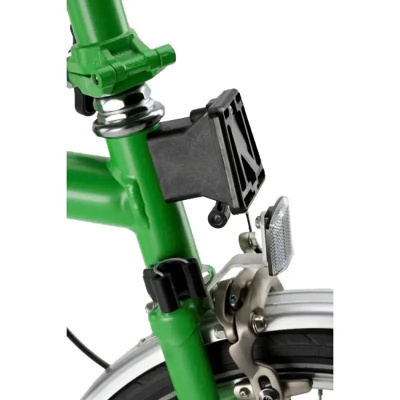
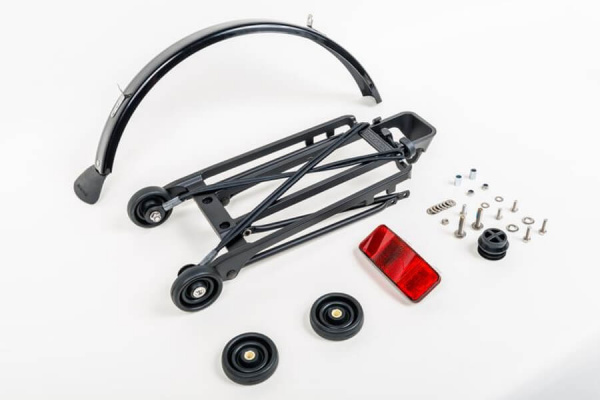
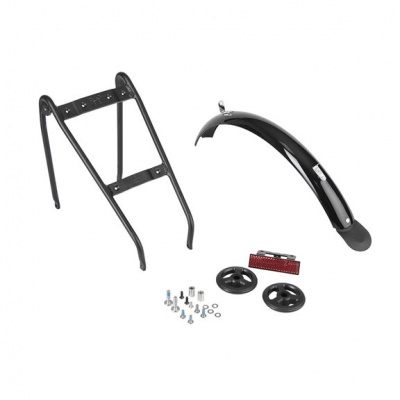
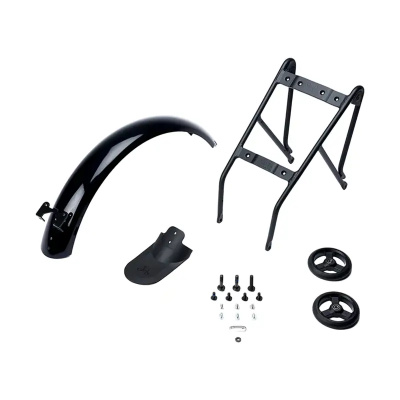
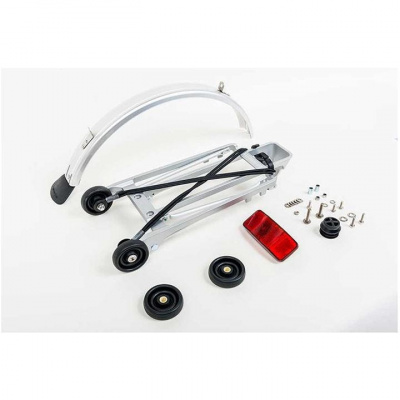
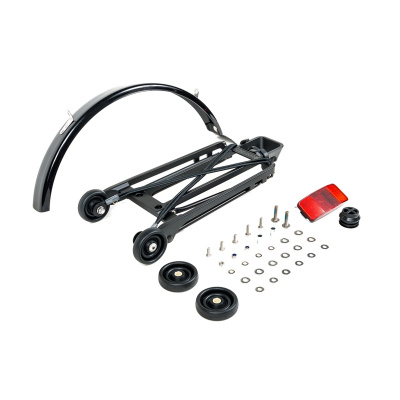
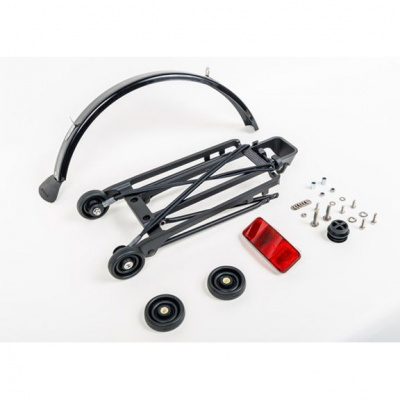
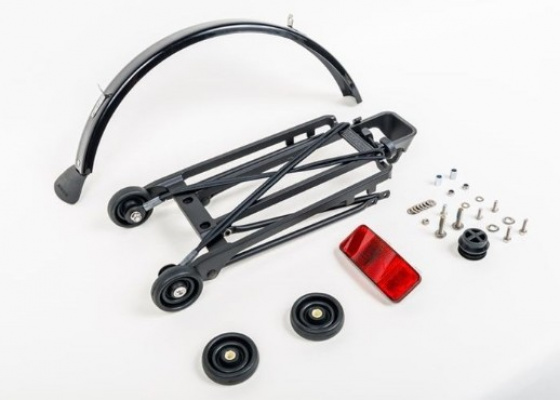
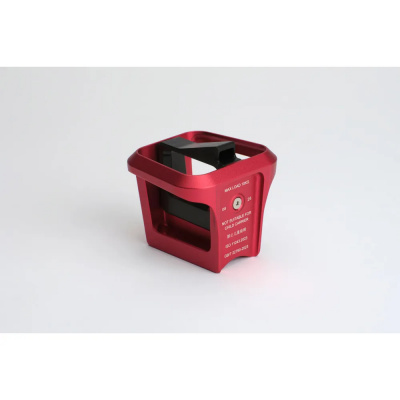
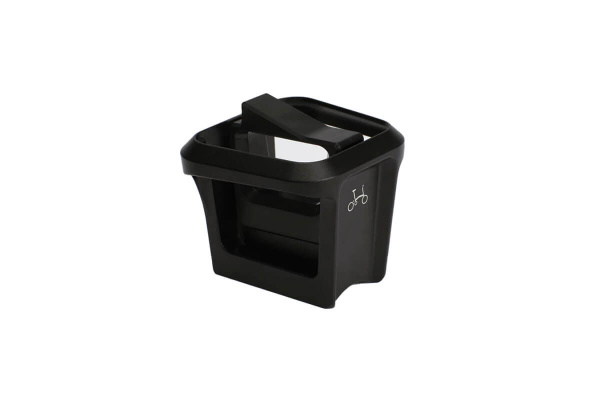
Fitting Brompton pannier racks to your folding bike is one of those changes that makes you wonder how you managed without one. Converting to an R-type setup gives you up to 10kg of rear carrying capacity and, crucially, transforms how the bike behaves when folded. Four roller wheels on the ground instead of two means you're gliding your Brompton down a crowded platform rather than wrestling it along on its easy wheels alone. That's a genuine daily-life improvement if you're commuting into London Bridge or threading through Manchester Piccadilly at rush hour.
The rack also acts as a secondary mudguard layer, keeping road spray off your panniers and the contents inside them - useful when UK winters do what UK winters do. Whether you're fitting a rack to a C Line for the first time or specifying an Advance Roller Rack on a new P Line, getting the right unit matters. The mounting points, mudguard clearances, and folding geometry vary between Brompton generations, and fitting the wrong rack creates problems the right one simply doesn't have. Get it right once and it just works, every day.
Prices and availability can change quickly. Delivery charges are not always included in listed prices.
Final price, stock status and delivery terms are set by retailer. We may receive a commission on purchases made.
Compatibility: C Line, P Line, and the L-to-R-Type Conversion
Brompton racks are not a one-size-fits-all proposition. The standard aluminium rack fits the steel rear triangles of the A Line and C Line, while the Advance Roller Rack is engineered specifically for the titanium rear triangles of the P Line and T Line. Fitting a C Line rack to a P Line frame is not a workaround - the mounting geometry is different and the rack simply won't sit correctly. So the first thing to check is which generation of rear triangle your bike has before you buy anything.
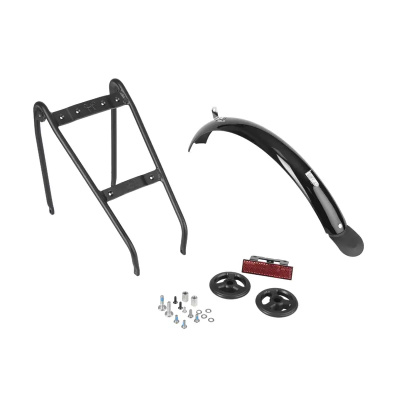
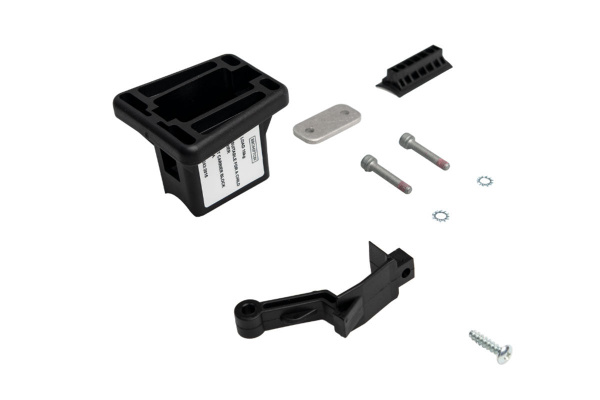
The other compatibility question we hear constantly is about Brompton L-to-R-type conversion. If your Brompton currently has mudguards but no rack - that's an L-type configuration - you can't just bolt a rack on top of the existing mudguard. The L-type mudguard mounts and clearances won't accommodate a rack above it. You'll need to purchase an R-type rear mudguard alongside the rack itself, which is designed with the correct geometry to sit beneath a rack and still fold cleanly. It's a slightly bigger job than people expect, so factor that into your budget and workshop time. If you're already running a Brompton folding bike in R-type spec, a like-for-like rack replacement is straightforward. And if you only need to replace worn components rather than the whole rack, our dedicated Brompton mudguards page covers the ancillary parts that keep your setup running.
Are P Line and C Line Brompton racks interchangeable? No - and it's worth being firm on that. The titanium rear triangle on the P and T Line has different junction points and tolerances than the steel C Line triangle. Cross-fitting racks between these families risks poor clearance when folding and puts stress on the frame in the wrong places.
Standard Rack or Advance Roller Rack - What Are You Actually Paying For?
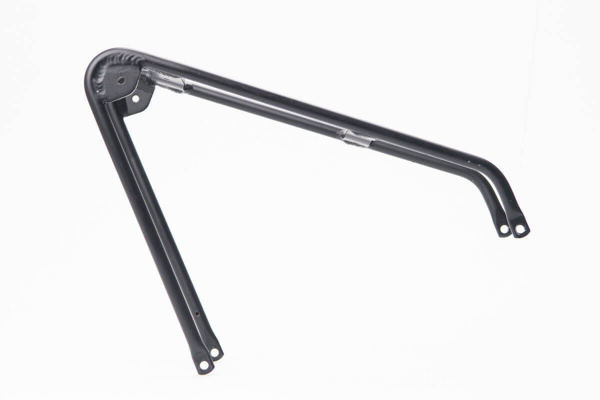
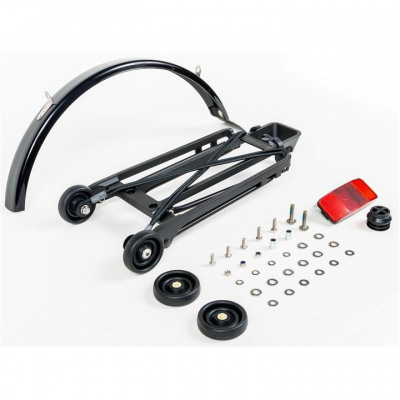
Brompton offers two distinct rack designs and the difference between them is more than just price. The standard rack is a classic tubular aluminium frame - proven, robust, and integrating an elastic bungee cord system that lets you strap loads down in seconds. It's the rack that's been doing honest work for commuters for years, and there's nothing wrong with it. The aluminium won't rust, it handles the rated 10kg load with no drama, and the four-point roller wheel stance keeps a folded Brompton tracking straight across station concourses.
The Brompton Advance Roller Rack is a more considered redesign for the newer platform. It's lighter, sits lower on the frame - which drops the centre of gravity of a loaded bike - and uses larger, smoother-rolling wheels optimised for the Advance rear triangle geometry. When you're folding and pushing through a tight ticket barrier, those wheels make a noticeable difference to how smoothly the bike rolls. The integrated shock-cord bungee system is retained, so rapid load securing is still part of the package. What you're paying for at the premium end is primarily weight savings and refined rolling dynamics. If you're running a P Line specifically to keep the bike as light and nimble as possible, the Advance rack is the consistent choice. If you're on a C Line and doing hard daily miles, the standard rack earns its keep without compromise.
For riders coming from racks on non-folding commuters - say, a SKS pannier rack on a hybrid - the Brompton system feels more integrated because it genuinely is. The rack is part of the bike's fold rather than an afterthought bolted to the seatstay. That's worth appreciating when you're stuffing the whole thing under a desk.
Surviving UK Roads: Maintenance and Longevity
The aluminium construction means the rack body itself won't corrode, which is one less thing to worry about on salty winter commutes. The weak point over time is the roller wheel bearings. Grit and salt from UK winter roads work their way into the bearing surfaces, and if you're rolling your folded Brompton across wet station concourses five days a week, that's a lot of contamination over a season. Pull the roller wheels off every six months, clean the axles thoroughly, and re-grease before reassembly. It takes twenty minutes and keeps the rolling feel smooth rather than gritty and resistant.
The bungee cords are the other component to keep an eye on. Rubber degrades in cold and wet conditions, and a cord that looks fine in September may be fraying or losing elasticity by March. Inspect them annually - give them a stretch and check for cracking along the length. A snapped bungee mid-commute with a full pannier is an inconvenience you don't need. Replacements are inexpensive and widely available as spares.
If you're pairing your rack with Brompton pannier bags, check periodically that the bag hooks aren't wearing grooves into the rack rails - a little electrical tape over the contact points is an old trick that adds months to both components. And if you're switching to a fresh set of Brompton commuter tyres for winter, that's a natural moment to do your rack inspection at the same time.
Folding bike racks from other brands - Tern pannier racks being the most relevant comparison point - often use similar tubular aluminium construction, but they don't integrate with Brompton's fold. Don't be tempted to adapt a third-party rack to save money; the clearances simply aren't there and you'll spend more fixing the consequences. Brompton-specific parts on a Brompton is the only approach that makes sense here.
Brompton Pannier Racks FAQs
Can I add a rear rack to my L-type Brompton?
Yes, but it's not just a case of bolting a rack on. Converting from L-type (mudguard only) to R-type (rack and mudguard) means replacing the rear mudguard too - the L-type mudguard won't sit correctly beneath a rack. Budget for both parts and check our Brompton mudguards page for compatible R-type options.
What is the maximum weight limit for a Brompton rear rack?
Both the standard rack and the Advance Roller Rack are rated to a maximum of 10kg. Go beyond that and you're not just risking the rack - you're putting stress through the rear triangle in ways Brompton hasn't engineered for. Keep loads within the limit and the rack will last for years.
Are P Line and C Line Brompton racks interchangeable?
No. The Advance Roller Rack is built for the titanium rear triangles on P Line and T Line bikes. The standard rack is designed for the steel rear triangles of the A Line and C Line. Mounting points and clearances differ between the two families, so cross-fitting isn't a viable option.