
Bontrager Mountain Bikes
Bontrager mountain bikes occupy a peculiar and genuinely fascinating corner of MTB history. Keith Bontrager coined what might be cycling's most honest engineering rule: 'Light, strong, cheap: pick two.' That philosophy shaped a generation of steel hardtails in the early 1990s that riders still hunt down today, and it quietly underpins the premium component work that carries the Bontrager name forward on modern Trek builds.
What you'll find here spans both worlds. True Bontrager frames - the Race, Race Lite, and Privateer hardtails with their distinctive wishbone seatstays and gusseted steel tubing - are the holy grail for retro MTB collectors and riders who want something with genuine provenance. Alongside those, you'll find modern Trek mountain bikes running Bontrager OCLV carbon wheels, trail-tuned cockpits, and Knock Block headset systems that reflect the same engineering-first thinking Keith Bontrager built his reputation on.
These aren't bikes for riders chasing badge value. They're for people who want to understand what they're riding, whether that's a beautifully made 26-inch steel hardtail on Peak District gritstone or a current Trek trail rig specced with some of the best in-house components in the business.
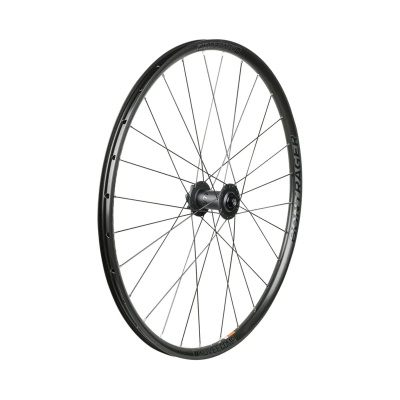
Prices and availability can change quickly. Delivery charges are not always included in listed prices.
Final price, stock status and delivery terms are set by retailer. We may receive a commission on purchases made.
Decoding the Bontrager MTB Legacy
The Bontrager name means two distinct things depending on which decade you're shopping in. The original Bontrager mountain bikes - frames built by Keith Bontrager in Santa Cruz through the late 1980s and into the mid-1990s - are standalone steel hardtails that predate and briefly followed Trek's 1995 acquisition. Models like the Race Lite are considered among the finest steel hardtails ever made, sought out by collectors and riders who know exactly what they're looking at. These are the bikes that put the brand on the map.
After the acquisition, standalone Bontrager frame production wound down. What emerged instead was a component brand of real quality - wheels, tyres, cockpits, and saddles - built to spec Trek's own MTB range from the inside out. So when you see 'Trek Bontrager mountain bikes' referenced today, it almost always means a Trek-framed bike running Bontrager parts, not a frame bearing the Bontrager name itself.
That distinction matters when you're browsing listings. A vintage Race Lite frame is a very different purchase from a modern Trek Marlin or Fuel EX fitted with Bontrager wheels and bars. Both are legitimate, and both have their appeal. If you're building or upgrading around a retro frame, we've got dedicated pages for Bontrager MTB tyres and Bontrager MTB wheels to help you spec the rest of the build properly.
The Engineering Behind the Frames
Keith Bontrager wasn't a marketer who learned to build bikes. He was an engineer who made frames because he understood the mechanics of what a good mountain bike needed to do. The gusseted steel tubing on early Bontrager frames wasn't decorative - gussets reinforce the junction points where stress concentrates, meaning the frame could be made lighter without sacrificing the rigidity that makes a hardtail actually respond to your input. It's the same logic that guides modern carbon layup work, just executed in steel with a different set of tools.
The wishbone seatstays are the detail that frame geeks fixate on, and rightly so. Rather than two separate stays meeting the dropout, the wishbone runs as a single curved piece, which distributes load more evenly and adds a small but noticeable degree of vertical compliance. On rough gritstone or rooted singletrack, that compliance matters - it's the difference between a frame that fights you and one that flows with the ground.
That engineering-first mindset carries into modern Bontrager tech. OCLV carbon - Trek and Bontrager's optimised carbon layup process - applies the same principle of putting material precisely where it's needed and nowhere it isn't. The result is wheels and components that are genuinely light without the fragility you sometimes get from carbon that's been pared back too aggressively. Knock Block headset compatibility, found on current Trek trail and enduro builds, limits fork rotation to protect the frame and cables during full-lock moments - the kind of practical, unglamorous feature that stops an expensive problem before it starts.
Compared to how brands like Cannondale or Giant approach frame engineering, Bontrager's legacy sits in a slightly different place - less focused on proprietary suspension platforms, more focused on material honesty and geometry that rewards rider input.
Running a Bontrager in British Conditions
If you're picking up a vintage Bontrager steel hardtail, the Welsh winter will test it in ways Californian sun never did. Steel rusts from the inside out, and a frame that looks fine externally can be quietly corroding at the bottom bracket shell and along the chainstays if it's never been treated. Before you ride it in anger, get a can of Weldtite or similar internal frame saver into every tube you can access. It takes ten minutes and it's the difference between a frame that lasts another thirty years and one that quietly rots.
The other reality of vintage Bontrager ownership is parts. These frames were built around 26-inch wheels, and while 26-inch tyres haven't vanished entirely, your options are narrower than they were. Decent rubber is still out there - check the Bontrager tyre range for compatible sizes - but you won't have the tyre variety a 29er rider takes for granted. Budget for that limitation before you commit to a build.
Modern Trek mountain bikes running Bontrager components are a different story. The componentry is specced for current standards, and sourcing replacement parts or upgrades is straightforward. On Peak District gritstone, where abrasive dust works into every moving part, Bontrager's sealed bearing wheels hold up well, and the grips and Bontrager saddles are designed with the kind of durability that doesn't demand constant fussing. If you're running a dropper post, keep a shock pump in your pack - it's a small habit that keeps the suspension dialled on longer days out.
For riders considering alternatives with broader parts availability and current geometry standards, Cube mountain bikes offer a well-specced modern option worth comparing, particularly if geometry and component spec at a given price point is the priority. Bontrager's appeal, vintage or modern, is rooted in something different - a specific engineering philosophy and a brand story that most bikes simply don't have. Whether that matters to you depends entirely on what you want from the ride.
Either way, pick up some Bontrager grips while you're at it. It's a small thing, but it's the right finish to a build.
Bontrager Mountain Bikes FAQs
Does Bontrager still make mountain bikes?
Not as standalone frames, no. Bontrager stopped producing its own mountain bike frames after Trek's acquisition in 1995 and now operates as Trek's in-house component brand. You'll find the Bontrager name on wheels, tyres, cockpits, and saddles fitted to Trek mountain bikes, rather than on frames in their own right.
Are Bontrager and Trek the same company?
Yes. Trek Bicycle Corporation acquired Bontrager in 1995, and since then Bontrager has functioned as Trek's premium in-house brand for components and accessories. The two names are closely linked in the market - if you're buying a Trek mountain bike, there's a good chance it's running Bontrager parts from the factory.
What is the Bontrager 'Light, Strong, Cheap' rule?
It's an engineering aphorism from founder Keith Bontrager: 'Light, strong, cheap: pick two.' The point is straightforward - any component can satisfy two of those three criteria, but not all three simultaneously. It's a useful lens for evaluating bike parts honestly, and it remains as applicable today as when Bontrager first said it.