
BMC Time Trial & Triathlon Bikes
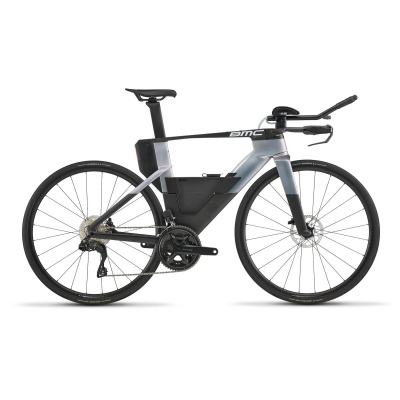
BMC Time Trial and Triathlon bikes are engineered in Switzerland and wind-tunnel refined to do one thing exceptionally well: go fast against the clock. Whether you're targeting a personal best on a blustery A-road time trial or grinding through the bike leg at Bolton or Tenby, BMC's lineup brings a genuine aerodynamic edge to race day. Two distinct families sit at the core of the range. The Timemachine is a proven, versatile aero platform that covers both UCI-legal time trials and long-course triathlon - adaptable enough to suit a wide range of riders without compromise. The Speedmachine is the radical end of the spectrum: a triathlon-specific machine co-developed with Red Bull Advanced Technologies, pushing integration and stability further than most manufacturers dare. Across both families, BMC's p2p (Position-to-Perform) system means the bike fits around your biomechanics, not the other way around. You're not just buying aero tube shapes - you're buying a platform that can be dialled to your position, your course, and your season. We've mapped out the full range below so you can find the right weapon for your next race.
Prices and availability can change quickly. Delivery charges are not always included in listed prices.
Final price, stock status and delivery terms are set by retailer. We may receive a commission on purchases made.
Decoding the BMC TT and Triathlon Lineup
BMC's time trial and triathlon range splits cleanly into two families, and knowing which one suits your racing matters. The Timemachine is the versatile, longer-standing platform - a UCI legal TT bike at its core, but one that can be configured for non-drafting triathlon with the addition of storage, hydration, and a more aggressive position. It's the bike if you race a mix of road time trials and the occasional Ironman. Broadly speaking, it's the workhorse of the two.
The Speedmachine is a different proposition entirely. Co-developed with Red Bull Advanced Technologies - the same group that works on F1 aerodynamics - it's a triathlon-only machine with deeper integration, a fork geometry tuned for stability at long-distance pace, and built-in hydration as standard. It is not a crossover bike. If you exclusively race long-course triathlon and want a purpose-built tool, this is where to look. If you also pin on a number at your local 10-mile TT, the Timemachine gives you more flexibility.
Trim levels follow a consistent logic across the range. 01 denotes BMC's premium carbon layup - lightest, stiffest, with fully integrated cockpits. Below that, ONE, TWO, and THREE indicate descending spec tiers: slightly heavier carbon construction with more accessible componentry, but the same fundamental frame geometry and aerodynamic shaping. For most amateur racers, a TWO or THREE build represents a sensible starting point without sacrificing the frame's core characteristics. If you're weighing up alternatives, Cervélo's TT and triathlon range and Trek's Speed Concept lineup occupy a similar space and are worth a direct comparison at your target budget.
The BMC Tech Philosophy: Vmax, SubA, and p2p
BMC's aerodynamic approach centres on two concepts: Vmax Aero Design and SubA aerodynamics. Vmax refers to the optimised tube profiles used across the frame - truncated aerofoil shapes that reduce drag at the yaw angles you actually encounter on a UK A-road, not just dead-calm wind tunnel conditions. SubA goes a step further, using tripwire technology on leading edges to keep airflow attached to the tube surface even at high crosswind angles. Think of it as encouraging the air to behave itself rather than detaching and creating turbulent drag. On an exposed dual carriageway with a 20mph crosswind, that crosswind stability is the difference between a bike that tracks straight and one that keeps nudging you toward the verge.
The p2p (Position-to-Perform) system is arguably where BMC earns its money in practical terms. The dual-mount seatpost allows you to shift the effective seat tube angle anywhere from a road-like 71 degrees up to an aggressive 81-degree triathlon position. That range covers the full spectrum from UCI-legal TT racing to long-course triathlon without swapping frames. The V-Cockpit extends that logic to the front end, allowing significant pad stack and reach adjustment while maintaining front-end stiffness - so you're not sacrificing steering precision in pursuit of a more upright or stretched position. Getting fit properly before you start adjusting is strongly advised; the system's flexibility is only useful if you know the numbers you're working toward.
On the Speedmachine specifically, the Red Bull Advanced Technologies collaboration shaped both the fork geometry and the frame's overall stability characteristics. The result is a bike that sits more predictably at lower cadence, higher-load triathlon efforts - particularly relevant when fatigue sets in on the second half of an Ironman bike leg and your steering inputs become less precise. If you're interested in what BMC does elsewhere in their range, their mountain bike lineup reflects the same engineering-first approach in a very different context.
Riding a BMC TT Bike on UK Roads
A few practical points worth knowing before you commit. Deep-section wheels and exposed UK roads are a genuine pairing to think about - the Speedmachine's fork geometry helps manage crosswind stability, but on a 60mm-plus front wheel across the Severn Bridge or an open A-road in the Fens, you'll still feel the gusts. The bike manages it better than most, but it won't disappear the physics entirely.
Tyre clearance is more important than it might seem on paper. Both the Timemachine and Speedmachine can accommodate 28mm rubber, and on rough, chip-seal UK roads - the sort you'll find on many UK Ironman courses - that extra volume keeps your momentum rolling rather than getting kicked around by every patch of broken tarmac. Running tubeless at 70 - 75psi front and rear is worth doing from day one rather than discovering the hard way mid-race. Compared with more road-oriented aero bikes from Argon 18, BMC's clearance figures are competitive for the category.
Maintenance is where integrated bikes ask something of you. The clean lines of the Timemachine 01's front end come at a cost when it's time to re-cable after a wet, gritty British winter. It's not a quick job, and if you're not confident with internal cable routing, budget for a mechanic's time. Headset bearings on heavily integrated bikes take more effort to replace too - worth keeping on top of rather than leaving until there's play in the front end mid-season. If the budget doesn't stretch to a new build, it's worth browsing approved used TT and triathlon bikes where earlier Timemachine builds occasionally surface at more accessible prices. For those considering the full picture before deciding between BMC and close rivals, Trek's triathlon range offers a useful point of comparison on fit adjustability and integrated storage.
BMC Time Trial & Triathlon Bikes FAQs
Is the BMC Timemachine UCI legal?
It depends on the configuration. The Timemachine set up with a flat cockpit and standard seatpost position meets UCI regulations for time trial racing. Fit the V-Cockpit, rear storage box, or extended hydration system and you're in triathlon-only territory - legal for non-drafting events but not UCI-sanctioned time trials.
What is the difference between the BMC Timemachine and Speedmachine?
The Timemachine is an adaptable aero platform covering both UCI-legal time trials and long-course triathlon. The Speedmachine is a dedicated triathlon machine co-developed with Red Bull Advanced Technologies - deeper integration, built-in hydration, and geometry tuned for long-distance stability. It's triathlon-only; the Timemachine suits riders who race both disciplines.
How adjustable is the BMC p2p cockpit?
Highly. The Position-to-Perform dual-mount seatpost moves the effective seat tube angle from 71 to 81 degrees, covering everything from UCI-legal TT positioning to an aggressive triathlon tuck. The V-Cockpit offers extensive pad stack and reach adjustment without losing front-end stiffness. Get a proper bike fit before you start moving things around - the range of adjustment is genuinely wide.