
Blackburn Saddle Bags
Blackburn saddle bags cover everything from a quick commute with a spare tube to a loaded multi-day gravel run across the Cairngorms - and the range is broader than most riders realise. At one end you've got the compact, ultra-reflective Blackburn Grid series, shaped for road and commuter use where a neat under-seat profile and serious low-light visibility matter more than raw volume. At the other, the Blackburn Outpost Elite brings a rigid alloy harness system and a removable welded drybag that laughs at a Scottish November downpour in a way that DWR-coated nylon simply cannot.
What makes Blackburn worth a proper look for UK riders specifically is the attention to real waterproofing. Welded seam construction on the Outpost drybags means water doesn't sneak in through needle holes during a three-hour soaking on the Pennine Bridleway. The harness geometry also incorporates sway reduction - important when you're loaded up and cornering on loose gravel. Fit matters too, and there are enough size options across the Grid and Outpost lines to suit everything from a featherweight carbon road saddle to a wide trail bike perch. Compare prices across UK retailers below.
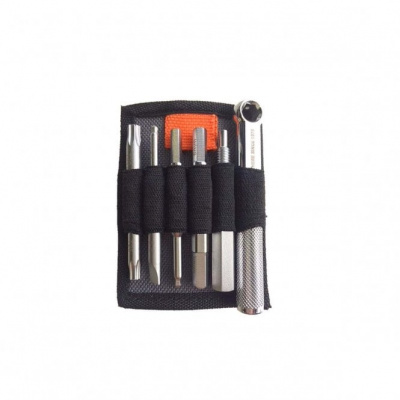
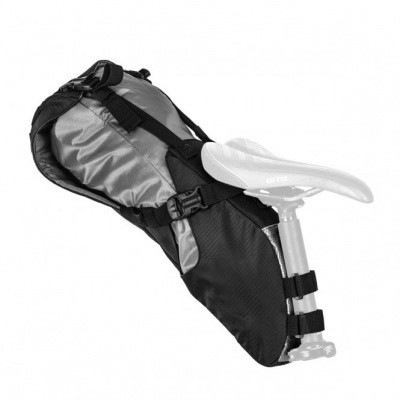
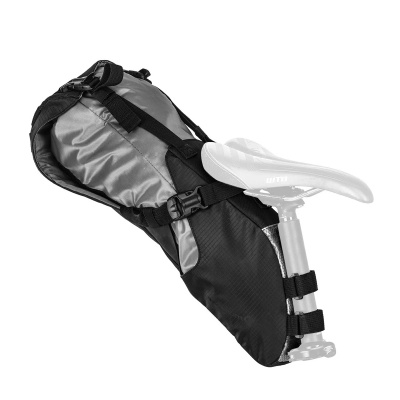
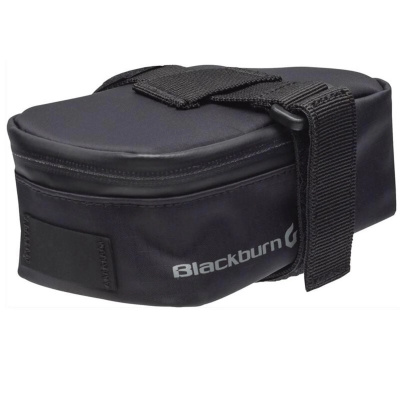
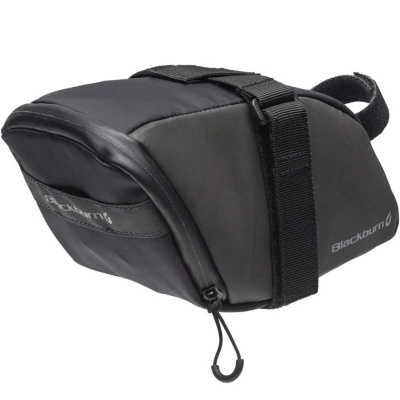
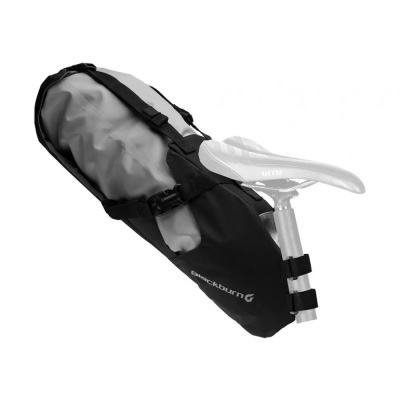
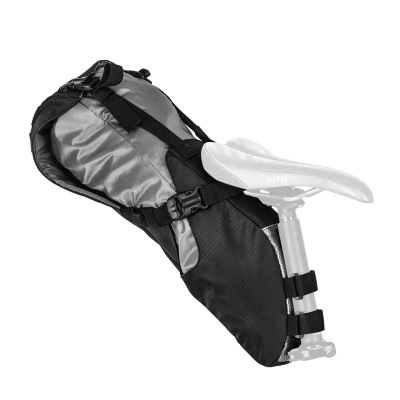
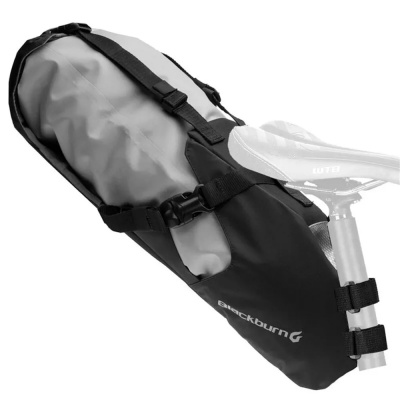
Prices and availability can change quickly. Delivery charges are not always included in listed prices.
Final price, stock status and delivery terms are set by retailer. We may receive a commission on purchases made.
Will It Actually Fit Your Bike? Clearances and Compatibility
Before you click buy, check one thing: the gap between your saddle rails and the top of your rear tyre. Most Blackburn seatpacks need at least 40 - 50 mm of clear air there, and that's measured with the suspension fully compressed if you're on a full-squish mountain bike. Bottom out hard on a rooty Forestry Commission descent and a bag with insufficient clearance will be chewing your tyre sidewall before you reach the car park.
Dropper post compatibility is the other question everyone asks. Blackburn's harness straps can physically mount to a dropper stanchion, but you really shouldn't run them directly on the post body. The hook and loop strap acts like sandpaper against an anodised surface, and one muddy ride is enough to score the stanchion and compromise the wiper seal. A dedicated dropper collar adapter - Wolf Tooth's Valais is the go-to - wraps the post and gives the strap something sacrificial to grip. Once that's sorted, drop the post fully and check the bag clears the tyre. A shorter bag or a smaller volume capacity option often solves the problem cleanly.
For the Blackburn Outpost Elite specifically, the alloy harness clamps directly to the saddle rails via two adjustable cradles. It works with most standard road and trail saddles, but very narrow carbon rails - some aero road saddles included - can slip in the cradle unless you use the included shim pack. Worth checking before your first big ride.
Outpost Elite, Standard Outpost, and Grid: Which Tier Is Yours?
Blackburn runs three distinct levels and picking the wrong one is a straightforward way to waste money. The Outpost Elite is the top of the tree: a two-part system where a rigid alloy harness stays bolted to the bike and the waterproof drybag clips in and out independently. That's genuinely useful if you're moving the bag between bikes or want to leave the harness system in place for a quick morning commute without the full load. The welded seam construction on the drybag makes it properly waterproof rather than just resistant - think immersion-grade, not shower-proof.
The standard Outpost drops the removable drybag concept but keeps the welded waterproof construction and solid harness. For riders doing occasional loaded touring or weekend gravel loops in Wales, it's a more accessible entry point without sacrificing much that you'd actually notice on a two-day trip. Volume capacity options across the Outpost range span roughly 0.5 to 16.5 litres, so there's room to spec the bag to the ride rather than stuffing a massive seatpack for a day out.
The Grid series is a different beast entirely. Compact, structured, and built around Grid reflective technology - strips of reflective material woven into the bag fabric rather than stuck on as an afterthought - these are road and commuter bags at heart. They'll keep your inner tube and multi-tool dry in light rain, and the low-light visibility is genuinely impressive. They're not bikepacking bags, though. If you're comparing across brands for longer-haul use, Apidura saddle bags and Carradice saddle bags sit in similar territory at various price points, and EVOC saddle bags bring a more structured approach if you want rigid protection. For a complete bikepacking setup, pairing your Blackburn seatpack with Blackburn frame bags and Blackburn bar bags keeps load distribution balanced and the kit cohesive.
UK Grit, Wet Mud, and Keeping Your Bike Intact
Mud mixed with Peak District grit is basically grinding paste. Run a bare nylon strap directly against an anodised seatpost through a winter ride and you'll have a ring of bare aluminium by February. The fix is simple: wrap the contact points in heli-tape - frame protection tape cut to size - before you mount any harness system. A tenner's worth of 3M or Jvr tape saves you a seatpost or a set of seat stays. Do it before the first ride, not after you notice the damage.
Hook and loop straps - the Velcro-style closures used on most seatpack harnesses - clog with mud and lose their grip surprisingly fast if you don't maintain them. A stiff bristle brush (an old toothbrush works) run through the loops after a muddy ride dislodges the debris before it sets. Takes thirty seconds. Similarly, the welded seams on the Outpost drybags are tough, but worth running your fingers along after particularly abrasive gravel rides. Grit ground repeatedly into a welded join will eventually find a weakness, so catching any abrasion early and treating it with seam sealer keeps the waterproof drybag actually waterproof.
If you're running a Blackburn Grid seat bag on a commuter through winter, the Grid's reflective technology earns its keep on unlit lanes, but the smaller bags have less structural sway reduction than the Outpost harness system. Keep them packed tight and check the strap tension every couple of rides - a loose bag bouncing against your tyre in the dark is both annoying and damaging. Rounding out your Blackburn kit with a Blackburn mini pump and some Blackburn tools means your emergency kit matches the bag it lives in, which sounds trivial until you're roadside in the rain fishing for a pump that fits your valve. Lezyne saddle bags are another option worth comparing if you're after a more compact commuter-focused design.
Blackburn Saddle Bags FAQs
How do you pack a Blackburn Outpost saddle bag?
Put the heavy stuff - tools, cooking kit, anything dense - right at the seatpost end of the drybag. That keeps the weight close to the bike's centre and cuts down on tail sway through corners. Lighter, compressible items like a gilet or spare socks go into the tapered end. A packed bag that barely moves is a well-packed bag.
Are Blackburn saddle bags waterproof?
The Outpost Elite and standard Outpost drybags use welded seam construction and waterproof materials - genuinely waterproof, not just water-resistant. The Grid series is highly water-resistant and handles typical UK showers, but sustained heavy rain can find its way in over time. If you're riding through Welsh winter weather, the welded Outpost bags are the right call.
Do Blackburn seat packs work with dropper posts?
They can, but don't strap directly onto the stanchion. Use a dropper post adapter collar to protect the post surface and wiper seal from abrasion. Once fitted, drop the post fully and check the bag clears your rear tyre - there needs to be enough volume capacity in a shorter model if clearance is tight with the post slammed.