
Bianchi Gravel Bikes
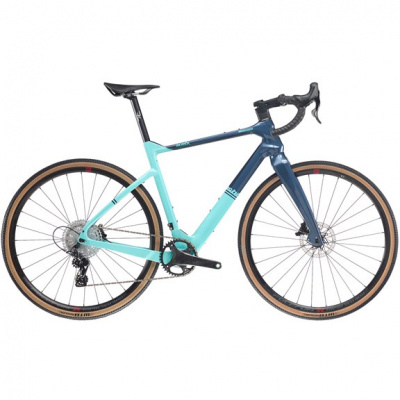
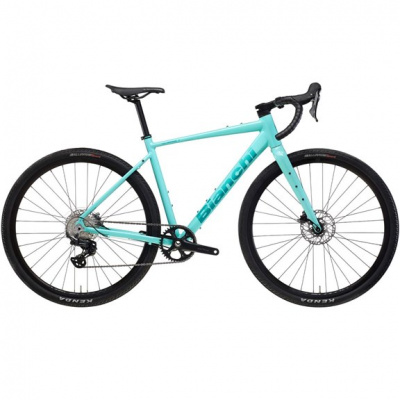
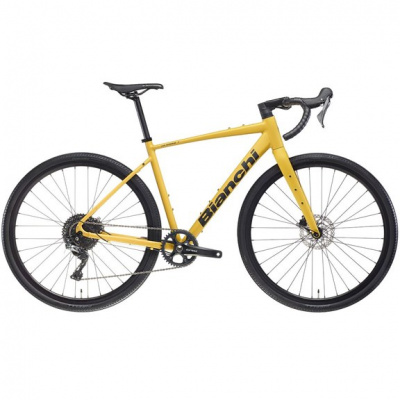
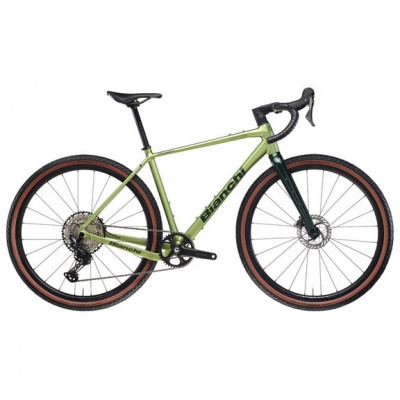
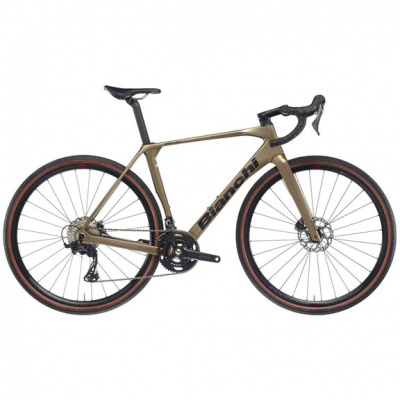
Bianchi gravel bikes arrive with a pedigree that stretches back to Italian racing's earliest chapters - but what matters here is what they do on a flinty bridleway or a loaded multi-day ride across Scotland. The range splits cleanly into two camps. The Impulso is built for speed: aero tube profiles, a race-sharpened geometry, and the kind of composure on hardpack gravel that makes a fast loop of the South Downs feel genuinely purposeful. The Arcadex takes a different line - wider tyre clearance, a more relaxed position, and the mounting points you need when the bags go on and the miles stack up. Both frames wear that iconic Celeste green, and both carry Bianchi's Countervail (CV) vibration-cancelling carbon architecture where the spec allows. Trim levels run from entry carbon builds with solid GRX groupset specs through to top-end Pro models where the carbon layup and component choices tighten considerably. Whether you're comparing the Impulso against an Italian rival or wondering if the Arcadex has the clearance for your muddiest winter loop, the guide below maps it all out plainly.
Prices and availability can change quickly. Delivery charges are not always included in listed prices.
Final price, stock status and delivery terms are set by retailer. We may receive a commission on purchases made.
Decoding the Bianchi Gravel Lineup
Think of the two families as occupying opposite ends of a sliding scale - fast and racy at one end, load-ready and adventure-focused at the other. The Impulso is Bianchi's answer to the Strade Bianche school of gravel riding: long, fast days on white roads and hardpack tracks where aerodynamics and stiffness matter as much as compliance. The tube profiles are shaped with aero intent, the geometry keeps you stretched and efficient, and the spec is built around performance riding rather than multi-day self-sufficiency. If your idea of a good Saturday involves chasing Strava segments across the Chilterns, this is the one.
The Arcadex thinks differently. The geometry is more upright, the frame clearances are generous, and there are enough mounts for bags, mudguards, and anything else you want to bolt on before a long weekend in the saddle. It's a proper adventure bike - not a road bike with gravel pretensions. Within each family, trim levels do real work in separating the models. Pro builds typically use a higher-grade carbon layup, lighter finishing kit, and top-shelf GRX or SRAM groupset options. Comp builds step down to mid-tier carbon and a slightly heavier but no less capable drivetrain. The ride character stays consistent across trims - it's the weight and componentry that shift. For riders comparing Italian alternatives at similar price points, Basso gravel bikes and Colnago gravel bikes are worth a look alongside the Bianchi range.
The Tech Behind the Frame
Bianchi's most distinctive engineering contribution to these bikes is Countervail (CV) vibration-cancelling architecture. It's a carbon layup process that integrates a viscoelastic material between carbon layers - the practical upshot being that high-frequency road buzz is absorbed at the frame level rather than transmitted into your hands and backside. On a corrugated gravel road, that difference is felt over hours, not minutes. It reduces cumulative fatigue in a way that no amount of bar tape can fully replicate.
The Impulso family layers aero-gravel tube profiling on top of this. The down tube, fork legs, and seatstays are shaped to cut drag without the weight penalty of a full aero road frame. It's a considered trade-off - you get meaningful aero gains on the open sections of a gravel route without sacrificing the compliance you need when the surface breaks up. Practical, rather than flashy.
Across both families, custom-designed integrated cockpit systems handle cable and hose routing internally. Gravel riding sends grit and water into every gap it can find, so keeping hydraulic lines and gear cables inside the bar and stem assembly genuinely extends service intervals. It also makes the front end look clean, which counts for something when the rest of the bike is caked in mud. Integrated cockpits do add a layer of complexity at service time, though - worth keeping in mind if you prefer workshop simplicity.
Running a Bianchi on UK Roads and Tracks
Tyre clearance is the first practical question for most UK riders, and the answer depends entirely on which model you're looking at. The Arcadex clears up to 700x42c or 650bx47c - enough room for a proper gravel tyre with volume to spare, which matters when you're dealing with deep clay on a Welsh winter loop or loose chalk on the Ridgeway. The Impulso is tighter, typically topping out at 700x38c or 40c depending on spec. That's fine for most hardpack and dry-summer riding, but if your routes regularly involve deep mud or chunky loose stuff, the Arcadex's clearance is the more useful number.
Mud-shedding is related but distinct. A frame can clear a 42c tyre and still pack up badly in thick mud if the chainstay and seatstay shaping works against you. The Arcadex's geometry and frame shaping are designed with this in mind. The Impulso less so - it's not built for deep winter mud and doesn't pretend to be.
Wet, gritty UK conditions are hard on integrated headsets and press-fit bottom brackets. Both systems are efficient and light when clean, but they reward regular attention. After a run of wet rides, it's worth checking for creaking and getting ahead of any bearing contamination before it becomes a workshop job. Ceramic-coated or sealed bearing upgrades are a common first service addition for riders in particularly gritty areas - the Peak District's rough bridleways and Scottish gravel tracks will find any weakness in short order. Keep a torque wrench handy for the integrated cockpit, too; carbon interfaces need consistent torque settings, not just finger-tight guesswork.
For riders considering Cervélo gravel bikes as a comparable alternative, it's worth noting that the Bianchi range prioritises vibration compliance and Italian frame character alongside the aero efficiency, which gives it a slightly different feel on long days in the saddle. If gravel is only part of your riding and tarmac pulls you back regularly, Bianchi road bikes cover the pure-speed end of the range. And if the climbs on your regular routes are becoming a negotiation rather than a pleasure, Bianchi e-bikes are worth exploring for assisted all-road riding.
Bianchi Gravel Bikes FAQs
Are Bianchi gravel bikes good for bikepacking?
The Arcadex is the one to look at for bikepacking - it has multiple mounting points for frame bags, mudguards, and racks, plus the tyre clearance to handle loaded riding on rougher tracks. The Impulso is built around race-day performance and lacks the luggage mounts for multi-day use, so it's better suited to fast, unloaded events.
What is the difference between Bianchi Impulso and Arcadex?
The Impulso is an aero-optimised gravel race bike - fast geometry, shaped tubes, and a focus on hardpack speed. The Arcadex is the adventure-ready option, with wider tyre clearance, a more relaxed riding position, and the mounts you need for longer loaded trips. Different bikes for genuinely different uses.
What is the maximum tyre clearance on a Bianchi gravel bike?
The Arcadex clears up to 700x42c or 650bx47c, giving you real room for volume on rough or muddy riding. The Impulso typically manages 700x38c or 40c depending on the model - capable for most gravel riding, but not the choice if your local trails regularly run deep and boggy.