
Basso Gravel Bikes
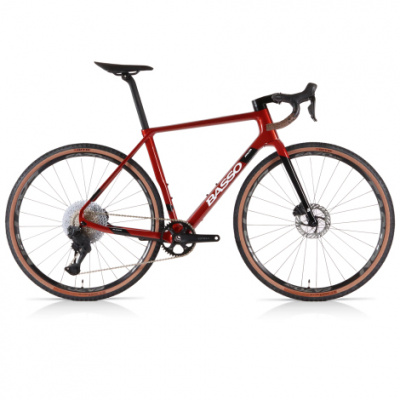
Basso gravel bikes arrive with decades of Italian racing craft behind them, translated here into two genuinely distinct machines built for the dirt. This isn't a road brand half-heartedly widening its tyre clearance - Basso has engineered gravel-specific geometry, proprietary vibration-damping hardware, and frame constructions that make sense for how people actually ride these bikes. The range splits cleanly into two mindsets. The Palta is the full-carbon, race-sharp option: aggressive geometry, stiff layup, built for riders who want to carry road-bike speed onto gravel and not give much back. The Tera takes a different line entirely - a mixed-material adventure platform with a fixed-pivot carbon rear triangle delivering 8mm of micro-suspension, better suited to loaded bikepacking days or long mixed terrain miles where comfort compounds over time. Both models run tubeless-ready wheels as standard and carry Basso's signature clean aesthetics. If you want to build a custom rig rather than buy complete, our Basso frames page lists current bare framesets. Otherwise, browse below for the best UK prices across the full Basso gravel lineup.
Prices and availability can change quickly. Delivery charges are not always included in listed prices.
Final price, stock status and delivery terms are set by retailer. We may receive a commission on purchases made.
Decoding the Basso Gravel Lineup
The Basso Palta gravel bike is the sharper tool. Its full Italian carbon frame is laid up with race geometry - a relatively short head tube, moderate reach, and quick steering that rewards riders who want to push hard on fast gravel roads or competitive gravel events. Clearance runs to 700x45c, which opens up a wide tyre range without the frame becoming unwieldy at speed. Trim levels are grouped around drivetrain choice: you'll typically find Palta builds specced with SRAM Rival AXS, Shimano GRX Di2, or Campagnolo Ekar depending on budget and preference. Each groupset changes the character slightly - Ekar's 13-speed cassette gives smooth, closely spaced ratios for sustained gravel efforts; GRX prioritises durability and serviceability for UK winters; Rival AXS brings wireless shifting at a keen price point.
The Basso Tera gravel bike does something structurally unusual. Its front triangle is aluminium - specifically a formed-alloy construction that keeps costs more accessible and adds a degree of natural compliance - mated to a carbon rear triangle via a fixed-pivot junction. That material pairing isn't a cost-cutting compromise; it's a deliberate engineering choice that lets the rear end flex in a controlled way to deliver 8mm of micro-suspension travel without adding shock hardware or significant weight. If your rides lean towards loaded overnighters, rough bridleways, or days where fatigue accumulates over six or seven hours in the saddle, the Tera's comfort advantage over a stiff carbon race bike becomes tangible. It's a genuinely different proposition to something like a 3T gravel bike or a Bianchi gravel bike, both of which lean harder into full-carbon construction across their ranges.
The Engineering Behind the Brand
Basso's proprietary tech is worth understanding before you buy, because it shapes how both bikes behave day-to-day. The 3B Clamp System Gen 2 is the headline piece. It looks like a tidy integrated seatpost clamp, but there's an active anti-vibration elastomer built into the mechanism. It absorbs high-frequency road buzz before it reaches your lower back - the kind of fatigue you don't notice building until hour three on a flinty South Downs track, then suddenly you do. It's a subtle addition, but on back-to-back long days it makes a measurable difference.
The Paradigma Integration System handles cable routing through a custom stem and headset unit. Cables disappear entirely at the bar and re-emerge inside the frame - no exposed housing to collect grit or salt. That matters considerably on UK winter rides, where road salt and mud work into any gap they can find. Clean cables stay indexed properly; corroded ones don't. The trade-off is that headset bearing replacement becomes a more involved job, since you're working around internal routing rather than a standard external clamp setup. Worth knowing before your first service.
The Tera's fixed-pivot rear triangle deserves its own mention. Rather than adding a traditional suspension linkage with pivot bearings and a shock unit, Basso uses the natural flex differential between the alloy front and carbon rear triangles, controlled through a single fixed junction point. The result is 8mm of vertical compliance built into the frame structure itself. No additional moving parts to service, no shock to rebuild. It's a tidy solution for riders who want some give without the weight and mechanical complexity of a full suspension system. Think of it as a frame that works with the road rather than fighting it.
Running a Basso in UK Conditions
The Palta's 700x45c tyre clearance is genuinely useful for British bridleways. Winter clay on the North Downs or the Ridgeway packs into tight tyre clearances fast, and the extra millimetres matter when you're trying to keep things rolling rather than stopping every mile to dig mud from your fork. That said, if you're running a full 45c tyre in very sticky clay conditions, clearance is close enough that mudguard fitment becomes impractical - something to weigh up if you commute on the same bike through winter.
The Paradigma internal routing is genuinely one of the best features for UK riding. Winter grit and salt are cable killers; keeping the housing sealed inside the frame and stem extends cable life noticeably. The annual headset service is the price you pay, but most riders would rather do one fiddly service a year than replace corroded brake and shift cables every few months. If you're planning to wrench on the bike yourself, factor in the extra time and look up Basso's specific assembly guidance before you start.
For bikepacking use, the Tera pairs logically with a frame bag setup - the mixed-material construction keeps the price accessible enough to spend more on luggage. Check our Basso frame bags page for compatible options, and the Basso handlebars page if you're thinking about a flared drop bar swap for wider descending control on rough days. If you're deciding between the Palta and a comparable Italian carbon option, it's also worth a look at what Cinelli's gravel range offers at similar price points - the geometry philosophies differ in interesting ways. Basso's own road pedigree is visible across both gravel models too; the Basso road bike range shares DNA in the carbon layup approach and integrated finishing kit.
Basso Gravel Bikes FAQs
Is the Basso Palta a good gravel bike?
Yes. The Palta is well regarded for gravel racing and fast-paced riding where you want road-bike responsiveness on dirt. Its stiff carbon layup and aggressive geometry reward riders who prioritise speed and sharp handling over long-haul comfort. It's a focused tool, not an all-rounder - but for its intended purpose it's very capable.
What is the difference between Basso Palta and Tera?
The Palta is a full-carbon race-oriented gravel bike with aggressive geometry and stiff construction. The Tera uses an aluminium front triangle mated to a carbon rear triangle, which flexes to deliver 8mm of micro-suspension at the rear. The Tera is the more comfortable, adventure-capable option; the Palta is faster and more precise. Different bikes for different priorities.
What is the maximum tyre clearance on a Basso Palta?
The Basso Palta accepts tyres up to 700x45c. That's enough room for a properly grippy gravel tyre on UK bridleways and rough tracks, though in very sticky clay conditions clearance is tight enough that mudguard fitment becomes difficult. Running 40 - 42c gives more breathing room if that's a concern.