
Beto Track Pumps
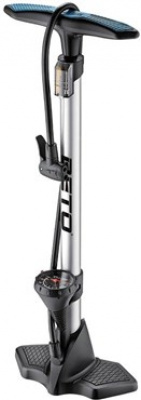
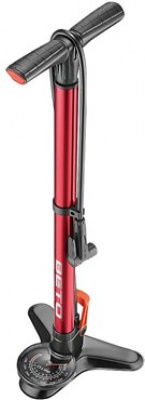
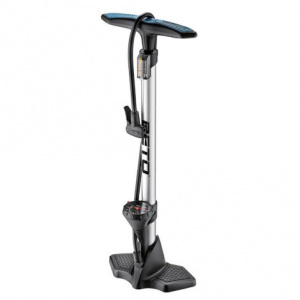
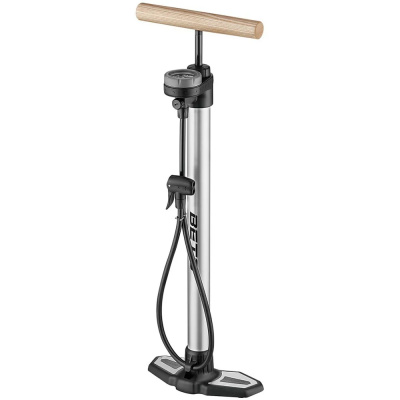
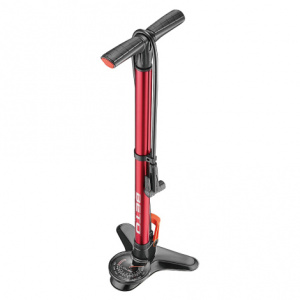
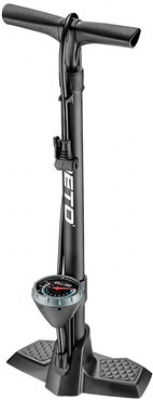
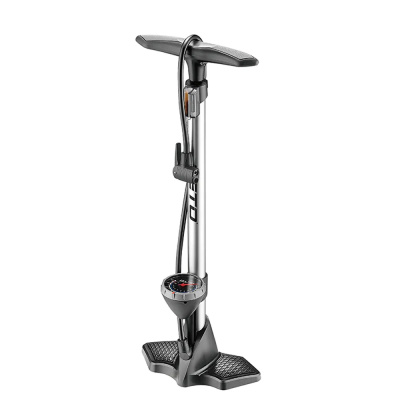
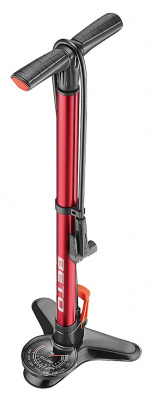
Beto track pumps have quietly become one of the most sensible choices on the workshop shelf - reliable, accurate, and priced so you're not wincing every time you reach for one. Whether you're dialling in road tyres to precise PSI before a sportive or forcing air into a stubborn tubeless gravel setup, Beto makes the process straightforward. The standout feature across the range is the proprietary EZ Head - it switches automatically between Presta and Schrader valves without you having to fish around inside the chuck with a coin. No lost grommets, no fumbling with cold hands on a dark January morning. The steel barrel models shift serious air volume fast, and the top-mounted industrial-grade pressure gauges are easy to read without crouching. Beto's base plates are wide and stable enough that pumping to high pressure doesn't feel like wrestling the thing across the floor. If you're running multiple bikes - road, gravel, MTB - a single Beto floor pump handles the lot. Compare the latest UK prices across the full range below and find the right model for your setup.
Prices and availability can change quickly. Delivery charges are not always included in listed prices.
Final price, stock status and delivery terms are set by retailer. We may receive a commission on purchases made.
Valve Compatibility and Choosing the Right Pump Type
Get this bit right and everything else follows. Beto's EZ Head design is the feature most riders notice first - push it onto a Presta valve and it self-selects the correct internal channel; swap to a Schrader-valved MTB tyre and it adjusts again, all without dismantling the chuck. That matters more than it sounds when you're switching between bikes mid-week. The alternative in the range is the AH Head - an Advanced Head with a locking lever that clamps down firmly for a near-airtight seal, which is particularly useful when pumping beyond 100 PSI and you can't afford any slippage.
Beyond the head type, the other split is high pressure versus high volume. High pressure (HP) barrels are built for road and cyclocross - narrow chambers that build PSI quickly with short, controlled strokes. High volume (HV) models push more air per stroke at lower pressures, which is what you want for seating a tubeless tyre bead or inflating a plus-sized MTB tyre. Trying to seat tubeless with an HP pump is an exercise in frustration. Pick the barrel type that matches your primary use case first.
Track pumps are built for the workshop or garage - they're not something you're cramming into a jersey pocket mid-ride. If you need emergency inflation out on the road or trail, take a look at Beto mini pumps for a compact, ride-ready option. And if you're tuning fork or shock pressures, that's a separate job entirely - Beto shock pumps handle the fine increments a track pump can't.
Beto's Range: What the Extra Money Actually Buys You
Entry-level Beto models come with composite or reinforced plastic barrels. They work, they're light, and they're fine for occasional use across one or two bikes. But the jump to a steel or alloy barrel model is noticeable - the stroke feels more solid, less prone to flex under load, and the pump sits more authoritatively on the ground when you're driving hard at high pressure. Think of it as the difference between a flexi-shaft screwdriver and a proper Snap-on - both turn screws, but one's a pleasure to use.
The premium steel barrel models add a few genuinely useful features. Top-mounted gauges - rather than ankle-level dials - mean you can actually read the pressure without contorting yourself. Wide base plates, often powder-coated steel, stay put when you're pushing towards 120 PSI on a road tyre. Some models include a bleed valve on the head, which lets you release tiny amounts of air to dial in exact pressure rather than deflating the tyre and starting again. That's a small feature that saves a surprising amount of time.
If your garage sees road, gravel, and MTB tyres regularly, it's worth stepping up to a steel barrel model with dual-mode capability. The price difference over a budget option is modest when you spread it across years of daily use. Compared to something like a Topeak floor pump at the same price point, Beto holds its own on build quality - and in some cases edges ahead on gauge readability. Lezyne track pumps offer a more premium aesthetic, but Beto's value-to-function ratio is hard to argue with. SKS and Park Tool are the other natural comparisons - respected names, but neither brand makes Beto look outclassed at the affordable end of the market.
Keeping Your Beto Pump Running in a Damp UK Shed
A UK garage or shed is not kind to pump internals. Cold, damp air and the odd muddy valve combine to shorten the life of any pump that isn't looked after. The good news is that keeping a Beto track pump in good shape takes about five minutes every couple of months.
Wipe the main shaft down periodically with a light silicone spray - this keeps the stroke smooth and prevents the piston seal from drying out and dragging. On steel barrel models, a quick wipe with a dry cloth after use stops surface rust from taking hold; it's not a complex job. The EZ Head chuck is the part most likely to suffer from grit - valves on bikes that have been through muddy Peak District lanes or Scottish forest tracks often arrive at the pump head carrying debris. Flush the chuck with clean water if you see grit building up, and dry it before the next use.
If the pump starts losing efficiency - strokes feeling soft, or pressure not building as expected - the most common culprit is a worn O-ring seal inside the piston. Replacement O-rings are cheap and widely available; fitting one takes minutes and returns the pump to full performance. The same applies if the EZ Head starts leaking at the valve connection - the internal rubber grommet takes the brunt of repeated use and will eventually deform. Swap it out rather than tolerating air loss on every stroke.
Locking levers on the AH Head models can stiffen in cold weather - keep them moving with a drop of light oil on the pivot. With cold, wet hands common across most of the UK cycling calendar, an oversized lever is worth choosing over a compact one if you have the option. It makes a real difference in November.
Beto Track Pumps FAQs
How do you use a Beto track pump on a Presta valve?
First, unscrew the Presta valve core a turn or two and give it a brief tap to break the seal. On an EZ Head model, push the chuck straight onto the valve - it self-selects the correct channel - then lift the locking lever to secure the connection. Pump to your target PSI, flip the lever down, and pull the head off cleanly. Don't yank sideways or you risk bending the valve.
Are Beto track pumps good for tubeless tyres?
The high-volume steel barrel models are well-suited to tubeless work - they shift enough air quickly to seat most beads in a few firm strokes. For particularly stubborn setups, look for a Beto model with a tubeless accumulator chamber, which pre-charges air before releasing it in one burst. Standard HP models can struggle with tubeless; make sure you're matching the pump type to the job.
Why is my Beto track pump leaking air at the valve?
Nine times out of ten it's a seating issue - the chuck hasn't been pushed far enough down before engaging the locking lever. Re-seat it firmly and try again. If the leak persists, check the chuck for grit blocking a clean seal, then inspect the internal rubber grommet. A deformed or worn O-ring seal won't grip properly and needs replacing - it's a cheap fix that restores full pump performance.