
Berk Composites Saddles
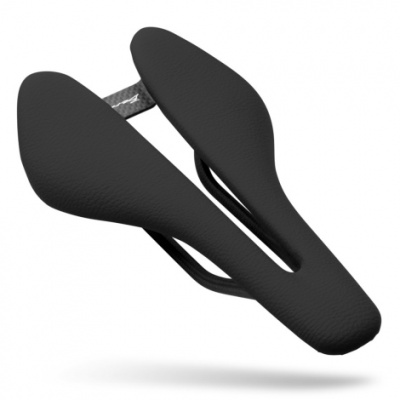
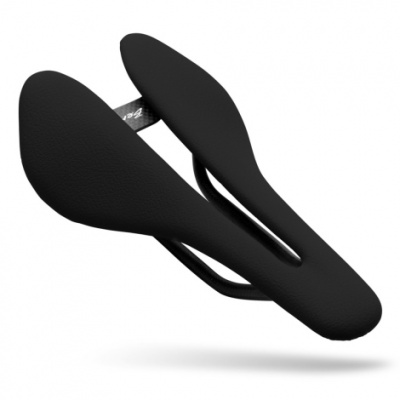
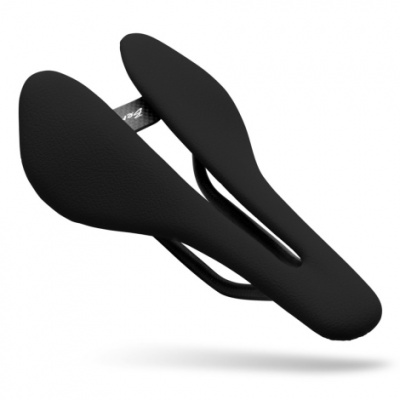
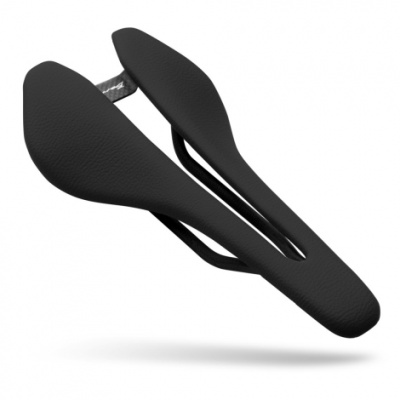
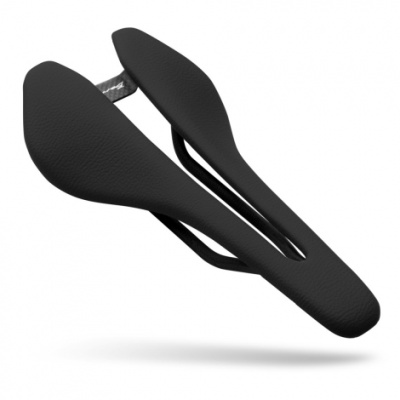
Berk Composites saddles sit at the sharp end of lightweight carbon road saddles - handmade in Slovenia, obsessively refined, and genuinely sub-100g on the scales. If you've ever stood at the top of a climb wondering where the last few grams are hiding, this is where they go. These aren't production-line pieces; each saddle is laid up by hand, using tuned carbon shell flex patterns that work as a damping system in their own right, absorbing road buzz without leaning on thick padding to do the job. That's a meaningful difference on longer rides, where a stiff, dead shell would have you shifting around long before the café stop.
Berk also weaves Innegra fibre into the carbon lay-up - a hybrid reinforcement that stops a crash or pothole strike from turning a crack into a catastrophic split. On UK roads, that's not a theoretical benefit. The range splits broadly into two profiles and a choice of padded or unpadded finishes, so there's a genuine decision to make based on your position, your anatomy, and how far you're riding. Whether you're building a hill-climb weapon or chasing long-distance comfort on a road endurance bike, Berk has thought carefully about both. Pair your saddle with Berk Composites bar tape to carry the same weight-conscious philosophy all the way to the cockpit.
Prices and availability can change quickly. Delivery charges are not always included in listed prices.
Final price, stock status and delivery terms are set by retailer. We may receive a commission on purchases made.
Fitting Your Berk Saddle: Rail Standards and Clamp Compatibility
Before anything else, check your seatpost. Berk saddles use 7x9mm oval carbon rails - not the round 7mm steel or titanium rails that most seatposts are designed around. That oval profile is stiffer and lighter, but it demands a clamp that's actually built for it. Side-clamp seatposts tend to be the most straightforward fit. If you're running a traditional top-and-bottom clamp, you'll need to confirm it has oversized ears or specific oval-rail inserts - don't assume it'll just squeeze down and hold.
Torque is where people come unstuck. Carbon rails crush. The fixing torque on most Berk saddles maxes out around 5Nm, and you need a calibrated torque wrench to hit that accurately - not a feel-based guess. Carbon assembly paste is non-negotiable here too; it lets you run lower torque while still preventing the rail rotating or creeping under load. Think of it like bedding in a new cleat: get the setup right once, check it after the first ride, then leave it alone. On UK roads where potholes arrive without warning, a properly torqued rail-clamp interface is the difference between a saddle that stays put and one that shifts mid-ride at the worst possible moment.
Road grit and winter muck have a habit of working into the rail-clamp interface, and carbon resin doesn't love abrasive particles grinding against it over thousands of kilometres. After wet rides - and in the UK, that's most of them between October and April - it's worth removing the saddle every few weeks, cleaning the rail ends and clamp faces, and reapplying assembly paste before refitting. It takes five minutes and it's the kind of marginal habit that keeps expensive components in good shape long-term.
Lupina vs Dila: Choosing the Right Profile
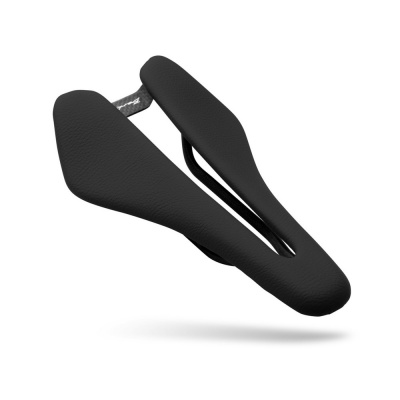
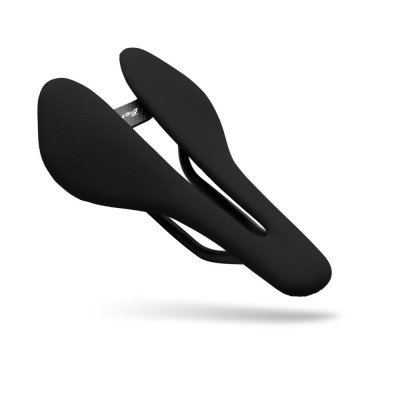
The Berk Lupina is the classic shape in the range - a traditional curved profile with a full-length nose that suits riders who move around on the saddle. If you ride with varying effort levels, shift your weight back on descents, or tend to shuffle forward under hard efforts, the Lupina accommodates that. It's the more versatile of the two and works well on road endurance bikes, sportive builds, or any setup where your position changes with the road.
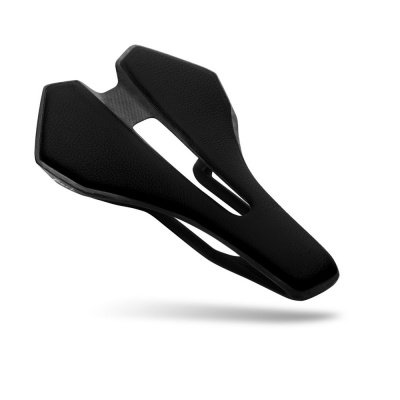
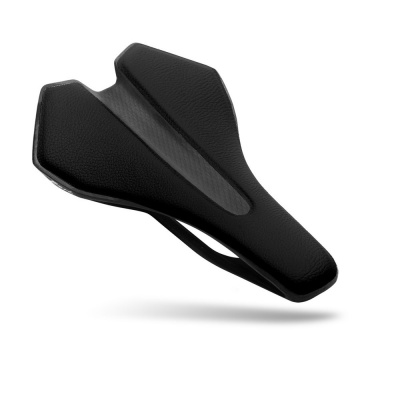
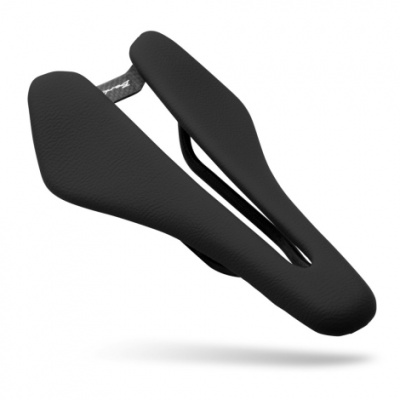
The Dila takes a different approach. It's a short-nose saddle, designed for riders locked into an aggressive, forward-rotated position where the nose of a traditional saddle creates pressure and restriction rather than support. Triathletes and time-trial riders will recognise the brief immediately, but it's increasingly relevant for road riders running steep seat tube angles on modern geometry frames. If you barely use the nose of your current saddle, the Dila makes the trade explicit and removes the dead weight.
On both models, you choose between an unpadded carbon shell or a version with a leather or microfibre top layer. The unpadded version is the weight-saving choice - every gram counts if you're racing or hill-climbing - but it demands that your shorts do the comfort work. Quality bib shorts with a well-matched chamois will handle that fine. The padded variants add a small weight penalty and suit longer days in the saddle where a touch of direct cushioning reduces fatigue. Neither is objectively better; it depends on your chamois, your position, and how long you're out. If you're comparing Berk's approach to other carbon saddle makers, Cadex saddles and Enve saddles occupy similar weight-focused territory, while Fizik saddles offer broader padding and fit-system options if you're undecided on the minimal approach.
The Berk Lupina vs Dila decision really comes down to one question: does your riding position stay fixed, or does it roam? Answer that honestly and the choice becomes straightforward.
How Berk Saddles Hold Up on British Roads
A sub-100g carbon saddle sounds fragile. It isn't - but it does require you to treat it with the same respect you'd give any precision component. The Innegra fibre reinforcement in the shell lay-up is the key detail here. Innegra is a polypropylene-based hybrid fibre that's specifically chosen for its ability to absorb impact energy rather than transmit it as a crack. In practical terms, if you drop the bike, clip a pothole at speed, or take a tumble, the shell is far more likely to deform slightly than to shatter. That's a deliberate engineering decision, not a lucky side effect.
The tuned carbon shell flex pattern works alongside this. Rather than building a dead-stiff platform and relying on foam or padding to filter road vibration, Berk designs flex into the shell itself - controlled movement that takes the edge off chatter from rough chip-seal or patched tarmac without introducing unwanted flex under pedalling load. It's a nuanced balance, and it's why these saddles can work well on long rides even in the unpadded configuration.
For winter riding, the unpadded carbon surface can feel slippery in wet bibs, so it's worth factoring that in if you're riding through the colder months rather than just racing in summer. That's not a dealbreaker, but it's honest. Good quality bib shorts with a grippy chamois backing resolve most of it. Keep the rail-clamp interface clean - road grit and salt are abrasive against carbon resin - and inspect the rails periodically for any stress marks, particularly around the clamp contact points. Berk's handmade Slovenian carbon construction is built to last, but carbon rewards attentive ownership.
Berk Composites Saddles FAQs
What is the weight limit for Berk Composites saddles?
Most Berk carbon saddles have a rider weight limit of 100kg (220lbs). Always use a calibrated torque wrench when fitting the seatpost clamp - over-tightening is the most common cause of rail damage, and the consequences on carbon are immediate and irreversible.
Do Berk saddles use round or oval rails?
Berk saddles feature 7x9mm oval carbon rails. Your seatpost must be compatible with this oversized oval profile - side-clamp posts are often the simplest solution, but top-and-bottom clamps can work if they have the correct oversized clamp ears. Check before you buy.
What is the difference between the Berk Lupina and Dila?
The Lupina is a full-length, curved saddle for riders who move around on the bike across varying efforts and gradients. The Dila is a short-nose saddle for aggressive, fixed positions - think time-trial or steep seat tube geometries where the nose of a traditional saddle creates pressure rather than support.