
BBB Overshoes
Cold, wet feet will end a winter ride faster than any hill, and BBB overshoes exist precisely to stop that happening. Born in the Netherlands - a country that treats rain as a permanent fixture rather than an inconvenience - BBB has spent years refining shoe covers that balance genuine weather protection with the kind of durability UK roads demand. Gritty B-roads, wheel spray from flooded lanes, freezing headwinds on January base miles: the range is built around those realities, not a glossy sponsored race calendar.
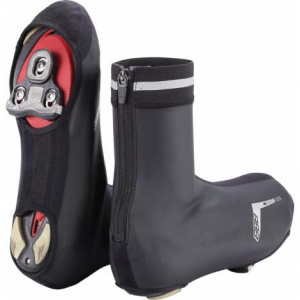
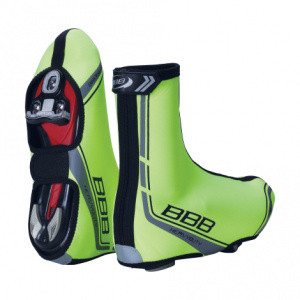
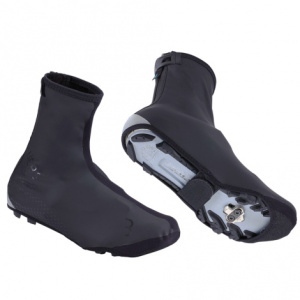
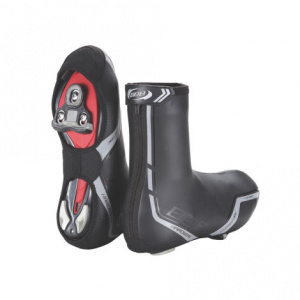
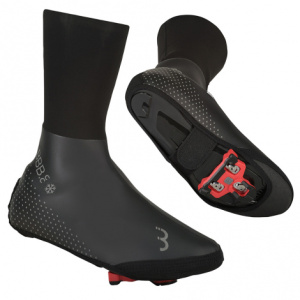
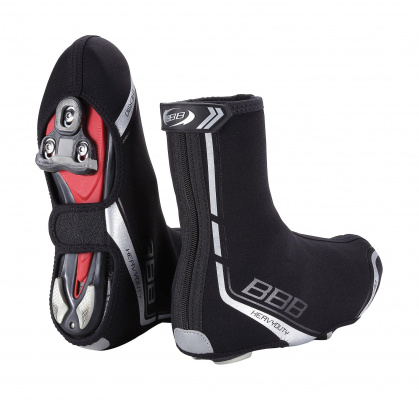
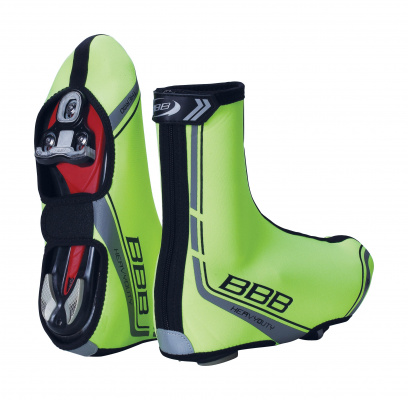
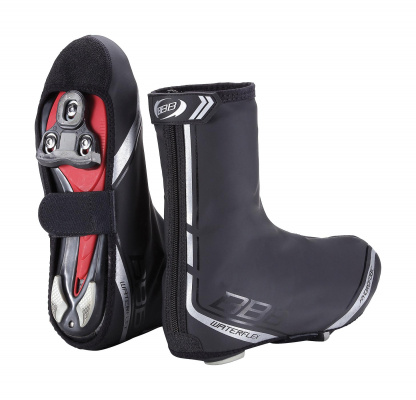
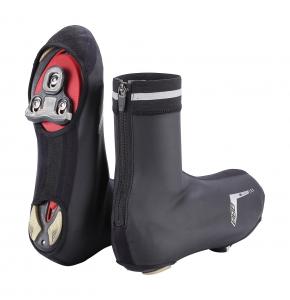
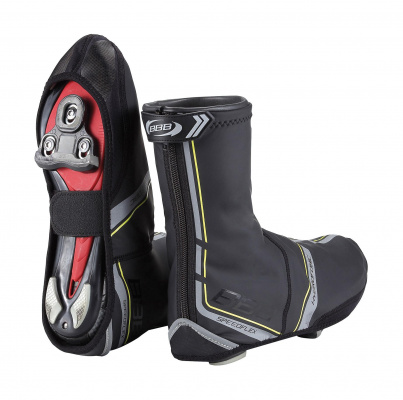
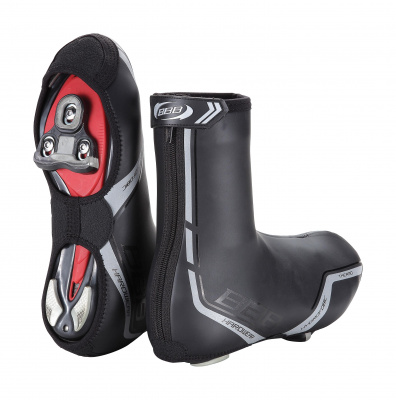
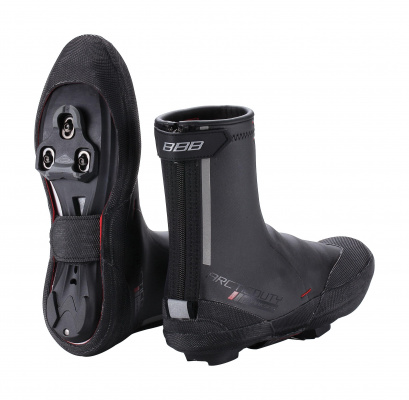
The line splits clearly between two core technologies. The BBB Waterflex models use a polyurethane rubber outer with a microfleece inner to shed rain on milder, wetter days. Step up the misery and you want the BBB HeavyDuty or UltraWear neoprene booties - 3mm multi-stretch neoprene that traps heat and blocks wind chill when temperatures drop hard. Across both families you get Kevlar-reinforced toe and heel zones, taped seams, and YKK zippers: the details that separate overshoes that last a season from ones that don't make it past February. If you've ever binned a cheap pair after the zip gave out on a wet Thursday, you'll appreciate why those specifics matter.
Prices and availability can change quickly. Delivery charges are not always included in listed prices.
Final price, stock status and delivery terms are set by retailer. We may receive a commission on purchases made.
Neoprene vs. Waterflex: Which Material Does What
Getting the material choice right is more useful than chasing the most expensive option. BBB's Waterflex line centres on a polyurethane rubber outer bonded to a microfleece lining - the PU face sheds water quickly and resists road spray, while the fleece keeps things comfortable on days that are cold but not brutal. Think autumn rides in the Peaks or damp spring mornings where you want protection without sweating inside a thick bootie. Taped seams stop water wicking through the stitching, which is where cheaper overshoes typically fail first.
When the mercury properly drops - deep winter base miles, exposed moorland crossings, the kind of Yorkshire morning where your bottle freezes in the cage - you want BBB neoprene booties. The HeavyDuty and UltraWear models use 3mm multi-stretch neoprene that works like a wetsuit: it traps a thin layer of warmth against your foot and resists wind chill far better than any polyurethane shell. The stretch construction also means they pull over shoes more easily than rigid covers, which matters at 6am in a dark garage. Both neoprene and Waterflex models use Kevlar reinforcements on the toe and heel - the two points that take constant abuse from clipping in, walking across cafe car parks, and the slow grind of road grit. Without that reinforcement, standard neoprene wears through surprisingly fast.
Reflective detailing on the rear panel is a small but welcome touch for early-morning or late-evening commutes, where a moving foot catches a driver's light better than a static reflector. It's not a replacement for BBB lights, but it adds a useful layer of visibility without adding bulk.
Sizing, Fit, and the Open Sole System
BBB overshoes follow standard European shoe sizing, so matching them to your cycling shoe size is the right starting point for road shoes with a slim profile. Where riders go wrong is assuming that rule holds universally. If you're pulling them over wide MTB shoes, gravel boots, or any shoe with a pronounced heel cup, size up - trying to stretch neoprene or Waterflex material over a bulky shoe stresses the seams and will split the zip anchor points over time. One size up costs you nothing in fit quality and saves you from replacing the pair before Christmas.
The Open Sole System (O.S.S.) is worth flagging because it's genuinely practical rather than marketing language. The open sole design is compatible with both SPD two-bolt MTB cleats and SPD-SL three-bolt road cleats, so you're not buying category-specific covers. If you run multiple bikes with different cleat systems, one pair of BBB cycling overshoes covers both. The opening is cut cleanly and reinforced at the edges to prevent tearing when you're walking on hard floors.
For context on where BBB sits in the market: GripGrab overshoes and Endura overshoes occupy similar territory on value and durability, while Castelli overshoes and Spatzwear overshoes push further into aero-optimised constructions at a higher price. BBB lands well for riders who want reliable winter protection without paying for marginal aero gains they'll never use in January sleet.
Making Them Last: Care and Layering
Overshoes take more punishment than almost any other piece of kit - road grit, salt, repeated wetting and drying - so a bit of basic care makes a real difference to longevity. After a wet ride, rinse the zippers with cold water before the grit dries in the teeth. A blocked YKK zipper is a strong zipper that still won't move, and forcing it is how the tape pulls away from the seam. Air dry flat or hanging, away from direct heat. Leaving neoprene or polyurethane draped over a radiator degrades both materials faster than road use does - the heat breaks down the bonding between layers and causes the neoprene to stiffen and crack at flex points. Occasional zipper lubrication with a dry wax or specialist zipper lube keeps things running smoothly through a full season.
On the layering side, pairing overshoes with a quality merino wool sock is the most effective combination for UK winter riding. Merino manages moisture from the inside - which matters because no overshoe stops your feet sweating - while the overshoe handles everything coming from outside. A thin merino base handles a wider temperature range than a thick synthetic, and it doesn't compress into a damp block the way cheap acrylic socks do after an hour. If you're riding in genuinely cold conditions, a thin neoprene toe warmer worn inside the shoe before the overshoe goes on adds meaningful insulation without bulk.
For complete winter protection, it's worth pairing your overshoes with BBB gloves and fitting BBB mudguards - mudguards cut the wheel spray that overshoes have to deal with in the first place, which keeps them drier for longer and reduces how hard the DWR treatment has to work.
BBB Overshoes FAQs
How do I choose the right size BBB overshoes?
Match your standard European cycling shoe size for road shoes with a slim profile and you'll be fine. If you're fitting them over MTB shoes, gravel boots, or anything with a chunkier heel, go one size up. Forcing neoprene over a wide shoe puts stress on the seams and zip anchor points, which is where they'll fail first.
Are BBB overshoes fully waterproof?
The Waterflex models are highly water-resistant - taped seams and the polyurethane outer deal well with road spray and steady rain. In a proper downpour, water can eventually run down bare legs into the top of the overshoe, or seep through the cleat opening at the sole. No overshoe fully solves that; fit a cape or bib tight to the top to minimise it.
How do you put on tight cycling overshoes?
Don't pull them straight over a laced shoe - you'll overstress the material. Instead, work the overshoe onto your foot first, pulling it up past the ankle, then put your shoe on and fasten it normally. From there, pull the overshoe down over the heel and toe before zipping up. It takes thirty seconds longer and saves the seams.