
Basso Road Bikes
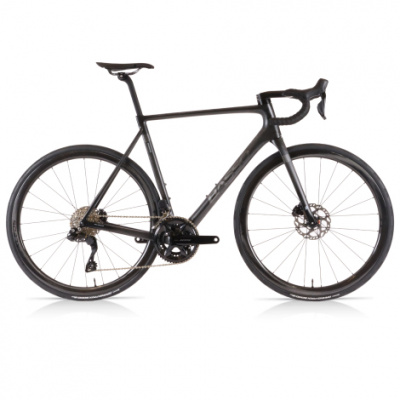
Basso road bikes occupy a corner of the market where Italian carbon frame construction and genuine racing pedigree still carry real weight. While plenty of brands have shifted production east, Basso continues to hand-build its premium carbon frames in Vicenza - and you can feel the difference in how considered every detail is, from the resin application to the paintwork. The lineup covers a proper spread: the Diamante SV for riders who want aerodynamic performance at the sharp end; the standard Diamante as a lightweight climber and all-rounder; the Astra for endurance and all-road use with wider tyre clearance; and the Venta as the way into Basso's carbon ecosystem without the flagship price tag. Whether you're looking for a complete build or want to spec your own, we've got you covered - browse the full builds below, or head over to our dedicated Basso Frames page if you're starting from scratch. Want to go further off-road? Basso's gravel bikes are worth a look too.
Prices and availability can change quickly. Delivery charges are not always included in listed prices.
Final price, stock status and delivery terms are set by retailer. We may receive a commission on purchases made.
Decoding the Basso Road Lineup
Basso keeps things focused. There are four road models worth knowing, and each has a clear purpose rather than blurring into one another.
The Diamante SV - Super Veloce - is the aero race machine. Deep tube profiles, an integrated cockpit, and a geometry that puts you low and forward. If you're chasing podiums or just want to go fast on a flat sportive, this is the one. It's Basso's answer to bikes like the Colnago V4Rs of this world: purposeful, uncompromising, and quick.
The standard Diamante steps back from full aero mode and leans into lightweight climbing performance. The carbon layup is optimised for stiffness-to-weight rather than drag reduction, which makes it the better choice if your rides involve sustained ascents rather than flat-out sprints. Think Torayca high modulus carbon doing the work it does best. It's also a touch more practical day-to-day, with 32mm tyre clearance that takes some of the edge off rough road surfaces.
The Astra is where Basso has moved most noticeably with the times. It's an endurance and all-road disc brake road bike with up to 35mm clearance - enough to run a proper winter tyre or something more robust for long-distance riding. The geometry is more forgiving than the Diamante, with a higher stack that suits riders who spend five or six hours in the saddle rather than racing crits. If the Bianchi Infinito range resonates with you, the Astra sits in similar territory.
The Venta is the entry point. It's still a carbon frame - Basso doesn't do aluminium - but the construction and spec are pitched at riders coming up from other brands or buying their first serious road bike. The ride feel is recognisably Basso: precise, composed, and Italian in character. Don't dismiss it as a stepping stone; it punches well for the money.
One thing to note: if you're eyeing the Palta, that's Basso's gravel offering and lives on a separate page. The models here are purely tarmac and light all-road.
What Basso's Engineering Actually Does
Basso's proprietary tech isn't marketing window dressing. Each system solves a specific problem, and it's worth understanding what you're actually getting.
The 3B Clamp System Gen 2 is the headline piece. On the surface it looks like a clean integrated seatpost clamp - and aesthetically it is - but the engineering detail is the rubber gusset built into the clamp interface. That gusset damps the micro-vibrations that travel up the seatpost from road imperfections, acting almost like a tuned absorber for high-frequency chatter. It's a subtle but meaningful addition for anyone doing long days on patchy roads, and it's the kind of thing you notice after three hours rather than three minutes.
The Paradigma Integration System handles cable routing through the stem and headset in a way that keeps the front end genuinely clean. Fully integrated cables aren't new, but Basso's execution routes everything internally from the bars through to the frame without awkward external loops or tight bend radii that can compromise shift feel. There's an aero benefit too - though for most UK riders the bigger win is protection from road salt and grime getting into exposed outers over a winter's riding.
Underpinning both systems is Basso's use of Torayca high modulus carbon, laid up in their own Italian facility. In-house manufacturing means Basso controls the fibre orientation and resin application directly, rather than relying on a third-party factory to interpret a spec sheet. The result is consistent frame-to-frame quality and the kind of ride character that's deliberate rather than accidental. If you're pairing a new build with aftermarket kit, their own Basso stems and handlebars are designed to work with the Paradigma system and keep that integration intact.
Compared to something from Cinelli, the approach is more conservative and engineering-led rather than design-led - which suits riders who want their bike to work reliably rather than look dramatic.
Running a Basso on British Roads
Italian race geometry and British B-roads don't always get along. Here's what's worth knowing before you buy.
The tyre clearance situation has improved significantly. Modern Bassos - particularly the Astra with its 35mm limit - handle the kind of broken tarmac you find on a typical Welsh valley road or across the North Yorkshire Moors without drama. Even the Diamante's 32mm clearance means you can run a 30mm tyre with some room, which transforms the ride quality on chip-and-tar surfaces compared to a traditional 25mm race setup. If you're coming from an older race bike, this alone will feel like a revelation.
Integrated cable routing through the Paradigma system is genuinely useful in wet UK winters. Exposed cable outers corrode faster than you'd expect when they're picking up road salt on every commute or club run from October to March. Fully routed cables stay cleaner for longer. The trade-off is that servicing takes more time - bleeding brakes or replacing cables requires more dismantling than on a traditionally routed bike. Factor that into your maintenance schedule.
Geometry is the bit that catches people out. Basso's race geometry - especially on the Diamante and Diamante SV - follows Italian tradition: a touch longer in the reach and lower in the stack than many equivalent German or Taiwanese-made competitors. That's great if you ride in an aggressive position, but if you're used to the more upright fit of a British sportive bike, check your reach and stack numbers carefully against your current bike before ordering. Sizing up isn't always the answer; a shorter stem via a Basso-compatible setup might be the cleaner fix.
One more practical note: integrated headsets on any bike require proactive bearing maintenance in wet conditions. Muddy water works its way in faster than you'd think. A few minutes with a rag and some fresh grease every few months keeps things running smoothly and avoids the grinding sensation that tells you the damage is already done.
Basso Road Bikes FAQs
Are Basso bikes actually made in Italy?
Yes. Basso hand-builds its premium carbon frames in their own facility in Vicenza, Italy. That means direct control over the carbon layup, resin work, and finishing - not a spec sheet sent to a contract factory. It's one of the genuine differentiators at this price point, and the consistency in frame quality reflects it.
What is the maximum tyre clearance on Basso road bikes?
The Astra accepts up to 35mm tyres, which gives you real flexibility for rough roads or longer endurance rides. The Diamante and Diamante SV clear up to 32mm, which still allows a proper all-season tyre. Clearance varies by frame size, so check the geometry chart for your specific size before ordering wider rubber.
What is the difference between the Basso Astra and Diamante?
The Diamante is Basso's race-oriented frame - stiffer, lighter, more aggressive geometry, built for speed. The Astra is the endurance and all-road option: slightly higher stack, more relaxed reach, and wider tyre clearance for longer days in the saddle. If you're racing or chasing PRs, the Diamante. If you're touring sportives or riding varied surfaces, the Astra makes more sense.