
Assos Leg Warmers
Assos leg warmers are what stand between you and cutting a ride short when October decides to behave like February. Pair them with your existing summer bib shorts and you've effectively bought yourself another two or three months of riding without rebuilding your kit drawer from scratch. That's a genuinely useful proposition for anyone logging miles through a British off-season.
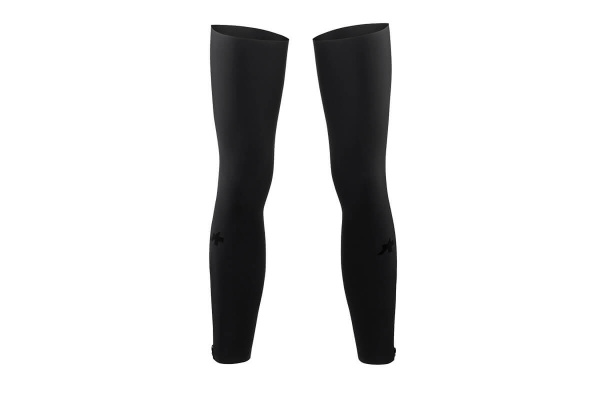
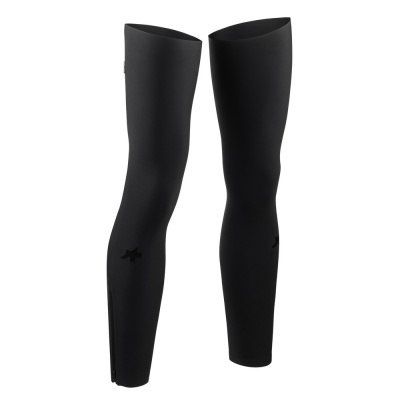
What separates Assos from a generic pair of warmers is the engineering detail. The proprietary RX EVO fabric balances thermal insulation against breathability, so you're not cooking on the climb then freezing on the descent. An ECO water-repellent DWR treatment sheds road spray and light drizzle - both constants on UK winter roads - without adding bulk. The anatomical, left/right-specific cut follows the natural geometry of each leg, and raw-cut hems sit flush against the skin with no ridge to dig in. Bunching behind the knee during the pedal stroke? Assos has designed that problem out entirely. The silicone grippers hold position across long efforts without creeping down. Whether you're grinding through a damp Pennine base mile or rolling out on a crisp spring morning in the Chilterns, these warmers integrate with your kit rather than fighting it.
Prices and availability can change quickly. Delivery charges are not always included in listed prices.
Final price, stock status and delivery terms are set by retailer. We may receive a commission on purchases made.
Fabric Tech and Weather Performance: The RX EVO Advantage
The RX EVO fabric is the core reason Assos leg warmers perform differently to mid-market options. It's a dual-weight knit that traps warmth close to the skin while allowing moisture vapour to escape outward - meaning hard efforts don't turn the inside of the warmer into a damp, clammy mess. On a lumpy ride with repeated short climbs and fast descents, that breathability matters more than raw insulation rating. You stay regulated rather than swinging between sweating and shivering.
For milder days and shoulder-season riding, the lighter RX EVO Light variant reduces weight and packs down small enough to stuff into a rear jersey pocket before a descent. That packability is genuinely useful in the UK, where conditions can shift inside a single ride. The heavier constructions in the winter range sacrifice some of that packability for denser protection against wind and cold.
The DWR treatment is worth understanding properly. It's an ECO water-repellent finish applied to the outer face of the fabric that causes water to bead and roll off rather than soak through. Road spray from a wet wheel, a five-minute drizzle on the descent - both handled. What it won't do is replace a waterproof leg covering in sustained heavy rain, so calibrate your expectations accordingly. The DWR also requires a little maintenance to stay effective: wash cold or at 30 degrees and the coating holds up well over many cycles. The trade-off with DWR-treated fabrics is that fabric softeners degrade the finish quickly, so skip them entirely.
Understanding the Assos Range and How the Fit Works
Assos uses a ClimaCode system to categorise their apparel by temperature range, and the leg warmer lineup follows the same logic. Spring Fall models are built around lighter RX EVO constructions - high breathability, quick-drying, genuinely packable. They're the ones you grab when the forecast shows 8 - 14°C and you're not sure whether you'll need them for the full ride. Winter models step up to OSMOS Heavy fabrics and denser knits that prioritise insulation and wind resistance for genuinely cold days, typically sub-8°C. The trade-off is that winter models are less packable and will feel stifling if the temperature climbs mid-ride.
Choosing between the two is straightforward once you know your typical riding window. If most of your autumn and spring riding sits in that mild-but-not-cold bracket, Spring Fall is the more versatile buy. If you're a committed year-round rider grinding through January and February in the Peak District or on Scottish roads, the winter construction earns its place. Some riders own both - the Spring Fall model covers roughly eight months of the UK calendar.
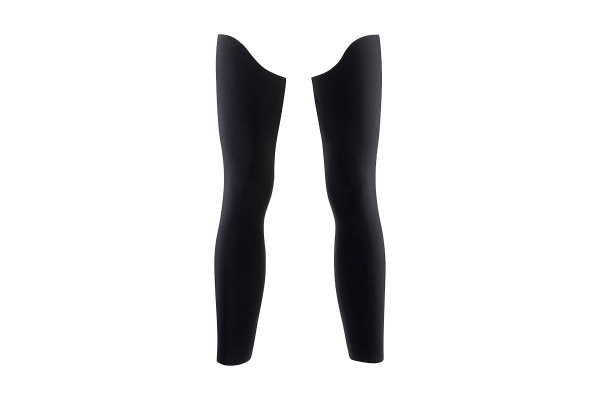
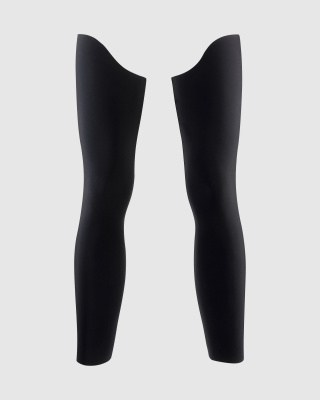
The left/right-specific anatomical fit is one of Assos's more distinctive design choices. Each warmer is cut with a curve that mirrors the natural angle of the corresponding leg, which keeps the fabric tracking correctly through the pedal stroke rather than rotating or bunching behind the knee. It's a detail that sounds marginal until you've worn a poorly cut warmer on a long ride and spent the last hour hitching it back into position. Check the L and R markings before pulling them on - it takes two seconds and makes a meaningful difference.
The raw-cut hems at the top and bottom of the warmer eliminate the thick rolled edge you find on cheaper products. The result is a smooth transition against the skin and no pressure ridge under the bib short gripper. At the top, silicone grippers hold the warmer in place without gripping so hard they leave marks - Assos has tuned the hold to be secure without being constrictive.
If full leg coverage is more than your conditions require, Assos knee warmers offer targeted joint protection for milder days without the added warmth of full-length coverage. Alternatively, if you're comparing across brands, Castelli leg warmers and Rapha leg warmers occupy a similar performance bracket and are worth a look if you want to compare fit and fabric approach before deciding.
Layering These Into a UK Riding System
Leg warmers work best as part of a coherent lower-body layering strategy rather than as a standalone fix. The combination most UK riders settle on for autumn and winter riding is Assos bib shorts as the base, leg warmers over the top (tucked under the bib gripper - more on that below), and Assos overshoes covering the foot and ankle. That combination handles most of what a UK winter can throw at you without resorting to a full bib tight. The modular approach also means you can shed a layer mid-ride if the temperature rises, which a one-piece bib tight won't let you do.
For really cold days, an Assos base layer underneath your shorts adds meaningful core warmth without bulk. The leg warmer then handles everything from mid-thigh to ankle. It's a practical system that most British winter riders end up converging on through experience.
On care: wash at 30°C with a dedicated activewear detergent and air dry flat. Tumble drying degrades both the elastane in the fabric and the DWR coating. The 30°C wash is the single most important habit for keeping the fabric performing correctly season after season. Avoid fabric softener - it coats the fibres and kills moisture-wicking performance. Do that consistently and these warmers will outlast several seasons of regular use.
One practical note: if you're considering Assos arm warmers alongside leg warmers, the same care rules apply and the ClimaCode sizing maps across consistently, which makes matching your kit straightforward.
Assos Leg Warmers FAQs
Do leg warmers go under or over bib shorts?
Always under. Pull the leg warmer on first, then pull your bib shorts over the top so the silicone gripper at the thigh sits on the outside of the warmer. This locks the warmer in place through the pedal stroke and creates a smooth, seamless transition rather than a ridge that catches on the chamois.
How do I choose between Assos Spring Fall and Winter leg warmers?
Spring Fall models use lighter RX EVO fabric - breathable, packable, right for roughly 8 - 14°C riding. Winter models use denser OSMOS Heavy constructions for sub-8°C conditions where wind resistance and insulation take priority over packability. If you ride through most of the UK calendar, Spring Fall covers the majority of it; winter models are for committed cold-weather miles.
Are Assos leg warmers left and right specific?
Yes. Each warmer has an anatomical cut shaped for its specific leg, marked clearly with an L or R. Getting them on the correct leg keeps the curved seam tracking behind the knee properly through the pedal stroke. It's a two-second check that prevents a lot of unnecessary discomfort on longer rides.