
Ashmei Bib Tights
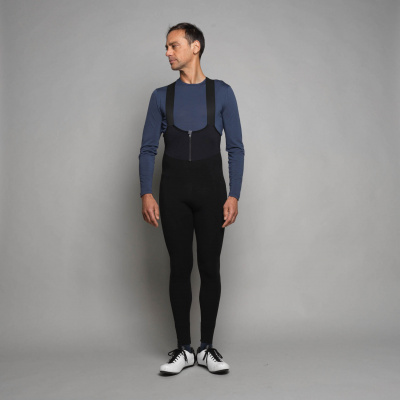
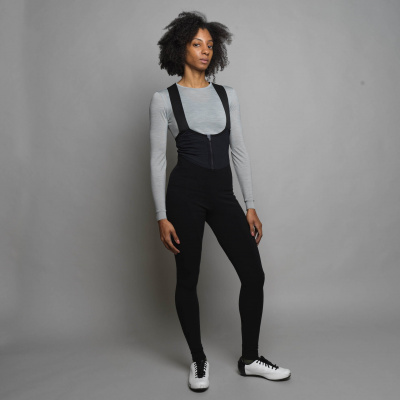
When the lanes turn grey and the temperature drops through the floor, ashmei bib tights are built to keep you riding. At the core of the range sits ashmei's bespoke Merino wool blend - a fabric choice that does something synthetic-only tights simply can't: regulate your temperature across wildly different efforts. Grinding up a humid Welsh climb in November, you're not overheating. Punching into a freezing headwind on a Lincolnshire flat, you're not bonking from the cold. That versatility is the whole point.
The Merino blend works alongside strategic windproof panels and a DWR coating to handle what UK winters actually throw at you - road spray from a wet B-road, biting crosswinds on exposed moorland, and that damp chill that settles in on long descents. It's a considered combination rather than a marketing checklist.
A compressive, articulated cut keeps the fabric where it should be across the full pedalling stroke, while the high-density chamois is shaped for endurance rather than an hour's spin. These are tights for riders who don't stop when the calendar says they should. If that's you, ashmei's winter bib tights deserve a serious look.
Prices and availability can change quickly. Delivery charges are not always included in listed prices.
Final price, stock status and delivery terms are set by retailer. We may receive a commission on purchases made.
Fabric Tech and Weather Performance: The Merino Advantage
The foundation of ashmei's winter bib tights is a bespoke Merino-synthetic blend, and the blend ratio matters more than most brands let on. The Merino component handles thermal insulation and breathability - wool fibres trap air to retain warmth but allow moisture vapour to pass through, so you're not sitting in a damp, clammy layer by the top of a climb. The synthetic fibres bring the structural side: four-way stretch so the tights move with you rather than against you, and enough durability to survive regular saddle contact and washing cycles without pilling or bagging out.
DWR (Durable Water Repellent) treatment is applied across the fabric surface to bead off road spray and light drizzle - the kind of persistent British damp that soaks through untreated tights within twenty minutes. It won't replace a waterproof overgarment in a proper downpour, but for the typical grey, drizzly UK winter ride it keeps the outer fabric from becoming a cold, wet compress against your legs. Worth knowing: DWR effectiveness degrades with washing, so refreshing it periodically with a low-heat tumble or a spray-on reproofer keeps the performance honest.
The windproof panels sit on the leading edges - thighs and knees - which are the surfaces taking the full force of a headwind on the drops. On a steep descent in the Peak District or a long exposed drag across the Fens, windchill at those contact points can drop the perceived temperature sharply. Targeted wind-blocking there, rather than an all-over membrane, lets the rest of the tight breathe properly on the climbs. It's a more thoughtful solution than wrapping yourself in full waterproof neoprene and hoping for the best. If you're weighing alternatives, Castelli bib tights and MAAP bib tights both take a broadly similar approach to panel placement, though ashmei's Merino integration gives it a distinct feel in variable conditions.
Fit, Chamois, and What the Range Covers
ashmei cuts for performance. The fit is compressive rather than relaxed - snug through the thigh, close at the knee, with a bib construction that holds the chamois in exactly the right place across a four-hour ride. That precision matters because fabric movement is what causes saddle sores. A tight that shifts and bunches over distance becomes an endurance problem as much as a comfort one.
The high-density foam chamois is shaped for long hours in the saddle rather than optimised purely for aggressive road positioning. The density means it doesn't compress flat after ninety minutes the way cheaper pads do - you get consistent support across the full duration of the ride. Placement is centred for a road and endurance gravel position, so it works best if your saddle height and fore-aft are dialled in properly. Worth checking that before blaming the chamois.
ashmei's sizing runs true, with a compressive performance fit as the baseline. If you're between sizes or prefer a bit more room through the torso bib section, go up. The leg panels will still sit correctly; the bib just won't feel quite as locked-in. If your winter riding sits at the milder end - autumn sportives, dry-day commutes - or you'd rather piece together your own leg coverage, have a look at ashmei bib shorts as a starting point and add leg warmers when the temperature drops further.
dhb bib tights offer a softer price point if budget is the primary constraint, but the Merino blend and construction quality in ashmei's range are meaningfully different at close range.
Layering Up and Keeping Them Right
The tights do serious work on their own, but they function best as part of a system. On genuinely cold days - sub-five degrees with wind - pair them with an ashmei Merino base layer to manage moisture from the skin outward, then an ashmei softshell jacket on top. That combination handles most of what a UK winter produces without locking you into a setup that's unrideable if the weather shifts mid-ride. Merino base layers earn their place here because they don't stink after a couple of hours the way synthetics can - relevant if you're stopping for coffee halfway.
An ashmei Merino jersey mid-layer is worth considering if you're covering big miles in genuinely freezing conditions - it bridges the gap between base and shell without adding bulk that fights your movement on the bike.
On washing: Merino is less fragile than its reputation suggests, but it does need a bit of care. Wash at 30°C on a gentle cycle with a non-biological detergent. Avoid fabric softener completely - it clogs the Merino fibres and strips the DWR coating in one go, which is a double hit you don't want. Never tumble dry. Lay them flat to dry naturally; hanging can stretch the bib straps out of shape over time. Treat the DWR with a spray-on reproofer every few months depending on how often you're washing them.
Ashmei Bib Tights FAQs
Are ashmei bib tights true to size?
Generally, yes. The fit is compressive by design, so they feel snug rather than roomy - that's intentional, not a sizing error. If you're between sizes or want a bit more comfort through the bib torso section, size up. The leg panels will still sit correctly and the chamois placement won't be affected.
How should I wash ashmei Merino bib tights?
Use a cool, gentle machine cycle at 30°C with a non-biological detergent. Skip the fabric softener entirely - it clogs Merino fibres and degrades the DWR coating. Never tumble dry; lay them flat to air dry. Refresh the DWR treatment periodically with a spray-on reproofer to maintain water resistance over time.
Are ashmei bib tights warm enough for deep winter?
Yes, for the bulk of UK winter riding. The Merino wool blend provides genuine thermal insulation, the windproof panels on the leading edges deal with windchill on descents, and the DWR coating handles road spray and drizzle. In genuinely arctic conditions - single-digit temperatures with a hard wind - layer a Merino base layer underneath and you're well covered.