
Apollo Folding Bikes
Apollo folding bikes sit at the practical end of the commuter market - no-nonsense, affordable, and genuinely useful for anyone hopping between cycling and public transport. If your morning involves a stretch of pedalling followed by a cramped Thameslink carriage, these bikes are worth a serious look. The folding mechanism centres on a quick-release mid-frame latch that clips shut firmly and releases without fuss, so you're not wrestling with the bike on a platform while the doors are beeping.
The 20-inch wheels strike a reasonable balance: small enough to fold into a compact footprint for a hallway or under a desk, but large enough to roll over city tarmac without feeling like you're on a toy. Shimano Tourney gearing handles the basics reliably, and the overall package - alloy or hi-ten steel frame depending on the model - is built to take commuter punishment rather than impress on specs alone.
Apollo won't trouble Brompton in a design showroom, but that's not the point. These are bikes for riders who want to get from A to B without spending a fortune or fussing over a lock. Practical, storable, and priced for real people. That's the offer.
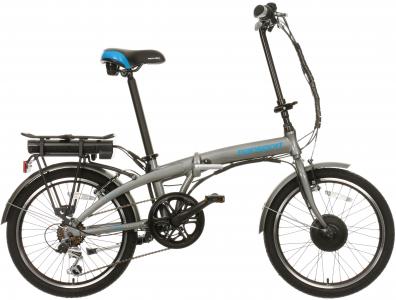
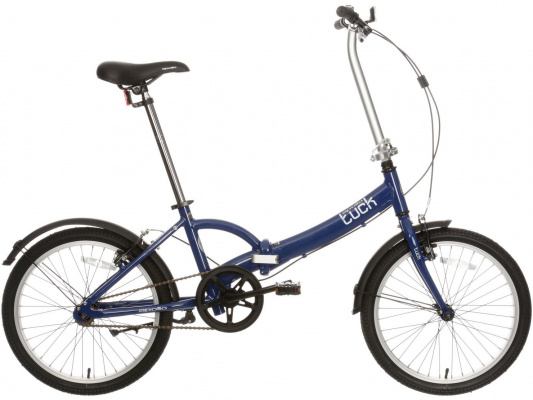

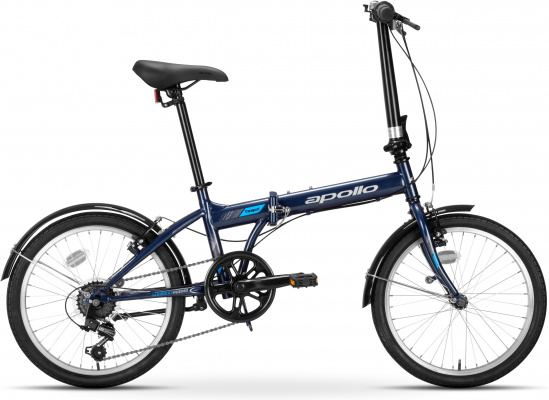
Prices and availability can change quickly. Delivery charges are not always included in listed prices.
Final price, stock status and delivery terms are set by retailer. We may receive a commission on purchases made.
Decoding the Apollo Folding Bike Lineup
Apollo's folding range is deliberately tight - a few models rather than an overwhelming grid, each aimed at a clear type of rider. The Apollo Tuck is the entry point: a hi-ten steel frame, single or low-step geometry, V-brakes, and a straightforward folding action. It's heavier than alloy alternatives, but hi-ten steel is forgiving of the odd knock and cheaper to replace if something goes wrong. For a first folding bike or an occasional-use commuter, the Tuck does the job without any drama.
Step up to the Apollo Transit and the kit list grows meaningfully. Integrated pannier racks and mudguards come fitted as standard - not bolted on as an afterthought - which matters when you're commuting in November and don't want a wet stripe up your back. The Transit suits riders who use the bike daily and want it ready to go without buying extras. If you're comparing across the market, Carrera folding bikes and Btwin folding bikes occupy similar price ground and are worth checking alongside Apollo if you want a direct comparison before buying.
If you're thinking about electric assistance for longer commutes, Apollo's folding range doesn't cover that ground - head to the Apollo e-bikes category for that, where the motor and battery specs are laid out properly.
What Apollo's Tech Actually Does
Apollo's engineering approach is straightforward: keep the mechanism simple, keep the cost down, keep it working. The mid-frame quick-release latch is the core of the fold - one lever, a clean pivot, and the front half of the bike swings back against the rear. It's not as refined as the multi-step fold on a Brompton, but it's far easier to learn and less likely to confuse you on a busy platform.
The telescopic folding handlebar stem drops the bars down once the frame is hinged, reducing the folded height so the bike actually fits into standard UK train luggage racks - the ones on GWR and Northern services that are barely wide enough for a large suitcase. Combined with a collapsible seat post, the folded package is genuinely compact rather than just technically smaller.
The 20-inch wheel choice is a deliberate trade-off. Smaller wheels fold tighter but roll poorly on anything rougher than smooth tarmac and feel twitchy at speed. Larger wheels are more comfortable but defeat the purpose of folding. Twenty inches sits in a workable middle ground - enough rolling momentum to feel stable on city streets, small enough to fold without the bike becoming unwieldy. On hi-ten steel models like the Tuck, the frame material adds weight but absorbs road buzz better than a budget alloy - useful on the kind of worn city tarmac you find around most UK town centres. Alloy-framed options trim a kilogram or so off the total, which you'll notice on station stairs.
Daily Reality: Using an Apollo Folder in the UK
Let's be straight about the weight. Most Apollo folding bikes land between 14kg and 16kg depending on spec. That's manageable for a short carry across a platform, but if your commute involves multiple flights of stairs and no lift - think a lot of older Tube stations or any Northern Rail interchange - you'll feel it. Fold the bike, tuck it under your arm or grab the frame, and keep the carry short. It's worth checking your specific station's layout before you commit.
V-brakes are perfectly adequate for flat city commuting and stop well in dry conditions. In wet weather - which is most of autumn and winter in the UK - they take a moment longer to bite, especially if the rims are dirty. Keep the brake pads free of embedded grit and wipe the rim surfaces down periodically. It takes two minutes and makes a real difference to stopping confidence on greasy roads.
The main frame hinge is the part that most people ignore until it starts to creak or stiffen. A small amount of grease or light oil on the pivot point every few weeks keeps it moving cleanly. British damp gets into everything, and a seized hinge on a folding bike is genuinely inconvenient. While you're at it, check the quick-release latch engages with a positive click each time - a loose latch is both annoying and unsafe.
For daily urban use, a decent Apollo saddle upgrade makes a meaningful difference if the stock one feels firm after a few weeks - commuter distances add up. Fitting an Apollo bell is a legal requirement on new bikes sold in the UK and practically useful on shared paths and pavements. If anything on the bike wears out sooner than expected, Apollo spare parts are stocked by most major UK retailers, which keeps running costs low. For riders who find the folding format suits them but want a more upright, less foldable option for weekend use, Apollo hybrid bikes are the logical next step.
Related searches:
Apollo Folding Bikes FAQs
Are Apollo folding bikes any good?
For budget commuters and occasional riders, yes - they're a solid choice. You get reliable Shimano gearing, a functional folding mechanism, and a frame that handles city use without complaint. They're not premium bikes, but they do exactly what most urban riders need them to do, particularly for multi-modal commuting.
How much does an Apollo folding bike weigh?
Expect 14kg to 16kg depending on the model. The Apollo Tuck uses hi-ten steel, which sits at the heavier end; alloy-framed options come in a little lighter. If you're carrying the bike up stairs regularly, that difference matters - check the specific model weight before buying.
How do you fold an Apollo folding bike?
Release the quick-release latch on the main frame tube and fold the front half back against the rear. Drop the seat post to its lowest position, then fold the telescopic handlebar stem downwards. The whole process takes under a minute once you've done it a few times.