
100 Percent Full Face Helmets
100% Full Face Helmets have become a fixture on World Cup downhill courses and bike park car parks alike - and it's not hard to see why. The range spans from the featherlight 100% Trajecta to the carbon-shelled 100% Aircraft 2, covering everything from punishing enduro stages to full-send gravity runs. Every lid in the lineup carries ASTM downhill certification, so you're not trading protection for weight savings.
At the core of the tech is the Smartshock Rotational Protective System - suspended elastomers that absorb and redirect rotational forces rather than just cushioning a direct blow. Pair that with multi-density EPS foam and you've got impact management that works across a range of crash types, not just the clean head-on hits that simpler foams are tuned for.
Ventilation matters more than people admit. If you're grinding up a Welsh hillside before dropping back down, a helmet that traps heat is a genuine problem - not just a discomfort. The 100% range addresses this head-on with up to 24 ports channelling airflow through the shell, keeping things bearable on the climbs without compromising the structure around your chin bar. Seamless goggle integration rounds out a package that's been thought through from the inside out.
Prices and availability can change quickly. Delivery charges are not always included in listed prices.
Final price, stock status and delivery terms are set by retailer. We may receive a commission on purchases made.
Shell Tech & Ventilation Performance
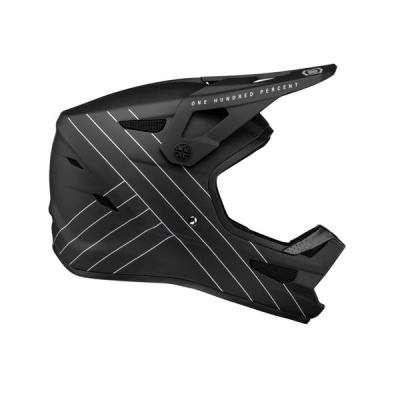
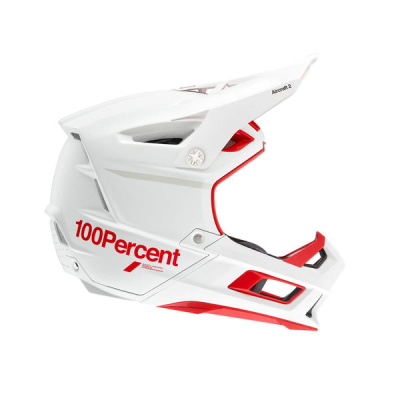
The difference between the Aircraft 2 and the Trajecta starts at the shell. The 100% Aircraft 2 carbon uses a carbon fibre and Kevlar composite construction - genuinely stiff, genuinely light, and the kind of material you'd expect on a World Cup bike rather than a mass-market lid. The Trajecta takes a different route: an in-moulded polycarbonate shell with multi-density EPS foam injected directly into it, which keeps the weight competitive while maintaining a robust outer skin.
Both helmets rely on the Smartshock Rotational Protective System to do the heavy lifting on impact management. The suspended elastomers inside the shell flex and compress independently of the outer structure, absorbing rotational energy - the kind generated in an oblique impact, which is statistically the most common crash scenario in trail and DH riding. It's not a gimmick. The mechanism is visible, replaceable, and designed to work across a wider range of impact angles than conventional EPS alone.
Ventilation is where the range genuinely earns its reputation. Up to 24 ports is a lot - on a humid summer day in the Tweed Valley, grinding up a fire road before a technical descent, that airflow difference is tangible. Channels run front to back through the EPS foam, pulling heat away from the crown and exhausting it at the rear. The chin bar integration keeps structural integrity intact without closing off lower airflow, so even at low speed you're not cooking. For riders who mix long uphill slogs with short, committed descents, this balance matters.
Understanding the 100% Fit & Range
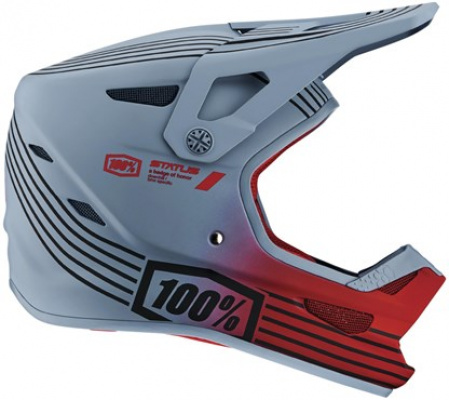
The lineup breaks down cleanly into three tiers. The 100% Aircraft 2 sits at the top - carbon shell, premium weight, aimed at dedicated DH and freeride riders who want the lightest certified option and aren't counting pennies. The 100% Trajecta is the one most enduro riders end up with: ASTM downhill certified, genuinely ventilated, and light enough that wearing it on a long liaison stage doesn't feel like a punishment. The Status fills the entry-level DH slot - heavier, polycarbonate throughout, but carrying the same certification and a sensible starting point if you're new to full-face riding.
Fit across the range follows an intermediate oval profile, which suits the majority of European head shapes without feeling like it's squeezing your temples. Sizing runs true, but if you land between two sizes, go up and use the interchangeable cheek pads to close the gap. This isn't a workaround - it's the intended system, and it works well. Swap in thicker pads and the helmet firms up around your face without changing how the crown sits. Check the circumference of your head at the widest point and cross-reference with the brand's size chart; the 100 percent downhill helmet sizing guide is worth reading before you buy.
How do 100% full face helmets fit in practice? The intermediate oval shape means they sit well on most heads without pressure points, but riders with a notably round or narrow head shape should try before committing if possible. The D-ring buckle system on the chin strap is fiddly for the first few uses but beds in quickly and holds more securely than many magnetic or ratchet alternatives once you're used to it.
If you're after open-face trail protection or something for younger riders, these full-face lids aren't the right fit - take a look at the broader 100% Helmets range or the 100% Kids Helmets collection instead.
Goggle Integration & Care for UK Riding
100% designed these helmets to work with their own goggles, and it shows. The brow of the shell and the goggle frame sit flush with no gap - no cold air funnelling into your eyes on a fast descent, and no condensation trap forming when you stop. Pair either helmet with the 100% Armega or Racecraft goggles and the fit is precise enough that the outriggers click in without forcing. That matters on a damp autumn ride in the Peak District where fogging is a constant irritant with a poorly fitted setup.
UK riding is hard on kit. Muddy winter laps, repeated wet-dry cycles, the kind of sweat that builds up on a long enduro stage - your helmet liner takes a battering. The washable, moisture-wicking anti-microbial liners in the 100% range are removable without tools: unclip the cheek pads and crown liner, drop them in warm water with a mild non-bio detergent, and let them air dry away from any heat source. Do this every few rides rather than waiting until the smell becomes obvious. Letting damp foam sit compressed inside the shell for weeks accelerates degradation and, frankly, it gets grim faster than you'd expect.
The EPS foam itself doesn't respond well to prolonged UV exposure or cleaning chemicals, so avoid leaving the helmet on a sun-baked car roof and keep solvent-based products away from the shell. A wipe down with a damp cloth handles most exterior mud. If the Smartshock elastomers or cheek pads wear out, 100% sells replacement parts - worth knowing before you assume a scuffed lid needs replacing entirely.
For the full kit picture, the 100% body armour range pairs logically with either helmet for bike park days, and their gloves and jerseys follow the same design language if you're building a cohesive setup. If you're weighing up alternatives, Fox full face helmets and Troy Lee Designs full face helmets occupy a similar price bracket and are worth comparing on fit and ventilation before you decide.
100 Percent Full Face Helmets FAQs
How do 100% full face helmets fit?
They follow an intermediate oval profile and generally fit true to size. If you're between sizes, go up and use the included interchangeable cheek pads to dial in a snug, wobble-free fit - that's the intended method, not a compromise. Measure your head circumference at its widest point and check the brand's size chart before ordering.
Is the 100% Trajecta suitable for downhill racing?
Yes. The Trajecta is fully ASTM downhill certified despite its enduro-focused weight and ventilation. The chin bar integration and multi-density EPS meet the same impact standards as dedicated DH lids, so it's a legitimate choice for bike park laps and race day - not just trail riding.
How do I wash the pads in my 100% full face helmet?
Unclip the cheek pads and crown liner - no tools needed - then hand wash in warm water with a mild non-bio detergent. Air dry completely away from direct heat before refitting. Do it every few rides if you're riding in wet or muddy conditions; damp foam that sits compressed degrades faster than people expect.