
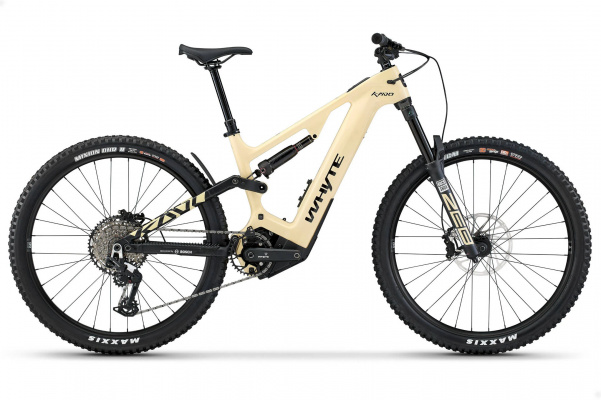
Whyte Kado RS
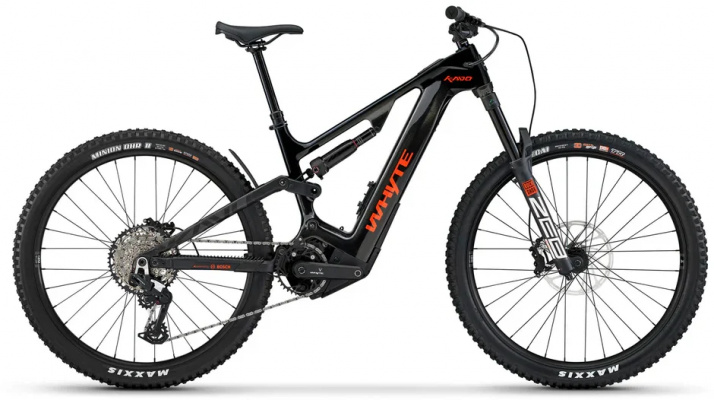
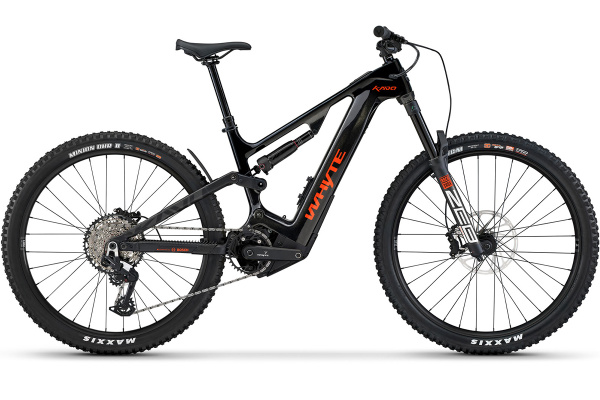
A carbon-mainframe, full-power trail and enduro eMTB with a removable 800Wh Bosch battery, 160mm front and 150mm rear travel, and mechanical SRAM T-Type shifting at a £5,199.00 UK RRP.
- Carbon mainframe, aluminium rear: Premium front triangle at the mid-range Kado price
- Removable 800Wh Bosch battery: Long assisted rides with easy indoor charging and battery swaps
- Up to 120Nm and 750W peak: Strong, controllable support on steep technical climbs
- 160mm ZEB fork and 150mm rear: Confident control on rough trail-centre descents
- 220mm front and 200mm rear rotors: Powerful four-piston braking for a heavy eMTB
- High and low geometry settings: Tune pedal clearance or descending stance to your riding
Whyte Kado RS Deals

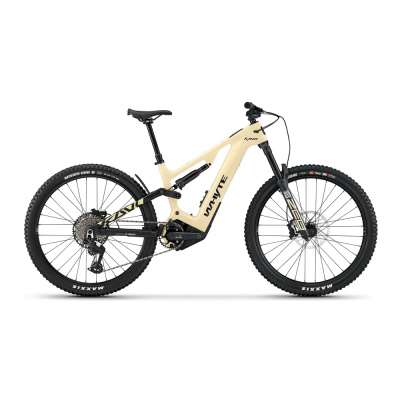
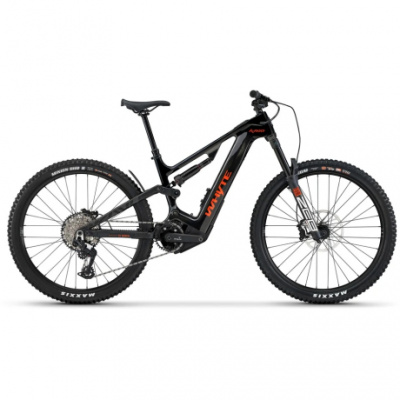
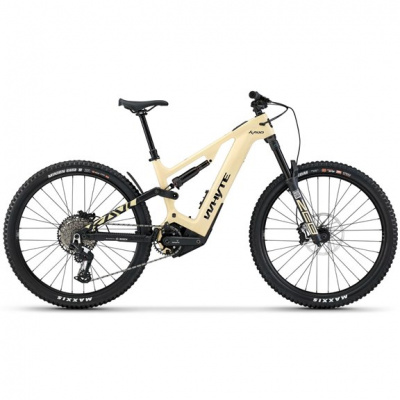
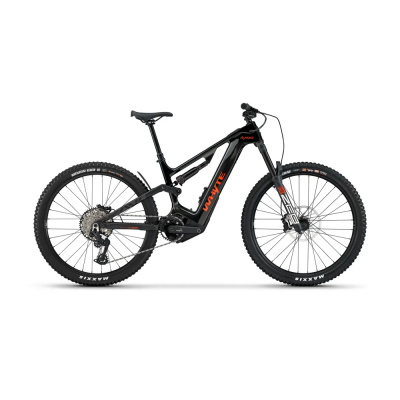
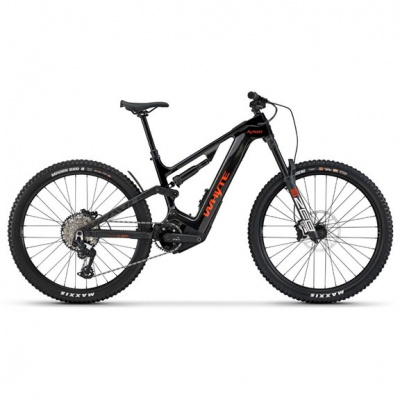
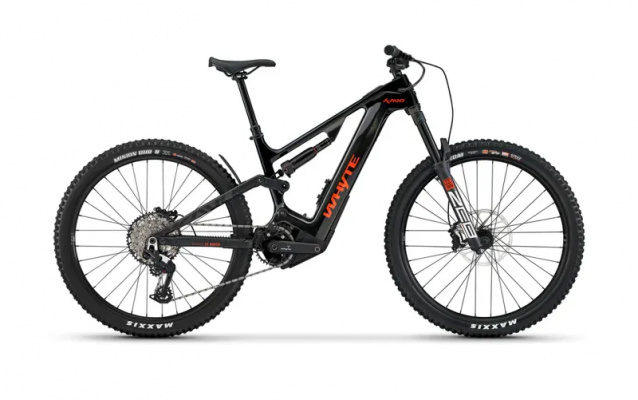
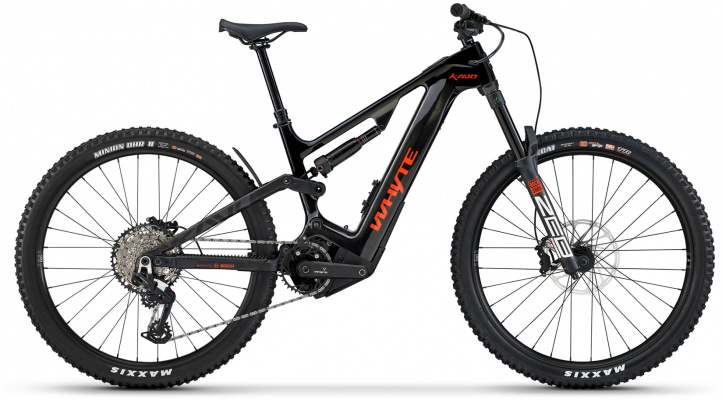
Prices and availability can change quickly. Delivery charges are not always included in listed prices.
Final price, stock status and delivery terms are set by retailer. We may receive a commission on purchases made.
Bikesy's Verdict
The Whyte Kado RS is a confident, well-rounded full-power eMTB that concentrates its value in a carbon mainframe, strong Bosch assistance and a removable 800Wh battery. It suits progressing intermediate through experienced trail and enduro riders who want to self-shuttle descents, climb technical trails and ride through wet UK conditions. The 160mm ZEB fork, four-piston brakes and reinforced Maxxis tyres inspire descending confidence, while the high/low geometry and optional range extender add useful flexibility. The main trade-off is the 25.4kg weight and a planted chassis that favours stability over playful line changes. Riders who want a lighter, more agile bike or electronic shifting should look elsewhere, but for long assisted days on rough trails, this is a satisfying package.
Pros
- Carbon mainframe at the middle of the Kado range, with the same V1 geometry and Bosch platform as pricier builds
- Removable 800Wh battery supports long assisted days and easy indoor charging or battery swaps
- Current Bosch software allows up to 120Nm and 750W peak for strong technical climbing
- Heavy-duty descending package: 160mm ZEB fork, four-piston brakes and reinforced Maxxis tyres
- High and low geometry positions plus optional PowerMore and mixed-wheel conversion give useful setup flexibility
Cons
- 25.4kg claimed weight makes stairs, lifting and motor-off riding noticeably harder
- Planted, composed chassis trades playful agility for high-speed stability
- Select-level suspension and mechanical shifting mean the value is in the frame and motor, not top-tier components
Compare live Whyte Kado RS prices and retailer offers
Whyte lists the current UK Kado RS at £5,199.00. Bikesy gathers current retailer offers so you can compare the same frame, drivetrain, colour and Bosch system without getting distracted by year labels. Retailer titles may say 2025, 2026 or 2027, but those are listing descriptions rather than proof of a new Kado generation. The current UK model comes in Monarch black and gloss dune tan yellow, with identical equipment.
What is the latest Whyte Kado RS?
The current Kado RS is the carbon-mainframe, aluminium-rear model in Whyte's Kado V1 platform. It sits above the all-aluminium Kado S and below the full-carbon Kado RSX and Kado Works. Whyte does not attach an official model year to the current catalogue entry, so the useful label is the current UK build. The two colourways share the same mechanical SRAM T-Type drivetrain, 800Wh battery and suspension package.
The launch-era Kado RS used the same frame platform but appeared at £5,999.00 with earlier Bosch software descriptions. That is a pricing and software state rather than a new frame generation, so a used or discounted launch build is still a Kado V1 RS, not an older generation. When comparing offers, match the frame, drivetrain, colour and Bosch system rather than trusting a title.
Kado frame, Bosch system and likely ride character
The RS pairs a uni-directional carbon mainframe with a 6061 aluminium rear triangle and a four-bar Horst-link layout. The Shape.it Link V2 gives two geometry positions: the high setting keeps the bottom bracket at 350mm, while the low setting drops it to 342mm and slackens the head angle from 65 degrees to 64.4 degrees. That is a setup choice for pedal clearance or a lower, calmer descending stance. It is separate from the mixed-wheel conversion, which needs an aftermarket Whyte link and a 27.5in rear wheel rather than a wheel-only swap.
The Bosch Performance Line CX Smart System is the heart of the bike. With the current approved software it supports up to 120Nm of torque and 750W peak, while the nominal rating remains 250W. In practice that means strong, controllable assistance for steep or repeated technical climbs, with the eBike Flow app for mode tuning. The removable PowerTube 800Wh battery slides out through the lower frame opening for indoor charging, cold-weather storage or a spare-battery swap. Whyte also states the platform can use compatible 600Wh and 800Wh batteries.
The Loam Wolf's test team described the Kado RS as impressively well-rounded and strong on climbs. The geometry and specification point to a planted, composed chassis that corners confidently and holds its line at speed: a 450mm chainstay across all sizes, dual 29in wheels and a steep effective seat angle for seated climbing. The trade-off is that it asks for more rider effort when you want to hop, flick and change direction constantly.
The current RS uses mechanical SRAM T-Type shifting with an Eagle 70 shifter and Eagle 90 rear derailleur, paired with a 10-52T cassette and 36T chainring. There is no derailleur battery to charge and the system is straightforward for most workshops to service. The 155mm cranks and size-specific dropper travel help fit: Small gets 150mm, Medium 170mm, and Large and Extra Large get 200mm.
For descending, the RS carries a 160mm RockShox ZEB Select fork, a 150mm Deluxe Select R shock, four-piston SRAM DB8 Stealth brakes and 220mm front with 200mm rear rotors. The Maxxis Assegai front tyre uses MaxxGrip, while the Minion DHR II rear uses a DoubleDown casing and MaxxTerra compound. That is a heavy-duty, wet-weather-friendly package rather than a lightweight cross-country setup.
The complete bike is claimed at 25.4kg in Medium without pedals and with inner tubes. That weight is normal for a full-power eMTB with an 800Wh battery, but it is noticeable on stairs, when lifting onto a rack and when the assistance is switched off. The 10-52T cassette and motor support make climbs straightforward, yet this is not a bike that feels quick or efficient without assistance.
UK durability, servicing and ownership
Whyte developed the Kado around wet UK riding. The frame uses protective details, conventional sealed cable ports and marine-greased pivots, which helps keep water and grit away from key areas. That does not remove maintenance. After a muddy ride, clean around the drivetrain, battery opening, pivots and suspension seals, and keep an eye on brake pads and rotors through gritty winter conditions.
The removable battery is genuinely useful for indoor charging when the bike lives in a shed or garage, and it makes lifting the bike a little easier if you take it out first. The bike remains heavy either way, so plan ground-level storage where possible and check your vehicle rack's load limit. The 120kg system weight limit covers bike, rider and carried equipment, and towing or child carriers are not approved.
Warranty wording is worth confirming at purchase. The Kado manual states a frame term extendable to four years through timely registration, lifetime main-pivot-bearing cover for the original owner, and two years for the Bosch system. Register promptly and keep the written terms supplied by the selling Whyte dealer.
The lower mount accepts the supplied Fidlock bottle base or an optional Bosch PowerMore 250Wh range extender. The extender, holder and 50mm connection cable are separate purchases, but they create a combined 1050Wh capacity for longer days. If you want Bosch's integrated ConnectModule alarm and tracking, note that the custom motor cover is not compatible, so you would need a separate tracker or security arrangement.
What changed from the launch-era Kado RS?
The launch-era Kado RS used the same Kado V1 platform but appeared at £5,999.00 with earlier Bosch software descriptions. The current UK build is listed at £5,199.00 and carries the current approved software state. A separate frame generation has not been established, so this is a pricing and software update rather than a new chassis. When comparing offers, the frame, drivetrain, colour and Bosch system matter more than any retailer year label.
Key Features & Benefits
- Carbon mainframe with aluminium rear triangle: Sits between the all-alloy Kado S and full-carbon Kado RSX, giving a premium mainframe at a mid-range price. The rear triangle stays aluminium and the complete bike is still 25.4kg in Medium.
- Removable Bosch PowerTube 800Wh battery: Supports long assisted rides and can be removed for indoor charging, cold-weather storage or battery swaps. The optional PowerMore 250Wh extender, holder and cable are separate purchases but create 1050Wh combined capacity.
- Bosch Performance Line CX with current software: Up to 120Nm and 750W peak with the current approved software state, while nominal power remains 250W. Strong assistance for steep climbs, with eBike Flow app mode tuning; maximum settings use more battery.
- 160mm ZEB fork, 150mm rear and reinforced Maxxis tyres: A robust package for rough trails, sustained descending and wet or loose ground. The tough tyres and suspension add weight and rolling resistance on gentle routes.
- High and low Shape.it geometry positions: Choose greater pedal clearance or a lower, slacker descending stance. This is separate from the mixed-wheel conversion, which requires an aftermarket link and 27.5in rear wheel.
Geometry
Current Kado V1 platform geometry
| Size | Wheel size | Reach (mm) | Stack (mm) | Effective top tube (mm) | Head angle high (deg) | Head angle low (deg) | Seat angle (deg) | Chainstay (mm) | Wheelbase (mm) | Standover (mm) | BB height high (mm) | BB height low (mm) | Seat tube length (mm) | Head tube length (mm) |
|---|---|---|---|---|---|---|---|---|---|---|---|---|---|---|
| Small | 29in front and rear | 436 | 623 | 569 | 65 | 64.4 | 77.9 | 450 | 1213.1 | 765 | 350 | 342 | 395 | 104 |
| Medium | 29in front and rear | 460 | 634.4 | 598 | 65 | 64.4 | 77.8 | 450 | 1243.2 | 768 | 350 | 342 | 420 | 116 |
| Large | 29in front and rear | 485 | 646.2 | 626 | 65 | 64.4 | 77.7 | 450 | 1273.7 | 771 | 350 | 342 | 445 | 129 |
| Extra Large | 29in front and rear | 510 | 659.8 | 656 | 65 | 64.4 | 77.5 | 450 | 1305 | 774 | 350 | 342 | 470 | 144 |
Whyte Kado RS alternatives
The Specialized Turbo Levo 4 Alloy is the cheaper full-power route at £4,799.00. It offers a larger 840Wh battery, 105Nm and 810W peak, and mixed wheels as standard. The Kado RS costs £400 more at £5,199.00 but adds a carbon mainframe, dual 29in stock wheels, an Eagle 90 rear derailleur and up to 120Nm. Choose the Levo for the bigger battery and lower price; choose the Kado for the carbon front triangle and planted dual-29in format.
The Specialized Turbo Levo 4 Comp Alloy at £5,499.00 also uses an Eagle 90 rear derailleur, so the meaningful differences are frame material, battery capacity, motor output and suspension. It has an aluminium frame, 840Wh battery, 105Nm and 810W peak, plus a Fox 36 Rhythm fork and GENIE shock. The Kado is £300 less, uses a carbon mainframe, 800Wh battery and up to 120Nm, with a RockShox ZEB Select and Deluxe Select R. Price and frame material favour the Kado; battery capacity and rear-shock sophistication favour the Specialized.
Independent ride impressions
The Loam Wolf's editorial test team rode the Kado RS launch build and described it as impressively well-rounded, with strong climbing ability and the composure to suit most trail riding short of the most aggressive trails. That matches the Kado platform's intended use as a full-power trail and enduro eMTB rather than a gravity-only machine.
BikeRadar's Alex Evans tested the higher-spec Kado RSX on the same Kado platform and found it notably planted, composed and predictable at speed, with strong cornering and technical-climbing ability. The same review noted that the chassis asks for more rider effort when making playful line changes. Those chassis impressions are useful for the RS, but the RSX uses a full-carbon frame and different suspension components, so damping feel will not be identical.
Full Specification
Shared Kado V1 platform
| Area | Specification |
|---|---|
| Frame | Uni-directional carbon-fibre mainframe with 6061 aluminium rear triangle, internal cable routing, tapered head tube and four-bar Horst-link suspension |
| Suspension travel | 160mm front, 150mm rear, 230 x 57.5mm shock |
| Geometry adjustment | Shape.it Link V2 high and low positions; head angle 65 degrees high, 64.4 degrees low; bottom bracket height 350mm high, 342mm low |
| Wheels | 29in front and rear as supplied; 29 x 2.5in front tyre, 29 x 2.4in rear tyre |
| Axles and routing | 15mm x 110mm Boost fork, 12mm x 148mm Boost rear, tapered headset, internal cable routing |
| Battery compatibility | Removable 800Wh PowerTube fitted; compatible 600Wh and 800Wh batteries supported |
| Accessory mount | Lower mount accepts supplied Fidlock bottle base or optional Bosch PowerMore 250Wh range extender |
| Mixed-wheel conversion | Requires aftermarket Whyte Shape.it link plus 27.5in rear wheel and tyre; not a wheel-only swap |
| System weight limit | 120kg total for bike, rider and carried equipment |
Current UK Kado RS build specification
| Component | Specification |
|---|---|
| Frame | Carbon-fibre mainframe, 6061 aluminium rear triangle, Shape.it Link V2, Boost rear axle |
| Fork | RockShox ZEB Select, 160mm travel, 44mm offset, DebonAir spring, Charger RC damper |
| Shock | RockShox Deluxe Select R, 230 x 57.5mm, rebound-adjustable, custom tuned for Whyte; RS shock orientation is fixed |
| Shifter | SRAM Eagle 70, 12-speed mechanical |
| Rear derailleur | SRAM Eagle 90 T-Type mechanical, 12-speed |
| Crankset | Whyte 155mm ISIS crank arms, SRAM 36T T-Type chainring |
| Bottom bracket | Not applicable to the Bosch drive system |
| Cassette | SRAM XS-1270 T-Type, 10-52T |
| Chain | SRAM Eagle 70 |
| Brakes | SRAM DB8 Stealth four-piston hydraulic, 220mm front rotor, 200mm rear rotor |
| Wheels | WTB ST Tough front rim, WTB HTZ Trail rear rim, both 30mm internal; alloy sealed-bearing 32-hole front hub, alloy e-bike-specific sealed-bearing 12mm x 148mm Boost four-pawl rear hub, 14g stainless black spokes with brass nipples. Check the fitted front-hub axle standard before ordering a replacement front wheel. |
| Tyres | Maxxis Assegai 29 x 2.5in EXO+ MaxxGrip front, Maxxis Minion DHR II 29 x 2.4in DoubleDown MaxxTerra rear |
| Handlebar | Whyte 6061 alloy, 30mm rise, 800mm wide |
| Stem | Whyte, 35mm |
| Headset | Token sealed-bearing tapered headset |
| Grips | Whyte Enduro lock-on |
| Seatpost | TranzX +RAD 34.9mm dropper with size-specific travel |
| Saddle | Whyte Custom |
| Pedals | Fibre-reinforced composite platform pedals |
| Motor | Fifth-generation Bosch Performance Line CX Smart System, up to 120Nm and 750W peak with current approved software, 250W nominal |
| Battery | Bosch PowerTube 800Wh removable |
| Charger | Supplied 4A charger, approximately 6.9 hours for a full charge |
| Controls | Top-tube System Controller, Mini Remote, eBike Flow app connectivity |
| Claimed weight | 25.4kg in size Medium, without pedals and with inner tubes |
| RRP | £5,199.00 |
Size-specific components
| Size | Dropper travel | Seatpost insertion depth |
|---|---|---|
| Small | 150mm | 225mm |
| Medium | 170mm | 250mm |
| Large | 200mm | 275mm |
| Extra Large | 200mm | 300mm |