
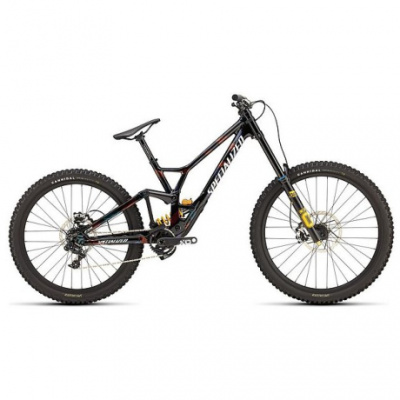
Specialized Demo Race
Pin it through rock gardens and tight corners with World Cup suspension, mullet agility, and flip-chip tunability.
- Öhlins DH38 fork and TTX22 coil: World Cup damping control
- Horst pivot flip chip: tune chainstay, BB height, wheel size
- Mullet setup (29" front, 27.5" rear): rollover meets agility
- FSR rearward axle path: less hang-up, more speed
- M5 alloy frame: proven durability for bike-park punishment
- SRAM X01 DH drivetrain: race-ready 7-speed precision
Specialized Demo Race Deals
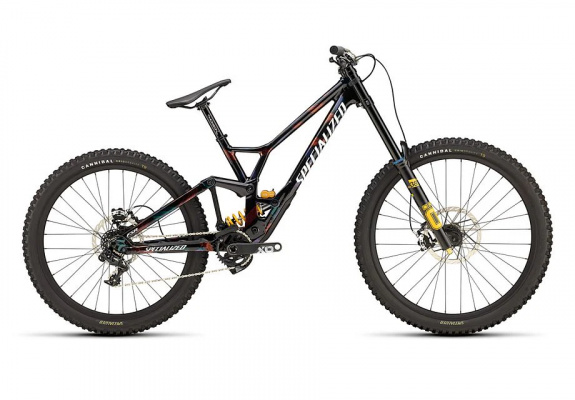
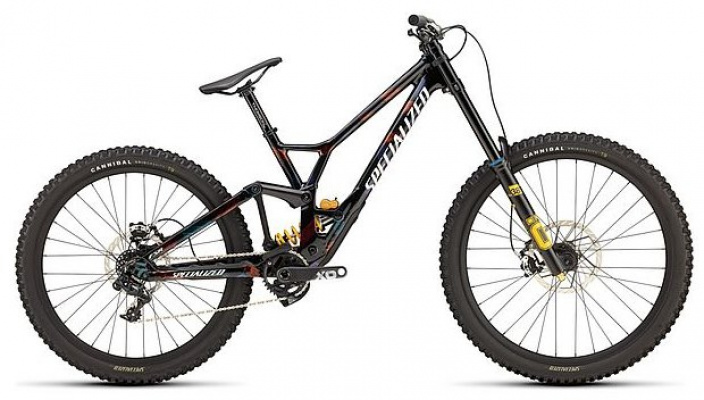

Prices and availability can change quickly. Delivery charges are not always included in listed prices.
Final price, stock status and delivery terms are set by retailer. We may receive a commission on purchases made.
Bikesy's Verdict
The Specialized Demo Race is a gravity weapon that rewards commitment and punishes hesitation. It's built for riders who live to descend, who want a bike that stays composed when the trail gets steep and rough, and who value tunability and performance over weight savings. The Öhlins suspension is world-class, the mullet wheel setup strikes a brilliant balance between rollover and agility, and the adjustable flip chip lets you tailor the bike to your riding style or the day's track. It's not the lightest downhill bike you'll find, but it's one of the most confidence-inspiring, and that's worth more than a few hundred grams when you're pinning it through a rock garden at race pace.
If your weekends revolve around bike parks, shuttle runs, or downhill racing, the Demo Race will let you ride faster and with more control than you thought possible. It's a bike that grows with you as your skills improve, a machine that encourages you to push limits and experiment with line choice rather than just survive the descent. For riders who want a proven, durable platform with World Cup-level performance and the flexibility to adapt to different tracks and conditions, the Demo Race is an outstanding choice.
Pros
- Exceptional downhill speed and control on steep, rough terrain
- Öhlins DH38 fork and TTX22 coil shock deliver World Cup-level damping and adjustability
- Horst pivot flip chip allows tuning of chainstay length, BB height, and rear wheel size
- Mullet setup (29" front, 27.5" rear) balances rollover with agility
- Durable M5 alloy frame with integrated protection and sealed cartridge bearings
Cons
- Heavier than carbon competitors if you're chasing marginal gains or shuttle-free riding
- Overkill for trail riding or enduro stages with significant climbing
- Premium Öhlins suspension requires regular servicing when ridden hard
About the Specialized Demo Race
The Demo Race is Specialized's gravity weapon for riders who live to point downhill and pin it. Built around an M5 alloy frame with FSR suspension and a rearward axle path, it's engineered to carry speed through the roughest sections where lesser bikes start to chatter and scrub momentum. The mullet wheel setup - 29-inch front, 27.5-inch rear - delivers the rollover you need to blast through rock gardens whilst keeping the back end nimble enough to snap through tight switchbacks and pump transitions. It's a bike that rewards commitment, the sort of machine that feels planted at speed yet responsive enough to change line mid-descent when the trail throws you a surprise.
Öhlins suspension front and rear sets the tone: the DH38 M.1 fork and TTX22M.2 coil shock bring World Cup-level damping to every run, with external high- and low-speed compression and rebound adjustments so you can dial the bike to match your weight, riding style, and the day's track conditions. Paired with SRAM's X01 DH drivetrain - a 7-speed setup with a 10-24t cassette and 34t chainring - you've got the gearing range to pedal between stages or session a jump line without spinning out. The Horst pivot flip chip adds another layer of tunability: adjust chainstay length, bottom bracket height, and even swap between 27.5-inch and 29-inch rear wheels to suit the terrain or your mood. It's a bike that adapts, whether you're chasing podiums on a World Cup track or lapping the bike park until the lifts close.
At 16.8 kilograms for a size S4, the Demo Race isn't the lightest downhill bike you'll find, but that mass translates to stability and confidence when the trail gets gnarly. The M5 alloy frame shrugs off impacts, the sealed cartridge bearing pivots keep things smooth, and the integrated frame protection means you're not wincing every time a rock pings off the downtube. This is a bike built to take a beating and come back for more, lap after lap, season after season.
Specialized Demo Race geometry
The Demo Race's geometry is tailored for aggressive downhill riding, with a slack head angle and long wheelbase that plant the front wheel and inspire confidence at speed. Reach figures are generous across the S2, S3, and S4 sizes, putting you in a centred, balanced position that lets you weight the front tyre through compressions without feeling stretched or cramped. The longer front centre calms the bike's behaviour on steep, fast sections, whilst the relatively short rear end - especially in the tighter flip-chip setting - keeps the bike playful enough to manual over roots and pump through rollers.
Bottom bracket height is adjustable via the flip chip, so you can raise it for pedally tracks where rock strikes are a concern or drop it for maximum stability on wide-open race runs. The mixed-wheel setup shifts the bike's balance point slightly rearward compared to a full 29er, which sharpens cornering response and makes it easier to weight the rear tyre for traction on loose, off-camber turns. Stack is tall enough to keep you upright and in control, but not so lofty that you feel perched; you're over the bike, not behind it, which matters when you need to move your weight quickly to navigate tight, technical sections.
Chainstay length varies with the flip-chip position and rear wheel size, but in the standard mullet configuration it strikes a balance between stability and manoeuvrability. The bike feels planted when you're charging straight, yet it'll flick into corners and pop off lips without feeling sluggish. It's a geometry package that suits riders who want to go fast but still have the option to play, to session features and experiment with line choice rather than just point and pray.
Component choices & upgrades
The stock build on the Demo Race is already race-ready, with Öhlins suspension, SRAM X01 DH shifting, and Code RSC brakes with 220mm front and 200mm rear rotors. For most riders - even those racing at a high level - this spec will do everything you ask of it. The Öhlins fork and shock offer a level of adjustability and performance that's hard to fault, and the X01 DH drivetrain is bombproof and precise. The Roval Traverse Gravity alloy wheels with DT Swiss 350 hubs are strong, reliable, and easy to service, whilst the Butcher tyres in GRID GRAVITY casing with GRIPTON T9 compound provide excellent grip and durability.
That said, if you're chasing marginal gains or have specific preferences, there are a few areas where upgrades might make sense. Swapping to a carbon handlebar - like the Roval Traverse SL Carbon that comes on some builds - can shave a bit of weight and add a touch of vibration damping without sacrificing stiffness. If you're racing on tracks with long, rough sections, a carbon bar can reduce hand fatigue over the course of a run. Tyres are another area where personal preference and terrain dictate choice: the stock Butchers are excellent all-rounders, but if you're riding in particularly loose or muddy conditions, experimenting with different tread patterns or compounds can fine-tune grip and rolling speed.
Brakes are a matter of feel and power preference. The Code RSC calipers are strong and consistent, but some riders prefer the lever feel and modulation of Magura MT7s or SRAM's newer Maven Ultimate brakes (which appear on some 2025 builds). If you're a heavier rider or frequently ride steep, sustained descents, upgrading to a larger front rotor - say, 223mm - can improve heat management and reduce fade. Beyond that, the stock build is so well-sorted that most riders will be better served spending time dialling in suspension settings and tyre pressures than chasing component upgrades. The Demo Race rewards setup and rider skill more than it does exotic parts.
Where the Specialized Demo Race excels
The Demo Race is outstanding at one thing above all: going downhill fast. It's built for bike parks, lift-accessed descents, and downhill racing, where the terrain is steep, rough, and technical, and the goal is to carry as much speed as possible from top to bottom. The bike's FSR suspension with its rearward axle path excels at absorbing square-edged hits and keeping the rear wheel tracking smoothly over roots, rocks, and braking bumps. The Öhlins dampers provide a level of control and tunability that lets you push harder into compressions and land jumps with confidence, knowing the bike will settle quickly and stay composed.
The mullet wheel setup shines on tracks that mix high-speed sections with tight, technical corners. The 29-inch front wheel rolls over obstacles and holds a line through rough sections, whilst the 27.5-inch rear wheel makes it easier to snap the bike sideways, pump through transitions, and manual over features. It's a combination that feels intuitive and versatile, letting you adapt your riding style to the terrain without feeling like you're fighting the bike's geometry. The adjustable flip chip adds another dimension: you can tune the bike for different tracks or riding styles, raising the bottom bracket for pedally sections or dropping it for maximum stability on race day.
Where the Demo Race is less ideal is anywhere that involves sustained pedalling or climbing. It's a downhill bike, not a trail bike, and whilst the updated FSR design with increased anti-squat improves pedalling efficiency compared to older models, you're still hauling 16.8 kilograms up any incline. If your riding involves long fire-road climbs or enduro-style stages with significant uphill sections, you'll want a lighter, more pedal-friendly bike. The Demo Race is also overkill for mellow trail riding or cross-country loops; it's built for gravity, and that's where it belongs. But if your weekends revolve around bike parks, shuttle runs, or downhill racing, this bike will let you ride faster and with more confidence than you thought possible.
Specialized Demo Race FAQs
What is the weight of the Specialized Demo Race?
The complete bike weighs approximately 16.8 kilograms for a size S4, with the frameset alone coming in at around 5.46 kilograms for a size S3. It's not the lightest downhill bike available, but the weight contributes to stability and durability, and most riders won't notice the extra mass once they're pointed downhill.
What kind of riding is the Specialized Demo Race best for?
The Demo Race is purpose-built for downhill racing, bike park laps, and lift-accessed descents. It excels on steep, technical terrain where speed and control are paramount. If your riding involves sustained climbs or long pedalling sections, you'll want a different bike; this one is all about the descent.
Can the Specialized Demo Race be used for enduro riding?
Technically, yes, but it's not ideal. The Demo Race is heavy and has 200mm of travel front and rear, which makes it sluggish on climbs and overkill for most enduro stages. If you're racing enduro or riding mixed terrain with significant uphill sections, you'd be better served by a lighter, more versatile bike with 160-180mm of travel.
What are the advantages of the mixed-wheel (mullet) setup on the Demo Race?
The 29-inch front wheel provides excellent rollover and stability, helping you carry speed through rough sections and hold a line on fast, open trails. The 27.5-inch rear wheel makes the bike more agile in tight corners and easier to manual and pump through transitions. It's a setup that combines the best of both wheel sizes, offering versatility across a wide range of terrain and riding styles.
How does the Öhlins suspension perform on the Demo Race?
The Öhlins DH38 M.1 fork and TTX22M.2 coil shock are World Cup-level components that offer exceptional control, adjustability, and consistency. The external high- and low-speed compression and rebound adjustments let you fine-tune the suspension to match your weight, riding style, and the day's track conditions. Riders consistently praise the Öhlins dampers for their predictable, confidence-inspiring performance, especially at high speeds and on rough terrain.
What are the maintenance requirements for the Demo Race?
Like any downhill bike, the Demo Race requires regular maintenance to keep it running smoothly. Suspension service intervals depend on how hard you ride, but expect to service the fork and shock at least once a season, more often if you're racing or riding frequently. The sealed cartridge bearing pivots are low-maintenance but should be checked periodically for play or roughness. Keep the drivetrain clean and lubricated, check brake pads and rotor wear regularly, and inspect the frame and components for damage after hard impacts.
Is the Specialized Demo Race suitable for beginners?
The Demo Race is a high-performance downhill bike designed for experienced riders who are comfortable on steep, technical terrain. Beginners would be better served by a more forgiving, versatile bike with less travel and a more upright geometry. That said, if you're committed to learning downhill riding and have access to a bike park or lift-accessed trails, the Demo Race will grow with you as your skills improve.
What is the warranty on a Specialized Demo Race?
Specialized typically offers a limited lifetime warranty on frames and a shorter warranty period (usually one to two years) on components, but specific terms vary by region and purchase date. Check with your local Specialized dealer or the Specialized website for the most current warranty information and registration requirements.
Key Features & Benefits
- Öhlins DH38 M.1 fork and TTX22M.2 coil shock: World Cup-proven damping with external high- and low-speed compression and rebound adjustments lets you dial the bike to your weight, style, and track conditions for maximum control and confidence at speed.
- Horst pivot flip chip with mullet wheel compatibility: Adjust chainstay length, bottom bracket height, and rear wheel size (27.5" or 29") to tune handling and stability for different tracks, riding styles, or personal preference.
- FSR suspension with rearward axle path: Reduces rear-wheel hang-up on square-edged impacts and braking bumps, keeping the bike tracking smoothly and maintaining speed through the roughest sections.
- SRAM X01 DH 7-speed drivetrain with 10-24t cassette: Race-ready shifting with a gearing range that covers pedalling between stages and spinning up jump lines without sacrificing durability or precision.
- M5 alloy frame with integrated protection and sealed cartridge bearings: Proven durability and low-maintenance reliability for bike-park punishment, season after season, without the cost or fragility of carbon.
Specialized Demo Race 2024, 2023 & 2021 differences
The 2024 model shares the same Öhlins DH38 M.1 fork and TTX22M.2 coil shock as the 2025 bike, along with the SRAM X01 DH drivetrain and Code RSC brakes with 220mm front and 200mm rear rotors. Component choices and frame design are largely unchanged, making the 2024 and 2025 models functionally identical for most riders.
The 2023 Demo Race also featured Öhlins suspension and the SRAM X01 DH drivetrain, though some builds came with Magura MT7 brakes instead of the Code RSCs. Frame geometry and the Horst pivot flip chip remained consistent, so the 2023 model offers similar performance and adjustability to the newer releases.
The 2021 model marked a more significant departure, with RockShox BoXXer Ultimate fork and Super Deluxe Ultimate DH Coil shock replacing the Öhlins components. The frame retained the Horst pivot flip chip for 27.5-inch or 29-inch rear wheel compatibility and arrived in a mullet setup, but the RockShox suspension offered a different damping character - still capable, but without the same level of external adjustability or World Cup pedigree as the Öhlins units. The 2021 bike also featured a Roval carbon handlebar on some builds, whereas later models moved to alloy or offered carbon as an option depending on spec level.
Alternatives to Consider
Within Specialized's gravity lineup, the Demo 29 offers a full 29-inch wheel setup for riders who prioritise maximum rollover and straight-line speed over the agility of the mullet configuration. It's a touch more stable at high speeds and suits wider, faster tracks where cornering precision is less critical. If you're after something more versatile, the Enduro Expert with 170mm travel front and rear is a capable climber that still handles bike-park laps, though it won't match the Demo Race's downhill composure or suspension performance.
Cross-brand, the Santa Cruz V10 is a direct competitor with a carbon frame option, VPP suspension, and a similarly aggressive geometry package; it's lighter and slightly more playful, though the Demo Race's Öhlins suspension and adjustable flip chip offer more tunability. The Commencal Supreme DH 29 Team brings a full 29-inch wheel setup and a reputation for value, with RockShox suspension and a robust alloy frame that's popular on the World Cup circuit. The Norco Aurum HSP uses a high single-pivot design that's known for its active suspension and traction, particularly on rough, off-camber sections, though it lacks the Demo Race's flip-chip adjustability. For riders who want a mullet setup with a different suspension feel, the Cube Two15 SL offers a carbon frame and a playful, poppy character that suits jump-heavy tracks, though it's less planted at high speeds than the Demo Race.
Reviews
Öhlins suspension transforms the Demo Race into a machine that eats rough terrain and spits out speed. The DH38 fork stays composed through rock gardens and braking bumps, tracking predictably even when you're pushing hard into compressions or landing jumps slightly off-line. Rebound damping is supple enough to let the wheel follow the ground, yet controlled enough that the bike never feels vague or wallowy. When you dial in the high- and low-speed compression settings to match your weight and the day's track, the fork becomes an extension of your intent - supportive in the mid-stroke, bottomless when you need it, and always ready to reset for the next hit.
Cornering feel is where the mullet setup earns its keep. The 29-inch front wheel holds a line through loose, off-camber sections, giving you the confidence to lean harder and carry more speed into turns. Meanwhile, the 27.5-inch rear wheel snaps sideways with less effort, letting you adjust your line mid-corner or pump through tight transitions without feeling like you're wrestling a long wheelbase. It's a combination that feels intuitive, rewarding riders who like to move around on the bike and experiment with different lines rather than just pointing and hoping.
Stability at speed is a standout trait. The long front centre and slack head angle plant the front wheel, so even when the trail gets steep and fast, the bike stays calm and predictable. You can let off the brakes earlier and trust the suspension to absorb whatever's coming, which translates to faster times and fewer sketchy moments. Because the FSR linkage keeps the rear wheel tracking smoothly, you're not fighting chatter or losing traction on rough sections; the bike just ploughs through and keeps accelerating.
Pedalling efficiency surprises for a downhill bike. The updated FSR design with increased anti-squat means you can pedal between stages or session a jump line without the suspension bobbing excessively. It's not a trail bike - you'll still feel every kilogram on a long fire-road climb - but for short pedalling sections or pumping through rollers, the Demo Race responds well enough that you're not constantly reaching for the brakes to manage speed.
Weight is noticeable when you're manhandling the bike onto a roof rack or hoisting it over a log, but once you're moving downhill, the mass becomes an asset. The bike feels planted and confident, absorbing impacts without deflecting or skipping, and the extra stability inspires you to push harder and ride faster. If you're chasing podiums or just trying to beat your personal best, the Demo Race gives you the tools to do it.
Full Specification
| Frame Material | M5 alloy |
| Suspension Design | FSR (Four-Bar Linkage) with Horst pivot flip chip |
| Front Suspension | Öhlins DH38 M.1 29, 200mm travel, 58mm offset |
| Rear Suspension | Öhlins TTX22M.2 Coil, 200mm travel, trunnion mount |
| Shifters | SRAM X01 DH, trigger, 7-speed |
| Rear Derailleur | SRAM X01 DH, 7-speed |
| Crankset | SRAM X01 DH, DUB, carbon, 165mm, 34T |
| Cassette | SRAM X01 DH, 7-speed, 10-24t |
| Chain | SRAM PC1130 with Powerlink, 11-speed |
| Brakes | SRAM Code RSC, 4-piston hydraulic disc |
| Brake Rotors | 220mm front, 200mm rear |
| Rims | Roval Traverse Gravity Alloy, 28mm internal width, 29" front / 27.5" rear |
| Rear Hub | DT Swiss 350, SRAM XD freehub, 12x148mm, 28h |
| Spokes | DT Swiss Competition, stainless steel, 14g |
| Front Tyre | Specialized Butcher BLCK DMND, GRID GRAVITY, GRIPTON T9, 2Bliss Ready, 29x2.3" |
| Rear Tyre | Specialized Butcher, GRID GRAVITY, GRIPTON T9, 27.5x2.3" |
| Handlebar | Roval Traverse SL Carbon, 800mm |
| Stem | Descendant 35mm Direct Mount |
| Grips | Deity Lockjaw |
| Seatpost | Thomson alloy, straight, 12-degree clamp |
| Saddle | Body Geometry Henge DH, hollow titanium rails, 130mm |
| Bottom Bracket | SRAM DUB, BSA threaded, 83mm shell |
| Rear Axle Spacing | 148mm Boost |
| Approximate Weight | 16.8kg (S4) |