
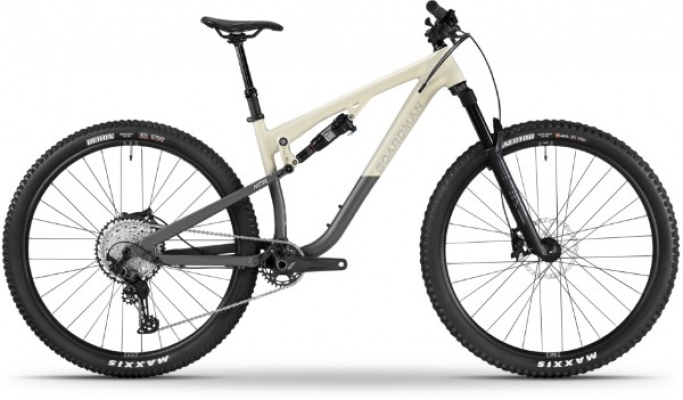
Boardman MTR 9.0
Balanced trail fun that descends with poise and climbs without complaint, all at a price that makes sense.
- 130mm four-bar Horst-link: supple bump feel, efficient pedalling
- RockShox Pike Select fork with Deluxe shock
- Shimano SLX 1×12 drivetrain, four-piston brakes
- Maxxis Dissector front, Rekon rear: UK-ready grip
- Progressive geometry: slack head angle, steep seat tube
- UDH hanger: simpler derailleur replacement
Boardman MTR 9.0 Deals

Prices and availability can change quickly. Delivery charges are not always included in listed prices.
Final price, stock status and delivery terms are set by retailer. We may receive a commission on purchases made.
Bikesy's Verdict
The Boardman MTR 9.0 is a bike that gets the fundamentals right and doesn't try to be something it's not. It's composed where it matters, efficient enough to get you to the top without complaint, and confident enough on the way down that you'll find yourself carrying more speed than you expected. The component package is smart - RockShox suspension that works, Shimano SLX bits that shift and stop reliably, and Maxxis rubber that grips when you need it. At around 15kg it's not a featherweight, but the ride quality you get in return makes that trade-off feel fair.
This is a bike for riders who want a versatile trail partner that handles UK conditions without fuss, who value composure and reliability over outright race pace, and who appreciate getting a well-sorted package without paying for high-end bling. If you're after a bike that does one thing brilliantly, look elsewhere. But if you want a machine that handles the full spectrum of trail riding with poise and won't punish your wallet or your patience, the MTR 9.0 is hard to fault.
Pros
- Superb RockShox Pike and Deluxe suspension for the money
- Reliable Shimano SLX 1×12 drivetrain and four-piston brakes
- Confident, composed handling on technical descents
- Well-chosen Maxxis Dissector/Rekon tyres for UK conditions
- Clean frame design with UDH hanger and internal routing
Cons
- Dropper post limited to 125mm on medium frames; taller riders may want more
- 15kg weight feels average if you're chasing KOMs or race pace
- Ride can feel slightly firmer than some rivals, though that aids composure
About the Boardman MTR 9.0
The Boardman MTR 9.0 sits in that sweet spot where trail capability meets sensible money. Built around 130mm of four-bar Horst-link travel front and rear, it's a bike that prioritises composure over outright aggression - think down-country manners rather than enduro bravado. The hydroformed X9 alloy frame is cleanly welded and internally routed, with the shock tucked under the top tube and driven by an inverted link that keeps the centre of gravity low and the ride feel planted. You're looking at a machine that's been tuned for UK trail conditions: rooty singletrack, wet rock, the occasional bike-park lap when you fancy it, and long backcountry loops where reliability trumps Instagram-ready spec.
Boardman has specced the MTR 9.0 with a confidence that shows they've done their homework. RockShox Pike Select forks and a Deluxe Ultimate rear shock deliver supple, supportive suspension that soaks up chatter without wallowing through compressions. Shimano's SLX 1×12 drivetrain shifts crisply across a 10 - 51T cassette, and the four-piston SLX brakes offer modulation that inspires trust when the trail tilts downward. Maxxis Dissector rubber up front and a Rekon out back strike a sensible balance between grip and rolling speed, while WTB's STi30 rims are tubeless-ready and wide enough to let those tyres breathe. At around 15kg it's not a featherweight, but neither is it a boat anchor - and the ride quality you get in return makes the trade-off feel fair.
This is a bike that rewards smooth inputs and rewards you with a ride that feels bigger than its travel numbers suggest. It's not trying to be a race weapon or a mini-DH sled; it's aiming to be the bike you reach for most weekends, the one that handles the commute to the trailhead without complaint and then gets properly stuck in once the dirt starts. If you're after a versatile trail partner that won't punish your wallet or your patience, the MTR 9.0 deserves a close look.
Boardman MTR 9.0 geometry
The MTR 9.0's geometry reflects Boardman's shift toward more progressive trail numbers without tipping into full enduro territory. The 65.5-degree head angle is slack enough to inspire confidence when the trail gets steep and technical, but not so laid-back that you'll struggle to thread tight switchbacks or keep the front wheel tracking on climbs. Paired with a 77.5-degree seat angle, you're positioned over the bottom bracket in a way that keeps your weight centred when you're grinding uphill - no more sliding forward on the saddle or feeling like you're fighting the bike's geometry.
Reach figures span 460mm in medium through to 500mm in extra-large, putting you in a posture that's neither cramped nor overly stretched. The cockpit feels roomy enough to move around when descending, but compact enough that you're not wrestling a barge through tight trees. Chainstays are a consistent 440mm across all sizes, short enough to keep the rear end playful and responsive without making the bike feel twitchy or prone to looping out on steep climbs. The wheelbase hovers around 1214mm, which translates to stability at speed and a planted feel through rough sections, though you'll notice it's not quite as flickable as a shorter-travel XC bike when you're trying to change direction in a hurry.
Bottom bracket drop is 33mm, a middle-ground figure that offers reasonable pedal clearance without sacrificing the low, stable feel that makes the bike so composed on descents. You'll occasionally clip a pedal on tight, rocky corners if you're not paying attention, but it's not a bike that punishes you for it. The overall package is one that prioritises confidence and control over outright agility - this is a geometry that lets you relax into the bike rather than constantly managing it.
Component choices & upgrades
The MTR 9.0 arrives with a component package that's already well sorted, and that's both a blessing and a mild limitation. RockShox Pike Select forks are a known quantity - supple off the top, supportive mid-stroke, and tuneable enough with volume spacers and air pressure to suit most riders. The Deluxe Ultimate rear shock is custom-tuned for the frame and offers lockout and rebound adjustment, plus DebonAir+ volume tunability if you want to fine-tune progression. Unless you're chasing the last few grams or need the extra adjustability of a Charger 3 damper, there's little reason to swap either unit.
Shimano's SLX 1×12 drivetrain is the sweet spot in the range - reliable, crisp, and tough enough to shrug off mud and abuse. The 10 - 51T cassette gives you a low enough gear for steep technical climbs and enough top-end for fire-road descents, while the four-piston SLX brakes deliver power and modulation that punches well above their price point. If you're a heavier rider or regularly tackle long, steep descents, you might consider swapping to XT or even Saint calipers for extra bite and heat management, but for most trail riding the stock setup is more than adequate.
Maxxis Dissector and Rekon tyres are a sensible pairing for UK conditions - grippy enough in the wet, fast-rolling enough that you won't hate the climbs. If you're riding particularly loose or muddy terrain, you might swap the rear Rekon for a DHR II or Aggressor for more bite, though you'll sacrifice some rolling speed. The WTB STi30 rims are tubeless-ready and wide enough to support those 2.4-inch casings properly; they're not the lightest hoops out there, but they're robust and unlikely to let you down. The dropper post is cable-actuated and offers 125mm travel on medium frames, 150mm on large and extra-large - adequate, though some riders on smaller frames might wish for more drop. A longer dropper is an easy upgrade if you find yourself wanting more saddle clearance on steep descents.
The cockpit is straightforward: a 780mm alloy bar with 15mm rise, a 45mm stem, and lock-on grips. If you prefer a wider bar or different rise, swapping is simple and inexpensive. The stock setup works well for most riders, but taller or shorter riders might tweak stem length to fine-tune reach and handling feel. The key takeaway is that the MTR 9.0 doesn't demand upgrades to be enjoyable - it's already a cohesive package. Upgrades should be driven by your specific needs or riding style, not by any glaring weaknesses in the stock build.
Where the Boardman MTR 9.0 excels
The MTR 9.0 is at its best on moderate to technical trail riding where composure and control matter more than outright speed. It's a bike that thrives on rooty, rocky singletrack, the kind of terrain where suspension sensitivity and stable geometry let you relax and focus on line choice rather than constantly managing the bike. Descents are where it really shines - the Pike fork tracks beautifully through rough sections, the rear end stays planted over repeated hits, and the slack head angle inspires confidence when the trail gets steep. You'll find yourself carrying more speed through technical sections than you might expect, not because the bike is aggressive, but because it's so composed that you trust it.
Climbing is efficient thanks to the steep seat angle and well-tuned suspension kinematics. The 10 - 51T cassette gives you gearing low enough for steep technical climbs, and the bike pedals without excessive bob or wallow. It's not a dedicated climbing machine - the 15kg weight means you'll feel it on long fire-road slogs or when chasing faster riders on smooth ascents - but it's more than capable of getting you to the top without complaint. The lockout on the rear shock is there if you want it, though the suspension platform is supportive enough that you might not bother.
Where the MTR 9.0 is less ideal is on flat-out race pace or ultra-smooth flow trails where lighter, snappier bikes will feel more responsive. It's also not the bike for full-on enduro or bike-park abuse - the 130mm travel and trail-oriented spec mean it'll handle the occasional park day, but it's not built to be hammered down black runs every weekend. If you're after a bike that does one thing brilliantly, look elsewhere. But if you want a versatile trail partner that handles the full spectrum of UK riding with poise and reliability, the MTR 9.0 is hard to fault.
Boardman MTR 9.0 FAQs
What is the latest model year for the Boardman MTR 9.0?
The most recent confirmed model year is 2025. The bike features refined geometry with a longer top tube and slacker head angle compared to earlier versions, and it's positioned more firmly in the down-country category with 130mm travel front and rear.
What kind of riding is the Boardman MTR 9.0 best suited for?
It's designed for all-round trail riding, from moderate singletrack to more technical descents, including the occasional bike-park lap and long backcountry rides. It's a versatile machine that handles UK trail conditions particularly well, offering a balance of climbing efficiency and descending confidence.
Is the Boardman MTR 9.0 good for climbing?
Yes, it climbs efficiently thanks to its steep 77.5-degree seat angle, supportive suspension, and wide-range 10 - 51T cassette. It's not a dedicated climbing bike - the 15kg weight means it won't fly up smooth fire roads - but it handles technical climbs and long ascents without complaint.
What are the key upgrades on the 2025 Boardman MTR 9.0?
The 2025 model features refined geometry with a longer top tube and slacker 65.5-degree head angle, positioning it more as a down-country bike. It retains 130mm travel front and rear, with RockShox Pike Select forks and Deluxe Ultimate shock, Shimano SLX 1×12 drivetrain, and Maxxis Dissector/Rekon tyres.
What is the maximum tyre clearance on the Boardman MTR 9.0?
The bike is fitted with 29×2.4-inch Maxxis tyres as standard, which suggests good clearance for modern trail rubber. Exact maximum clearance isn't specified, but you should have room for similar-width tyres with different tread patterns without issue.
Is the Boardman MTR 9.0 worth the price?
It offers excellent value, with a strong component package - RockShox Pike and Deluxe suspension, Shimano SLX drivetrain and four-piston brakes, and Maxxis tyres - at a price point that undercuts many competitors. If you're after a capable, reliable trail bike without paying for high-end bling, it's a smart choice.
What are the pros and cons of the Boardman MTR 9.0?
Pros include superb suspension performance, reliable Shimano SLX components, confident handling, and excellent value. Cons are the limited dropper travel on smaller sizes (125mm), average weight for the category, and a ride feel that's slightly firmer and less dynamic than some rivals - though that's partly what makes it so composed.
Key Features & Benefits
- 130mm Horst-link four-bar suspension with RockShox Pike and Deluxe: Supple bump absorption and planted rear-end feel on technical descents, with efficient pedalling on climbs
- Progressive geometry: 65.5° head angle, 77.5° seat angle: Confidence-inspiring stability on steep trails, with centred climbing position that keeps weight over the bottom bracket
- Shimano SLX 1×12 drivetrain with 10 - 51T cassette: Crisp, reliable shifting across a wide range, with gearing low enough for steep technical climbs
- Shimano SLX four-piston hydraulic brakes (203mm front, 180mm rear): Powerful, modulated stopping with excellent heat management for long descents
- Maxxis Dissector (front) and Rekon (rear) 29×2.4-inch tyres: Grippy in the wet, fast-rolling on climbs, and durable enough for UK trail abuse
Boardman MTR 9.0 2024 and 2021 differences
The 2024 model year likely carried over most of the 2025 specification, with the refined geometry - longer top tube, slacker 65.5-degree head angle, and 130mm travel front and rear - already in place. Component choices remained consistent: RockShox Pike Select and Deluxe Ultimate suspension, Shimano SLX 1×12 drivetrain, and Maxxis Dissector/Rekon tyres.
The 2021 MTR 9.0 featured a similar 6061 aluminium frame with 130mm travel front and rear, RockShox Pike Select fork, and Deluxe Ultimate RCT shock. However, it ran Maxxis Minion DHF front and DHR II rear tyres - a more aggressive pairing than the current Dissector/Rekon setup - and had a slightly different geometry with a 66-degree head angle and 75.5-degree seat angle. Weight was comparable at around 14.9 - 15.36kg depending on size. Earlier models (pre-2021) sometimes featured 140mm rear travel and 150mm forks, positioning them more as traditional trail bikes rather than the down-country focus of the current generation.
Alternatives to Consider
Within the Boardman range, the MTR 8.9 shares the same frame and geometry but steps down to a more budget-conscious component package - still capable, but you'll notice the difference in fork and drivetrain performance if you're pushing hard. If you're looking to step up, Boardman's higher-tier models aren't widely available, so you're more likely to be cross-shopping other brands.
The Calibre Bossnut is a natural comparison, offering similar travel and price point, though it leans more toward a traditional trail bike feel - a bit more bruiser, a bit less down-country finesse. The Vitus Mythique 29 VR is another strong contender, with a slightly more aggressive spec and geometry that suits riders who want a bit more enduro capability without stepping up in price. The Marin Rift Zone 2 offers a similar travel envelope and progressive geometry, with a slightly different suspension feel that some riders find more playful. If you're willing to stretch the budget slightly, the Nukeproof Reactor 290 Comp delivers more travel (150mm rear, 160mm front) and a burlier build, though it's less efficient on long climbs. The Whyte T-130 S is another UK-designed option with a similar down-country ethos, offering a slightly different suspension platform and component mix that's worth comparing back-to-back if you can.
Reviews
Balanced geometry and custom-tuned RockShox suspension give the MTR 9.0 a composed, confidence-inspiring ride that suits UK trail conditions particularly well. The Pike Select fork tracks beautifully through rough sections, soaking up roots and rocks without feeling harsh or vague, while the Deluxe Ultimate shock keeps the rear end planted through repeated hits and compressions. When the trail tilts downward, the bike feels stable and predictable, letting you carry more speed than you might expect from a 130mm platform.
Shimano's SLX 1×12 drivetrain shifts crisply and reliably, even when caked in mud, and the four-piston brakes deliver modulation and power that inspire trust on long, steep descents. Maxxis Dissector and Rekon tyres strike a sensible balance between grip and rolling speed, offering enough bite in the wet without dragging on climbs. The steep seat angle positions you well for technical ascents, and the 10 - 51T cassette gives you gearing low enough for steep pitches without leaving you spinning out on fire roads.
Weight is average for the category at around 15kg, and you'll feel it on faster climbs or when trying to match pace with lighter bikes. The dropper post offers 125mm travel on medium frames, which feels adequate but not generous - taller riders on larger sizes get 150mm, which is more in line with current standards. Some find the ride slightly firmer or less dynamic than rivals, though that same quality contributes to the bike's composed, planted feel on technical terrain. Water bottle fit can be tight due to shock clearance, and a side-entry cage may be necessary on smaller sizes.
Because the bike arrives so well-specced, there's less room for meaningful upgrades without spending serious money. That's not a criticism - it's a bike that works brilliantly as delivered - but it does mean you're buying into a complete package rather than a platform to build on. For riders seeking a versatile, reliable trail partner that handles the full spectrum of UK riding without drama, the MTR 9.0 delivers exactly what it promises.
Full Specification
| Spec | Value |
|---|---|
| Frame Material | 6061 Butted Aluminium (X9 Alloy) |
| Frame Construction | Hydroformed alloy with smoothed welds |
| Frame Features | Internal cable routing, UDH dropout, water bottle cage mounts on down tube |
| Available Sizes | M, L, XL |
| Bottom Bracket | Shimano BB52 (BSA threaded) |
| Rear Axle | 148x12mm Boost |
| Suspension Platform | Horst-link 4-bar linkage system |
| Fork | RockShox Pike Select |
| Fork Travel | 130mm |
| Fork Adjustments | Air-sprung with DebonAir air spring and Charger RC damper |
| Rear Shock | RockShox Deluxe Ultimate RCT |
| Rear Travel | 130mm |
| Rear Shock Adjustments | Custom-tuned with lockout and rebound adjustments; DebonAir+ air spring with volume tunability |
| Drivetrain | 1x12 speed |
| Shifters | Shimano SLX SL-M7100-R, 12-speed RAPIDFIRE PLUS with 2-way release |
| Rear Derailleur | Shimano SLX RD-M7100-SGS, Shadow+ |
| Crankset | Shimano FC-MT510-1 or MT511 |
| Crank Length | 170mm |
| Chainring | 32T narrow wide |
| Cassette | Shimano SLX CS-M6100 or M7100, 10-51T, 12-speed |
| Chain | Shimano M6100 or M7100, 12-speed |
| Brakes | Hydraulic disc brakes |
| Brake Calipers | Shimano SLX BR-M7120, 4-piston |
| Rotors (Front) | 203mm |
| Rotors (Rear) | 180mm |
| Rims | WTB STi30 TCS, 29-inch, tubeless-ready, 30mm internal width |
| Hubs (Front) | Boardman Boost, sealed cartridge bearings, 32H, 15x110mm |
| Hubs (Rear) | Boardman Boost, sealed cartridge bearings, 32H, 12x148mm Boost |
| Tyres (Front) | Maxxis Dissector EXO TR, 29x2.4in |
| Tyres (Rear) | Maxxis Rekon 3C MAXXTERRA EXO TR, 29x2.4in |
| Tubeless Ready | Yes; tyres come with valves, sealant required |
| Handlebar | Boardman Alloy, 780mm width, 15mm rise |
| Stem | Boardman Alloy, 45mm length, 31.8mm clamp |
| Grips | Boardman Lock-on Grips |
| Headset | FSA No.42, Tapered (ACB-A) |
| Seatpost | Dropper post, cable actuated; 125mm travel (M), 150mm travel (L/XL) |
| Saddle | WTB Solano (medium) or Fizik Taiga |
| Pedals | Wellgo flats, 9/16" |
| Weight (Approx) | 15kg |