
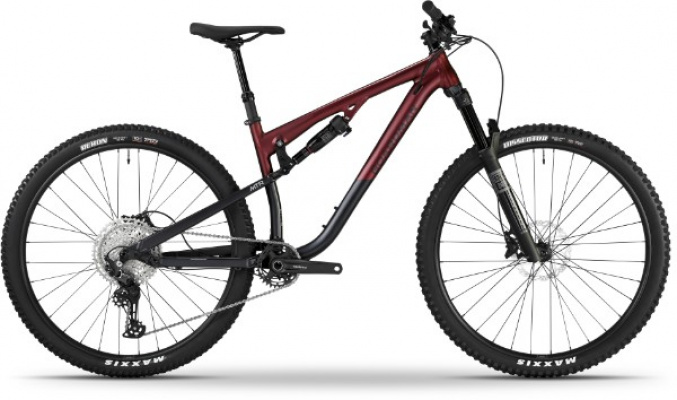
Boardman MTR 8.9
Modern trail geometry, capable RockShox suspension, and Shimano Deore reliability in a versatile package that climbs efficiently and descends with confidence.
- 130mm RockShox Psylo fork punches above its weight
- 65.5° head angle and 77.5° seat angle for modern trail poise
- Shimano Deore 1x12 with 10-51T cassette: wide range, reliable shifts
- Maxxis Dissector/Rekon combo suits UK trail conditions
- UDH hanger future-proofs drivetrain compatibility
- Dropper post included: 125mm (S/M), 150mm (L/XL)
Boardman MTR 8.9 Deals

Prices and availability can change quickly. Delivery charges are not always included in listed prices.
Final price, stock status and delivery terms are set by retailer. We may receive a commission on purchases made.
Bikesy's Verdict
The Boardman MTR 8.9 delivers modern trail geometry, capable suspension, and a well-considered spec at a price that doesn't force you to budget for immediate upgrades. It climbs efficiently, descends with composure, and handles the in-between bits without drama - exactly what you want from a versatile trail bike. The RockShox Psylo fork and Deluxe shock punch above their weight, the Shimano Deore drivetrain is reliable and wide-ranging, and the frame's lighter, stiffer, and future-proofed with a UDH hanger.
If you're progressing beyond your first full-suspension bike or you're an experienced rider who wants something fun and capable without the faff, the MTR 8.9 is a brilliant choice. The two-piston brakes are the only component you'll likely want to upgrade if you're tackling long, steep descents regularly, but everything else is sorted. It's a bike that rewards rhythm and momentum, inspires confidence, and offers genuine value without compromise.
Pros
- Modern trail geometry (65.5° head, 77.5° seat) inspires confidence on climbs and descents
- RockShox Psylo fork and Deluxe shock punch well above their price point
- Shimano Deore 1x12 drivetrain is reliable, wide-ranging, and easy to maintain
- Dropper post included as standard with size-specific travel
- UDH hanger future-proofs drivetrain compatibility
- Tubeless-ready Maxxis Dissector/Rekon tyres suit UK trail conditions
Cons
- Two-piston brakes adequate for most trails but lack power if you're heavier or tackling long, steep descents regularly
- Stock dropper travel might feel limiting on very steep terrain if you prefer maximum saddle drop
- Moderate stack height may feel less upright than some riders prefer for all-day comfort
About the Boardman MTR 8.9
Boardman's MTR 8.9 lands in that sweet spot where modern trail geometry meets accessible pricing, and the 2025 iteration sharpens the formula further. The frame's been slimmed down - over 300 grams lighter thanks to straighter main tubes and a single-piece forged rocker link - yet the four-bar linkage still delivers progressive suspension that grips on the way in and supports you through compressions. With 130mm of RockShox Psylo up front and 120mm of Deluxe Select+ out back, it's pitched squarely at UK trail centres and natural singletrack where you want enough travel to smooth the rough stuff without the weight penalty of a mini-enduro sled.
The spec sheet reads like a carefully considered shopping list rather than a parts-bin raid. Shimano Deore 1x12 handles shifting duties with that trademark Shimano precision, Maxxis Dissector and Rekon tyres arrive tubeless-ready, and you get a dropper post as standard - 125mm drop for smaller frames, 150mm for the larger sizes. It's a bike that doesn't ask you to budget for immediate upgrades just to make it rideable, which is refreshing when so many trail bikes at this price point leave you hunting for a dropper or decent rubber within the first month.
What you're getting is a hydroformed 6061 alloy frame with smooth welds, internal cable routing, and a UDH hanger that'll play nicely with future drivetrain standards. The geometry's been dragged firmly into the current decade - 65.5-degree head angle, 77.5-degree seat angle - so you're not fighting an upright perch on climbs or a nervous front end when the trail tilts down. It's a bike that rewards commitment without punishing hesitation, and that balance makes it equally suited to riders looking to progress beyond their first full-suspension machine and experienced hands who want something fun without the faff.
Boardman MTR 8.9 geometry
The numbers translate to a bike that feels planted rather than skittish. That 65.5-degree head angle sits in modern trail territory - slack enough to inspire confidence when the gradient steepens, but not so laid-back that you're wrestling the front wheel through tight switchbacks. Paired with a 77.5-degree seat angle, your weight sits further forward over the bottom bracket when you're climbing, keeping the front wheel weighted and traction under the rear tyre honest. You'll notice the difference if you've come from an older trail bike with a more upright seat tube; the steeper angle puts you in a stronger pedalling position without feeling like you're perched on the nose of the saddle.
Reach grows progressively across the size range - 440mm on the small, 500mm on the extra-large - and the longer top tube gives you room to move around when the trail demands it. Stack height is moderate rather than towering, which keeps the front end from feeling too high and vague, though riders who prefer a more upright position might want to experiment with a taller stem or riser bar. The 440mm chainstays are short enough to keep the bike feeling playful and responsive, yet the longer wheelbase (1140mm on the small, stretching to 1194mm on the XL) adds stability at speed and smooths out the ride over successive hits.
When you're threading through tight trees or pumping rollers, the shorter rear end lets you flick the bike around with minimal effort. On faster, rougher descents, that longer wheelbase stops the bike feeling twitchy or nervous, and the 33mm of bottom-bracket drop plants you low enough for cornering confidence without dragging pedals through every rock garden. It's a geometry that doesn't force you to pick a lane - it'll climb efficiently, descend with composure, and handle the in-between bits without drama.
Component choices & upgrades
The stock build is already well sorted, which means you can ride the MTR 8.9 hard for months before you'll genuinely need to change anything. The RockShox Psylo Gold RC fork is a standout performer at this price point - 35mm stanchions provide stiffness, the Debonair air spring offers a supple initial stroke, and the rebound and lockout adjustments give you enough control for varied terrain. The Deluxe Select+ shock is custom-tuned for the frame's progressive kinematics, so it supports you through the travel without feeling harsh or wallowy. Both units punch well above their weight, and unless you're regularly riding bike-park laps or ultra-rough natural trails, they'll serve you brilliantly.
Shimano's Deore 1x12 drivetrain is the workhorse of mid-range mountain biking for good reason: it shifts cleanly, the 10-51T cassette range covers everything from fireroad slogs to steep technical climbs, and it'll take a beating without constant fettling. The chain and cassette will wear eventually - that's physics - but replacement costs are reasonable, and the UDH hanger means future compatibility with newer drivetrains is baked in. If you're chasing marginal gains or prefer a different shift feel, an SLX or XT upgrade is straightforward, but it's not a priority unless you're racing or simply prefer the crispness of higher-tier Shimano.
The Shimano MT410 two-piston brakes are the component most likely to leave you wanting more if you're a heavier rider or you're tackling long, steep descents regularly. They're perfectly adequate for trail-centre riding and moderate gradients, but four-piston calipers - whether Shimano's own MT420 or MT520, or a jump to something like SRAM's Code R - will give you more power and better modulation when you're scrubbing speed hard. Rotor size is 180mm front and rear, which is sensible; if you do upgrade the calipers, consider a 200mm front rotor for even more bite.
The Maxxis Dissector front and Rekon rear combo is well chosen for UK conditions - fast-rolling but grippy enough for damp roots and loam. EXO sidewall protection adds durability without the weight penalty of DoubleDown or MaxxTerra casings. If you're riding rockier terrain or want more descending confidence, swapping the rear Rekon for a Dissector or even an Aggressor will sharpen the bike's edge, though you'll sacrifice a bit of rolling speed. The dropper post is cable-actuated and does the job, but if you're used to the snappier action of a hydraulic post, that's an upgrade worth considering once you've put some miles in. Handlebar width is size-specific - 760mm for S/M, 780mm for L/XL - which is thoughtful, though some riders might prefer a touch more rise than the stock 15mm for steeper descents.
Where the Boardman MTR 8.9 excels
This bike is outstanding at flowing, varied trail riding where you're mixing climbs, descents, and everything in between without needing to stop and flip switches or second-guess your line choice. It's the kind of machine that rewards rhythm and momentum - pump through a roller section, lean into a berm, and the suspension stays active and supportive without bobbing or feeling vague. The geometry keeps you balanced whether you're grinding up a technical climb or letting off the brakes on a rooty descent, and the progressive suspension curve means you're not constantly hunting for the right sag setting or worrying about bottoming out harshly.
It climbs with genuine efficiency thanks to that steep seat angle and a suspension platform that doesn't waste your watts. You'll appreciate the wide Deore cassette range when the gradient ramps up, and the bike's weight - around 15.3 kilograms - is competitive for an alloy trail bike at this price. The RockShox Psylo fork stays composed through repeated hits, and the Maxxis tyres hook up on damp climbs without feeling draggy on the flatter sections. When the trail points down, the slacker head angle and longer wheelbase give you the confidence to carry speed, and the suspension soaks up the chatter without feeling harsh or uncontrolled.
It's also a brilliant choice if you're progressing your skills and want a bike that'll grow with you rather than hold you back. The geometry is modern enough that you won't outgrow it quickly, the dropper post lets you shift your weight properly on descents, and the overall build quality means you're not constantly tweaking or replacing parts. It handles natural singletrack, trail-centre loops, and rougher bridleways with equal competence, and it's forgiving enough that you can experiment with line choice and technique without the bike punishing mistakes.
Where it's less ideal is on ultra-steep, ultra-rough descents where you'd benefit from more travel and burlier components. The 130mm fork and 120mm rear travel are ample for most UK riding, but if you're regularly sessioning bike-park blacks or alpine trails, you'll want something with more suspension and beefier brakes. Similarly, if you're a pure XC racer chasing every gram and every second, the MTR 8.9's weight and slightly more relaxed geometry won't match a dedicated race machine. It's a trail bike first, which means it prioritises versatility and fun over outright speed or downhill dominance.
Boardman MTR 8.9 FAQs
What is the best year for the Boardman MTR 8.9?
The 2025 model represents the strongest iteration so far, with a lighter frame (over 300 grams shed through refined tubing and a single-piece rocker link), modern geometry, and a well-considered spec that includes a dropper post and UDH hanger as standard. Earlier models from 2023 and 2022 offered more travel but less progressive geometry and often lacked the dropper or tubeless-ready wheels, so the current version strikes the best balance between capability and value.
How much travel does the Boardman MTR 8.9 have?
The 2025 MTR 8.9 runs 130mm of travel up front via the RockShox Psylo Gold RC fork and 120mm at the rear through the RockShox Deluxe Select+ shock. Previous model years featured more travel - 140mm or 150mm front, 145mm rear - but the current setup is better matched to the bike's trail-focused geometry and intended use, offering enough cushion for rough trails without the weight or pedalling penalty of longer-travel designs.
Is the Boardman MTR 8.9 good for climbing?
Yes, the steep 77.5-degree seat angle keeps your weight centred over the bottom bracket, which maintains traction and puts you in a strong pedalling position without feeling like you're perched too far forward. The suspension platform is efficient enough that you won't need to constantly flick the lockout lever, and the Shimano Deore 1x12 drivetrain's 10-51T cassette range covers everything from gentle fireroad grinds to steep technical pitches. At around 15.3 kilograms, it's light enough to reward effort without feeling like an anchor.
What kind of brakes does the Boardman MTR 8.9 have?
The bike comes with Shimano MT410 hydraulic disc brakes - two-piston calipers front and rear, paired with 180mm rotors. They're reliable and offer decent modulation for trail riding, though heavier riders or those tackling long, steep descents might find them lacking in outright power compared to four-piston options. Upgrading to Shimano MT420 or MT520 four-piston brakes, or fitting a larger 200mm front rotor, is a straightforward improvement if you need more stopping force.
Can I fit wider tyres on the Boardman MTR 8.9?
The frame and fork accommodate the stock Maxxis Dissector and Rekon tyres at 29×2.4 inches with room to spare, so you've got clearance for similar or slightly wider rubber - 2.5-inch tyres should fit comfortably, and you could likely squeeze in a 2.6-inch tyre depending on tread pattern and casing volume. If you're riding muddier conditions or want more grip, swapping to a burlier rear tyre like a Maxxis Aggressor or DHR II in 2.4 or 2.5 inches is a sensible upgrade without worrying about clearance issues.
What is the recommended rider height for a size large Boardman MTR 8.9?
Boardman suggests the large frame suits riders between 175 and 185 centimetres tall, with a reach of 480mm and stack of 620mm. If you're at the taller end of that range or prefer a more stretched-out position, the large will feel roomy; if you're closer to 175cm and like a more compact, playful feel, the medium (460mm reach, 610mm stack) might suit you better. As always, a test ride or at least standing over the bike will confirm which size feels right for your proportions and riding style.
Is the Boardman MTR 8.9 a good beginner mountain bike?
It's an excellent choice for a newer rider who's serious about progressing and wants a bike that won't hold them back as their skills develop. The modern geometry is forgiving and confidence-inspiring, the suspension is capable without being overly complex to set up, and the Shimano Deore drivetrain is intuitive and reliable. The dropper post is included as standard, which is crucial for learning proper descending technique, and the overall build quality means you won't be constantly fixing or upgrading parts. That said, it's not a budget-friendly entry-level machine - if you're still deciding whether mountain biking is for you, a less expensive hardtail might be a wiser starting point.
What are the alternatives to the Boardman MTR 8.9?
Within Boardman's own range, the MTR 8.8 offers similar geometry at a lower price with slightly more basic components, while the MTR 9.0 steps up to a RockShox Pike fork and higher-tier finishing kit if you want more performance. Cross-brand, the Vitus Mythique VRX is a frequent comparison - often with similar or slightly more travel and competitive spec at a close price point. The Marin Rift Zone 2 is another strong contender with modern geometry and capable suspension, and the Calibre Bossnut remains a popular value option in the UK market. If you're willing to stretch the budget slightly, the Trek Fuel EX 5 offers a refined ride and proven pedigree, though typically at a higher price.
Key Features & Benefits
- 65.5° head angle and 77.5° seat angle: Keeps you balanced and confident on climbs while adding stability and poise when the trail tilts down
- RockShox Psylo Gold RC fork with 35mm stanchions: Delivers stiffness, supple initial stroke, and adjustable rebound/lockout for varied terrain without the weight penalty
- Progressive four-bar linkage with RockShox Deluxe Select+ shock: Grips on the way in, supports through compressions, and resists harsh bottom-outs on drops and rough sections
- Shimano Deore 1x12 drivetrain with 10-51T cassette: Wide gear range covers steep technical climbs and fast descents with reliable, low-maintenance shifting
- UDH (Universal Derailleur Hanger): Future-proofs compatibility with newer drivetrains and simplifies replacement if you bend or break the hanger
Boardman MTR 8.9 2025, 2024, 2023 & 2022 differences
The 2025 MTR 8.9 represents a significant evolution over previous iterations, with the most notable change being a lighter, stiffer frame - over 300 grams shed through straighter main tubes and a single-piece forged rocker link. Geometry has been modernised: the 2025 model runs a 65.5-degree head angle and 77.5-degree seat angle, compared to the 2023/2022 versions which typically featured a 66-degree head angle and 75.5-degree seat angle on a size large. This shift brings more stability on descents and a more efficient climbing position.
Travel has been adjusted to better suit the bike's trail-focused intent: the 2025 model offers 130mm front (RockShox Psylo Gold RC) and 120mm rear (RockShox Deluxe Select+), down from 145mm rear and 150mm front on the 2023/2022 models (which used a RockShox 35 Gold RL fork). The current setup is lighter and more efficient for all-day trail riding without sacrificing capability on rough terrain. Drivetrain duties have switched from SRAM NX Eagle 1x12 on earlier models to Shimano Deore M6100 1x12, offering similar range but with Shimano's renowned reliability and shift feel.
Brakes have changed from SRAM Guide T hydraulic discs (often with four-piston calipers) on 2023/2022 models to Shimano MT410 two-piston units on the 2025 bike, which some riders may see as a step down in outright power, though the Shimano units offer good modulation and are easier to service. Tyres have shifted from Maxxis Minion DHF/DHR II combinations on earlier models to the Dissector/Rekon pairing on the 2025 bike, which rolls faster and suits UK trail conditions well, though the Minions offered more aggressive grip. The 2025 model also gains internal cable routing (earlier versions often had external routing), a UDH hanger for future compatibility, and a dropper post as standard with size-specific travel (125mm for S/M, 150mm for L/XL), whereas some older models shipped with rigid posts or less travel. Overall, the 2025 MTR 8.9 is lighter, more modern in geometry, and better specced out of the box, making it the strongest iteration yet.
Alternatives to Consider
Within Boardman's own MTR family, the MTR 8.8 sits one step down with a similar frame and geometry but slightly more basic components - ideal if you want the same modern trail manners at a lower price and don't mind upgrading a few parts later. Step up to the MTR 9.0 and you'll gain a RockShox Pike fork, higher-tier finishing kit, and a bit more descending confidence, though the core ride character remains familiar. Both share the same progressive suspension platform and modern geometry, so your choice hinges on budget and how much performance you want out of the box.
Cross-brand, the Vitus Mythique VRX is the most frequently cited rival - it offers similar or slightly more travel, a comparable Shimano Deore drivetrain, and modern geometry at a competitive price, making it a natural comparison if you're shopping around. The Marin Rift Zone 2 brings its own take on progressive trail geometry with capable suspension and a well-considered spec, while the Calibre Bossnut remains a strong value option in the UK market, often undercutting on price without sacrificing too much capability. If you're willing to stretch the budget slightly, the Trek Fuel EX 5 delivers a refined ride with proven pedigree and a touch more polish, though you'll pay for the Trek badge. The Specialized Stumpjumper Alloy is another step-up option, offering a more refined suspension platform and higher-tier components if you want a bike that'll handle more aggressive riding without immediate upgrades.
Reviews
Flowing singletrack is where this bike feels most at home, rewarding rhythm and momentum without punishing the occasional scrappy line. The RockShox Psylo fork stays composed through repeated hits, offering a supple initial stroke that grips roots and rocks while the mid-stroke support keeps the front end from diving under braking. When the trail tilts up, that steep seat angle keeps your weight centred and traction honest, and the Deore drivetrain shifts cleanly through the 10-51T range without fuss. We appreciate how the suspension platform pedals efficiently enough that you're not constantly reaching for the lockout lever, yet it stays active over rough ground when you need it most.
Descending reveals the benefit of that slacker head angle and longer wheelbase - the bike tracks confidently at speed, and the progressive rear suspension soaks up compressions without feeling harsh or uncontrolled. The Maxxis Dissector front tyre hooks up predictably on damp roots and loose corners, though the Rekon rear can feel a touch skittish if you're pushing hard through rough, off-camber sections; swapping to a burlier rear tyre sharpens the bike's edge noticeably. Stack height is moderate rather than towering, which keeps the front end feeling direct and connected, though taller riders or those who prefer a more upright position might want to experiment with a higher-rise bar.
Because the geometry is modern and the suspension well-tuned, the MTR 8.9 inspires confidence without demanding perfection. You can experiment with line choice, lean into berms, and pump through rollers, and the bike responds predictably. The two-piston brakes are the component most likely to leave you wanting more - they're adequate for trail-centre riding and moderate descents, but heavier riders or longer, steeper runs will expose their limits. Upgrade to four-piston calipers and you'll unlock more descending confidence. Overall, it's a bike that rewards commitment and grows with your skills, offering a balanced, engaging ride that punches well above its price point.
Full Specification
| Spec | Value |
|---|---|
| Frame Material | 6061 Butted Alloy, Hydroformed, Smooth-welded |
| Frame Construction | Four-bar linkage with progressive suspension kinematics |
| Frame Features | Internal cable routing, bottle cage mounts, UDH, Boost 148x12mm rear axle spacing |
| Available Sizes | S, M, L, XL |
| Fork | RockShox Psylo Gold RC |
| Fork Travel | 130mm |
| Fork Adjustments | Air sprung (Debonair), RC damper with rebound adjustment and lockout lever, 35mm stanchions |
| Rear Shock | RockShox Deluxe Select+ |
| Rear Travel | 120mm |
| Rear Shock Adjustments | Rebound control and lock-out lever, custom-tuned |
| Suspension Platform | Four-bar linkage with progressive curve |
| Drivetrain | 1x12 speed |
| Shifters | Shimano Deore SL-M6100-R, 12-speed |
| Rear Derailleur | Shimano Deore RD-M6100-SGS, Shadow+ |
| Crankset | Shimano FC-MT510-1, 32T |
| Crank Length | 170mm |
| Bottom Bracket | Shimano Deore SM-BB52, Hollowtech II |
| Cassette | Shimano Deore CS-M6100, 10-51T, 12-speed |
| Chain | Shimano CN-M6100, 12-speed |
| Brakes | Hydraulic Disc |
| Brake Calipers | Shimano BR-MT410, 2-piston |
| Rotors (Front) | 180mm |
| Rotors (Rear) | 180mm |
| Wheels | 29 inch |
| Rims | Boardman Trail Alloy, tubeless compatible |
| Hubs | Sealed cartridge bearing, Boost spacing |
| Tyres (Front) | Maxxis Dissector EXO TR 29x2.4 |
| Tyres (Rear) | Maxxis Rekon EXO TR 29x2.4 |
| Tyre Casing | EXO sidewall protection |
| Tubeless Ready | Yes |
| Handlebar | Boardman Alloy, 15mm rise, 760mm (S/M) / 780mm (L/XL) |
| Stem | Boardman Alloy, 45mm length |
| Grips | Boardman Lock-on |
| Headset | FSA No.42, ACB-A |
| Seatpost | Dropper post, cable actuated, 125mm drop (S/M) / 150mm drop (L/XL) |
| Saddle | Boardman MTB |
| Pedals | Wellgo flats, 9/16 inch |
| Weight (Approx) | 15.3kg |
| Standards | UDH, Boost 148x12mm, Tapered headset, Hollowtech II bottom bracket |