
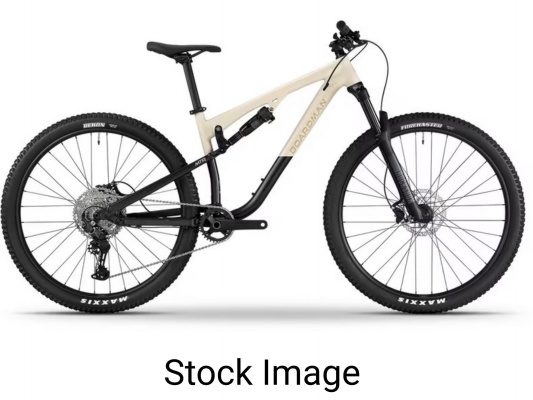
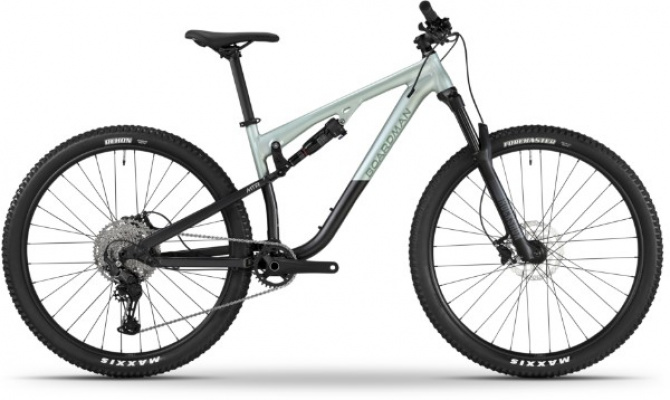
Boardman MTR 8.8
Proper trail capability and dropper-post confidence without the boutique price tag or faff.
- Four-bar Horst-Link suspension: active traction, minimal bob
- RockShox Recon & Deluxe Select+: 130/145mm travel
- Shimano CUES 1x11: wide 11-50T range
- Dropper post included: on-the-fly height adjustment
- Tubeless-ready Maxxis rubber: DHF/DHRII grip
- UDH hanger: future-proof, easy replacement
Boardman MTR 8.8 Deals
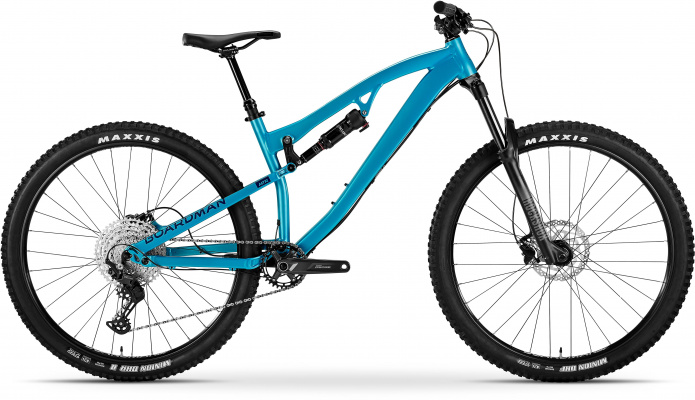

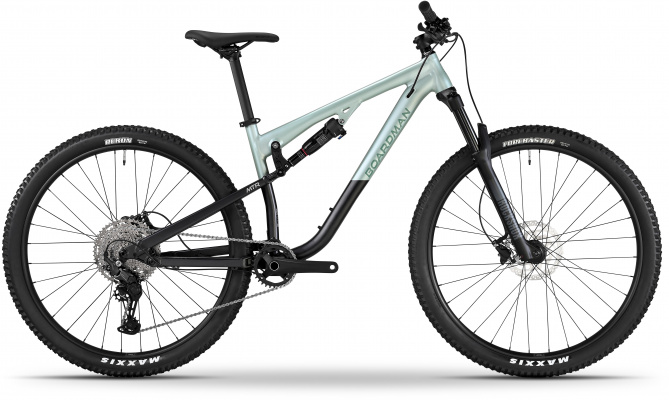
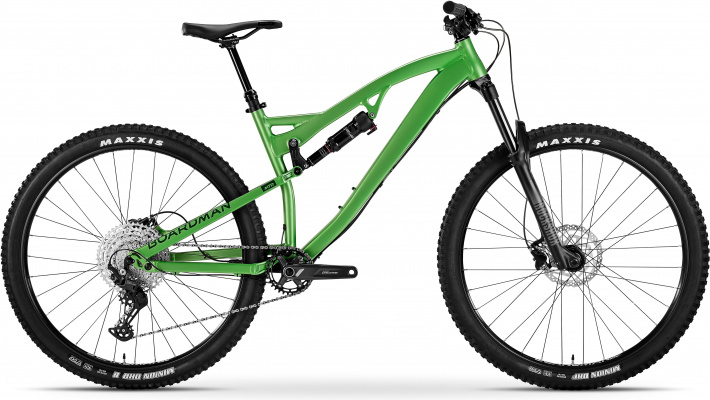
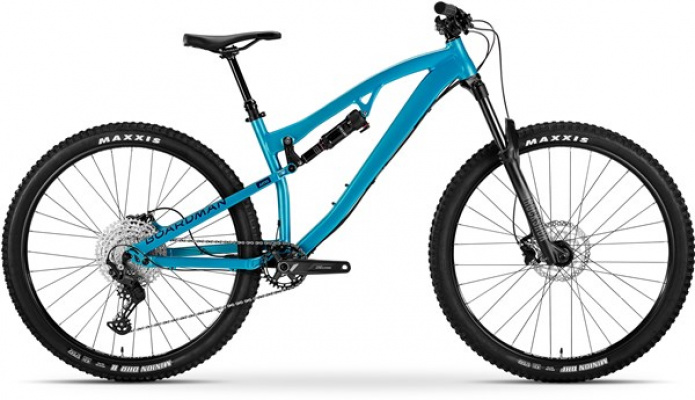
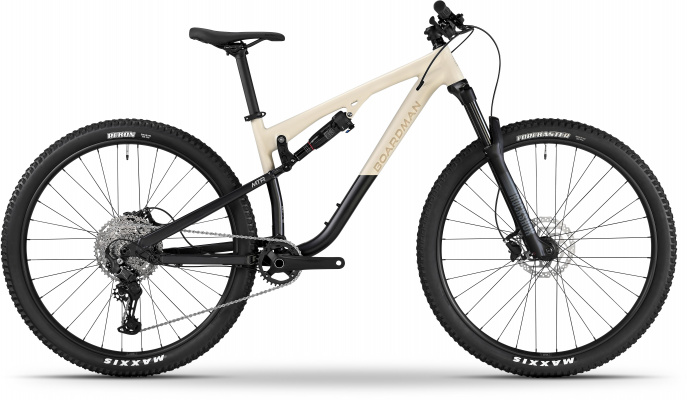
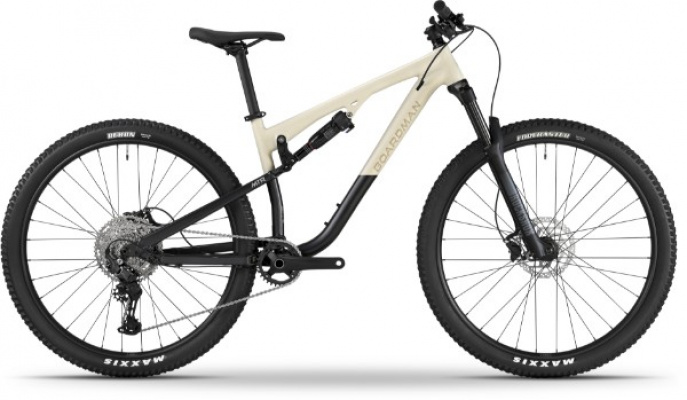
Prices and availability can change quickly. Delivery charges are not always included in listed prices.
Final price, stock status and delivery terms are set by retailer. We may receive a commission on purchases made.
Bikesy's Verdict
The MTR 8.8 delivers what weekend warriors actually need: a full-suspension platform that climbs without wallowing, descends without drama, and doesn't demand a second mortgage. Boardman's four-bar Horst-Link keeps the rear wheel glued through rough sections while the revised geometry - longer reach, slacker head angle - plants you squarely over the bike when the trail tilts down.
RockShox suspension front and rear brings proper damping control, the Shimano CUES drivetrain shifts cleanly across an 11-50T spread, and those tubeless-ready Maxxis tyres grip in the wet stuff. You're getting a dropper post as standard, which transforms technical descents from white-knuckle affairs into flowing fun. At just under 16 kg it's not featherweight, but the triple-butted alloy frame shrugs off the kind of abuse that turns carbon into expensive regret.
If you're ready to push beyond hardtail limits and want a bike that'll grow with your skills rather than hold you back, the MTR 8.8 makes a compelling case.
Pros
- Strong value: RockShox suspension, dropper post, and tubeless-ready Maxxis tyres at an accessible price
- Balanced geometry: stable on descents, efficient on climbs, nimble enough for tight singletrack
- Horst-Link suspension: active rear end with minimal pedal bob
- Wide-range Shimano CUES 1x11 drivetrain: reliable shifting across an 11-50T cassette
- UDH hanger: easier, future-proof derailleur replacements
Cons
- Heavier than race-focused XC bikes if you're chasing KOMs or ultra-light builds
- Tektro brakes are adequate but may lack bite for heavier riders or long, steep descents
- Head angle is moderate rather than slack if you're after enduro-level aggression
About the Boardman MTR 8.8
Boardman's MTR 8.8 sits in that sweet spot where serious trail capability meets sensible money. Built around a triple-butted 6061 alloy frame with a four-bar Horst-Link rear end, it's aimed squarely at riders who've outgrown hardtails but aren't chasing podiums. The 2025 iteration refines the geometry - longer top tube, slacker head angle - so you're better balanced when the trail gets steep and loose, while RockShox suspension front and rear irons out the chatter without turning climbs into a pedal-bob slog.
This isn't a bike trying to be everything. It's a 29er trail machine designed for UK singletrack, technical descents, and the kind of all-day rides where you'll appreciate the dropper post and the wide-range Shimano CUES gearing. Boardman's kept the spec practical: tubeless-ready Maxxis rubber, hydraulic disc brakes, and a UDH hanger that makes derailleur replacements less of a treasure hunt. The result is a bike that punches well above its price point, offering the sort of confidence-inspiring ride that helps you improve quickly rather than flattering your ego.
At just under 16 kg for a medium, it's not the lightest trail bike you'll find, but the robust alloy frame and sensible component choices mean you can ride hard without constantly worrying about what might break. It's a tool for getting better, not a trophy for the garage.
Boardman MTR 8.8 geometry
The MTR 8.8's geometry puts you in a balanced, slightly forward position that works across a wide range of trail conditions. Reach grows from 440 mm in small to 500 mm in extra-large, giving taller riders proper room to move without feeling cramped. The head angle sits at 65.5 degrees across all sizes - not the slackest number you'll see, but slack enough to inspire confidence when the trail drops away beneath you, and steep enough that the front wheel doesn't wander on tighter, twistier sections.
Stack climbs steadily with frame size, keeping your torso upright enough for all-day comfort without sitting you bolt upright like a commuter. The seat angle is steep - 77.5 degrees effective - which plants your weight over the bottom bracket on climbs and keeps your pedalling efficient. Chainstays are a uniform 440 mm, short enough to let you pop the front wheel over obstacles and flick the bike through tight switchbacks, but not so stubby that the rear gets nervous on fast, rough descents.
Wheelbase stretches from 1162 mm in small to 1186 mm in extra-large, giving the bigger frames a planted, stable feel at speed while the smaller sizes stay nimble. Bottom bracket drop is a modest 33 mm, so you're low enough for cornering confidence but not so low that you're constantly clipping pedals on rock gardens. It's a geometry that favours composure and control over outright aggression, which suits the bike's trail-riding brief perfectly.
Component choices & upgrades
The stock build on the MTR 8.8 is already well sorted for the money. Shimano's CUES 1x11 drivetrain with an 11-50T cassette gives you a wide enough range to spin up steep climbs and still have legs left for the descent, and the Shadow+ clutch keeps the chain quiet over rough ground. The RockShox Recon Silver RL fork and Deluxe Select+ shock aren't top-tier, but they're tuneable - rebound and low-speed compression adjustments let you dial the bike to your weight and riding style - and they're robust enough to handle proper trail abuse.
Tektro HD-M285 hydraulic brakes with 180 mm rotors front and rear offer solid stopping power, though if you're a heavier rider or you're regularly descending long, steep trails, you might find yourself wanting more bite. Swapping to a four-piston calliper up front or stepping up to Shimano's MT400 or MT520 levers and callipers would give you more modulation and power without breaking the bank. The Maxxis Minion DHF and DHRII tyres are a strong pairing - grippy, predictable, and tubeless-ready - so you can drop pressures for better traction and a more supple ride.
The Satori Sorata Pro2 dropper post works reliably, though if you're after more drop or smoother action, a OneUp or Brand-X Ascend would be a worthwhile upgrade down the line. The Boardman alloy cockpit - 780 mm bars, 45 mm stem - is sensible and functional; if you want to fine-tune handling, a shorter stem or wider bars can sharpen steering or add stability, but the stock setup is a good starting point. The key message here is that the MTR 8.8 arrives ready to ride hard, and any upgrades should be driven by your own skills and terrain demands, not by any glaring weaknesses in the spec.
Where the Boardman MTR 8.8 excels
The MTR 8.8 is outstanding at UK trail riding - the kind of mixed-terrain outings where you're climbing fire roads, threading through rooty singletrack, and then pointing it down technical descents with rocks, drops, and off-camber corners. The Horst-Link suspension keeps the rear wheel tracking through rough sections without bouncing you out of the saddle, and the geometry gives you enough stability to commit to steep lines without feeling like you're going to pitch over the bars.
It also does well on longer rides where you're mixing surfaces. The lockout on the fork and the two-position compression on the shock mean you can firm things up for road or gravel sections, then open them back up when the trail gets rowdy. The wide-range gearing and efficient pedalling platform make it a capable climber, and the dropper post transforms technical descents - you can get your weight back and low, which opens up lines you'd never attempt with a fixed seatpost.
Where it's not ideal is pure XC racing or ultra-light bikepacking. At just under 16 kg, it's heavier than dedicated race bikes, and while the geometry is balanced, it's not as aggressive as enduro-focused machines with longer travel and slacker angles. If you're chasing KOMs on smooth climbs or you want a bike that'll happily session jump lines and drops all day, you'll find faster or burlier options elsewhere. But for riders who want one bike that'll handle the vast majority of UK trail riding with confidence and capability, the MTR 8.8 hits the mark.
Boardman MTR 8.8 FAQs
What is the Boardman MTR 8.8 best suited for?
The MTR 8.8 is best suited for all-around UK trail riding, tackling technical singletrack, rough descents, and longer mixed-terrain rides. It's designed for riders who want a capable full-suspension bike that climbs efficiently and descends with confidence, without the price tag of high-end race or enduro machines.
How much travel does the Boardman MTR 8.8 have?
The 2025 MTR 8.8 runs 130 mm of travel up front via the RockShox Recon Silver RL fork, and 145 mm of travel at the rear through the RockShox Deluxe Select+ shock. That's enough to smooth out rough trails and absorb bigger hits without feeling overly plush or wallowy on climbs.
What are the typical components on a Boardman MTR 8.8?
You'll find a Shimano CUES 1x11 drivetrain with an 11-50T cassette, Tektro HD-M285 hydraulic disc brakes with 180 mm rotors, RockShox suspension front and rear, tubeless-ready Maxxis Minion tyres, and a Satori Sorata Pro2 dropper post. The spec is practical and trail-ready, with a focus on reliability and performance rather than weight savings.
Is the Boardman MTR 8.8 a good bike for beginners?
It's a strong choice for riders stepping up from hardtails or looking to take their trail riding more seriously. The geometry is forgiving, the suspension is tuneable, and the dropper post makes technical descents far less intimidating. That said, it's a proper trail bike, so if you're brand new to mountain biking, you might want to start with something simpler and less expensive to build your skills and confidence first.
What are the differences between Boardman MTR 8.8 models from different years?
The 2025 model features 130 mm of fork travel (down from 150 mm on earlier versions) and uses the Shimano CUES 1x11 drivetrain with an 11-50T cassette, whereas 2023 and 2021 models ran Shimano Deore M5100 with an 11-51T cassette. Brake spec has also varied, with some years using Shimano MT200 and others Tektro HD-M285. The core geometry and Horst-Link suspension platform have remained consistent.
Can the Boardman MTR 8.8 be used for bikepacking?
Yes, though with some caveats. The frame has internal cable routing and provision for a water bottle cage (up to 550 ml with a side-loading cage), and the stable geometry and wide-range gearing suit long days in the saddle. However, at just under 16 kg it's heavier than dedicated bikepacking rigs, and you'll need to add frame bags and other storage solutions. It's better suited to shorter overnight trips or supported rides than ultra-light, long-distance touring.
What is the weight of the Boardman MTR 8.8?
A medium frame weighs approximately 15.97 kg without pedals. That's not featherweight, but it's reasonable for a full-suspension trail bike at this price point, and the robust alloy frame and practical component choices mean you're getting durability and reliability rather than chasing grams.
How does the Boardman MTR 8.8 compare to other trail bikes in its price range?
The MTR 8.8 offers strong value, with a spec and capability that rivals bikes from Calibre, Vitus, and Giant at similar price points. It's not as aggressive as some enduro-focused machines, but it's more versatile and easier to live with day-to-day. The inclusion of a dropper post, tubeless-ready wheels, and RockShox suspension front and rear gives it an edge over cheaper alternatives that cut corners on key components.
Key Features & Benefits
- Four-bar Horst-Link suspension with RockShox Recon & Deluxe Select+: Active rear wheel tracking through rough terrain with minimal pedal bob on climbs
- Revised geometry: longer reach, 65.5° head angle, steep 77.5° seat angle: Balanced position for confident descending and efficient climbing without feeling cramped
- Shimano CUES 1x11 drivetrain with 11-50T cassette: Wide gear range for steep climbs and fast descents, with reliable Shadow+ clutch for quiet chain retention
- Satori Sorata Pro2 dropper post (125/150 mm drop): On-the-fly saddle height adjustment transforms technical descents and tight corners
- Tubeless-ready Maxxis Minion DHF/DHRII tyres on 30 mm internal rims: Lower pressures for better traction and comfort, with reduced puncture risk on rough trails
Boardman MTR 8.8 2023 and 2021 differences
The 2023 and 2021 MTR 8.8 models featured 150 mm of fork travel via the RockShox Recon Silver RL, compared to the 2025's 130 mm. Rear travel remained consistent at 145 mm across all three years. The drivetrain on earlier models was Shimano Deore M5100 1x11 with an 11-51T cassette, whereas the 2025 iteration uses Shimano CUES 1x11 with an 11-50T cassette - a slightly narrower range but with improved shift quality and durability.
Brake spec varied between years: the 2023 and 2021 models ran Shimano MT200 hydraulic disc brakes, while the 2025 version uses Tektro HD-M285 callipers. Both setups offer 180 mm rotors front and rear. The core geometry - reach, stack, head angle, and seat angle - has remained consistent across these model years, as has the four-bar Horst-Link suspension platform and the triple-butted 6061 alloy frame construction. The UDH hanger and Boost hub spacing are present on all three years, ensuring compatibility with modern drivetrain and wheel standards.
Alternatives to Consider
Within Boardman's own MTR range, the MTR 8.9 steps up with higher-spec suspension and drivetrain components if you're after more refinement and adjustability, while the MTR 8.6 offers a more budget-conscious entry point with slightly simpler kit but the same core geometry and frame design.
Cross-brand, the Calibre Bossnut V2 is a direct rival, offering similar travel and geometry with a focus on value and UK trail riding. The Vitus Escarpe VR brings a bit more enduro aggression with longer travel and slacker angles if you're prioritising descents over all-day versatility. For a more XC-leaning option, the Giant Stance 29 2 offers efficient pedalling and lighter weight, though with less descending capability. The Trek Fuel EX 5 delivers a more refined ride feel and better component integration at a higher price, while the Specialized Stumpjumper Alloy offers sharper handling and a more progressive geometry if you're willing to stretch the budget. Each brings a different balance of climbing efficiency, descending confidence, and component spec, so your choice depends on whether you value outright capability, weight savings, or all-day versatility.
Reviews
Longer reach and a calmer head angle bring poise to steep, technical descents without making the bike feel sluggish on tighter trails. The Horst-Link rear end stays active through rock gardens and roots, keeping the rear wheel planted while the RockShox Deluxe Select+ absorbs bigger hits without wallowing. Climbs are efficient - minimal bob, even when you're out of the saddle - and the steep seat angle keeps your weight centred over the bottom bracket for traction on loose, steep pitches.
When the trail tilts down, the geometry inspires confidence. You're not fighting the bike to stay balanced, and the Maxxis Minion tyres grip predictably in the wet and loose. The dropper post transforms technical sections; being able to drop your saddle on the fly opens up lines you'd never attempt with a fixed post. Shimano CUES shifts cleanly across the 11-50T range, and the Shadow+ clutch keeps the chain quiet over rough ground.
Braking power is adequate rather than exceptional. The Tektro HD-M285 callipers offer decent modulation, but heavier riders or longer descents might leave you wanting more bite. Short, punchy climbs suit the bike well. Because the suspension platform is efficient and the gearing is wide, you can spin up steep sections without feeling like you're fighting the rear end. The 29-inch wheels roll over obstacles smoothly, maintaining momentum where smaller wheels would stall.
At just under 16 kg it's not a lightweight, but the robust alloy frame and practical component choices mean you can ride hard without constantly worrying about what might break. The bike rewards commitment - the more you push it, the more capable it feels - and it's forgiving enough that you'll improve quickly rather than being punished for small mistakes.
Full Specification
| Frame Material | 6061 Alloy (triple-butted with anodised finish) |
| Fork | RockShox Recon Silver RL, 130mm travel, air spring, Motion Control damper, lockout |
| Rear Shock | RockShox Deluxe Select+, 145mm travel, DebonAir+ spring, two-position compression adjustment |
| Suspension Design | Four-bar Horst-Link |
| Shifters | Shimano CUES SL-U6000-11R, 11 speed |
| Rear Derailleur | Shimano CUES RD-U6000 Shadow+ |
| Crankset | Shimano M5100, 170mm |
| Cassette | 11-50T, 11 speed |
| Chain | KMC eGlide, 11 speed |
| Brakes | Shimano MT200 hydraulic disc, 180mm rotors front and rear |
| Rims | Boardman alloy, 30mm internal diameter, tubeless-ready |
| Front Tyre | Maxxis Minion DHF, 29" x 2.4", tubeless-ready |
| Rear Tyre | Maxxis Minion DHRII, 29" x 2.4", tubeless-ready |
| Handlebar | Boardman alloy, 760mm wide (S: 740mm), 15mm rise |
| Stem | Boardman alloy, 45mm, zero rise |
| Grips | Boardman lock-on |
| Headset | FSA No.42, tapered |
| Seatpost | Satori Sorata Pro2 dropper, 125mm drop (S/M), 150mm drop (L/XL) |
| Saddle | Boardman MTR |
| Bottom Bracket | Threaded BSA 73mm |
| Rear Axle | 148x12mm Boost, UDH hanger |
| Weight | 15.97 kg (M, without pedals) |