
Van Rysel Balance Bikes
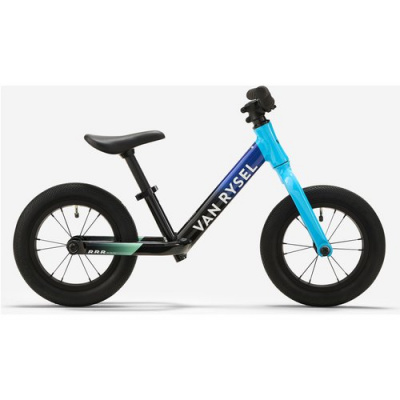
Van Rysel balance bikes bring the same performance thinking behind their adult road range down to toddler scale - and the difference shows the moment you pick one up. Where most balance bikes lean on heavy steel tubes and chunky moulded plastic, Van Rysel uses lightweight alloy frames that a two-year-old can actually manoeuvre rather than wrestle. That low kerb weight isn't just a spec-sheet boast; it's what lets small riders steer, glide, and correct themselves without the bike fighting back.
The range focuses on 12-inch wheels with a genuinely low standover height, so little legs can plant flat on the ground from the off. Pair that with adjustable saddle height and you've got a bike that grows with the child across the critical balance-learning window. Real pneumatic tyres - not the hard EVA foam found on cheaper alternatives - give actual grip on wet tarmac and damp park paths, which matters considerably in a country where dry days feel like a bonus. Sealed bearings keep rolling resistance low and maintenance manageable. If your child's already eyeing up pedals, take a look at the Van Rysel kids bikes range for the natural next step.
Prices and availability can change quickly. Delivery charges are not always included in listed prices.
Final price, stock status and delivery terms are set by retailer. We may receive a commission on purchases made.
Decoding the Van Rysel Balance Bike Lineup
Van Rysel keeps the balance bike range deliberately focused. You're looking at 12-inch wheel models built around lightweight alloy tubing - the kind of material choice you'd expect from a brand that also produces serious Van Rysel road bikes, not a brand that stumbled into children's products as an afterthought. The alloy construction trims meaningful weight compared to the steel frames common at the budget end of the market, and that gap is felt immediately by small riders who haven't yet got the strength to muscle a heavy bike around a corner.
The geometry is scaled properly for toddler ergonomics rather than just shrunk from a larger template. A low bottom bracket and compact wheelbase mean the bike sits naturally under a child rather than perching them up on something that feels precarious. The adjustable saddle covers enough height range to stay relevant as the child grows through the typical balance bike years, so you're not buying a bike that fits perfectly in month one and feels wrong by month eight. If your child has outgrown balance bikes entirely and is ready for their first pedal bike, the Van Rysel kids bikes category covers the transition clearly.
The Van Rysel Tech Philosophy: Performance for Toddlers
The tech here reads like a scaled-down brief from the adult road team, and that's not an accident. Road-inspired lightweight aluminium tubing keeps the overall weight low enough that the bike responds to input from a toddler's slight body movements - which is exactly what you want when a child is still figuring out how balance works. Heavy bikes mask feedback; light bikes teach it.
The ergonomic micro-reach handlebars are cut to suit small hands properly, so grip is comfortable and steering doesn't require arms fully extended. It sounds minor until you watch a child struggle with bars that are too wide or too far forward - they compensate with bad posture and lose confidence quickly. Getting this right matters. A steering limiter is built in to cap the turning arc, which prevents the front wheel folding back and the bike going down hard - something that spooks toddlers badly and sets back progress. Think of it as the equivalent of a gentle hand on the shoulder.
The low-friction sealed wheel bearings deserve a mention beyond the spec sheet. On a balance bike, rolling resistance is everything - if the child has to push hard just to keep moving, they spend effort on propulsion rather than learning to glide and balance. Sealed bearings stay smooth and keep grit out, which is a genuine long-term advantage over open bearings that degrade after a few muddy sessions. Real pneumatic tyres over EVA foam complete the picture: they absorb small bumps, give actual cornering grip on slick autumn leaves, and behave predictably on wet surfaces in a way hard plastic simply cannot. The integrated anti-slip footrests let riders rest their feet at speed without sliding off - useful once they're properly gliding and building confidence.
Compared to Specialized balance bikes or Frog balance bikes at similar price points, Van Rysel holds its own on weight and bearing quality. The B'Twin balance bike range - Decathlon's entry tier - shares some DNA but uses heavier steel construction and more basic componentry. The Van Rysel range is the step up when you want less compromise.
Living with a Van Rysel Balance Bike in the UK
UK riding conditions for a toddler largely means damp parks, leaf-covered paths, and the occasional puddle that was significantly deeper than it looked. The pneumatic tyres handle this well, but drop the pressure slightly below the maximum recommendation for autumn and winter use - a little more give in the tyre means more contact patch on wet tarmac and better grip through corners. Worth doing at the start of each season rather than waiting for a wobble.
The sealed bearings cope with mud and water far better than open alternatives, but they still benefit from a quick wipe down after particularly dirty park sessions. Mud packed around the hub and headset will find its way in eventually if left to sit. A damp cloth and two minutes after a muddy outing keeps things running smoothly far longer than a deep clean every few months.
Storage is worth thinking about. UK sheds are famously damp, and while the alloy frame won't rust, steel fasteners and the headset can corrode over a winter if the bike sits wet. Hang it up inside if you can, or at least wipe it dry before it goes away. It's the kind of thing that costs nothing to do and saves a headset replacement in the spring.
Rounding out the setup, a well-fitted helmet is non-negotiable - check the Van Rysel helmets range for age-appropriate options. Van Rysel gloves keep small hands warmer on colder mornings and offer some protection when the inevitable slide happens. The Van Rysel kids clothing range is worth a look if you're kitting them out properly from the start.
Van Rysel Balance Bikes FAQs
What age is a Van Rysel balance bike suitable for?
Most Van Rysel balance bikes are designed for toddlers aged 2 to 4 years, though inside leg measurement matters more than age as a guide. The adjustable saddle height and low standover mean the bike can be dialled in as the child grows rather than outgrown after a single season.
Are Van Rysel balance bikes better than B'Twin?
Van Rysel sits above B'Twin as Decathlon's premium tier, and the differences are tangible - lighter alloy frames rather than heavier steel, and higher-quality sealed bearings throughout. For smaller toddlers especially, that weight reduction makes the bike noticeably easier to steer and handle from day one.
Do Van Rysel balance bikes use real pneumatic tyres?
Yes, the premium models run proper rubber pneumatic tyres with inner tubes rather than solid EVA foam. On wet UK paths and slick autumn surfaces, the grip difference over hard foam is significant, and the natural cushioning makes for a smoother ride on uneven park tarmac.