
Trek Jackets
Trek cycling jackets (sold under the Bontrager label) are built around one idea: keep you moving when the weather decides to make things difficult. Whether that's a biting headwind on a pre-dawn commute, a sudden downpour halfway up a Welsh climb, or the slow, damp chill of a January road ride, there's a Trek jacket engineered for it.
The range covers three distinct needs. A packable wind jacket handles those mornings where it's cold on the descent but roasting by the top of the second climb - stuff it in a jersey pocket and forget about it. A thermal softshell with thermal fleece lining is your go-to for base miles through November and December, where warmth and breathability matter more than outright waterproofing. And when it's properly hammering down - think Scottish west coast in October - a hardshell with taped seams and AquaGuard zips is what you want between you and the road spray.
Across the board, Trek builds in BioMotion visibility detailing, drop tail cuts for lower-back coverage in the saddle, and articulated patterning that stops the jacket riding up or bunching when you're stretched out on the drops. Practical details, properly thought through.
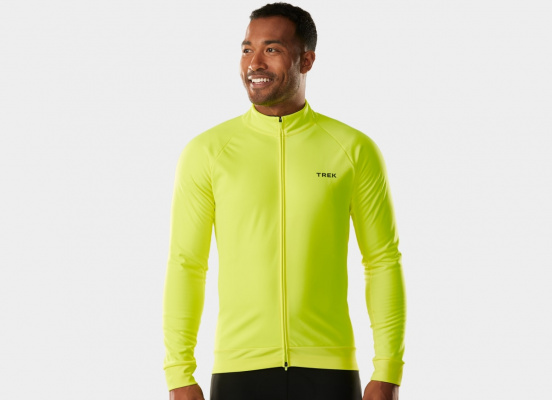
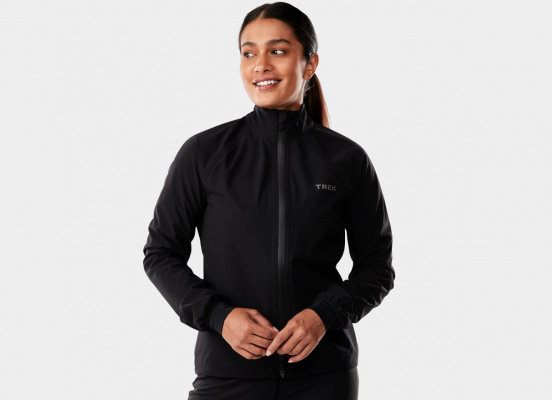
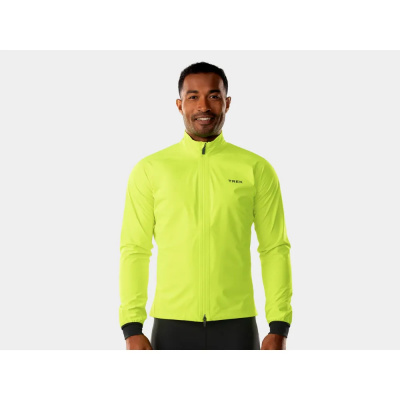
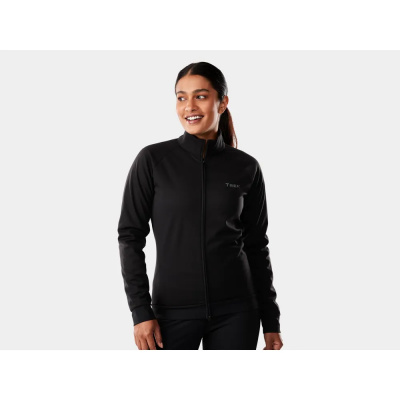
Prices and availability can change quickly. Delivery charges are not always included in listed prices.
Final price, stock status and delivery terms are set by retailer. We may receive a commission on purchases made.
Fabric Tech and How It Handles the Weather
Trek's weather protection splits cleanly into two camps, and knowing which you're buying matters. Their thermal softshells - built around Profila Softshell fabric - are water-resistant and highly breathable, with a brushed fleece interior that traps warmth without weighing you down. They'll handle a light shower or persistent drizzle without fuss, but they're not designed for a sustained downpour. Think of them as your three-season workhorse: good across a wide range of conditions, but not a replacement for a proper hardshell when it's really coming down.
The hardshell rain jackets are a different proposition. These use a DWR coating on the outer face fabric to bead water off the surface, combined with fully taped seams and AquaGuard zip closures to block water ingress at every join. That construction adds a bit of weight and reduces the raw breathability compared to a softshell, so they're best reserved for genuinely wet days rather than worn every ride by default.
One thing worth flagging: even the best DWR coating degrades over time. If you notice water soaking into the fabric rather than beading off, the jacket isn't broken - the coating just needs reactivating (more on that below). Trek's breathability rating varies across the range, so if you're the type who generates serious heat on long climbs in the Peak District or the Brecon Beacons, look closely at the spec sheet and prioritise models with two-way or underarm zips for mechanical venting. That option makes a genuine difference when you're grinding uphill in a heavy layer.
Fit Profiles and Choosing the Right Cut
Trek jackets come in two core fit profiles, and picking the wrong one for your riding style is a common mistake. Fitted cuts are cut close to the body - minimal excess fabric, longer at the back, designed to work with a road or gravel position without flapping or bunching. If you're spending most of your time on the drops or riding at pace, this is the cut you want. The aerodynamic profile also means it layers neatly under a gilet if needed.
The Semi-Fitted profile gives you noticeably more room through the chest and shoulders. That's intentional - it's designed to sit over a thicker winter layering system without restricting movement, and it suits the more upright position of MTB or commuting. It's also the better choice if you run wide shoulders or just find race-cut jackets uncomfortable over longer rides.
On sizing: if you're planning to layer a heavy thermal jersey underneath a Fitted model, go up one size. Trek's Fitted cut is genuinely snug, and trying to pull it over a chunky midlayer is a recipe for a restricted shoulder and a cold morning. If you're between sizes in the Semi-Fitted range, stick with your usual - the extra volume absorbs the variation. Compared to something like Endura jackets, Trek's Fitted cuts run slightly longer in the torso, which suits riders who find shorter race cuts leave a cold strip above the bib shorts.
It's also worth noting that Trek's road-focused Circuit range sits at the tighter, more aerodynamic end, while the Evoke MTB line uses the roomier Semi-Fitted construction. Knowing which range a jacket belongs to tells you a lot about how it'll wear before you even check the size chart.
Layering for UK Autumn and Winter Riding
A Trek jacket works hardest when it's paired sensibly with what's underneath. For autumn riding - the kind of day where it starts at six degrees and climbs to eleven by mid-morning - a merino base layer under a Profila Softshell jacket is a hard combination to argue with. The merino manages moisture and odour across a long ride; the softshell blocks the wind and handles the odd light shower. That pairing covers most of what September through November throws at UK roads and trails.
Drop into proper winter - dark by four, roads permanently damp - and you want to add a thermal bib tight and consider whether a packable wind jacket over a thermal jersey gives you more flexibility than a single heavy layer. Stuffing a wind jacket in your back pocket and pulling it on for descents is one of those habits that makes long winter rides genuinely more enjoyable. Pair that with Trek lights and the BioMotion reflective detailing built into Trek's jackets, and you're covered for visibility too.
On washing: this is where a lot of riders inadvertently wreck their DWR coating. Biological detergents and fabric softeners both degrade the water-repellent treatment - avoid them completely. Use a dedicated tech wash (Nikwax Tech Wash is widely available), run a gentle cool cycle, and then tumble dry on a low heat setting. The heat is what reactivates the DWR coating, so skipping the dryer and hanging the jacket to dry means the coating stays dormant. Do that a couple of times and you'll wonder why water is soaking through a jacket that's barely a year old. A proper care routine adds real longevity to the investment.
If you ride in conditions that justify full mudguard coverage as well as a hardshell jacket - which, honestly, describes most UK winter commutes - pairing your jacket with Trek mudguards makes the whole system more effective. The jacket handles the rain from above; the guards deal with the road spray from below. It's a practical combination that Castelli jacket users and Bontrager jacket riders alike tend to arrive at after one particularly miserable wet commute.
Trek Jackets FAQs
Are Trek cycling jackets fully waterproof?
Not all of them - Trek offers both fully waterproof hardshells with taped seams and AquaGuard zips, and water-resistant softshells that handle light rain but not sustained downpours. Check the product description carefully: if it says 'waterproof' and lists taped seams, it'll cope with heavy rain; if it says 'water-resistant', treat it as a three-season layer rather than a hardshell replacement.
How should a Trek cycling jacket fit?
Trek jackets come in Fitted (close-to-body, road-oriented, longer rear hem) and Semi-Fitted (roomier, better for MTB or commuting over thick layers). If you're sizing a Fitted model for winter use with a heavy thermal jersey underneath, go up one size - the cut is genuinely snug and doesn't leave much room to breathe over bulkier midlayers.
How do I wash my Trek waterproof jacket?
Use a dedicated tech wash on a gentle, cool machine cycle - no biological detergents, no fabric softener, both of which degrade the DWR coating. Tumble dry on a low heat setting afterwards; the heat reactivates the DWR treatment and restores the water-beading performance. Skipping the dryer is the most common reason a jacket starts wetting out prematurely.