
Tifosi Suspension Forks
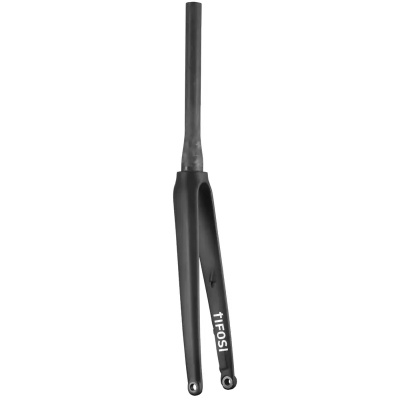
Tifosi suspension forks take the sting out of UK bridleways and washboard gravel in a way that a rigid carbon fork simply can't match on a bad day. Tifosi has spent years building precise road and cyclocross machines, and that same geometry-obsessed thinking carries into their suspension fork range - these aren't bolted-on afterthoughts. Designed around micro-travel in the 30 - 40mm window, they absorb high-frequency chatter from Peak District grit roads and Welsh clay tracks without the wallowy, slow-steering feel you'd associate with a trail mountain bike fork. Weight stays competitive, steering stays sharp. The vibration-damping carbon lowers work with gravel-tuned micro-travel dampers to filter fatigue rather than soak up square-edged hits, so your front wheel stays honest and on line. Integrated mud-guard mounts are a practical touch for UK winter riding - no bodge-mounting required. Whether you're building a bikepacking rig from scratch or swapping out a rigid fork on an existing adventure bike, Tifosi's range covers both ends of the gravel spectrum. If you've been wondering whether a suspension fork can actually suit a fast gravel setup without wrecking the handling, this is a genuinely interesting answer to that question.
Prices and availability can change quickly. Delivery charges are not always included in listed prices.
Final price, stock status and delivery terms are set by retailer. We may receive a commission on purchases made.
Decoding the Tifosi Suspension Fork Lineup
Tifosi suspension forks split broadly into two camps, and picking the wrong one for your riding style is the kind of mistake worth avoiding before you pull the trigger. At the sharper end sits their gravel race-oriented fork - stiffer through the crown, lighter overall, and built around a lockout-first philosophy. This is the one you want if most of your miles are fast mixed-surface riding where you're on tarmac as much as gravel, and where every gram matters on a long day out. The travel is tighter, the damper tuning is firmer, and the axle-to-crown length is kept deliberately short to preserve the snappy steering geometry your gravel frame was designed around.
The adventure and bikepacking-leaning forks take a more progressive approach. Travel opens up slightly, the damper has more room to move over successive hits, and the crown sports additional mounting bosses for bags, dynamo lights, and guards. Useful. These forks do add axle-to-crown length compared to a rigid replacement, which will slacken your head angle by a degree or so and push your front end up a touch - worth factoring into your fit before you commit. Fork offset also shifts the trail figure, so if your frame already runs a relaxed geometry, check the numbers against your existing steering feel. A Tifosi Tifosi carbon suspension fork in this class won't transform a fast race bike into a tourer, but on the right adventure-geometry frame it clicks into place logically.
It's worth comparing what Tifosi offers against alternatives like RockShox suspension forks - specifically the Rudy - which also targets the gravel market with short travel and lockout. RockShox has more damper tunability at the top end, but Tifosi's integration with their own frame geometry gives their forks a cohesion that's harder to replicate with a mixed-brand build.
The Tifosi Tech Philosophy
The headline piece of engineering here is the vibration-damping carbon lowers. Carbon in the lower legs isn't just a weight play - the material's natural flex characteristics are tuned to absorb the persistent 10 - 50Hz buzz that comes off rough tarmac and packed gravel, the kind of vibration that numbs your hands over a long ride without ever feeling like a proper bump. Pair that with lightweight alloy stanchions above and you've got a structure that's stiff where it needs to resist braking and cornering loads, while remaining compliant in the frequency range that matters most on gravel.
The gravel-tuned micro-travel dampers are calibrated differently from what you'd find in an XC mountain bike fork. The key behaviour is brake-dive resistance - on a loose, steep drop-off, you don't want the fork compressing heavily as you grab the brakes, because that pitches your weight forward and upsets the line. Tifosi's damper kinematics resist that dive while staying supple enough to track over constant small ripples without feeling wooden. It's a narrow window to tune for, and getting it right is what separates a genuinely useful gravel fork from one that's just marketing a travel number.
Lockout is present across the range and works as you'd expect: flip it on for a long tarmac climb or a flat canal path section, flip it off when the surface deteriorates. Some riders never touch it; others use it constantly. Having the option without a significant weight penalty is the point. If you're considering alternatives at this tech level, Fox suspension forks offer sophisticated damper adjustability in their gravel-oriented units, though at a price step up. SR Suntour suspension forks occupy the more accessible end of the market with simpler internals. Tifosi sits between the two in terms of specification depth.
To complete your front-end build, Tifosi headsets are designed to work with the tapered steerer tube geometry used across their fork range - worth pairing properly rather than mixing standards. A matched Tifosi stem keeps the stack and reach relationship predictable if you're rebuilding from an existing frame.
Living with a Tifosi Fork in the UK
British winters are genuinely hard on suspension forks. The combination of grit, clay, and persistent damp turns the gap around your wiper seals into a grinding paste factory if you leave it. Wipe the stanchions down after every wet ride - it takes thirty seconds and it's the single most effective thing you can do to extend the life of the internals. Don't skip it because the bike's going back out tomorrow. Welsh winter mud in particular, heavy with clay and road grit, is abrasive enough to score stanchions over a season if you're not on top of it.
Tifosi's integrated mud-guard mounts are a practical bit of thinking here. Running a proper guard over the front wheel significantly reduces the volume of debris thrown up onto the lower legs and wiper seals in the first place, which means your service intervals stay manageable. Speaking of which: a basic lower-leg service every 50 hours of winter riding is a reasonable target. That means draining and replacing the lower-leg oil, checking the seals, and inspecting the stanchion surface. It's not a complex job and most mechanics can do it quickly, or you can learn to do it yourself with the right volume of fork oil and a basic seal kit.
On tyre clearance: most Tifosi gravel suspension forks run comfortably to 700x45c or 650bx50c, which gives you meaningful room for a chunky winter tyre. Running something like a 40c mud-specific tyre through December on the Peak District's gritstone tracks is well within scope. The clearance also means you're not forced into a compromise - run a fast 35c in summer, swap to a beefy 45c when the ground softens. The fork handles both without drama. If you're deep into gravel kit research, Tifosi sunglasses are another area where the brand's optically precise, weather-resistant lenses suit UK riding conditions well.
Tifosi Suspension Forks FAQs
Are Tifosi suspension forks good for gravel riding?
Yes, genuinely. They're tuned specifically for the high-frequency chatter that gravel and all-road surfaces produce - washboard tracks, rough tarmac, packed stone paths. The micro-travel range keeps weight and steering geometry sensible, so you're not sacrificing handling precision for compliance. They suit fast mixed-surface riding better than a heavier trail fork would.
What is the maximum tyre clearance on a Tifosi suspension fork?
Most Tifosi gravel suspension forks clear up to 700x45c or 650bx50c comfortably, which covers most winter and adventure tyre choices. Before fitting, check how the fork's axle-to-crown length interacts with your frame's existing geometry - adding a suspension fork will alter your head angle and stack height compared to a rigid fork.
How do I maintain my Tifosi fork in UK winter conditions?
Wipe the stanchions and wiper seals clean after every wet ride - grit mixed with moisture becomes abrasive quickly and accelerates seal wear. Aim for a lower-leg service roughly every 50 hours of winter riding: drain and replace the leg oil, inspect the seals, and check the stanchion surfaces for scoring. Running a front mudguard reduces the amount of debris reaching the seals in the first place.