
Tern Hybrid Bikes
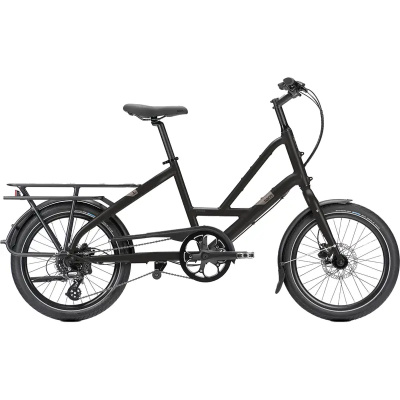
Tern hybrid bikes occupy a genuinely useful corner of the urban mobility market - these are proper city tools built around stiff frames, practical geometry, and the kind of cargo capacity that makes a car journey feel unnecessary. Where a lot of city bikes compromise between looking sharp and actually working hard, Tern leans firmly into the working-hard column. Robust mounting points, high-volume tyres, and thoughtfully spec'd componentry come as standard, not afterthoughts.
One thing worth knowing before you browse: because Tern's urban range spans several formats, some models cross into folding or electric territory. If you're after a motor to help with the hills, our Tern e-bikes page is the better starting point. Likewise, if a genuinely compact fold for the Tube or a cluttered hallway is the priority, head to our Tern folding bikes page. What you'll find here is the human-powered end of the range - bikes designed for daily riding, heavy panniers, potholed streets, and the kind of commute that needs a bike you can actually rely on.
Prices and availability can change quickly. Delivery charges are not always included in listed prices.
Final price, stock status and delivery terms are set by retailer. We may receive a commission on purchases made.
Link vs Verge: Mapping the Tern Urban Range
Tern's non-electric city lineup splits broadly into two families, and knowing which is which saves a lot of head-scratching. The Link series is the workhorse - upright geometry, relaxed riding position, and a frame built around day-in, day-out reliability. Think wide gearing, forgiving handling, and a bike that won't complain when you bolt a rack on both ends and fill them with shopping. If your commute involves traffic lights, cobbles, and a supermarket stop, this is your bike.
The Verge series sits at the performance end. Sharper angles, larger gearing, and a more committed riding posture mean it rewards riders who want to cover ground quickly. It's still a practical urban bike - Tern doesn't really do impractical - but the Verge leans closer to a fast flat-bar road bike than a hybrid in the traditional sense. If you're knocking out 15 miles each way and want to actually enjoy it, that's the direction to look.
Trim levels follow a numbering logic worth decoding: the suffix indicates the drivetrain. A D8 runs an 8-speed derailleur setup, while a P10 steps up to a 10-speed configuration. Higher numbers generally mean wider range or closer gear steps - useful if your route throws in a canal-side drag or a short sharp climb out of the city. If you're weighing up how Tern sits against the broader UK hybrid market, Boardman hybrid bikes and Marin hybrid bikes are natural comparisons - both offer strong city-focused ranges, though neither leans as hard into cargo utility as Tern does.
The Frame Tech That Actually Makes a Difference
Tern's engineering choices aren't cosmetic, and it's worth understanding what you're actually getting. DoubleTruss technology turns the rear section of the frame into a three-dimensional truss structure. In plain terms, it dramatically reduces torsional flex - the kind of twisting that saps power and makes a frame feel vague under load. On a step-through or compact urban frame, flex is a genuine problem; DoubleTruss is Tern's answer to it, and it's why their bikes feel notably stiffer than similarly priced city bikes from brands that haven't thought this hard about it.
The Physis 3D Handlepost addresses the other common weak point - the cockpit. A flexy handlepost is like trying to sprint off a traffic light with your hands in a bowl of jelly. The Physis design eliminates that flex, so when you put the power down, it goes into the road rather than into wobbling the front end. You'll notice it most when you're out of the saddle on a short, sharp effort - the bike responds cleanly rather than squirming beneath you.
On models that straddle the hybrid and folding categories, Tern also employs the OCL+ Frame Joint - a heavy-duty folding hinge engineered to handle the stresses of daily use without developing slop over time. Paired with N-Fold technology, which allows a faster and more compact fold, these features make the folding-hybrid crossovers genuinely viable for multi-modal UK commutes - train to bike, bike to office, without the faff of a full-size fold process.
Riding a Tern Through a British Winter
British roads test bikes in ways that smoother European cities simply don't. Potholes deep enough to lose a wheel, gritty spray from lorries, and the kind of persistent drizzle that finds every gap in your kit - Tern's urban range is built with all of this in mind, even if the marketing rarely mentions Peckham High Street at 7am in November.
High-volume Schwalbe tyres - the Big Apple being a common Tern fitment - absorb road chatter rather than transmitting it straight to your hands. They also run tubeless-compatible on some models, which opens up the option of running lower pressures with sealant for even better grip on wet tarmac. Puncture protection built into the casing is standard across most Schwalbe urban tyres, which matters when you're commuting too frequently to be patching tubes every other week.
Tern's mounting point philosophy is worth flagging here. Full-coverage mudguards fit without the usual heel-clearance compromises that plague poorly designed city frames. The rack mounts are rated for serious loads - useful when you're running a Tern pannier rack loaded with a change of clothes, a laptop, and a week's worth of optimism. Some models will also accept a child seat, making them a credible car-replacement for the school run as well as the commute.
Hydraulic disc brakes feature across most of the range - essential when you're stopping repeatedly in wet conditions where rim brakes lose meaningful bite. Pair that with a set of Tern lights and you've got a genuinely winter-ready setup without needing to bolt on aftermarket parts. Worth checking individual model specs for brake standard and rotor size if you're planning to swap pads or rotors down the line.
Are Tern bikes good for commuting? Straightforwardly, yes - the geometry keeps you upright enough for traffic visibility, the stiff frames pedal efficiently, and the accessory ecosystem means you can build the bike out exactly as your commute demands. That's a combination a lot of hybrid brands talk about but fewer actually deliver.
Tern Hybrid Bikes FAQs
Are Tern bikes good for commuting?
Yes, without much qualification. Tern designs its urban bikes specifically around commuting demands - stiff frames for efficient pedalling, upright geometry so you can actually see what's happening in traffic, and comprehensive mount options for racks and mudguards. The accessory ecosystem means you can configure the bike to your exact commute rather than compromising.
What is the weight limit on a Tern hybrid bike?
Most Tern urban and hybrid models carry a maximum gross vehicle weight - that's rider, bike, and cargo combined - of between 105 kg and 120 kg. The exact figure varies by model, so if you're planning to carry heavy loads regularly, check the specification sheet for your specific bike before buying.
Do all Tern hybrid bikes fold?
Not every model folds completely, but the majority of Tern's non-electric city bikes - including the Link and Verge series - do feature N-Fold technology for reasonably compact storage. If a full fold is essential for your commute, confirm the specific model's folding spec; if it's non-negotiable, the dedicated Tern folding bikes range is worth browsing separately.