
Stages Gps Computers
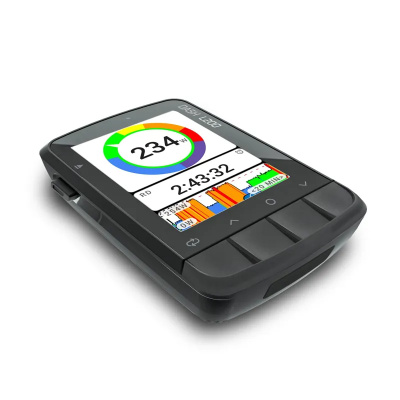
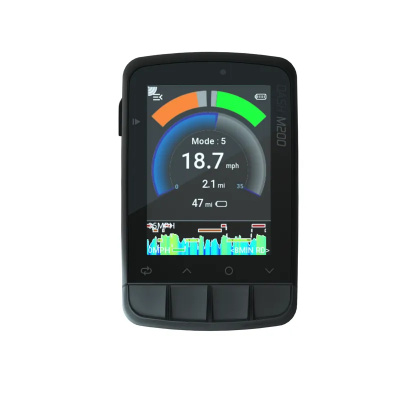
Stages GPS Computers have quietly built a reputation as the head units that serious riders actually trust - and once you've seen the Dash M200 and L200 side by side, it's easy to understand why. At the heart of both units sits the EverBrite™ colour screen, which punches through flat grey British light without you needing to crank the backlight to maximum and haemorrhage battery in the process. That matters when you're three hours into a winter ride across the North York Moors and the cloud hasn't shifted all day.
Both the M200 and L200 run on GPS, QZSS, and SBAS satellite networks simultaneously, so your position locks quickly and holds accurately - useful when you're navigating a new route through unfamiliar lanes rather than retracing a road you know by heart. Dual-band ANT+ and Bluetooth Smart connectivity means your sensors, heart rate strap, and power meter all talk to the unit without any faffing. Add 16GB of onboard storage and seamless syncing through the Stages Link app, and you've got a head unit that covers everything from threshold intervals to multi-day touring without asking you to compromise.
IP57 dust and water resistance rounds out the package. British weather doesn't ask permission, and neither should your GPS.
Prices and availability can change quickly. Delivery charges are not always included in listed prices.
Final price, stock status and delivery terms are set by retailer. We may receive a commission on purchases made.
Tech Ecosystem and How It All Connects
The dual-band ANT+ and Bluetooth Smart setup on the Stages Dash isn't just a spec-sheet tick. It means you can run a full sensor stack - cadence, speed, heart rate, power - without conflicts, and still have bandwidth left for your phone connection. Practically, that matters if you're running newer Bluetooth-only sensors alongside older ANT+ kit picked up secondhand. The Dash handles both without you having to choose.
Most of the day-to-day customisation happens through the Stages Link app. Screen layouts, data field arrangement, and app connections are all managed there rather than through the unit's own menus, which keeps the on-device interface clean. Linking to Strava or TrainingPeaks takes a couple of minutes - you authorise the connection once inside the app, and from that point your rides push automatically the moment you save them, over Wi-Fi at home or Bluetooth from your phone in the car park. If you're following structured training through Wahoo or Garmin ecosystems and considering a switch, Stages Link is notably more straightforward to navigate than either platform's equivalent app - fewer menus to dig through to get to what you actually want.
Stages head units also pair flawlessly with their own crank-based power meters, sharing a tight data handshake that cuts out the calibration friction you sometimes get with third-party pairings. If you want to explore that side of things, take a look at the Stages Power Meters range.
Battery Life and Screen Performance Where It Counts
The 18-hour battery claim is achievable - in the right conditions. Run the unit in a stripped-back GPS-only profile on a mild day, and you'll get close. Add full mapping, three or four active sensors, and a cold January morning in the Peaks, and you're looking at 10 to 12 hours. Lithium-ion cells don't love freezing temperatures; that's physics, not a Stages-specific flaw. Plan longer winter days accordingly, and if you're doing something like a full LEJoG attempt or a loaded bikepacking route, pack a small power bank rather than gambling on the top-end figure.
The smart profile feature is worth understanding before your first ride. The unit detects which sensors are connected and adapts the available data fields automatically - so you're not staring at a blank power field if you've left the power meter at home. It sounds minor, but it removes one of those small irritations that niggles at you mid-ride when you can't remember which screen you left things on.
The EverBrite™ screen is genuinely one of the stronger arguments for choosing Stages over a similarly priced Hammerhead unit. On overcast UK days - which is most of them between October and March - colour contrast and pixel density matter more than peak brightness. The display holds legibility in low light without burning through battery, which is a real trade-off most head units struggle to balance well.
Setting Up, Mounting, and Keeping It Running Through a British Winter
Setting up a Stages Dash is straightforward enough that you can have it map-ready before the kettle's boiled. Initial pairing runs through the Stages Link app, firmware updates push over Wi-Fi, and the unit walks you through sensor connections step by step. There's no need to connect it to a laptop or navigate a clunky desktop programme - everything happens on your phone.
On the bike, the Dash uses a standard quarter-turn mount interface, so it's compatible with a wide range of third-party options. The IP57 rating means it's sealed against dust ingress and can handle sustained immersion in up to a metre of water for 30 minutes - which in practice means road spray, torrential rain, and the kind of puddle you didn't see coming on a dark November commute are all well within its comfort zone. Gritty winter roads and the salt residue that builds up on your bars won't cause problems either, provided you rinse the unit occasionally rather than leaving it caked for weeks. That's not special advice for Stages - it applies to any head unit if you want the buttons to keep working come spring.
For mounting options - out-front, stem, or aero - have a browse through the Stages Computer Mounts range to find what suits your setup.
One honest limitation worth flagging: the Stages Dash range sits at the capable end of the market but doesn't currently offer the turn-by-turn routing sophistication of some dedicated navigation-focused units. If you ride primarily on familiar roads and use the GPS for data capture and structured workouts, that won't bother you. If you're regularly exploring new routes in detail - say, plotting a traverse of the Cairngorms with complex off-road sections - you might want to weigh that against a unit with more advanced routing tools before committing.
Stages Gps Computers FAQs
How do I connect my Stages Dash to Strava?
Open the Stages Link app on your phone, go to the Connections menu, and authorise Strava from there. Once linked, your rides sync automatically whenever you save an activity - either over Wi-Fi when you're home or via Bluetooth directly from your phone.
How long does the Stages Dash battery last?
Up to 18 hours is possible in a low-power GPS-only profile. Run full mapping, multiple sensors, and a backlight in cold conditions and expect 10 to 12 hours instead. Cold UK winters are the main variable - lithium-ion batteries lose capacity below freezing, so plan longer rides with that in mind.
Is the Stages Dash waterproof?
Yes. The IP57 rating means it's fully protected against dust and can handle immersion in up to a metre of water for 30 minutes. Heavy rain, road spray, and muddy winter commutes are no problem. Just give it a rinse after particularly gritty rides to keep the buttons and ports clean.