
SRAM 11 Speed Front Derailleurs
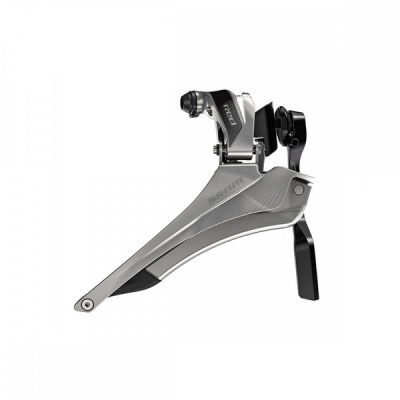
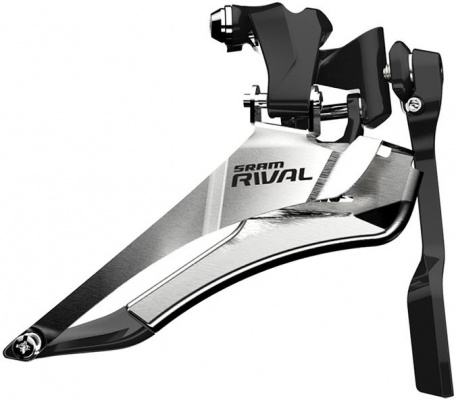
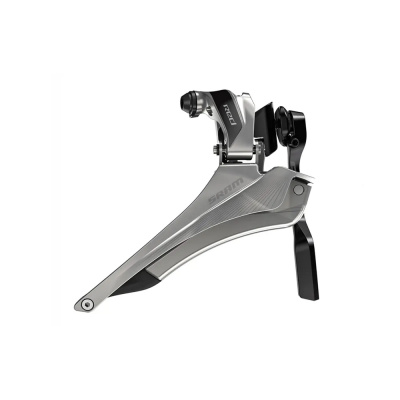
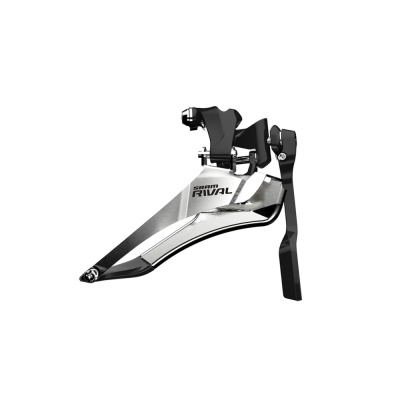
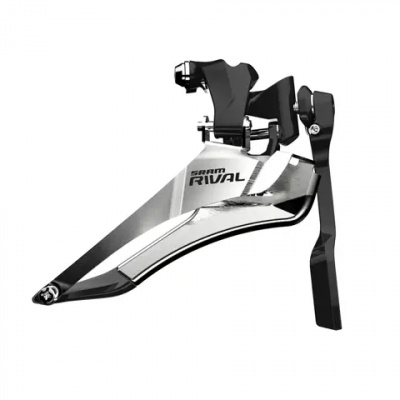
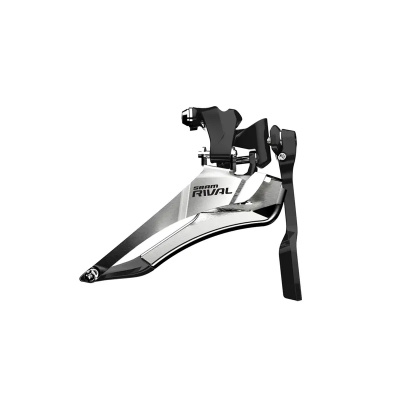
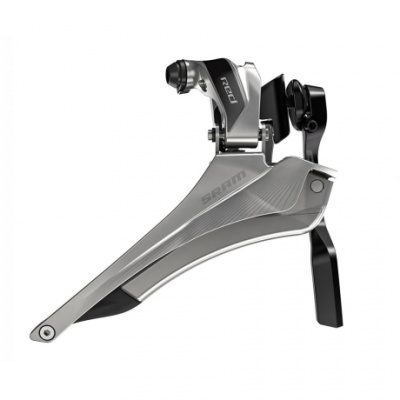
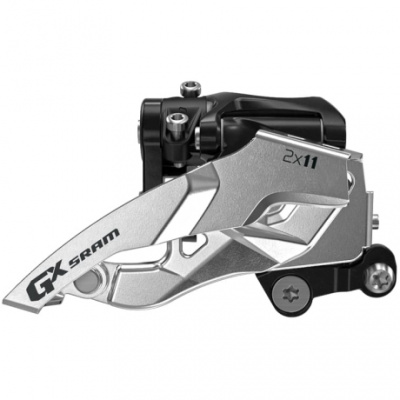
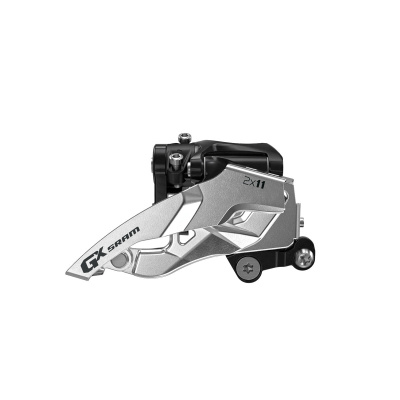
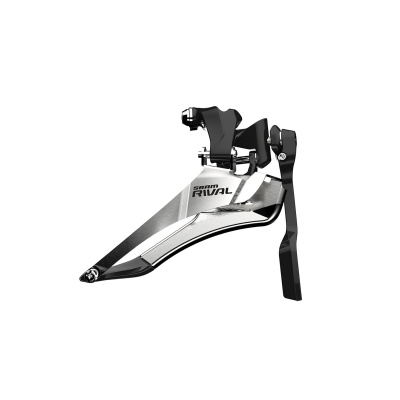
SRAM 11 speed front derailleurs do something no other road mech does quite the same way: the cage physically rotates as it shifts, keeping a consistent angle with the chain across every sprocket on the cassette. That's Yaw technology in a sentence, and what it means in practice is no chain rub, no fidgety trim shifts, just clean chainring transitions whether you're mid-climb or sprinting out of a wet corner. The entire 22-series range - Red 22, Force 22, and Rival 22 - runs this system, so you're not paying a premium just to get trim-free shifting. It comes as standard.
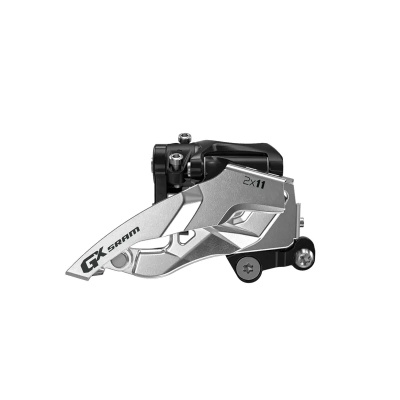
All three tiers also include integrated chain spotters, which clip onto the cage and stop a dropped chain from scoring your frame - worth knowing if you're running carbon. Mounting options cover braze-on direct-mount tabs and clamp-on collars for standard round seat tubes, so most frames are catered for. What changes between tiers is mainly weight and material - titanium and carbon up top, stamped steel down the range - rather than how the mech actually performs. Use the price comparison below to find the right spec for your build, whether that's a race-sharp Red 22 setup or a dependable Rival 22 to handle the British winters.
Prices and availability can change quickly. Delivery charges are not always included in listed prices.
Final price, stock status and delivery terms are set by retailer. We may receive a commission on purchases made.
Mounting Standards and What Fits Your Frame
Get this wrong and nothing else matters. SRAM's 11-speed front mechs come in two main mounting flavours: braze-on and clamp-on (also called band-on). A braze-on derailleur bolts directly to a threaded tab that's built into the frame - cleaner, lighter, and increasingly common on modern road and cyclocross bikes. Clamp-on versions use a metal collar that wraps around the seat tube, and you'll need to match the diameter: 31.8mm is the standard for most aluminium and steel frames, while 34.9mm suits older or some steel touring frames. Check your frame spec before you order.
Beyond mounting, the bigger compatibility point is Exact Actuation. SRAM engineered a specific cable pull ratio for their 11-speed road mechs, and it's calibrated exclusively for SRAM shifters. That means you cannot mix a SRAM 11-speed front derailleur with Shimano 11-speed shifters or Campagnolo components and expect it to work properly - the pull distances simply don't match, and you'll get sluggish or over-thrown shifts regardless of how much time you spend at the barrel adjuster. Stick to a complete SRAM 22-series groupset or confirmed SRAM-compatible shifters.
Chainring capacity is another thing to nail down. Standard 53/39 double setups run fine across all three tiers. Drop to a compact 50/34 and you're still well within limits. If you're replacing worn rings at the same time as the mech, SRAM chainrings are worth looking at alongside - getting the cage height and ring size sorted together saves you a second round of cable adjustment later.
Red 22, Force 22, Rival 22 - What You Actually Get
All three use Yaw technology and integrated chain spotters. The differences are about weight, materials, and what you're prepared to spend - not about whether the shifting works.
SRAM Red 22 sits at the top. The cage is titanium, some components use carbon, and the whole thing is obsessively pared back for riders who weigh every gram. It's the mech you'd spec on a dedicated race build or a climbing-focused road bike. The pivot spring is tuned for rapid, light action - responsive in a way that suits riders who shift frequently and deliberately.
Drop a tier and you get SRAM Force 22. Steel and alloy construction adds a modest weight penalty over Red, but the Yaw shifting behaviour is functionally identical. Force 22 is arguably the most sensible choice for most serious riders - the privateer racer's pick, as it gives you race-level performance without the race-level bill. It's also more resistant to cosmetic wear if your bike lives outdoors or doubles as a wet-weather workhorse.
SRAM Rival 22 uses heavier stamped steel throughout, and you'll feel that in hand. But durability is genuinely impressive at this price point. The spring tension holds up well over time, and the chain spotters do the same job as on Red. For riders building a reliable winter training bike or a cyclocross rig that gets battered every weekend, Rival 22 makes a strong case. You can pair it with an SRAM groupset built around the same tier and get a cohesive, long-lasting drivetrain without mixing standards.
Setup, UK Conditions, and Keeping Things Running
Yaw derailleurs have a reputation for being fiddly to set up the first time. They're not - but they are unforgiving of sloppy initial alignment. The cage has printed reference lines on it, and the whole process hinges on getting the cage perfectly parallel with the large chainring before you tension the cable. Do that correctly and the Yaw pivot does its job automatically from there, rotating as you shift to stay square with the chain. Skip that step or eyeball it, and you'll spend an afternoon chasing rub that won't go away.
Height and reach matter too. Set the cage so there's roughly 1 - 3mm clearance above the large ring, and make sure the outer plate lines up with the chainring face, not angled in or out. Once it's right, you genuinely don't need to trim - that's the point of the system. No half-clicks, no adjusting on the fly mid-climb up something like the Bealach na Bà in the wet.
UK winters are rough on derailleur pivot points. Grit from gritty roads - think Peak District winter lanes or anything in Wales from October onwards - works into the pivot linkages and accelerates wear on the spring mechanism. Every few months, flush the pivots with a light degreaser, dry them off, and apply a wet-condition Teflon-based lubricant. It takes ten minutes and extends the life of the mech considerably. Cable and housing contamination is the other weak point: if your shifts start feeling heavy on the upstroke to the big ring, contaminated housing is usually the culprit before anything mechanical has failed.
If you're doing a full drivetrain refresh, it's worth replacing the chain and rear mech at the same time. A worn SRAM 11-speed chain will accelerate ring wear and make even a fresh front mech feel imprecise. Pairing it with a new SRAM 11-speed rear derailleur means you're setting everything up from a clean baseline - one less variable when you're trying to dial in the Yaw alignment.
SRAM 11 Speed Front Derailleurs FAQs
Are SRAM 11-speed front derailleurs compatible with Shimano?
No. SRAM's Exact Actuation cable pull ratio is calibrated for SRAM shifters only. Pair a SRAM 11-speed front mech with Shimano levers and you'll get poor chainring shifts and persistent chain rub - the pull distances are fundamentally different and no amount of barrel adjusting fixes that.
How do you set up a SRAM Yaw front derailleur?
Use the alignment lines printed on the cage to set it perfectly parallel with the large chainring before tensioning the cable. Height should give roughly 1 - 3mm clearance above the big ring. Get that initial position right and the Yaw pivot handles the rest automatically - no trim shifts needed once it's properly dialled.
What is the difference between braze-on and clamp-on front derailleurs?
A braze-on derailleur bolts directly to a threaded tab built into the frame - lighter and cleaner. A clamp-on (band-on) version uses a metal collar around the seat tube, available in 31.8mm or 34.9mm diameters. Check your frame's spec to confirm which mounting standard it uses before buying.