
Sonic Kids Bikes
Sonic Kids Bikes sit in a genuinely useful part of the market - not the flimsy stuff you'd find hanging in a supermarket aisle, and not the eye-wateringly expensive race-ready rigs either. What you get is a range built around one clear idea: make it easier for kids to actually ride. Lightweight alloy frames keep the weight manageable, which matters more than most parents realise - a bike that's too heavy simply stops being fun, and a frustrated child is a child who'd rather stay indoors.
The child-specific geometry runs through every model, from the smallest balance bikes right up to the junior MTB sizes. Low standover heights mean confident, feet-on-the-floor mounting without any of the wobbling drama. Short-reach brake levers are sized for small hands so your child can actually squeeze them with authority, not just graze them hopefully. Proportionate crank lengths keep pedalling efficient and comfortable, stopping that awkward knee-splay you see on bikes where the geometry hasn't been thought through.
For the daily school run on potholed British pavements, or weekend laps of the local park, Sonic builds to last. Rust-resistant alloy components hold up to the wet and the mud without demanding constant attention. If your child is ready to ride, there's a Sonic that fits them.
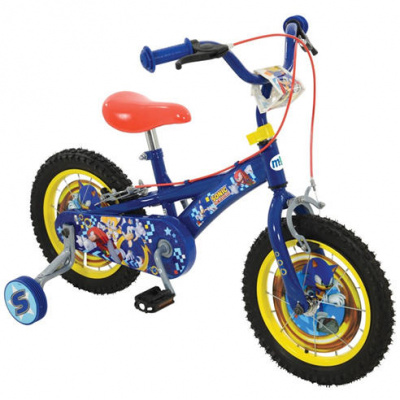
Prices and availability can change quickly. Delivery charges are not always included in listed prices.
Final price, stock status and delivery terms are set by retailer. We may receive a commission on purchases made.
Decoding the Sonic Kids Bikes Lineup
The range runs in a clear progression, and understanding where each size sits saves a lot of second-guessing. Balance bikes are the starting point - no pedals, no drivetrain complexity, just a child learning to scoot, steer and glide. From there, 12-inch and 14-inch wheel models bring in a single-speed drivetrain with removable stabilisers, bridging the gap between scooting and proper pedalling. These are driveway and quiet-pavement bikes, suited to children who are still figuring out the relationship between momentum and steering.
Move up to 16-inch wheels and you're into bikes for children who've got the basics down and want a bit more speed and range - park rides, gentle off-road paths, longer family loops. The 20-inch and 24-inch sizes are where things get properly capable. These are junior MTB-adjacent machines with gearing, hand brakes, and enough confidence in the build to handle rougher ground without rattling themselves apart. Compared with something like Frog Bikes, which leans heavily into ultra-low weight, Sonic offers a more accessible price point while keeping the geometry sensible. Carrera kids bikes occupy similar territory but tend toward heavier steel builds at the entry level - Sonic's alloy frames keep the kerb weight noticeably lower.
The wheel-size naming convention follows the tyre diameter, not the overall bike size - so a 20-inch Sonic refers to 20-inch wheels, typically suiting ages seven to ten depending on your child's inside leg. Don't go by age alone. Measure the inside leg, check the standover height on the spec sheet, and if in doubt, size down rather than up. A bike they can touch the ground on is a bike they'll actually ride.
The Engineering That Makes the Difference
Lightweight Sonic bikes for kids aren't a marketing line - the alloy frame construction is genuinely central to how these bikes work in practice. Steel is cheaper to manufacture, but a steel-framed kids bike at 12 or 14 inches can weigh close to what an adult commuter weighs proportionally to its rider. Ask a seven-year-old to lug that up a kerb repeatedly and you'll see the problem. Alloy cuts that burden considerably, and when a child can manage the bike rather than wrestling it, their confidence builds faster.
The child-specific geometry does more than just look different in the spec sheet. A low centre of gravity means the bike wants to stay upright rather than toppling at slow speeds - which is exactly the speed at which learners spend most of their time. Proportionate crank lengths are the detail that often gets overlooked: on a bike with adult-scaled cranks simply bolted to a smaller frame, children pedal with their knees flaring outward in an inefficient, uncomfortable arc. Sonic's crank lengths are matched to the wheel size and intended rider height, keeping the pedalling motion natural.
Short-reach alloy brake levers are another specific engineering choice rather than an afterthought. Standard brake levers assume adult hand span - children with smaller hands often can't generate enough pull to brake confidently, which is a real safety concern. Sonic's levers bring the reach in close so a child can brake firmly with two or three fingers. It's a small detail that changes how safe the bike actually feels to ride, not just how safe it looks in a brochure.
Where Sonic sits versus something like Dawes kids bikes comes down to this focus on engineered-for-children details rather than scaled-down adult components. Both are credible options, but Sonic's spec choices are consistently child-first across the range.
Owning a Sonic in Britain: What to Expect Day to Day
British riding conditions are specific, and a kids bike needs to cope with them. Damp park paths, muddy cut-throughs after school, and the general grind of potholed pavements are the reality for most Sonic owners - not dry summer trails. The alloy components resist rust well, but the drivetrain still benefits from a quick wipe-down after wet school runs. Grit and moisture work into the chain over time; a dry lube reapplied every couple of weeks keeps things running smoothly and extends component life without any real effort.
Tyre pressure is worth checking monthly, particularly in autumn and winter. Under-inflated tyres on slippery wet paths lose traction quickly and make the steering feel vague - not ideal when your child is still building confidence. Check the recommended pressure range on the tyre sidewall and keep them toward the middle of that range for mixed wet and dry conditions. It takes two minutes and makes a tangible difference to how the bike handles.
Before any ride, get your child properly protected. A well-fitted helmet is non-negotiable - take a look at the kids helmets available on Bikesy to find something sized correctly, because a helmet that wobbles around doesn't protect the way it should. Pair it with appropriate cycling helmet fit guidance and you've covered the most important safety base before the wheels even turn.
For families comparing options, Cube kids bikes push further into the performance end of the junior market, with multi-speed drivetrains and trail-ready builds on the larger sizes. If your child is primarily riding to school and around the park, Sonic's simpler single-speed drivetrain on the smaller models is genuinely the better choice - less to go wrong, easier to maintain, and perfectly matched to the distances involved. Save the gearing complexity for when they're ready to tackle longer or more varied rides.
Sonic Kids Bikes FAQs
Are Sonic bikes good for kids?
Yes, and the reason is specific: Sonic bikes are engineered around children rather than just scaled down from adult designs. Lightweight alloy frames, low standover heights, and short-reach brake levers all make a real practical difference - the bike is easier to manage, easier to brake on, and more confidence-inspiring than heavier alternatives at a similar price.
What size Sonic bike does my child need?
Go by inside leg measurement, not age - children vary too much for age to be reliable. As a guide, 12 to 16-inch wheel bikes suit most children aged three to six with shorter legs, while 20 to 24-inch wheels work for ages seven to eleven. When in doubt, size down so your child can get both feet flat on the ground.
Do Sonic kids bikes come with stabilisers?
Most 12-inch and 14-inch Sonic models include removable stabilisers in the box. Once your child has got pedalling and steering sorted, you can unbolt them straightforwardly and move on to two-wheel riding. They're a useful stepping stone, not a permanent fixture - take them off as soon as your child's ready.