
Ridley Gravel Bikes
Ridley gravel bikes come from a brand that spent decades racing cyclocross in Belgian mud - and that background shapes every tube junction and geometry call they make. The range splits cleanly between two missions. If you want to go fast on gravel, the Kanzo Fast is Ridley's aero-first race weapon, trimmed down and built for pace. If you want to go anywhere - loaded, in winter, on tracks that barely qualify as tracks - the Kanzo Adventure is the one to look at, with clearance and mounts to match proper off-road ambitions. Then there's the Grifn sitting in the middle as a road-gravel crossover, and the alloy and carbon entry-level Kanzo A and Kanzo C for riders who want Ridley geometry without the top-end spend. For UK riders specifically, the Belgian-grit DNA translates well: these bikes are at home on Pennine bridleways, flinty South Downs chalk, or anything winter throws at a bridleway gate. If you're after a frame to build up yourself, our Ridley Frames page is worth a look. Otherwise, the full gravel build range is below.
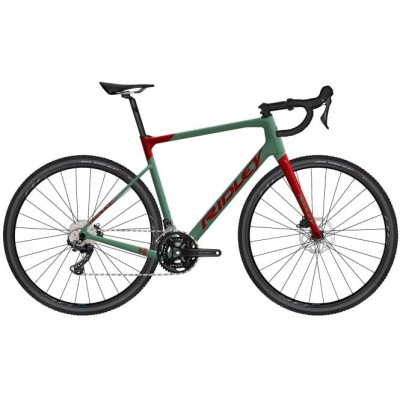
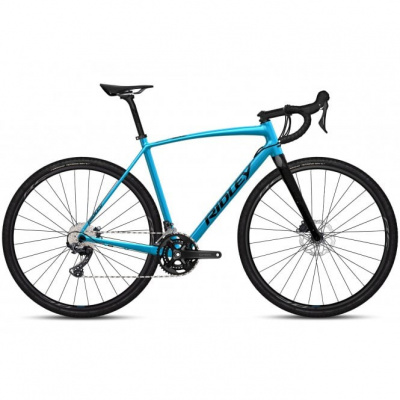
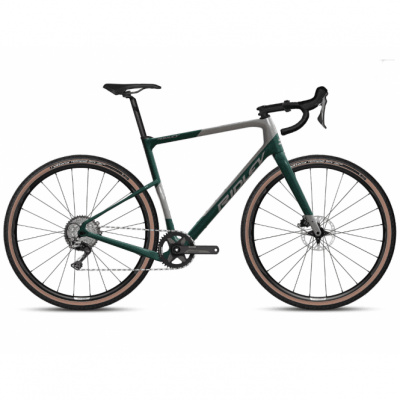
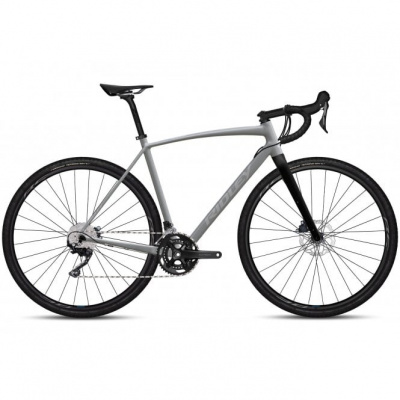
Prices and availability can change quickly. Delivery charges are not always included in listed prices.
Final price, stock status and delivery terms are set by retailer. We may receive a commission on purchases made.
Decoding the Ridley Gravel Lineup
Four models, four different riders. Getting the right one means understanding what each is actually designed to do - not just what the name suggests.
The Kanzo Fast is a gravel race bike, full stop. Aggressive geometry, a reach that keeps you flat and forward, and a maximum 42mm tyre clearance tell you everything about its priorities. It's made to be ridden hard on gravel race routes where the goal is speed, not carrying capacity. Think Dirty Reiver or any timed gravel event where you're not stopping to make coffee.
The Kanzo Adventure is the opposite in almost every useful way. Relaxed geometry, suspension-corrected fork, 53mm tyre clearance, and enough bikepacking mounts to carry serious kit. That 53mm clearance is the number worth noting - it means you can run proper knobbly rubber for sticky Welsh mud or deep bridleway ruts without the tyre kissing the stays every time you hit a root. For multi-day riding or winter use in the UK, it's a genuine workhorse.
The Grifn sits between road and gravel as an all-road machine. Wider tyre clearance than a traditional road bike, gravel geometry, but light enough to double as a fast road sportive bike. It's the N+1 that actually makes sense if your riding swings between tarmac and light gravel. If you're curious how Ridley road builds compare, the Ridley Road Bikes range gives a useful reference point.
At the accessible end, the Kanzo A (alloy) and Kanzo C (carbon) bring the same gravel geometry down to a more approachable price. The carbon layup on the Kanzo C is built around Ridley's Elite Series Carbon - a stiffness-to-weight optimised construction that keeps the frame responsive without going full race-weight fragile. Good entry point if you want Belgian-engineered handling without the flagship spend.
The Ridley Tech Philosophy
Ridley's proprietary tech is worth understanding properly, because a couple of the features have real practical implications - both positive and slightly awkward.
The F-Steerer is a D-shaped steerer tube that routes cables completely internally from bar to frame. The result is a clean cockpit with meaningful aero gains - wind tunnel work backs it up. The trade-off is that swapping stems becomes a more involved job than on a standard round steerer. If you're the type who regularly tinkers with fit, factor that in. If you set your position once and leave it, it's no issue at all.
F-Tubing refers to Ridley's aerodynamic tube profiles across the Kanzo Fast - flattened, shaped sections that minimise drag. It's not visual gimmickry; Ridley has history with wind tunnel development from their road race programme, and the tube shapes are genuinely drag-reducing rather than purely aesthetic. The practical benefit on a fast gravel ride is measurable, even if the numbers matter more at race pace than on a relaxed weekend loop.
One integration that stands out is Ridley's support for the Classified Powershift hub. This is a two-speed internal rear hub that effectively replaces the front derailleur - you get a 2x gear range with a 1x drivetrain setup. Cleaner cockpit, no front mech to clog with mud, and wide-range gearing. For UK gravel riding, where you might hit a 20% rutted lane after a flat fireroad, that range matters. It's a premium addition, but it solves a real problem.
If you want to explore Ridley's broader technical range beyond gravel, the Ridley Mountain Bikes page shows how the same engineering approach transfers to longer-travel builds.
Living with a Ridley in the UK
A few practical points before you commit to a size or model - the sort of things worth knowing before the order goes in.
Ridley frames traditionally run with a slightly longer reach and higher stack than many European and Asian competitors at the same nominal size. In plain terms: if you're usually a medium, try a small before assuming. Check the geometry charts directly against your current fit numbers rather than trusting S/M/L alone. It's a consistent pattern across the range and riders who skip this step often find themselves stretching further than expected.
For winter use, the model choice genuinely changes your experience. The Kanzo Adventure's 53mm clearance gives you room to run a 50mm mud tyre with actual volume, which on a bridleway after three days of rain in the Brecon Beacons is the difference between riding and pushing. The Kanzo Fast's tighter clearances - maxing at 42mm - require more careful tyre selection in winter. You can make it work, but you're limited to drier or grittier conditions rather than deep sticky mud. Adding Ridley mudguards to either model helps with spray and keeps the drivetrain cleaner through autumn and winter.
Tubeless setup is straightforward on both models - the rims are tubeless-ready and the tyre clearances on the Adventure in particular mean you can run lower pressures for genuine grip and comfort on rough tracks. Worth doing from the start rather than retrofitting later. A compatible seat clamp is also worth checking if you're running a dropper post or swapping saddle height frequently - Ridley's seat tube spec is standard, but it's one of those details that catches people out on delivery day.
On the question of how Ridley compares to alternatives: Canyon gravel bikes and Focus gravel bikes sit in similar territory on price and geometry, and both are worth looking at if Ridley's reach dimensions don't suit your proportions. Ridley's edge is in the F-Steerer integration and the Classified Powershift compatibility - if those features matter to you, the comparison gets easier.
Ridley Gravel Bikes FAQs
Is Ridley a good brand for gravel bikes?
Yes, and the cyclocross background is relevant rather than just a marketing line - Ridley has spent years engineering frames to handle unpredictable, muddy conditions at race pace. That translates directly to gravel: the carbon layups are robust, power transfer is efficient, and the handling stays predictable when conditions deteriorate. A genuinely capable choice for UK riding.
What is the difference between the Kanzo Fast and Kanzo Adventure?
The Kanzo Fast is built for gravel racing - aero tube profiles, aggressive geometry, and 42mm maximum tyre clearance. The Kanzo Adventure is built for bikepacking and rough riding - relaxed geometry, a suspension-corrected fork, 53mm tyre clearance, and multiple luggage mounts. Same brand, completely different priorities. Choose based on what you're actually going to do with it.
Do Ridley gravel bikes run big?
They do tend to run with a longer reach and higher stack than many competitors at the same label size. Don't rely on S, M, or L alone - pull up the geometry chart and compare the reach and stack figures against your current bike or a professional fit. Riders who skip this step often find they need to size down.