
Reverse Components MTB Wheels
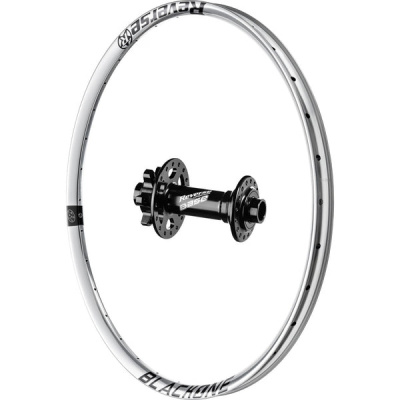
Reverse Components MTB wheels come out of the Black Forest with a clear brief: stay in one piece when things get rough. These aren't wheels chasing a weight target - they're built for riders who'd rather replace a £4 spoke than a cracked carbon hoop after a bad line at Innerleithen or a sketchy Welsh trail centre drop. Featuring high-engagement hubs that snap you back into drive the moment you start pedalling, tubeless-ready alloy rim profiles wide enough for modern gravity tyres, and J-bend spokes you can source from any decent local shop, Reverse wheelsets are the kind of kit that privateer enduro racers and weekend bike park regulars keep coming back to. The Black One series sits at the top - lighter, wider, genuinely refined - while the Base range gives you the same bulletproof ethos at a more straightforward price. There's an E-Series too, with reinforced internals built for the torque that kills lesser freehubs. Get your axle spacing and freehub standard right before you buy, and you'll have wheels that ask very little of you between rides.
Prices and availability can change quickly. Delivery charges are not always included in listed prices.
Final price, stock status and delivery terms are set by retailer. We may receive a commission on purchases made.
Axle Spacing, Freehub Standards and Rotor Mounts
Get the spec sheet wrong here and the wheels won't leave the car park. Reverse hubs span the three main axle spacings: standard 142mm rear for older frames, Boost 148mm - by far the most common on modern enduro and trail bikes - and Superboost 157mm for wide-chassis frames that run larger tyre clearances or specific linkage designs. Many Reverse hub shells accept interchangeable end-caps, so you can shift between 142mm and Boost 148mm without buying new hubs. That said, you cannot convert a standard hub shell to Superboost 157mm - the flanges are in a different position entirely, and no amount of end-cap swapping changes that. Check your frame spec carefully.
Freehub body choice matters just as much. Reverse hubs are available in Shimano HG (the old 8 - 11 speed standard), Shimano Micro Spline (for 12-speed Shimano cassettes), and SRAM XD (for SRAM's 10 - 50t and wider-range 12-speed options). If you're running a 10-speed Shimano setup on an older hardtail, HG is your call. Moving to GX Eagle or XX SL? You need XD. It sounds obvious, but it's the kind of thing that catches people out when they're buying second-hand or upgrading cassettes mid-season. Rotor mounting across the Reverse range is predominantly 6-bolt, which is widely compatible, easy to service and lets you reuse rotors across builds without hunting for a Centerlock lockring tool. If you're also looking at Reverse Components rotors, pairing them at purchase makes sense for straightforward compatibility. For riders building up custom wheels rather than buying complete sets, the Reverse Components rims page is where to head - standalone hoops are listed there separately.
Black One, Base and E-Series - Which Tier Fits Your Riding
Reverse keeps the range readable, which is a relief. Three tiers, each with a distinct job.
The Black One series is the flagship. The rim profiles are optimised for wide gravity tyres - internal widths that make a 2.4 or 2.5 casing sit properly rather than balloon awkwardly - and the overall build is noticeably lighter than the Base without sacrificing the structural integrity you need on a proper enduro or bike park wheel. If you're lining up for a timed Enduro World Series stage or you just want a wheel that handles hard braking on loose, rocky descents without flexing under you, the Black One is the one to look at. It's a meaningful step up, not just a badge change.
The Base series is the workhorse. Heavier, yes - but not by a margin that'll ruin your day on the climbs, and considerably more cost-effective. These are the wheels that mechanics quietly recommend to riders who bin wheels regularly, ride every weekend regardless of conditions, and don't want to wince every time they clip a rock. Freehub engagement is handled by Reverse's high-engagement Base hubs, which give you immediate pedal response - useful on technical climbs where a dead spot in the drivetrain can cost you a line. Compared to something like Halo MTB wheels at a similar price point, the Base range holds its own on durability, though Halo has the edge in breadth of sizing options.
The E-Series addresses a specific problem: e-MTB torque destroys standard freehub internals faster than most manufacturers admit. Reverse engineered the E-Series freehubs with reinforced internals and thicker spokes to handle the sustained, high-torque output that a mid-drive motor produces on every climb. If you're running a Shimano EP8 or Bosch Performance CX system and you've already seen one freehub ratchet wear out prematurely, the E-Series is a direct answer to that. Worth noting if you're comparing options - DT Swiss MTB wheels offer a similarly reinforced e-bike range, but often at a higher price bracket.
Keeping Reverse Wheels Running Through a UK Winter
British grit is abrasive in a way that polite product descriptions tend to underplay. Deep winter mud from the North Downs or a sodden Grizedale session carries fine silica particles that work into bearing seals and destroy cartridge bearings faster than dry-condition riding ever would. Reverse hubs use sealed cartridge bearings rather than loose ball arrangements, which gives you a meaningful layer of protection against ingress - but sealed doesn't mean invincible. Washing bikes with a pressure washer aimed directly at the hub flanges accelerates wear regardless of brand. A gentle rinse and a wipe-down goes much further.
On servicing intervals: plan to inspect the pawls and re-grease them roughly every six months if you're riding through autumn and winter regularly. It's a straightforward job - pop the freehub body off, clean the pawl seats, apply a light grease, reassemble - and it keeps the engagement crisp. Left too long, pawls get sticky and the hub starts skipping under load, usually on the worst possible climb. Keep a small bottle of light hub grease in your workshop kit and it's a ten-minute job rather than a warranty conversation.
The J-bend spoke design is genuinely practical for UK riders who put miles in far from a specialist workshop. If you snap a spoke on a Welsh trail centre ride, a standard J-bend replacement is available from almost any bike shop in the country. Proprietary straight-pull spokes are faster to build but harder to source at short notice - the Reverse approach means your local mechanic can have you rolling again the same day. Wet, off-camber roots and rock gardens also make a case for tubeless setups; the Black One rim profiles support lower tyre pressures without the sidewall folding, which reduces the risk of pinch-flat damage on those slippery, root-strewn descents you get across much of the UK. You'll need tubeless-compatible rim tape, valves and sealant - none of which come in the box - but it's a one-evening job that pays back every muddy ride. For a complete build, pairing Reverse wheels with Reverse Components singlespeed sprockets keeps everything under the same parts umbrella if you're running a stripped-back setup. Alternatively, Hope MTB wheels are worth a look if you want UK-manufactured hubs with similarly robust serviceability - different aesthetic, comparable ethos.
Reverse Components MTB Wheels FAQs
Are Reverse Components MTB wheels tubeless ready?
Modern Reverse wheelsets, including the Black One series, feature tubeless-ready rim profiles. You'll need to add tubeless rim tape, valves and sealant yourself - none are included - but the rims are shaped and sealed to support a proper tubeless setup without modification.
What freehub body do I need for my Reverse wheels?
Reverse hubs come with Shimano HG, Shimano Micro Spline or SRAM XD freehub bodies. HG suits 8 - 11 speed Shimano cassettes, Micro Spline is for 12-speed Shimano, and XD covers SRAM's 12-speed Eagle range. Match the freehub to your cassette standard before ordering.
Can I convert my Reverse hubs to a different axle spacing?
Many Reverse hubs accept interchangeable end-caps, letting you switch between 142mm and Boost 148mm rear spacing. Converting to Superboost 157mm isn't possible via end-caps - the hub shell geometry is different. Always check the specific model's adapter compatibility before buying.