
Reserve Gravel Wheels
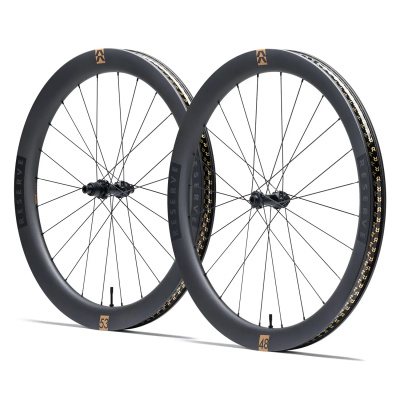
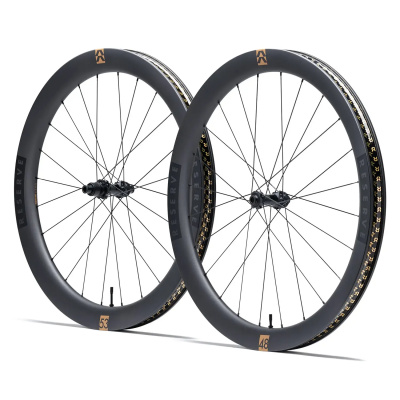
Reserve gravel wheels are built around a simple idea: carbon rims that genuinely survive what British riding throws at them, backed by warranty terms that most brands won't touch. Born from the partnership between Santa Cruz and Cervélo, Reserve has spent years refining asymmetrical carbon rim layups that balance spoke tension more evenly across the wheel - which translates into a more compliant, planted feel on rough surfaces without sacrificing stiffness where it counts.
The range covers two distinct wheelset characters. There's a shallower, lighter option for technical, lumpy gravel and a mixed-depth aero profile for faster, more open riding. Both run DT Swiss hubs - the same internals that live through years of Scottish grit and South Downs flint - and both come tubeless ready with Fillmore high-flow valve integration included. That last detail matters more than it sounds: getting a tubeless setup to actually seal first time on a blustery Sunday morning is its own kind of victory.
If you're comparing Reserve against ENVE gravel wheels or weighing up the no-fault crash replacement policy against standard crash cover, the lifetime warranty deserves serious attention. For UK riders putting in big miles on abrasive chalk trails or winter mud runs, it isn't just reassuring - it's practical value.
Prices and availability can change quickly. Delivery charges are not always included in listed prices.
Final price, stock status and delivery terms are set by retailer. We may receive a commission on purchases made.
Fitment Specs and What Works With What
Both Reserve gravel wheelsets use 12x100mm thru-axle front spacing and 12x142mm rear - the current standard on virtually all modern gravel bikes, so compatibility headaches are rare. Rotor attachment is Centerlock disc across the range, which suits most riders well; if your bike runs six-bolt rotors, a Centerlock adaptor ring sorts it without drama. Worth checking your existing rotors before you order, though.
Freehub body options cover the main drivetrains: Shimano HG for 11-speed road-style setups, Shimano MicroSpline for 12-speed, and SRAM XDR for Eagle and Force AXS groupsets. Reserve builds these as swappable bodies on the DT Swiss hubs, so if you change drivetrain down the line, you're not locked into a whole new wheelset.
Internal rim width runs around 24 - 25mm depending on the model. That's the sweet zone for tyres from roughly 30mm up to 50mm - covering everything from a snappy 35mm file-tread for hardpack to a chunky 47mm winter mud tyre. Go narrower than 30mm and you'll lose tyre profile shape; go wider than 50mm and you're into gravel-plus territory where the rim width starts to feel limiting. If you want to lace Reserve rims into a custom build rather than buy a complete wheelset, Reserve rims are available separately - useful if you're speccing bespoke hub options or matching an existing drivetrain.
25|GR vs 40|44 GR: Choosing Your Profile
The Reserve 25|GR is the climbing and technical option. Its shallow, 25mm rim depth keeps weight low and cross-wind handling predictable - exactly what you want when the route involves loose rocks, root-laced descents, or the kind of narrow Peak District bridleways where a sail-like deep rim becomes a liability. It's also the more forgiving choice for longer days in the saddle on genuinely rough surfaces, where the shallower carbon profile works with the asymmetrical layup to take the edge off repeated impacts.
The Reserve 40|44 GR runs a mixed-depth profile - 40mm front, 44mm rear. That asymmetry is deliberate: the deeper rear adds rolling momentum and a touch of aerodynamic efficiency, while the shallower front keeps steering predictable in gusty conditions. On fast, open gravel - think Lincolnshire wolds roads, long Northumberland drover tracks, or gravel sportives with more tarmac linking sections than the route card suggests - the 40|44 GR finds its rhythm quickly. It's a more purposeful race tool, though not a fragile one.
Hub choice runs across three tiers on both wheelsets. The DT Swiss 350 is the workhorse: heavier than the others but almost absurdly reliable, with a straightforward Star Ratchet engagement that survives neglect. The DT Swiss 240 sheds meaningful weight over the 350 and uses the same internals - just lighter alloy - making it the pick for riders who want performance without tipping into extravagance. At the top sits the DT Swiss 180 with ceramic bearings, noticeably smoother under load and lighter still, but it rewards regular cleaning and greasing more than the lower tiers do. Worth being honest about your maintenance habits before speccing these. Hope gravel wheels and DT Swiss gravel wheels offer comparable hub quality at different price points if you're still weighing the field.
Getting Through a UK Winter Without Destroying Your Wheels
British gravel riding is its own category of abuse. Chalk and flint on the South Downs leave rim edges looking like they've been dragged across a belt sander, and winter rides produce a grinding paste of mud and sand that works into hub bearings with real intent. Reserve's carbon fibre rim layup is engineered to handle rim strikes well - the asymmetrical construction distributes impact loads more evenly than a standard symmetric layup, which reduces the chance of catastrophic failure on a jagged flint edge. That's not a marketing claim so much as basic composite engineering, and it's the reason the lifetime warranty exists with no-fault crash replacement terms rather than the usual exclusion-heavy small print.
The DT Swiss Star Ratchet system inside the hubs is genuinely serviceable without specialist tools - you can pull the freehub, clean the ratchet rings, and regrease everything in a car park with a rag and a tube of grease. On a wet February ride out of the van, that matters. Ratchet ring upgrades (36T, 54T) are available off the shelf too, so you can tune engagement without replacing the hub.
For tubeless setup, the Fillmore high-flow valve system that ships with Reserve wheelsets speeds up the initial inflation significantly - the wider bore lets you seat a tyre bead with a track pump rather than a compressor in most cases. Getting the sealant right is the other half of that equation; check the Reserve tubeless valves page for compatible valve options and pair them with a quality sealant to complete the setup properly.
One honest trade-off: the carbon fibre rim surface, while strong, does require tyre pressure awareness if you're running hookless or semi-hooked profiles. Always verify the maximum pressure rating for your specific Reserve rim and tyre combination - the asymmetrical layup changes the pressure dynamics slightly compared with a conventional symmetric rim, particularly in the 25|GR. Most gravel tyre pairings in the 35 - 47mm range sit well within safe limits, but it's worth a two-minute check rather than finding out the hard way on a long day out. The lifetime no-fault crash replacement warranty covers the original owner for riding incidents including crashes - but it works best when you're not pushing the setup beyond its design parameters to begin with.
Reserve Gravel Wheels FAQs
Are Reserve gravel wheels hookless?
Reserve gravel wheels - including the 40|44 GR - typically use a semi-hooked or hooked rim design rather than fully hookless, giving broader tyre compatibility and more headroom on pressure. That said, always check the specific rim profile for your chosen model before fitting tubeless tyres, as construction details vary across the range.
What hubs do Reserve gravel wheels use?
Reserve builds all gravel wheelsets exclusively with DT Swiss hubs. You can spec the DT Swiss 350 for day-in, day-out reliability, step up to the DT Swiss 240 for a meaningful weight saving, or go to the DT Swiss 180 with ceramic bearings for the smoothest, lightest option. All use the same serviceable Star Ratchet internals.
What is the warranty on Reserve wheels?
Reserve offers a lifetime warranty for the original owner that covers crash damage as well as manufacturing defects - no-fault replacement, no questions about how it happened. If you break a rim while riding, they replace it. It's one of the most straightforward warranty policies in the carbon wheel market.