
Rapha Saddle Bags
A dropped chain you can walk off, but a pinch flat ten miles from anywhere with no spares? That's a long push. Rapha saddle bags keep your essentials locked away under the saddle - tidy, secure, and well clear of the wind. Built from PU-coated ripstop nylon with YKK AquaGuard zips, they're designed to handle exactly what UK roads throw at the back end of a bike: constant rear-wheel spray, road grit, and the kind of damp that never quite stops. The dual saddle-rail and seatpost strap retention system keeps the bag planted even when you're out of the saddle hammering up a climb - no swing, no rattle, no distraction. Whether you're after a compact pouch to hold a single 700c tube, a CO2, and a couple of tyre levers for a road ride in the Surrey Hills, or a beefier pack with enough room for gravel spares and a multi-tool, there's a size in the range that fits the job. Compare the latest models and find the best prices below.
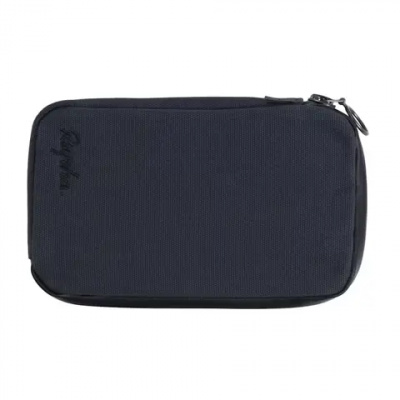
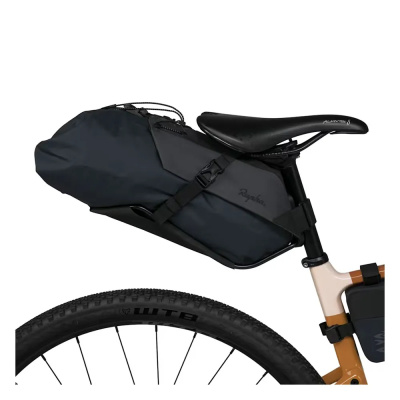
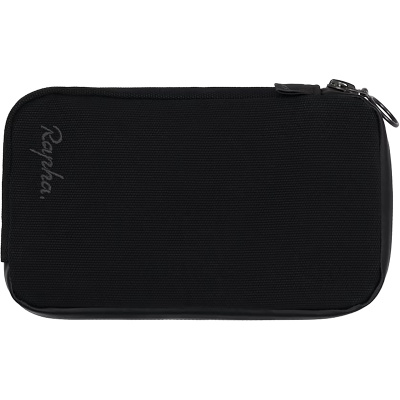
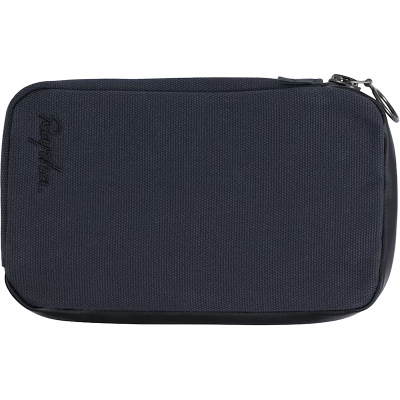
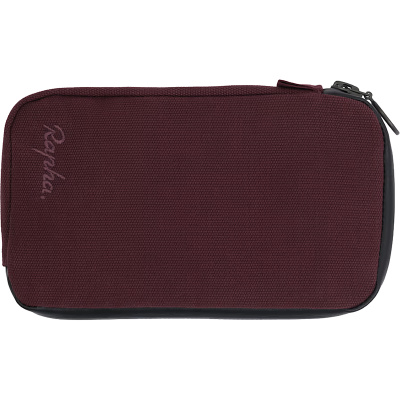
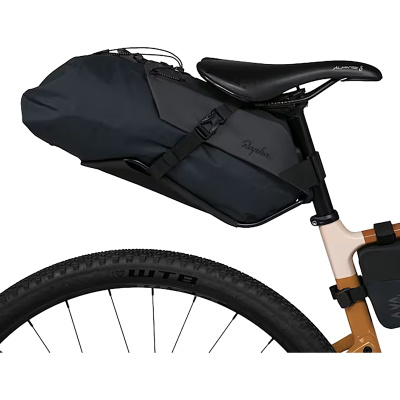
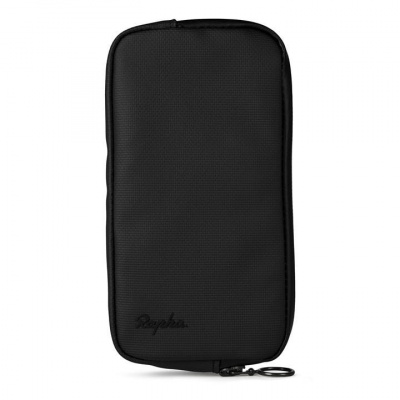
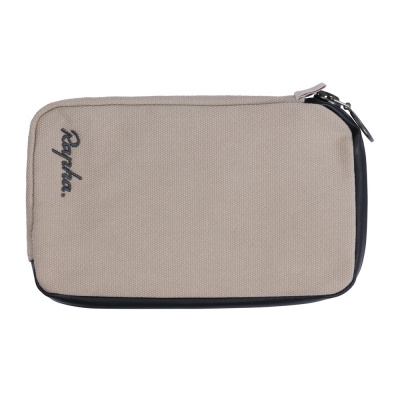
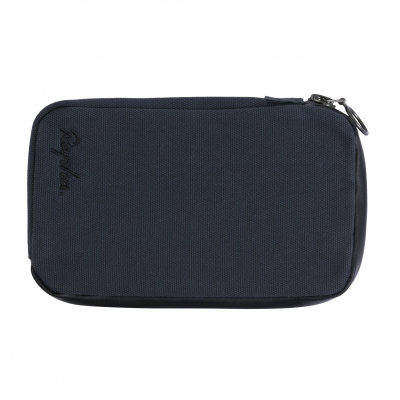
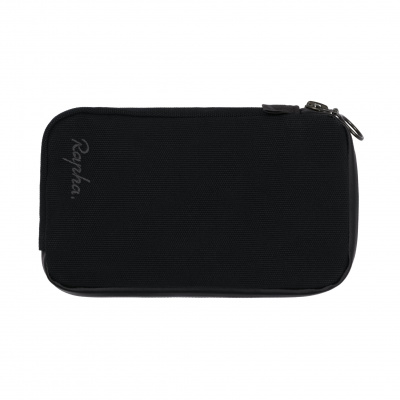
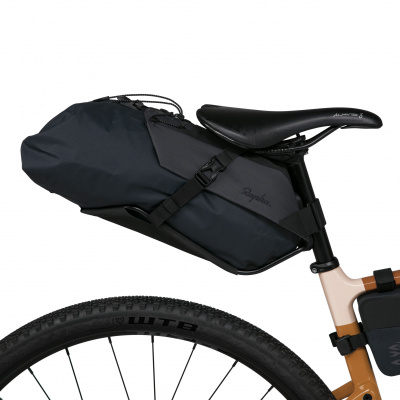
Prices and availability can change quickly. Delivery charges are not always included in listed prices.
Final price, stock status and delivery terms are set by retailer. We may receive a commission on purchases made.
Mounting, Seatpost Clearance, and What to Check Before You Buy
Every Rapha saddle bag uses the same core mounting approach: a pair of velcro loops wrap around the saddle rails, and a secondary strap cinches around the seatpost. It's a straightforward system, and when it's fitted correctly on a standard round or D-shaped post, the bag sits snug with virtually no lateral movement. That said, there are a few things worth checking before you click buy.
Dropper post compatibility is the big one. Most traditional saddle bags - Rapha's included - will foul the dropper mechanism when the post drops, either catching the bag on the tyre or blocking full travel. If you're running a dropper on a gravel or off-road build, a saddle bag simply isn't the right solution for that bike. Have a look at Rapha frame bags instead - they keep your kit weight centred and clear of any moving parts.
For standard setups, minimum exposed seatpost length matters more than most riders realise. Medium and larger bags need enough post showing above the clamp to allow the strap to sit flat and grip properly - typically 80 - 100mm minimum. If your post is slammed or close to it, the strap ends up riding too near the clamp, and the bag cants forward under load. Check your clearance before committing to a larger size.
If carrying extra layers is your priority and saddle bag space won't cut it, Rapha bar bags offer a more practical front-end option for bulkier kit without compromising your post setup.
Road Bags vs. the Explore Range: What You Actually Get for Stepping Up
Rapha's saddle bag lineup splits fairly cleanly into two families, and understanding the difference saves you buying the wrong size for your riding.
The Classic road bags are built small and aero-tucked. The small format fits one 700c inner tube, a CO2 canister, and a set of tyre levers - possibly a compact multi-tool if you pack light. There's no wasted space, which is exactly the point. These bags disappear under a road saddle and add almost nothing visually to a clean build. The waterproofing here comes from a DWR (Durable Water Repellent) treatment over the PU-coated shell, which handles road spray well in normal conditions but isn't a dry bag.
Step up to the Explore saddle packs and the brief changes considerably. These are designed with wider gravel-specific tubes in mind - a 700x40c or 650b tube is noticeably fatter than a road tube, and the Explore range accommodates that without forcing you to stuff and wrestle the zip closed. Capacity goes up, and so does the waterproofing specification: Explore models feature welded seams in addition to YKK AquaGuard zips, which makes a meaningful difference when you're deep into a mixed-surface day in the Welsh Marches and the rain hasn't let up for two hours. You also get internal mesh dividers on the higher-spec Explore versions - a small detail that stops a loose multi-tool grinding against a CO2 canister for the entire ride, which anyone who's heard that noise for three hours will appreciate.
Reflective detailing on the Explore bags is also more extensive than on the road variants. Not just a logo hit, but proper strip coverage that picks up car headlights from the rear on unlit lanes. Pair the Explore pack with a set of Rapha jackets and you've got useful rear visibility sorted front and back.
The honest trade-off: the Explore bags are heavier and visually chunkier. On a weight-sensitive road build, that matters. On a gravel bike where you're already running wider tyres and a more relaxed geometry, it's largely irrelevant. Choose the bag that matches the bike, not the one that looks smallest in a product photo.
Keeping Rapha Saddle Bags in Good Shape Through a UK Winter
Saddle bags sit in arguably the worst possible place on a bike for winter riding. The rear wheel flings a continuous stream of water, grit, and road salt directly at the zip and lower seam. Most riders ignore this entirely until the zip starts jamming or the teeth split - and by then the damage is already done.
The YKK AquaGuard zips on Rapha bags are genuinely good, but they're not self-cleaning. After a muddy or salty ride, a quick brush along the zip teeth followed by a light application of silicone spray every couple of months keeps them running smoothly and maintains the water-resistant seal. It takes two minutes and extends the life of the bag significantly. Zip lubricant is cheap. A replacement bag isn't.
The other issue that catches riders out is seatpost abrasion. The velcro retention strap works by clamping tightly against the post - which is fine on a bare aluminium post, but on a carbon seatpost it becomes a problem once road grit works its way under the strap. That grit turns the strap into sandpaper, and after a full winter's riding it can cause real damage to the carbon layup. The fix is straightforward: apply a strip of clear helicopter tape to your seatpost wherever the strap contacts it. It's invisible, it's tough, and it takes the abrasion instead of your post. Do it before you fit the bag for the first time, not after you notice the marks.
If you're building out a full setup for year-round riding, Rapha water bottles and Rapha bib shorts are worth looking at alongside the bag - consistent kit that's built to the same durability standard and works together through long winter miles. You can browse the full Rapha range on Bikesy to compare current prices across the board.
Rapha Saddle Bags FAQs
What fits in a Rapha saddle bag?
A small Rapha saddle bag holds one 700c inner tube, a CO2 canister, tyre levers, and usually a compact multi-tool if you pack efficiently. Medium and Explore versions have enough room for two tubes or the bulkier 700x40c and 650b gravel tubes, plus a full multi-tool without forcing the zip.
Are Rapha saddle bags fully waterproof?
The road bags use DWR treatment and YKK AquaGuard zips - more than enough for heavy UK road spray and a wet commute. The Explore models add welded seams for a meaningfully higher level of protection. Neither is designed for submersion, but in normal riding conditions, including persistent rain, both perform well.
Will a Rapha saddle bag scratch my carbon seatpost?
It can, yes - not from the bag itself but from road grit trapped under the velcro retention strap. Over time that acts as an abrasive against the carbon. Apply a strip of clear helicopter tape to the post wherever the strap contacts it before you fit the bag. It's an easy fix that protects the layup entirely.