
Pivot Mountain Bikes
Pivot mountain bikes occupy a rarefied corner of the market - boutique Arizona engineering that happens to translate brilliantly to British riding. Every acoustic MTB in the range is built around two non-negotiables: DW-Link suspension and hollow core carbon construction. The result is a lineup where the frames are genuinely light, the suspension actually works under power, and the geometry doesn't feel like a compromise in either direction.
What makes Pivot worth your attention isn't brand cachet - it's specificity. Each model is engineered for a distinct purpose, from cross-country efficiency through to proper enduro aggression, and the component builds are tiered clearly so you're not guessing what you're getting. For UK riders dealing with everything from Thetford hardpack to Tweed Valley gloop, that engineering depth matters more than it might on a sunnier continent.
On this page you'll find complete bikes across the core acoustic range. Looking for pedal-assist power to conquer steeper climbs? Explore our dedicated Pivot E-Bikes collection. If you're planning a custom dream build from the ground up, browse our available Pivot Frames.
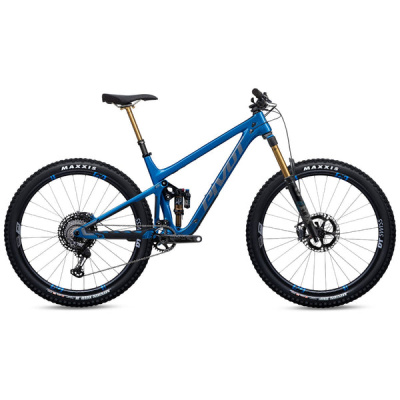
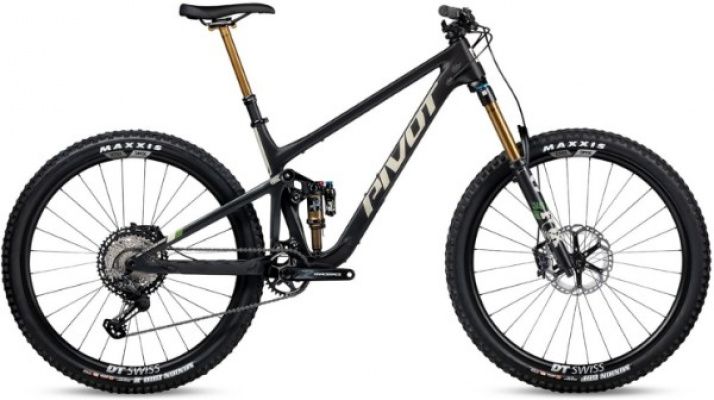
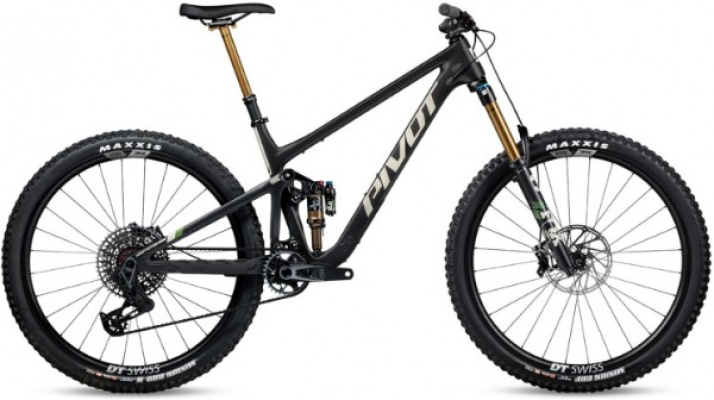
Prices and availability can change quickly. Delivery charges are not always included in listed prices.
Final price, stock status and delivery terms are set by retailer. We may receive a commission on purchases made.
The Core Pivot MTB Lineup and Who Each Bike Suits
Pivot mountain bikes split into four distinct acoustic families, each with a clear remit. Get this right and you buy confidently; get it wrong and you'll be fighting your bike up every climb or feeling nervous on every descent.
The Mach 4 SL is Pivot's XC race weapon - 100mm rear travel, sub-10kg builds at the top end, and geometry that rewards committed pedalling. It's not a bike for riders who want to dabble in enduro, but if you're chasing lap times at a cross-country event or grinding long mountain days with minimal faff, it's the tool.
The Trail 429 sits at 120mm rear travel and is genuinely the most versatile bike in the range. Think all-day Welsh trail centre laps, exploring bridleways, and tackling the kind of varied riding that doesn't demand a single specialism. It climbs with real urgency and descends with more confidence than its travel figure suggests.
Step up to the Switchblade and you're into 142mm rear travel with slacker geometry. This is where Pivot MTB riders who want all-mountain aggression without sacrificing climbing manners end up. It'll handle proper rowdy descents while still getting you back up the hill without feeling like hard work. Thinking about how the Pivot Switchblade vs Firebird decision breaks down? Travel and geometry are the key split - the Switchblade still climbs hard, the Firebird prioritises going down fast.
The Firebird is Pivot's enduro rig. At 160mm rear travel with a notably slack head angle, it's built for riders who point at the steepest line and commit. Climbing is possible - the DW-Link sees to that - but this bike's priorities are unambiguous. Compare it to options from Ibis or Forbidden and you'll find similar philosophy: long, low, slack, and unapologetically gravity-focused.
Build kit naming follows a logical tier structure. Ride builds use Shimano XT or SRAM GX components - capable, durable, and a sensible entry into the range. Pro builds step up to XTR or GX Eagle AXS territory, and Team builds represent the full Fox Factory suspension and top-tier groupset treatment. Worth knowing: the frame is identical across tiers, so upgrading components later is always an option.
Why the Engineering Behind Pivot Actually Matters
Three technologies define how Pivot frames feel - and they're worth understanding before you compare price tags.
DW-Link suspension, designed by Dave Weagle, is the centrepiece. The kinematics are tuned specifically for anti-squat behaviour, meaning the suspension resists pedalling-induced bob without being locked out. You get a bike that accelerates cleanly and tracks the ground properly on descents. It's not a gimmick - it's measurably different from generic four-bar or single-pivot designs, and it's why Pivot riders often describe the bikes as feeling almost telepathic under power.
The Hollow Core Internal Molding process addresses one of carbon's persistent problems: resin pooling inside the layup, which adds weight without adding stiffness. Pivot's method uses highly compacted carbon and a mandrel-based moulding technique to keep wall thickness controlled and consistent throughout the frame. The practical upshot is a stiffer, lighter frame than most competitors achieve at equivalent price points. When you're comparing Pivot Trail 429 vs Mach 4 SL on paper, it's worth knowing both benefit from the same production process - the weight difference comes from geometry and travel choices, not carbon quality.
Super Boost Plus 157 rear hub spacing is the spec that raises eyebrows in the car park, but it earns its keep. Wider rear hub spacing lets wheel builders run a more symmetrical spoke bracing angle, which translates directly into a stiffer rear wheel without adding weight. For UK riders, the secondary benefit is arguably more immediately relevant: the wider spacing allows significantly more tyre and mud clearance in the chainstay area. Running a 2.6-inch tyre caked in Peak District clay stops being a concern.
Running a Pivot in British Conditions
Pivot mountain bikes UK buyers should know a few practical realities before committing.
The Super Boost Plus 157 spacing genuinely earns its place in Welsh winter slop. The clearance around the rear tyre means that even when you're caking on mud at Bike Park Wales or pushing through saturated moorland, you're not fighting a bike that's turned into a giant brake pad. That's a real-world difference on a wet November Saturday, not a spec-sheet talking point.
Bearing longevity is another area where Pivot thinks carefully. Factory-installed Enduro Max bearings are used throughout the suspension pivots - these are sealed, high-quality cartridge bearings that cope better with grit and regular jet washing than the budget alternatives you'll find on cheaper bikes. If you're the type who hoses the bike down after every muddy session and then wonders why bearings creak within a season, the Pivot approach is a genuine step forward. They're not indestructible, but they last considerably longer under British abuse than most.
On sizing, Pivot runs modern reach numbers. If you're used to older geometry, the bikes can feel long at first glance. Many riders find they can comfortably size down from what they'd expect, which makes the handling feel more playful without sacrificing stability at speed. If you're between sizes, it's worth considering your riding style: more technical, tighter trails favour the smaller size; faster, more open riding suits staying with your usual size. Hope builds share a similar approach to geometry progression if you want a comparative reference point.
One practical note: Super Boost Plus 157 is a Pivot-specific standard. Rear wheel replacements need to be built or bought to that specification, which slightly narrows your off-the-shelf options. It's not a deal-breaker - wheelbuilders handle it routinely - but factor it in if wheel weight or rapid replacement matters to you. A good Fox Factory shock setup is also worth checking at purchase; the leverage curves are model-specific, so swapping shocks between Pivot bikes isn't always straightforward.
Whether you're weighing up a Trail 429 for Afan Argoed or a Firebird for proper enduro stages, the core Pivot proposition holds: tightly engineered frames, suspension that works, and builds that don't need immediate upgrading. For riders who spend serious time on their bikes, that's where the pricing starts to make sense.
Pivot Mountain Bikes FAQs
Are Pivot mountain bikes worth the money?
For committed riders, yes. The Hollow Core carbon construction keeps frames genuinely light and stiff, and the DW-Link suspension is refined enough that the ride quality difference over cheaper alternatives is immediately noticeable. You're paying for engineering depth and durability - not just a badge - which makes the premium easier to justify the more time you spend on the bike.
Where are Pivot mountain bikes made?
Pivot frames are designed and prototyped at their headquarters in Tempe, Arizona. Carbon manufacturing is carried out in high-specification facilities in Taiwan - standard practice among top-tier MTB brands. Complete bike assembly and quality control are handled at US or European bases before bikes reach UK distributors.
What is the difference between the Pivot Switchblade and Trail 429?
The Trail 429 runs 120mm rear travel and prioritises pedalling efficiency - it's the one for long days and varied riding. The Switchblade steps up to 142mm with slacker geometry, so it handles steeper, more demanding descents with more composure. Both climb well thanks to DW-Link, but the Switchblade is clearly the more aggressive tool of the two.