
Forbidden Mountain Bikes
Forbidden Mountain Bikes have built a fierce reputation on a simple idea: make the rear wheel go backwards. That rearward axle path - what Forbidden call their High Pivot Witchcraft - means square-edged roots and rock lips that would deflect a conventional suspension design get absorbed and rolled over instead. Momentum stays where you want it: carrying you through the rough rather than being bled off every time the trail bites back.
It's a system that suits UK riding particularly well. Steep, punchy descents in the Tweed Valley, braking bumps on slick Welsh singletrack, the kind of chewed-up lines that appear after a wet weekend - this is exactly where the Forbidden approach pays dividends. The Trifecta Suspension System ties the high pivot to a linkage-driven rate control that keeps the bike active and planted without feeling vague or wallowy under pedalling load.
Two complete acoustic models sit at the heart of the range: the trail-focused Druid and the enduro-ready Dreadnought. Looking for motorised assistance or building a custom rig from scratch? Check out our dedicated Forbidden E-Bikes and Forbidden Frames collections.
Prices and availability can change quickly. Delivery charges are not always included in listed prices.
Final price, stock status and delivery terms are set by retailer. We may receive a commission on purchases made.
Decoding the Forbidden Mountain Bike Lineup
This section covers complete, non-motorised Forbidden mountain bikes only - if you're after the Epoc, head to the Forbidden E-Bikes page, and if you'd rather spec your own build, the Forbidden Frames page is where you want to be.
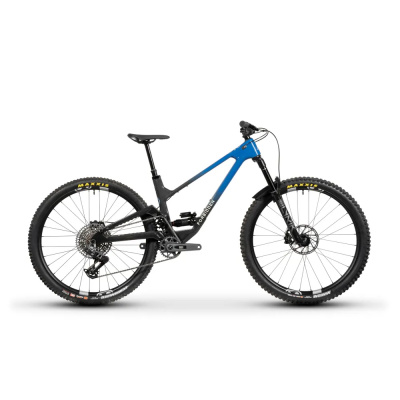
The Druid sits at 130mm of rear travel and is Forbidden's trail bike - the one you'd reach for on an all-day mission with a decent amount of climbing in the mix. It's no slack-geometry cruiser, though. V2 kinematics tightened up the pedalling efficiency without dulling the descending character, and the geometry numbers put it firmly in aggressive trail territory rather than cross-country compromise. Both 29er and mullet setup (29-inch front, 27.5-inch rear) options are on the table, which matters if you're shorter or just prefer a more flickable rear end on tight lines.
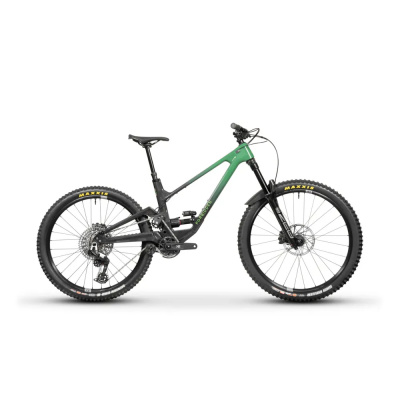
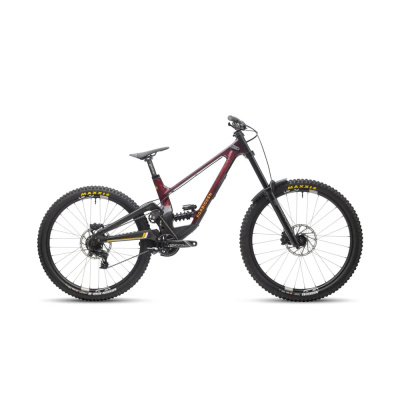
Step up to the Dreadnought and you're into 154mm enduro territory. This is the bike for bike park laps, Enduro World Series-style stages, or anyone who spends most of their time pointing downhill and wants the machine to match that intent. The V2 updates brought refined V2 kinematics that improved small-bump sensitivity without softening the mid-stroke support you need when a berm loads up properly. Again, mullet compatibility is built in - not an afterthought. Compared to something like an Ibis mountain bike, the Dreadnought sits in a more specialised, high-pivot niche rather than the broad all-rounder bracket.
Both models use a full carbon layup chassis. The fibre orientation and layup schedule differ between sizes to balance stiffness and compliance, rather than just scaling a single design up and down. That detail matters more than it sounds.
The Forbidden Tech Philosophy: High Pivot Witchcraft
The Trifecta Suspension System is the piece that makes everything else work. It combines the high pivot axle position, a Rate Control Linkage, and an integrated idler pulley into a single coherent design. Each part is doing a specific job, and they're genuinely interdependent - you can't just bolt a high pivot onto a conventional frame and expect the same result.
The rearward axle path is the headline act. When the rear wheel hits a square edge - think a sharp rock lip mid-corner or a braking bump at pace - a conventional suspension layout pushes the wheel forward and into the hit. The Forbidden system moves the axle rearward and upward instead, so the wheel rolls up and over the obstacle rather than deflecting off it. Think of the difference between dragging a box across a carpet versus lifting it. Speed holds. Traction holds.
The Rate Control Linkage manages what a rearward axle path would normally compromise: pedalling efficiency. Without it, the chain growth inherent in a high pivot design creates significant anti-squat forces that can make the bike feel harsh and chain-dependent under power. The Rate Control Linkage dials this back, giving the suspension freedom to move independently of whether you're on the gas or not.
The idler pulley is the mechanical piece that makes the chain routing work with the high pivot - it redirects the chain around the larger axle arc. It's an elegant fix to a genuine engineering problem, but it does add a component to your maintenance rotation (more on that shortly).
Then there's One Ride Geometry. Rather than scaling a single chainstay length across every frame size, Forbidden increase the chainstay length proportionally as the frame grows. A rider on a Small gets the same handling balance - the same ratio of front-to-rear weight distribution - as a rider on an XL. On most bikes, smaller riders end up with proportionally longer chainstays relative to the front centre, which upsets balance. One Ride Geometry removes that variable. It's a small thing in isolation; across a day's riding it compounds into a noticeably more intuitive bike.
If you're weighing this system against more conventional linkage designs from brands like Hope or Cube, the honest answer is that the Forbidden approach demands more precision from its rider in terms of maintenance but offers a different handling character - particularly on rough, high-speed descents - that its fans are genuinely evangelical about.
Living with a Forbidden in the UK
High pivot systems and British winters have a complicated relationship. The idler pulley sits low on the frame, directly in the firing line of whatever the trail throws up - and in Welsh winter conditions or a muddy Tweed Valley weekend, that's a lot. Grit, clay, and standing water work into the pulley bearings faster than you'd expect. Clean and re-lube the idler pulley after every properly mucky ride; leave it and you'll start to notice drivetrain drag that robs the system of its smoothness. It's a five-minute job. Don't skip it.
Frame protection is worth treating seriously too. The carbon is high-quality, but the chainstay and downtube take consistent abuse from grit flicked up at pace. Manufacturers' own protection kits or aftermarket helicopter tape on the vulnerable spots is cheap insurance against stone chips that, left unaddressed, can compromise the finish over a season.
The good news is that on the descents where UK riding gets genuinely technical - steep, rooty, slick - the Forbidden kinematics are in their element. The rearward axle path handles the kind of square-edged hits that characterise eroded British singletrack with a composure that feels almost unfair. Where a more conventional 29er might skip and deflect, the Forbidden stays connected. In the wet, that translates directly to confidence.
Geometry-wise, the reach numbers are on the generous side by UK trail centre standards, so check the size guide carefully, particularly if you're between sizes. The mullet option is worth considering for shorter riders not just for fit but because the 27.5 rear adds a degree of agility that suits tighter, more technical lines over outright rolling speed. Pairing either model with a quality set of grips and pedals - categories where Bikesy also lists a wide range - makes a real difference to how connected the bike feels on slippery days.
Forbidden Mountain Bikes FAQs
Are Forbidden bikes any good?
Forbidden are well-regarded at the premium end of the MTB market. Their high-pivot Trifecta Suspension System gives the bikes a distinctly capable character on rough, fast descents - particularly strong at carrying momentum over square-edged hits. The trade-off is a slightly higher maintenance commitment around the idler pulley compared to conventional designs.
Where are Forbidden bikes made?
Forbidden Bike Co. is based in Cumberland, British Columbia, where design and testing takes place. The carbon frames are manufactured in Taiwan under close quality control. It's a setup common across premium MTB brands - design IP stays in-house; frame production goes where the carbon expertise is.
What is the difference between the Forbidden Druid and Dreadnought?
The Druid is a 130mm trail bike - agile enough for all-day rides with climbing in the mix, but with genuine descending ability. The Dreadnought runs 154mm of travel and is built squarely around aggressive descending: bike park laps, enduro stages, and steep, technical lines. Both share the Trifecta suspension platform and support mullet wheel setups.