
Nalini Skinsuits
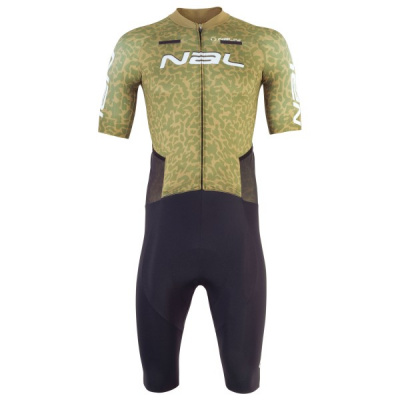
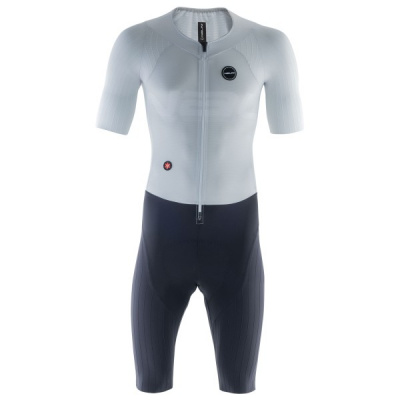
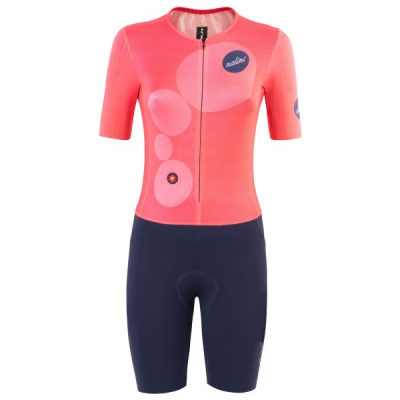
When fractions of a second separate a PB from a near-miss, Nalini skinsuits bring pro-peloton aerodynamic engineering to the privateer racer. Made in Italy by Moa Sport, each suit is built around wind-tunnel-tested Kinetech fabrics and strategically placed textured panels that work to reduce aerodynamic drag where it counts most. The integrated chamois pads - drawn from Nalini's Krono and Randonneur lineups - sit flush against the body without adding bulk, and raw-cut sleeves with low-profile silicone grippers keep the profile clean. Hidden front zips remove another variable from the drag equation. Whether you're targeting a course record on a blustery dual-carriageway time trial, fighting for wheel position through a technical summer criterium, or grinding through a winter cyclocross league in deep mud, Nalini has a discipline-specific suit for the job. The cut is aggressive - genuinely race-focused - so if you've only worn bib shorts and a jersey before, the fit will feel confrontational at first. That's by design. These suits are engineered to be worn in the aero position, and that's exactly where they perform.
Prices and availability can change quickly. Delivery charges are not always included in listed prices.
Final price, stock status and delivery terms are set by retailer. We may receive a commission on purchases made.
Fabric Tech and Aerodynamic Performance
The foundation of any Nalini skinsuit is Kinetech - a family of woven fabrics engineered to provide targeted compression while managing aerodynamic drag across the body. Different panels use different Kinetech weights depending on their role: smoother, denser weaves sit over muscle groups where compression aids power delivery, while textured or dimpled fabrics are positioned at the arms, shoulders, and outer legs. Those textures aren't decorative. They're designed to trip the boundary layer of air clinging to the suit's surface, converting laminar flow into turbulent flow and, counterintuitively, reducing overall drag - the same principle that makes a golf ball's dimples work. At race pace, that's measurable. Under threshold effort in a time trial, the Kinetech construction also breathes well enough to prevent overheating, which matters on a 25-mile course where you can't afford a second half fade.
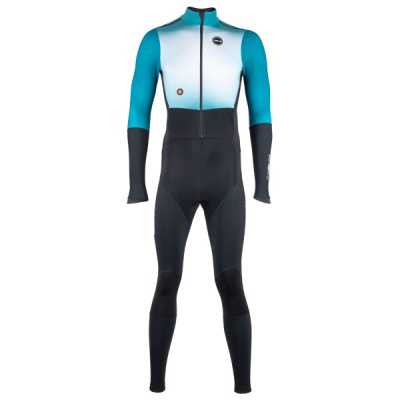
For cyclocross-specific suits, Nalini applies DWR (durable water repellent) treatments and uses heavier thermal-backed variants of their technical fabrics. Mud sheds rather than saturates, and the added thermal layer keeps core temperature stable through early morning start waves in November. It's a different brief to a pure Nalini aero skinsuit, but the same attention to fabric placement carries through. If you're comparing at this level, Castelli skinsuits and Bioracer skinsuits operate in the same space - all three invest heavily in wind-tunnel data - but Nalini's Italian manufacturing and Moa Sport heritage give the fabrics a tactile quality that's hard to quantify but easy to notice when you're pulling one on.
Understanding the Nalini Fit and Range
Every Nalini skinsuit is cut for an aggressive, race-specific position. In the showroom or bedroom, it'll feel tight across the shoulders and restrictive through the hips. Don't let that put you off. In the tuck - elbows in, back flat - the panels align with your body and the compression becomes purposeful rather than punishing. Fabric bunching, which costs watts by disrupting airflow, disappears entirely. That's the point of the cut.
The range breaks down into three clear categories. Pure Nalini TT suits are stripped back: no rear pockets, minimal panelling breaks, hidden zips front and centre. Everything is subordinated to straight-line speed. Road speedsuits add rear pockets and slightly more breathable fabric construction - practical for criteriums or road races where you need to carry a gel or two without blowing up thermally through a two-hour effort. The Nalini cyclocross suit variants are a different animal: thermal, slightly more forgiving in the cut to allow for repeated dismounts and remounts, and built to handle conditions that would wreck a summer race suit inside a season.
On Nalini skinsuit sizing, the general advice is: if you're between sizes, go up. The high-compression fabrics don't offer much give, and a suit that's too small will restrict breathing and shoulder movement in ways that hurt performance rather than help it. Check your chest and hip measurements against Nalini's size guide carefully - Italian race sizing runs close to body measurements, not generous. If you're carrying any muscle mass in the legs, pay particular attention to the thigh measurement. For an alternative take on fit and sizing philosophy, Santini skinsuits follow a similar Italian race cut and are worth comparing if you're undecided.
One thing worth knowing: the silicone grippers at the sleeve hems are intentionally low-profile. They hold position without leaving marks, which becomes relevant if you're racing back-to-back weekends and living in the suit for warmup, race, and cool-down.
Layering and Care for UK Racing
An early morning British time trial - think 6am on an empty A-road, temperature hovering around 10°C - is a specific challenge. The suit itself won't be enough. A lightweight, moisture-wicking base layer underneath adds a meaningful thermal buffer without compromising the aerodynamic profile of the Kinetech fabric above it. Keep the base layer thin and close-fitting; anything with texture or loose fabric will undo the work the suit's outer panels are doing. Pair that with a Nalini gilet for the warmup and strip it off at the start line.
For criteriums or road races in summer, most riders go straight onto the suit with nothing underneath. Cooling is better, the aerodynamic properties of the fabric sit correctly against skin, and the integrated chamois functions as designed without a bib short liner muddying the picture. A Nalini jacket over the top on the rollers before your race starts is a sensible habit - you want to arrive at the line warm, not cold and stiff from standing around in a skinsuit.
Care is where a lot of riders inadvertently shorten a suit's lifespan. Wash cold, always inside out, and never use fabric softener. Softener coats elastane fibres, reducing their elasticity over time and degrading the aerodynamic properties of the technical fabrics - the textured panels that manage airflow need their surface structure intact to do their job. Air dry only. Tumble drying will ruin the chamois and distort the compression panels faster than almost anything else. Handle the suit well and it'll repay you across multiple seasons. If you find yourself wanting to compare everyday training options alongside race-day skinsuits, Nalini bib shorts carry the same fabric philosophy into a more forgiving format.
Nalini Skinsuits FAQs
How tight should a Nalini skinsuit fit?
It should sit flush against the body with no bunching or wrinkles - any loose fabric disrupts airflow and costs you watts. Standing up it'll feel restrictive across the shoulders, but once you're in the aero position it contours correctly. If you're between sizes, go up rather than down.
Do you wear a base layer under a cycling skinsuit?
For summer criteriums or short TTs in warm conditions, most riders go straight onto the suit - better cooling, cleaner aerodynamic profile. For early morning UK time trials or winter cyclocross, a thin, close-fitting moisture-wicking base layer is worth the minimal added bulk to manage the chill.
Are Nalini skinsuits only for time trials?
Not at all. Pure TT suits are built for straight-line speed with no pockets, but Nalini's road speedsuits add rear pockets and higher breathability for criteriums and road races. Their cyclocross-specific suits go further still - thermal fabrics, DWR treatment, and a cut that handles repeated dismounts without fighting you.