
Motobike Kids Bikes
MotoBike Kids Bikes are built around one idea: give a child a pedal bike that looks and feels like it belongs on a motocross track. The moto-inspired Y-frame, the chunky suspension forks, the race plates - it all adds up to something that genuinely gets kids excited to ride. That matters, because a bike a child actually wants to ride is one they'll improve on fast.
The range covers 12-inch, 16-inch, and 20-inch wheel sizes, so there's a fit from first-pedals age through to confident pre-teen riders. Smaller models come with stabilisers included; the bigger 20-inch machines drop them in favour of Shimano twist-grip gears. For UK riders, the knobby tyres and robust high-tensile steel frames handle park abuse, pavement drops, and the odd muddy cut-through without complaint.
Not quite at the pedal stage yet? Our MotoBike Balance Bikes collection covers the first-steps options. This page focuses entirely on the pedal-driven MotoBike range, from 12-inch first bikes to 20-inch trail-ready machines.
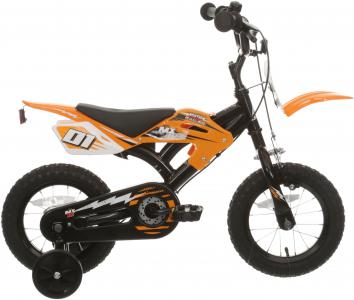
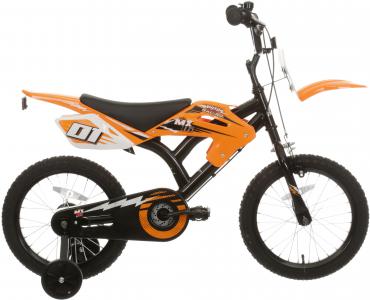
Prices and availability can change quickly. Delivery charges are not always included in listed prices.
Final price, stock status and delivery terms are set by retailer. We may receive a commission on purchases made.
Decoding the MotoBike Kids Lineup
Three wheel sizes, one consistent philosophy. The 12-inch models are the starting point - single-speed, stabiliser-equipped, and sized for children roughly 3 to 5 years old who are getting their first feel for balance and pedalling together. Geometry is relaxed, standover height is low, and the moto-style frame already plants the aesthetic seed early.
Step up to the MotoBike kids bike 16 inch and you're in the busiest part of the range. These are the bikes you'll see doing kerb drops in every park across the UK on a Saturday morning. Still single-speed, still with removable stabilisers in the box, but the MX series naming starts to mean something here - the frame profile is noticeably more aggressive than a standard BMX silhouette. Where a typical BMX runs a straighter top tube, the MotoBike MX geometry uses that distinctive Y-frame to drop the standover point lower and push the riding position slightly forward. It's a subtle but real difference in how confident a child feels throwing a leg over it.
The 20-inch models are where the range opens up properly. Shimano twist-grip gears arrive, the stabilisers disappear, and the overall spec steps up to match riders who are starting to think about longer rides rather than just laps of the estate. If you're weighing a MotoBike MX vs standard BMX at this size, the suspension forks and knobbly tyre combo give the MotoBike a clear edge anywhere off smooth tarmac. A standard BMX fork is rigid and built for the skatepark - the MotoBike MX is more at home on a gravel path or a woodland shortcut. Alternatives like Carrera Kids Bikes offer trail-focused options at this size, and Frog Kids Bikes prioritise low weight for smaller riders - both worth a look if the MotoBike spec isn't quite the right match.
What's Actually Going On With the Frame and Forks
The moto-inspired Y-frame geometry is the defining feature of every MotoBike. The Y-shape isn't just visual - it lowers the centre of the frame, which brings standover height down and makes it easier for a child to put a foot down quickly and confidently. That's genuinely useful when a kid is still building nerve on a new bike. Think of it as a shorter step off a kerb rather than a jump.
The motocross-style front suspension forks are real, working suspension - not decorative. They're not tuned to the level of a trail bike fork, but they absorb the sort of sharp impacts that come from dropped kerbs, root-covered paths, and the general chaos of how kids actually ride. On MotoBike children's bikes UK conditions - which usually means potholes, cracked pavements, and the occasional muddy field edge - that fork does a job. It takes the sting out of impacts before they reach a child's wrists, which helps with confidence and comfort on longer stints.
Knobby, high-volume tyres run across the range. They're not specialist trail rubber, but the tread pattern grips on loose gravel, damp grass, and the kind of mixed surfaces a MotoBike boys bike 20 inch will cover in a typical week. Tyre clearance is generous enough that a bit of winter mud doesn't pack the frame solid - useful in the wetter months when most rides end with a hose-down. The integrated moto mudguards and race plates round out the aesthetic and add a small amount of practical protection from trail spray.
High-tensile steel is the frame material throughout. It's heavier than aluminium - that's the honest trade-off - but it resists dents and bends in a way that cheaper alloy can't match when a bike gets thrown about. For kids who aren't yet precious about their equipment, that durability counts for a lot. If low weight is a priority, brands like Btwin Kids Bikes and Cube Kids Bikes use aluminium frames that save meaningful grams - worth considering for smaller, lighter children who struggle to manoeuvre a heavier bike.
Living With a MotoBike Through a UK Winter
Steel frames and UK weather need a bit of attention. Nothing dramatic - but if the bike lives in a damp shed or garage, a quick wipe-down after wet rides stops surface rust from taking hold. A light spray of a water-displacing lubricant on bare metal areas once a month through autumn and winter keeps it in good shape. It's a five-minute job, not a service.
V-brakes are the stopping setup across the range. They work well and are easy to adjust at home with a basic Allen key. After muddy park sessions - think a November afternoon on a churned-up path - the rims and brake pads pick up grit, which wears both faster than normal. Getting into the habit of wiping the rims clean after a muddy ride extends pad life noticeably. If stopping power starts feeling soft, nine times out of ten it's the pad alignment rather than anything more serious; most parents can sort it in minutes following a basic YouTube guide.
The knobby tyres handle UK park mud well, but very thick, clay-heavy winter mud can pack into the tread and reduce grip quickly. A stick and a rinse sorts it. For woodland rides in heavy winter conditions, some parents drop to a slightly narrower tyre if clearance allows, but for most park riding the stock rubber is more than adequate.
One practical note on sizing: the 16-inch models with stabilisers suit most children aged 5 to 7, but always check inside leg measurement against the minimum saddle height before buying - height varies more than age at this stage. The 20-inch models are generally right for 7 to 10-year-olds, but a tall 6-year-old can fit one comfortably. When in doubt, size up - a child grows into a slightly larger bike faster than you'd think.
Motobike Kids Bikes FAQs
What age is a 16-inch MotoBike for?
Most children aged 5 to 7 fit a 16-inch MotoBike well, but age is only a rough guide. Check your child's inside leg measurement against the bike's minimum saddle height - that's the reliable way to confirm a safe, comfortable fit. A child who can flat-foot confidently is a child who'll ride with confidence.
Are MotoBike kids bikes heavy?
Yes, they're on the heavier side. High-tensile steel frames, suspension forks, and the moto plastics all add up compared to a stripped-back aluminium bike. The pay-off is durability - these bikes take a proper beating without buckling. If weight is your main concern for a smaller child, an aluminium alternative may suit better.
Do MotoBike kids bikes come with stabilisers?
The 12-inch and 16-inch models include removable stabilisers in the box. The 20-inch models don't - they're aimed at riders who are already confident and don't need them. Stabilisers on the smaller models bolt off easily when your child is ready to go without.