
Mirider Folding Bikes
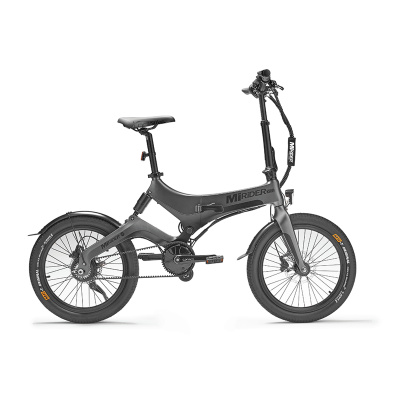
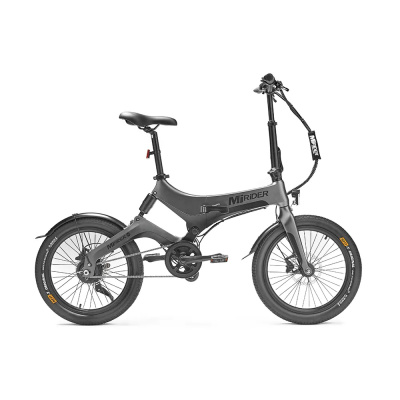
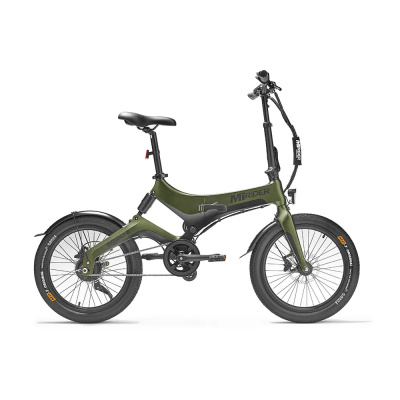
Mirider folding bikes occupy a genuinely interesting corner of the compact e-bike market - hand-assembled in Wigan, built around a weld-free die-cast magnesium alloy frame, and designed with the daily realities of British urban travel firmly in mind. These aren't holiday novelties. They're thought-out machines for commuters who need electric assistance without dragging something the size of a full-size bike onto a packed Northern Rail service.
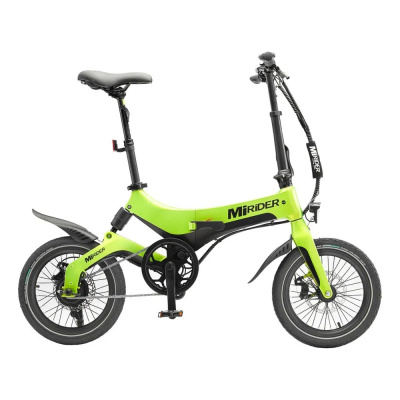
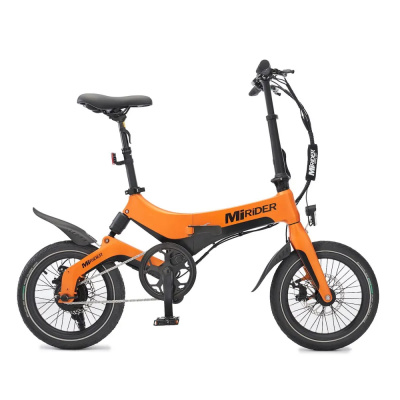
The 16-inch wheels keep the fold tight and the silhouette compact, while a rear hub motor adds assistance without complicating the drivetrain. Two distinct models - the single-speed Mirider One and the belt-driven Mirider GB3 - mean there's a clear choice depending on how far you push, how hilly your route is, and how much maintenance you're willing to do through the winter months. Both fold down to stow under a seat, in a car boot, or in the corner of a motorhome without a fight.
What sets Mirider apart from the broader folding e-bike crowd is the quality of the frame engineering and the care taken at assembly. Compared with volume-produced rivals, the magnesium construction gives these bikes a purposeful, one-piece solidity. If you're weighing up a Brompton or something from Tern, Mirider offers a different proposition - electric-first, lower maintenance, and distinctly UK-rooted.
Prices and availability can change quickly. Delivery charges are not always included in listed prices.
Final price, stock status and delivery terms are set by retailer. We may receive a commission on purchases made.
Decoding the Mirider Folding Bike Lineup
Start with the Mirider One. It's the more accessible entry point - a single-speed, chain-driven electric folder that keeps things simple and the price lower. For flat urban commutes, canal towpaths, or anyone who just wants to get from A to B without fuss, it does the job cleanly. No gears to fumble with, no complex drivetrain to service. You pedal, the motor assists, you arrive. Done.
The Mirider GB3 is where things get more interesting. The GB3 upgrades to a Gates Carbon belt drive paired with an Efneo 3-speed gearbox - and that combination changes the character of the bike noticeably. The belt runs cleaner and quieter than a chain, needs no lubrication, and laughs at the kind of grit-and-salt mixture UK roads serve up between November and March. If you're commuting year-round, that matters more than most spec-sheet figures. The Efneo gearbox sits in the bottom bracket rather than the rear hub, keeping the back end tidy, and critically it shifts while you're completely stationary - useful when you've rolled to a halt at a red light and the road ahead kicks uphill. That's a genuinely practical detail, not a marketing footnote.
In short: the One suits flatter routes and riders who want simplicity. The GB3 suits anyone dealing with inclines, longer distances, or the commitment of daily winter riding. Think of the Mirider One vs GB3 decision as choosing between a reliable workhorse and a more refined all-conditions tool.
The Mirider Tech Philosophy
The frame is where Mirider's engineering story begins. Die-cast magnesium alloy construction means the frame is formed as a single, mould-cast structure rather than welded together from tubes. The result is a notably clean aesthetic - no visible weld beads, no stress concentrations at joints - and a strength-to-weight ratio that keeps the overall package manageable without sacrificing rigidity. Magnesium is roughly 35% lighter than aluminium by volume, so you get a stiff frame that doesn't pile on the grams unnecessarily.
The telescopic adjustable stem is a practical addition that's easy to overlook on paper but makes a real difference in use. It means the bike isn't locked to one riding position - shorter commuters and taller riders can both find a comfortable setup without swapping components. Folding bikes often ignore this, leaving riders hunched or stretched.
Underneath the rider, a rear shock absorber block - an integrated elastomer unit built into the rear of the frame - takes the edge off rough tarmac. It won't transform the ride into something plush, but it meaningfully reduces the jarring that 16-inch wheels can transmit on potholed city streets. Think of it less as suspension and more as a damped buffer: it stops the worst of the sharp hits reaching your spine on broken urban surfaces. Paired with the wider balloon-style tyres, the ride quality is noticeably more composed than a rigid small-wheel bike at the same pressure.
The rear hub motor keeps the power delivery smooth and the centre of gravity low, which helps the bike feel planted rather than top-heavy when folded or ridden. It's a sensible placement for a commuter tool - predictable, low-drama, and reliable over time. For riders comparing Mirider's electric folding bike approach to brands like Eovolt, the hub motor placement and magnesium frame make a clear statement about long-term durability over ultra-light weight.
Living with a Mirider in the UK
The weight question comes up immediately when people consider any folding e-bike, and it's worth being straight about it. The Mirider One tips the scales at around 17.2kg with the battery installed. That's not light - no folding e-bike with a useful battery really is - but it's a manageable one-handed lift onto a train step or up a short flight of stairs. Compact fold dimensions mean it tucks under a seat or into an overhead space without the sideways shuffle you'd need with a full-size folder. For Tube or rail commuters in particular, the fold width is what keeps you on the right side of the conductor.
Winter use is where the GB3's drivetrain choices justify the premium. A Gates Carbon belt drive needs no chain lube, doesn't stretch, and doesn't clog with the brown paste that British roads produce in January. Combined with the enclosed Efneo 3-speed gearbox, it's a genuinely low-intervention setup for wet-weather riding. The One's chain drive will need cleaning and lubrication more regularly in winter - not a dealbreaker, but worth factoring in if your commute runs October through March.
Battery care in cold weather is worth a mention for any lightweight folding e-bike. Lithium cells lose capacity when temperatures drop, so storing the bike somewhere cool but above freezing, and not leaving the battery at a very low charge for extended periods, will preserve range over the bike's life. On a full charge in reasonable conditions, you can expect up to 45 miles of assisted riding - real-world figures will vary with rider weight, gradient, and which of the five assist levels you lean on most.
For riders wanting to extend range further, Mirider e-bike batteries are available separately, making it straightforward to carry a spare for longer days. And if you're using the bike as a genuine commuter tool, Mirider pannier bags are designed to work with the rack and fold geometry - a cleaner solution than strapping a third-party bag to a frame that wasn't shaped for it.
The Wigan assembly facility matters here too. Hand-assembly and testing in the UK means quality control is tighter than typical mass-import folding bikes, and it makes warranty and after-sales support more straightforward for UK buyers. That's a practical ownership advantage, not just a badge of origin.
Related searches:
Mirider Folding Bikes FAQs
How much does a Mirider folding bike weigh?
The Mirider One weighs approximately 17.2kg including the battery. That's heavier than a non-electric folder, but still manageable for lifting onto trains, carrying up short flights of stairs, or loading into a car boot - particularly given the compact fold dimensions.
What is the range of a Mirider e-bike?
Expect up to 45 miles (72km) on a single charge under reasonable conditions. Real-world range depends on rider weight, gradient, and the assist level you use most. Running on a lower assist setting across flatter ground will get you closer to that ceiling; heavier loads and higher assist will reduce it.
Where are Mirider bikes manufactured?
The die-cast magnesium frames are produced overseas, but every Mirider bike is hand-assembled, set up, and tested at the brand's dedicated facility in Wigan. That UK-based final build and quality check is a genuine differentiator in the folding e-bike category.