
Maddux Road Wheels
Maddux road wheels are the kind of kit that quietly gets the job done while flashier wheelsets get all the attention. Manufactured by Jalco and frequently specced as original equipment on bikes like Cannondale's road range, Maddux builds around one core idea: durability that outlasts the conditions rather than weight figures that look good on a spec sheet. That's a reasonable priority when you're riding UK roads in November.
These are double-wall alloy wheelsets with robust spoke lacing and hubs designed to handle serious mileage - not one-season wonders. If you've taken a pothole strike and need a direct replacement Maddux wheels Cannondale swap, or you're building a dedicated winter training setup and don't want to punish your good wheels with road salt and grit, Maddux makes a genuinely solid case. They're available in rim brake and disc brake configurations, cover standard 700c sizing, and use widely compatible hub standards that play nicely with most groupsets you're likely to be running. Browse the live price comparisons below to find the right fit for your bike.
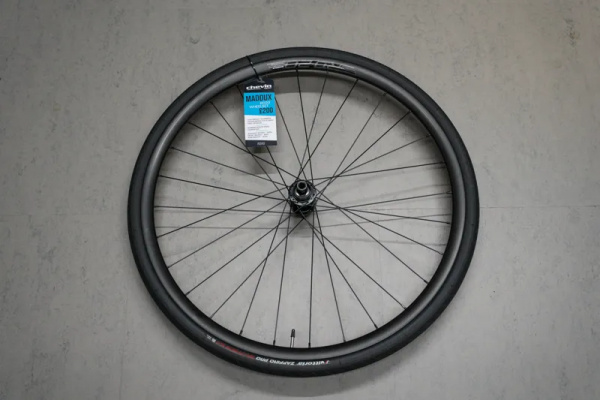
Prices and availability can change quickly. Delivery charges are not always included in listed prices.
Final price, stock status and delivery terms are set by retailer. We may receive a commission on purchases made.
Will It Fit Your Bike? Compatibility and Axle Standards Explained
Getting the right Maddux 700c wheelset starts with axle and brake standard - get either wrong and you're posting it back. Rim brake models run the traditional quick release setup: 100mm front spacing, 130mm rear. That covers the vast majority of older road bikes still running caliper brakes, so if you're replacing a stock wheel on a bike from the last decade or so, you're almost certainly in that camp.
Disc brake versions are a different animal. These use a 12mm thru-axle with 100mm front and 142mm rear spacing - now standard across most disc-equipped road and gravel bikes. Before you order, check your rotor mounting standard too. Maddux disc wheels come in both 6-bolt and Centerlock variants, and mixing those up means a trip to the workshop for an adaptor ring you didn't budget for. Worth thirty seconds of checking your existing rotors before clicking buy.
On the drivetrain side, the vast majority of Maddux road wheels use a standard Shimano HG freehub body. That makes them natively compatible with 8, 9, 10, and 11-speed Shimano and SRAM road cassettes - which covers most riders on aluminium or entry-level carbon bikes. Running SRAM XD or Campagnolo? These aren't the wheels for you. But if you're on a sensible Shimano or SRAM HG setup, the freehub drops straight in without faff. Compared to something like Mavic road wheels, which use proprietary axle systems on some models, Maddux's orthodox standards make sourcing and fitting a non-event.
Making Sense of the Model Names
Maddux doesn't sell through a traditional retail channel with a clean good-better-best ladder, so the naming conventions can look a bit cryptic when you're browsing. Here's what actually matters. The prefix tells you the brake standard: RD stands for Road Disc, while RS typically points to rim brake or a sport-profile clincher build. So an RD 3.0 is a disc brake wheel; an RS 2.0 is rim brake.
The number after the prefix is a loose indicator of spec level. Higher numbers generally mean slightly refined rim extrusions - marginally stiffer or lighter profiles - and occasionally upgraded hub internals. The differences aren't dramatic. These are OEM tiers, not the kind of performance jumps you'd see moving between entry and mid-range at Fulcrum or Halo. Think of the numbering as a subtle refinement rather than a category shift.
Most Maddux rims use a clincher setup as standard. Some newer builds are marked as tubeless ready - look for a 'TR' designation on the rim decal or in the spec sheet. Those feature a proper bead shelf in the internal rim profile. Older OEM pulls are strictly clincher-only, so don't assume tubeless capability without checking. We'll come back to that in the FAQ below.
If you're after something with a more defined aftermarket lineage, Miche road wheels sit in a similar durability-focused bracket but with a more conventional retail structure. Worth a look if the naming on Maddux leaves you uncertain.
Keeping Maddux Wheels Honest Through UK Winters
UK B-roads are not kind to wheels. The combination of potholes, road salt, agricultural mud, and temperatures that sit just above freezing for months means your hubs and rims are taking a proper beating. The good news is that Maddux builds are designed with exactly this kind of punishment in mind - sleeved or pinned rim joints prioritise impact resistance over saving a few grams, and the spoke counts are higher than you'd find on race-oriented hoops.
Still, maintenance matters. After any serious pothole strike - the kind that makes you wince - run a spoke tension check before your next ride. A loose spoke left unchecked will lead to a buckled rim faster than you'd expect, especially under load on rough surfaces. Pluck each spoke like a guitar string; they should all ring at roughly the same pitch. A dead note tells you something needs attention.
Hub servicing is where Maddux's real-world design pays off. Depending on the model, you'll find either sealed cartridge bearings or a traditional cup-and-cone system. Cartridge bearing hubs are low maintenance right up until they're not - when they do need replacement, you'll need a blind bearing puller to extract them cleanly. It's a ten-minute job if you've done it before, slightly more if you haven't. Cup-and-cone hubs are more hands-on but more forgiving: strip them down, clean off the old grease, repack with a marine-grade grease that resists water ingress, reset the cone adjustment, and you're back on the road. Do this once a season if you're riding through winter and the bearings will outlast the rims.
Road salt is the real enemy. After wet rides, rinse the hubs down with clean water - not a pressure washer - and keep the bearing area dry before storing. It takes two minutes and meaningfully extends bearing life. If you're commuting year-round and covering serious mileage, a dedicated winter wheelset built around Maddux's serviceable hubs makes more sense than grinding through your best carbon hoops. Pair them with a robust tyre in the 28 - 32mm range and you've got a setup that handles most of what a UK winter can throw down.
Maddux Road Wheels FAQs
Are Maddux wheels any good?
For what they're designed to do, yes. Maddux builds are durable, high-spoke-count alloy wheelsets specced as OEM on bikes from brands like Cannondale. They're not aiming at race-day performance - they're built for consistent, high-mileage reliability. For winter training, commuting, or replacing a damaged stock wheel, they're a solid, practical choice.
Can you set up Maddux road wheels tubeless?
Some can, some can't. Newer Maddux rims marked 'TR' have the internal bead shelf required for a proper tubeless setup. Older OEM pulls are clincher-only and aren't safely convertible. Check the rim decal or spec sheet before buying tubeless tape and valves - if the bead shelf isn't there, the tyre won't seat reliably under pressure.
What freehub body do Maddux wheels use?
Almost all Maddux road wheels use a standard Shimano HG freehub body, compatible with 8, 9, 10, and 11-speed Shimano and SRAM road cassettes. If you're running Campagnolo or SRAM's XD driver system, these won't work without a freehub swap - check with the supplier whether that's available for your specific model.