
HUUB Skinsuits
HUUB skinsuits exist for one reason: to make you faster. Not marginally, not anecdotally - measurably, repeatably faster, whether you're pinning a number on for a club 10-mile TT on a blustery dual carriageway or threading through a tight summer criterium. HUUB's approach starts in the wind tunnel, where their proprietary Anemoi aerodynamic technology - developed alongside engineer and hour-record holder Dan Bigham - shapes every panel decision. Strategically placed aero trip lines manipulate the boundary layer of air across your body, nudging airflow to stay attached longer and cutting drag where it matters most. That's not marketing language; it's applied fluid dynamics stitched into lycra.
The fit is deliberately uncompromising. Standing in the car park before a race, the suit will feel snug across the shoulders and through the legs. Drop into your TT position or onto the drops, and it contours to you exactly as designed - no wrinkles, no bunching, no drag-inducing fabric folds. The chamois pad is positioned specifically for aggressive, forward-leaning riding postures, so it supports rather than hinders. Silicone leg and arm grippers keep everything locked in place through the effort. If you're serious about your times, HUUB's range gives you a genuine aerodynamic edge backed by real engineering.
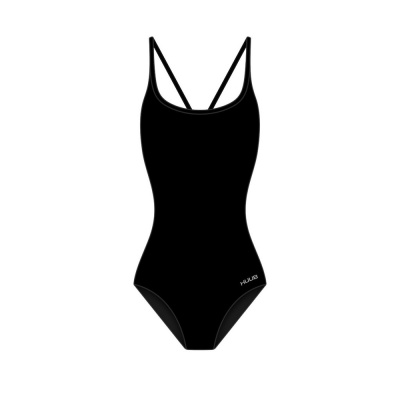
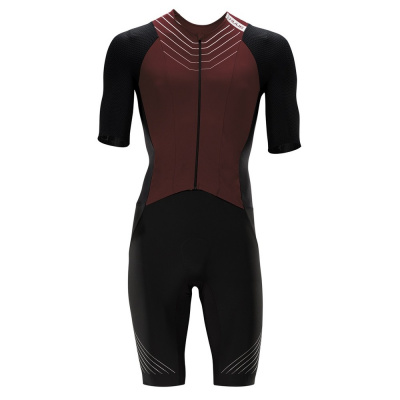
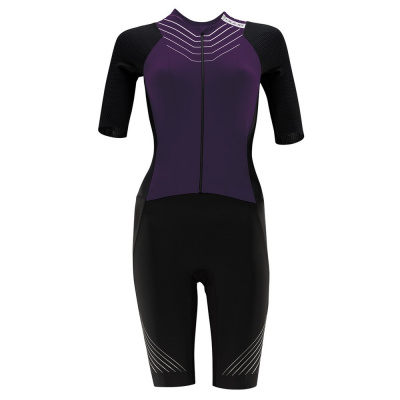
Prices and availability can change quickly. Delivery charges are not always included in listed prices.
Final price, stock status and delivery terms are set by retailer. We may receive a commission on purchases made.
Fabric Tech and How It Actually Cuts Drag
The Anemoi technology at the heart of HUUB's TT suits isn't a single fabric - it's a zonal strategy. Different panels use different textile constructions depending on where airflow behaves differently across a rider's body. The trip lines, those subtle ridges and texture changes you can feel on the suit's surface, are the key mechanism. They trigger turbulence in the boundary layer of air at precisely the right moment, keeping airflow attached to the suit's surface rather than separating and creating a wide, draggy wake behind you. It's the same principle engineers use on golf balls, applied to a cycling speedsuit.
Moisture-wicking performance is built into the same fabrics that deliver drag reduction. At race intensity - whether that's a four-minute criterium corner sprint or a 20-minute TT effort - you generate significant heat and sweat. The fabrics move moisture away from the skin quickly, keeping you cooler and preventing that clammy, heavy feeling that slows you down mid-effort. There's also a light wind-blocking quality to the outer face of the fabric, which matters more than you'd think for early-morning UK time trials. A 7am start on an exposed A-road in April involves a wind chill that can lock up your muscles before you've hit your rhythm. HUUB's fabrics don't trap heat, but they do take the edge off that cold air pressing against your chest and thighs at 30-plus mph.
Compared to a standard club jersey and bib shorts combination, the aerodynamic benefit of a well-fitted skinsuit is one of the easiest free speed gains in cycling. If you're weighing up options, Castelli skinsuits and Bioracer skinsuits operate in the same performance space, but HUUB's wind-tunnel collaboration with Bigham gives their aero claims a particularly rigorous foundation.
The HUUB Fit, and Choosing Between Short and Long Sleeve
A race fit skinsuit should feel like a second skin - that phrase gets overused, but with HUUB it's the literal design brief. Any excess fabric creates wrinkles, and wrinkles create drag. Standing upright in the changing rooms, expect the suit to feel tight across the upper back and shoulders. That's correct. In a TT position over the bars, or bent forward into the drops for a crit, the suit redistributes across your body and sits perfectly flat. If it feels comfortable while you're standing tall, it's probably a size too large for racing purposes.
HUUB offers short-sleeve suits aimed at criteriums and road races, and long-sleeve variants built for time trial and track use. The short-sleeve options give you better thermoregulation in summer racing and more freedom of movement through high-cadence sprint efforts. The long-sleeve TT suits cover more surface area, which means more opportunity for the Anemoi panels and trip-line textures to manage airflow across your arms - significant when your arms are held forward in a TT position and represent a meaningful chunk of your frontal area. For mixed UK summer racing where you might do a crit one weekend and a TT the next, a short-sleeve suit is the more versatile choice. If your primary goal is the club time trial championship or a dedicated TT season, go long-sleeve.
On the question of long sleeve skinsuit vs short sleeve: the aerodynamic case for long-sleeve is well-established in wind tunnel data, but the short-sleeve suit is easier to live with across different conditions and event types. Worth thinking about what your race calendar actually looks like before committing.
If you're also doing triathlons and wondering whether a cycling skinsuit will do the job across all three disciplines - it won't, not comfortably. The chamois in a cycling skinsuit is thicker and positioned for sustained saddle time; it's not designed to be swum in or run with. For that, head to our HUUB Tri Clothing page, where the suits use thinner, run-friendly chamois pads and dry-fast fabrics built around the demands of transition racing. HUUB's HUUB wetsuits are worth a look too if you're building out a triathlon kit setup.
Endura skinsuits are another strong option if you want British-made engineering at a range of price points, though HUUB's wind-tunnel pedigree gives their top-end suits a particular edge for dedicated TT use.
Layering Choices and Keeping the Suit in Good Shape
The default advice for skinsuit use is to wear it directly against the skin - no base layer, no bib shorts underneath. For warm summer racing that's the right call. The suit handles moisture management on its own, and adding a base layer just introduces extra fabric that can bunch and wrinkle under the suit's panels.
For early-season UK time trials, though, that calculus shifts. A 6am start in late March on an open course in the Fens or across the Yorkshire Wolds means cold air and damp, and a skinsuit alone won't keep your legs warm through the warm-up. A thin, moisture-wicking mesh base layer worn underneath adds a meaningful layer of warmth without significantly affecting aerodynamics - the key is to keep it tight-fitting and smooth. If you're training in the suit before the season proper, HUUB compression wear pairs well for recovery and cool-weather sessions.
Care matters more with a skinsuit than with standard kit. The aero textures on the fabric are physical structures - the trip lines and surface constructions that do the aerodynamic work are part of the textile itself. Fabric softener coats those fibres and blunts the surface texture, degrading performance over time. Wash at 30 degrees, use a gentle detergent without softener, and let the suit dry naturally away from direct heat. Never tumble dry. The silicone grippers on the leg and arm hems will also degrade faster with heat exposure. Treat it like the performance equipment it is, and it'll keep performing.
HUUB Skinsuits FAQs
How tight should a HUUB skinsuit be?
It should sit completely flush against the skin with no bunching, wrinkles, or loose fabric anywhere - folds create drag, and drag costs seconds. It will feel restrictive across the shoulders when you're standing upright. That's normal and correct. Drop into your TT or race position and the suit should contour perfectly to your body. If it feels comfortable standing tall, consider sizing down.
Do you wear base layers under a skinsuit?
For warm summer races, wear it directly against the skin - that's what the moisture-wicking fabrics are designed for. For early-season UK time trials where wind chill is a real factor, a thin, tight-fitting mesh base layer underneath adds useful warmth without meaningfully hurting aerodynamics. Keep it smooth and close-fitting or you'll undo the benefit.
What is the difference between a cycling skinsuit and a tri suit?
A cycling skinsuit carries a thicker chamois positioned for sustained time in the saddle, and has no rear pockets to keep the back panel aerodynamically clean. A triathlon suit uses a thinner chamois that works across swim, bike, and run, and dries quickly after the water. Using a cycling skinsuit for a triathlon is uncomfortable at best; the chamois gets heavy when wet and is too bulky to run in.