
Form Goggles
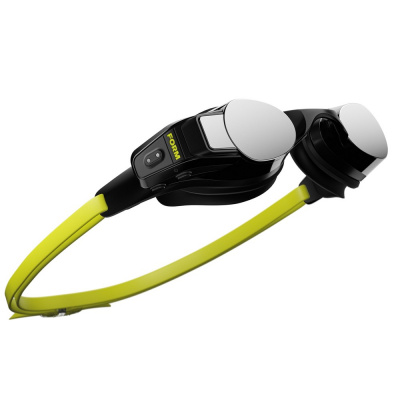
Form Goggles do something no poolside watch or wrist-glance can manage: they put your real-time metrics directly in your line of sight, mid-stroke, without breaking your rhythm. Split times, stroke rate, distance covered - all projected onto a heads-up augmented reality display while you swim. No interruptions. No guesswork.
These are goggles aimed squarely at triathletes and data-focused swimmers who want structured feedback without the friction of stopping to check a device. The hydrodynamic profile keeps drag low, the FDA-certified silicone eye seals are built to stay watertight whether you're doing threshold sets in a 50m pool or sighting buoys in a grey October lake, and the chemical-resistant anti-fog coating holds up session after session. Form smart swim goggles connect to compatible GPS watches via Bluetooth and ANT+, which means open water pacing becomes genuinely usable rather than a post-swim spreadsheet exercise. The interchangeable nose bridges let you dial in fit for your face, not a generic average. If you've ever finished a hard interval set unsure whether you held your target pace, or lost count of lengths halfway through a long aerobic block, Form's AR swim goggles offer a direct answer to that problem.
Prices and availability can change quickly. Delivery charges are not always included in listed prices.
Final price, stock status and delivery terms are set by retailer. We may receive a commission on purchases made.
What the AR Display Actually Does
The core of Form's technology is a waveguide augmented reality display - a thin optical element built into the right lens that bounces metric data into your peripheral vision without sitting over your central sightline. You're not squinting at a screen. The numbers appear in your field of view the way a HUD works in a fighter jet: present when you need them, out of the way when you don't. Pace per 100m, stroke rate, heart rate (when paired with a compatible sensor), interval splits - all readable mid-stroke.
The chemical-resistant anti-fog treatment matters more than it sounds. Standard anti-fog coatings degrade quickly, especially if you touch the lens or rinse aggressively. Form's treatment is designed to resist the repeated chlorine exposure of regular pool training without clouding the display. That's important, because a fogged lens and an AR projection don't mix. In terms of display contrast, Form has tuned the brightness to handle the difference between a fluorescent-lit indoor pool and the kind of murky, low-light conditions you'll find on an early morning open water session in a UK reservoir. The display remains legible. It's not magic - very bright direct sunlight can test it - but for the conditions most UK swimmers actually train in, including overcast skies and tannin-stained lake water, the contrast holds well.
If you're comparing options, Huub goggles offer strong optical quality and open water fit, while Oakley goggles lead on lens clarity for pool environments - but neither puts data in front of you mid-swim the way Form does.
Getting the Fit Right
A leaky goggle is a broken session. Form includes multiple interchangeable nose bridges in the box, and this isn't a token gesture - it's where the fit genuinely lives. The nose bridge controls how far the eye cups sit from your face, which directly affects both the seal pressure and where the AR display lands in your vision. Get it wrong in either direction and you've either got water ingress or you're spending a long swim with uncomfortable socket pressure.
The FDA-certified silicone eye seals are soft and pliable enough to conform to a wide range of face shapes, but they need the correct nose bridge to seat properly. A quick test before you get in: press the goggle cups to your eyes without the strap and let go. If they hold briefly under suction, the seal is making proper contact and you've got the right bridge size. If they drop straight away, go narrower. If they feel like they're compressing into your eye sockets uncomfortably, go wider.
For open water use, particularly when layering under a neoprene swim cap in cold UK water, a secure seal is non-negotiable. Thermal shock from a sudden cold water ingress mid-race is unpleasant at best. Take time at home to find your bridge size before race day - don't leave it to a pre-start faff in a muddy field. The silicone strap is adjustable and durable, but the nose bridge is your first variable to sort.
Swimmers with narrower faces often find that Form's fit competes well with POC goggles, which also prioritise a precise, low-volume seal over a bulkier frame.
Open Water Use and Looking After the Tech
Form open water goggles work, but with a condition worth understanding upfront: the goggles themselves have no GPS. In open water, distance and pace data come from a paired smartwatch - Garmin and Apple Watch are both compatible via Bluetooth and ANT+ - which handles the GPS tracking and transmits metrics to the display in real time. Pool mode is self-contained and uses the goggles' own accelerometer to count lengths and calculate distance. Open water mode is a two-device system. Pair your watch before you enter the water, not while standing on a pontoon in a wetsuit.
Garmin integration is particularly clean - if you train with a Garmin multisport watch, the pairing process is straightforward and the data sync into Garmin Connect post-session. Swim pacing in open water becomes a practical tool rather than an aspiration. For triathlon-specific use, this is where Form triathlon goggles earn their place: being able to monitor pace during the swim leg without losing stroke efficiency is a genuine performance advantage.
Care is simple but important. Rinse the goggles in fresh water after every session - pool chlorine and UK coastal saltwater are both corrosive to the AR components and will degrade the anti-fog coating faster than normal wear. Don't rub the inside of the lens. Store them in the case. Let them air dry before packing away. Treated properly, the anti-fog coating and display optics have a long service life. Treated like a pair of throwaway pool goggles, they won't.
It's also worth pairing Form goggles with a quality swim bag and open water accessories. A dedicated open water goggle case and tow float are sensible additions for lake sessions, and keeping your goggles protected between swims extends the life of the AR optics considerably.
Form Goggles FAQs
Do Form goggles work in open water?
Yes, though GPS-based metrics like distance and pace require a paired smartwatch - Garmin and Apple Watch both work via Bluetooth or ANT+. The watch handles GPS tracking and sends the data to your goggle display in real time. Pool mode is fully self-contained and doesn't need a watch.
Do you need a subscription to use Form goggles?
No subscription is needed for basic real-time data - swim time, rest intervals, stroke rate, and distance all work out of the box. A paid subscription unlocks structured workouts, guided training plans, and deeper post-swim analysis. Most swimmers will find the free tier genuinely useful before deciding whether to upgrade.
How do you stop Form goggles from leaking?
Almost always a nose bridge issue. Try pressing the cups to your eyes without the strap - if they hold a brief suction seal, you've got the right size. If they drop off immediately, go narrower. Form includes multiple bridge sizes in the box, so work through them at home before your next session.