
FLR Road Shoes
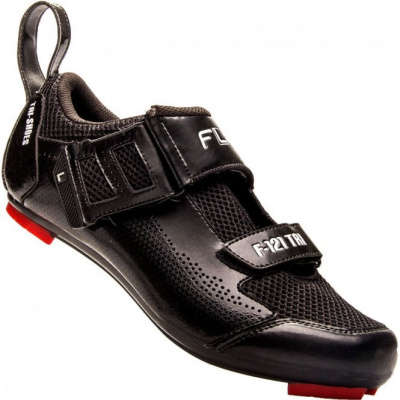
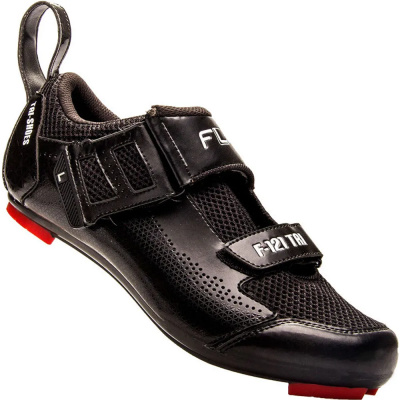
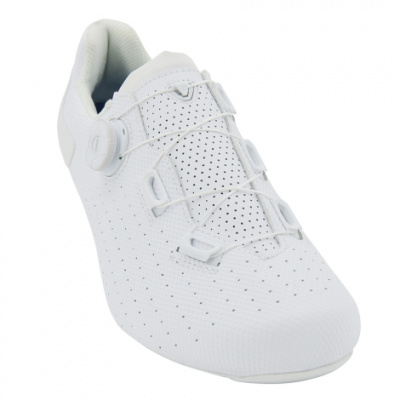
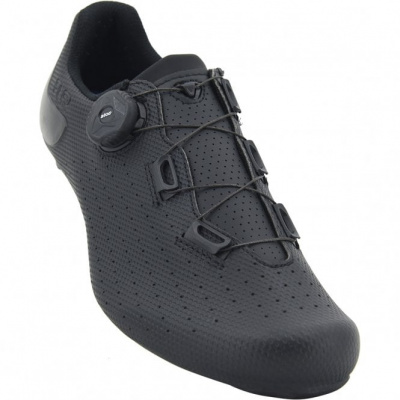
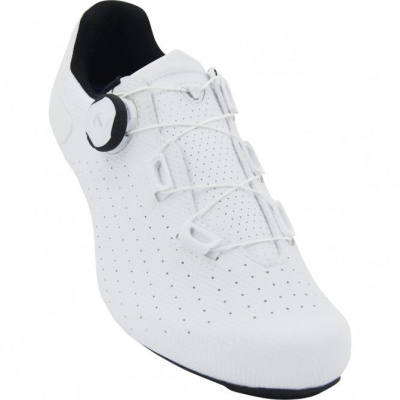
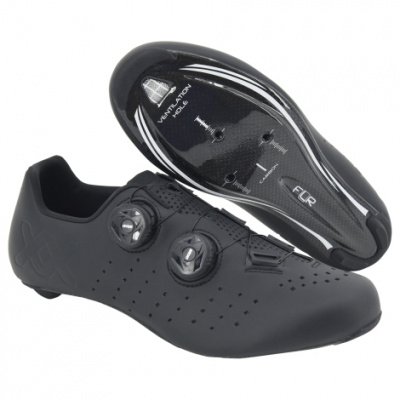
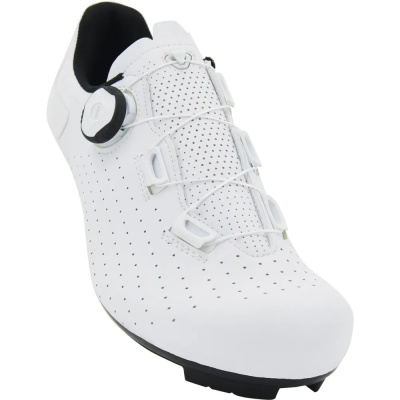
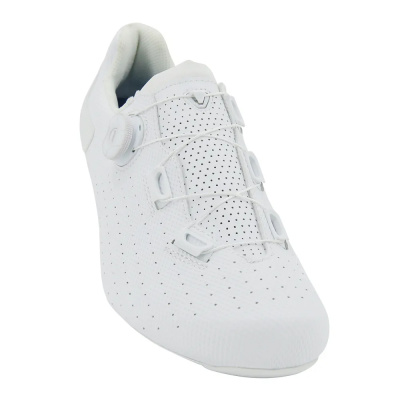
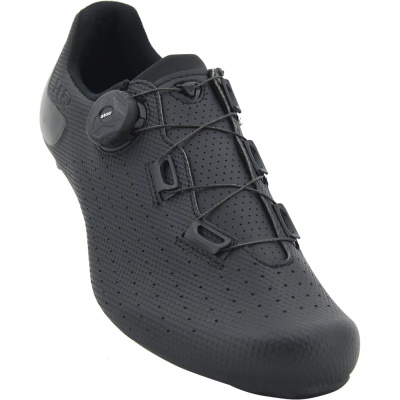
FLR road cycling shoes sit in a part of the market that not many brands get right: genuinely performance-focused footwear that doesn't ask you to remortgage for the privilege. Across the range you'll find stiff carbon and composite soles, micro-adjustable dial closures, and seamless synthetic microfiber uppers - the kind of specification that used to belong exclusively to the top shelf. Whether you're rolling out for a club run or pinning a number on at a local crit, these shoes are built around a standard 3-bolt cleat pattern, so they slot straight into your existing pedal setup without fuss.
The range spans from race-sharp, aerodynamic models through to more relaxed fits suited to long sportive miles, meaning there's a shoe here whether you're chasing a KOM or just trying to get round a century without your feet screaming at you by the final climb. The synthetic uppers handle British summer humidity reasonably well - breathable enough to keep things comfortable during back-to-back efforts, and easy enough to wipe down when the roads are less than pristine. Power transfer, fit precision, and day-to-day practicality are the three things FLR consistently prioritise, and the range reflects that clearly.
Prices and availability can change quickly. Delivery charges are not always included in listed prices.
Final price, stock status and delivery terms are set by retailer. We may receive a commission on purchases made.
Sole Tech and Power Transfer: Carbon vs. Composite
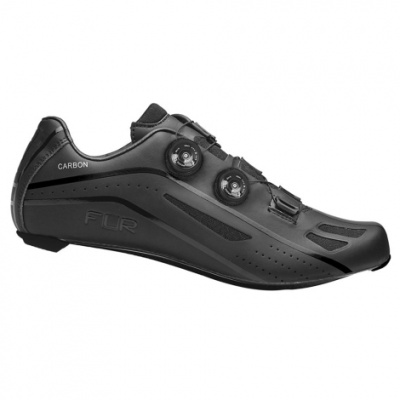
The headline piece of kit across FLR's top-end models is the R350 carbon sole - a full carbon fibre construction that delivers a stiffness index serious enough to satisfy riders who spend their Sunday mornings sprinting over cattle grids. Under hard efforts, a sole that flexes is essentially stealing watts; the R350 eliminates that energy loss almost entirely. You feel it most on steep punchy climbs and out-of-the-saddle efforts, where every pedal stroke goes directly into forward motion rather than being absorbed by a spongy platform.
Step down the range and you'll find nylon and fibreglass composite soles. These aren't a consolation prize - on long sportive rides over rough UK tarmac, a small amount of give in the sole actually reduces the kind of localised foot fatigue that builds up over four or five hours in the saddle. Think of it as the difference between a race car suspension and a fast road car: one is sharper, one is more liveable over distance. If you're doing audax distances or back-to-back riding weekends, the composite sole models are worth considering on their own merits, not just as a budget fallback.
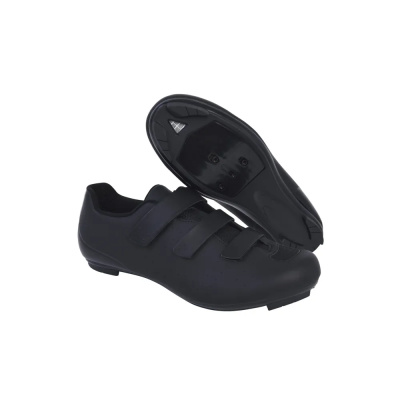
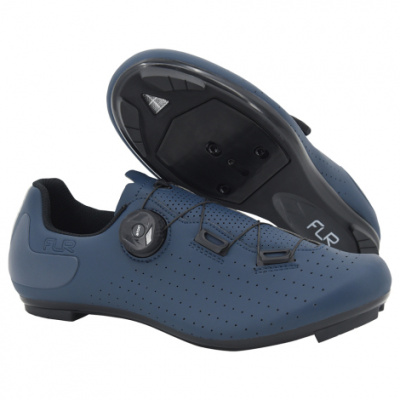
All models in the range use a standard 3-bolt cleat compatible sole pattern, which keeps your options open across the major road pedal systems. There's no proprietary fitting here that locks you into a single ecosystem.
How the FLR Range Breaks Down
The F-XX sits at the sharp end of the lineup. It's an aerodynamic, race-focused shoe with a close, precise fit - heel cup retention is firm, and the last is cut to minimise bulk and keep your foot locked in position during hard efforts. It's not a shoe you'll want to walk around in for long at a feed station, but that's not what it's designed for. When you clip in and start pushing, the combination of the R350 carbon sole and the Atop dial lacing system means your foot simply doesn't move.
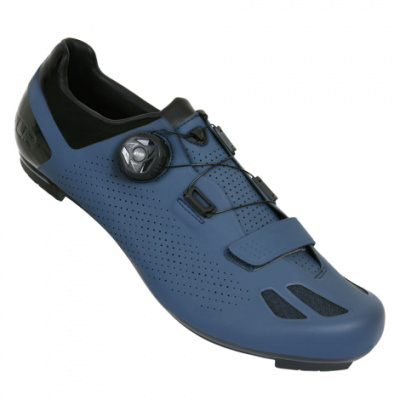
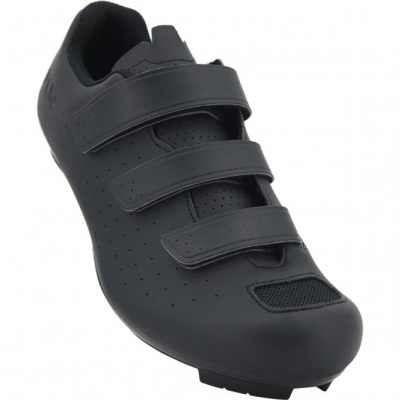
The Atop dial itself is worth understanding properly. Unlike traditional hook-and-loop Velcro straps, which you set at the start of a ride and largely forget, the Atop system lets you make micro-adjustments on the fly - while riding, without stopping. Feet swell slightly over long efforts, particularly in warm weather, and being able to release or tighten a quarter-turn without breaking rhythm is genuinely useful rather than just a marketing feature. It's the kind of thing you don't appreciate until you've spent three hours in a shoe that's become slightly too tight on a hot day.
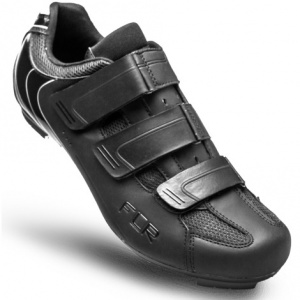
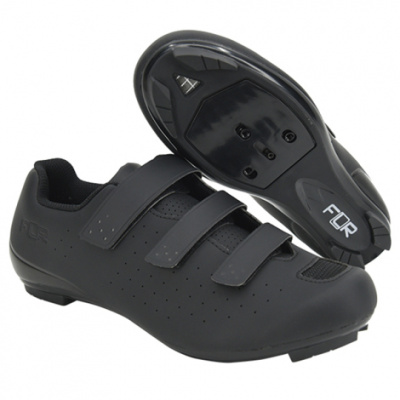
The F-11 and F-35 models offer a slightly more relaxed fit profile, better suited to club rides and sportives where comfort over distance matters as much as outright performance. The fit isn't loose - FLR shoes generally run to a standard width profile - but the overall geometry is a fraction less aggressive than the F-XX. If you're comparing against something like Shimano road shoes at a similar price point, the FLR models tend to feel slightly more tapered through the toe box, so it's worth checking your foot shape before committing.
For riders who need a wider fit, Lake road shoes are worth a look - they build specific wide-last models that FLR doesn't currently cover. And if you want to see how FLR's design approach translates off-road, their MTB and gravel shoes follow similar construction principles in a more walkable package.
UK Riding: Weather, Cleats, and Keeping Them Clean
The breathable mesh inserts and ventilated tongue on FLR road shoes do a decent job during humid British summer sportives - the kind of day where it's 22 degrees by the time you hit the first climb and your feet are already complaining. Ventilation ports in the sole also help airflow from below, which makes a noticeable difference on longer efforts.
The synthetic microfiber upper is genuinely low-maintenance. After a damp August ride where the roads are throwing up a fine spray of grit and diesel, a quick wipe with a damp cloth is usually enough to bring them back to respectable. That's not glamorous advice, but it matters - leather uppers require more care, and cheap synthetic materials crack over time; the microfiber FLR uses threads the needle between the two.
On sizing: FLR shoes generally fit true to size. If you're planning to wear thicker Merino socks during the shoulder seasons - which is a sensible call for early morning rides in April or late October - going half a size up gives you the volume you need without compromising the overall fit. The performance footbed includes arch support that works well for most foot shapes, though dedicated insole users will find the footbed easy to swap out.
All FLR road shoes use a standard 3-bolt cleat pattern, making them fully compatible with Shimano SPD-SL, Look Keo, and Time Xpresso systems. For cleat selection and setup guidance, head over to FLR cleats. When the temperature drops and you want to protect your investment, FLR overshoes are designed to fit the range properly. Replacement dials, straps, and insoles are available through FLR shoe spares, and pairing these shoes with the right FLR socks is worth doing - particularly if you're running close to your size limit and want to manage volume carefully. If you want to see how FLR compares across the broader road shoe category, Fizik road shoes offer a useful reference point at the performance end of the market.
FLR Road Shoes FAQs
Are FLR road shoes true to size?
Generally yes - FLR road shoes fit true to size with a standard width profile. If you're planning to ride in thicker Merino or waterproof socks during colder months, going half a size up gives you the extra volume without sacrificing fit security in the heel cup.
How stiff are FLR carbon road shoes?
Top-tier FLR models like the F-XX use the R350 full carbon sole, which is exceptionally stiff - suited to sprinting, climbing, and any riding where direct power transfer matters. Entry-level models use a nylon and fibreglass composite that introduces a small amount of flex, which actually reduces foot fatigue on longer sportive efforts.
Do FLR road shoes take SPD-SL cleats?
Yes. All FLR road shoes feature a standard 3-bolt sole pattern, making them compatible with Shimano SPD-SL, Look Keo, and Time Xpresso road pedal systems. There's no proprietary cleat format to worry about - whatever road pedals you're already running, FLR shoes will work with them.