
Felt Time Trial & Triathlon Bikes
Felt triathlon and time trial bikes have been at the sharp end of the race against the clock for well over a decade, racking up Ironman World Championship titles and shaping what a modern tri bike should look like. Every tube profile, every internal cable run, every gram of carbon is there for one reason: to get you to the finish line faster. Whether you're pinning a number on for a blustery A-road 10-mile TT or counting down the weeks to a full-distance Ironman, Felt's lineup covers the full spectrum - from the jaw-dropping IA 2.0 at the top to the more accessible B-Series at the entry point. These aren't road bikes with clip-on bars bolted on as an afterthought. They're purpose-built machines with aggressive triathlon geometry, proprietary carbon layups, and integrated storage that keeps your nutrition in the airstream rather than stuffed in a jersey pocket. Compare complete build prices across the range below, and find the Felt that fits your race calendar and your budget.
Prices and availability can change quickly. Delivery charges are not always included in listed prices.
Final price, stock status and delivery terms are set by retailer. We may receive a commission on purchases made.
Decoding the Felt TT and Triathlon Lineup
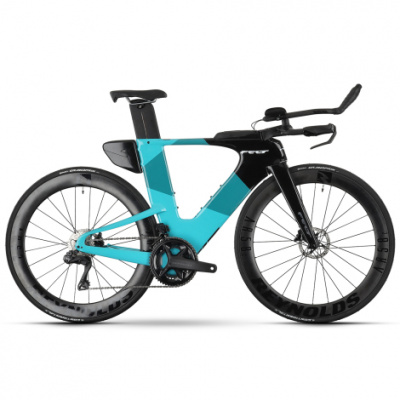
Felt's race-ready range breaks down into two clear families, and knowing which one suits you saves a lot of head-scratching. At the top sits the IA series - the flagship line that's won on the Kona Queen K and on finishing straight across the globe. The original IA uses deep, wind-cheating tube profiles and a full integrated cockpit to minimise aerodynamic drag at real-world yaw angles. Above that in the hierarchy sits the IA 2.0, a more radical redesign that removes the traditional seat tube and seatstay junction entirely. That missing section isn't a cost-cutting measure - it's a deliberate aerodynamic and compliance decision that tucks the rear wheel tighter to the seat tube while letting the frame absorb more road buzz. Long-course athletes doing six-plus hours in the saddle will feel that difference.
Carbon spec splits the range further. Ultimate-level builds use Felt's TeXtreme® carbon fibre layup - more on that below - while Advanced builds use the UHC Advanced carbon, which is still a performance-grade material but sits a step down in stiffness-to-weight ratio. In real terms, Ultimate is for athletes where marginal gains genuinely matter; Advanced is for riders who want a serious race bike without paying the premium for the very last watt of efficiency.
Below the IA family, the B-Series triathlon bikes bring Felt's aero philosophy to a more accessible price point. The geometry is still aggressive enough for non-drafting racing, the integration is cleaner than most rivals in the category, and the UHC Advanced carbon keeps the weight respectable. Think of the B-Series as the logical starting point if you're moving up from a road bike with clip-ons and want a proper tri-specific platform. Riders eyeing Cervélo's triathlon range or Argon 18's E-series at a similar price point will find the B-Series competes directly on integration and geometry. If you want to build your own custom TT rig from the ground up rather than buy a complete build, our dedicated Felt frames page is the place to start.
The Felt Tech Philosophy: Speed Through Integration
Felt's engineering approach starts in the wind tunnel, not the marketing department. Their yaw angle aerodynamics work tests frames across a realistic range of wind angles - not just head-on, where every bike looks fast - which means the tube profiles are shaped for the crosswinds you'll actually encounter on a British A-road, not idealised lab conditions. That's a meaningful distinction when you're riding an exposed section of dual carriageway with a stiff south-westerly pushing across.
The material doing the structural heavy lifting in top-end builds is TeXtreme® carbon fibre. Spread-tow carbon weaves the fibres flat and wide rather than bundling them into traditional tows, which distributes load more evenly across the laminate. The practical result is a frame that's both lighter and stiffer for a given wall thickness - less material achieving more. UHC (Ultra Hybrid Carbon) Advanced and Ultimate layups then tailor that carbon precisely to each tube's job: the down tube prioritises stiffness under pedalling load, while the seatstays and rear triangle are tuned for a degree of vertical compliance. On a bike you might be aboard for eight hours, that's not a small thing.
Where Felt genuinely separates itself from the field is storage. The CALpac and VRpac integrated nutrition and hydration systems mount within the bike's aerodynamic envelope rather than hanging off it as an afterthought. CALpac sits between the aerobars, keeping calories within easy reach during the ride; VRpac integrates behind the saddle without the aerodynamic penalty of a bolt-on saddle bag flapping in the wind. Together they mean you can race self-sufficient across a full Ironman distance without stopping to rummage in a transition bag - and crucially, without adding significant drag. It's the kind of detail that separates a bike designed by people who race long course from one designed by people who've read about it.
Living with a Felt TT Bike in the UK
Riding a serious tri or TT bike on British roads asks a few specific questions of the machine. Crosswind stability is the first. On exposed A-road courses - the sort of flat, open dual carriageway sections you get on many CTT events - deep section wheels and blunt tube profiles can make the front end feel nervous in a gust. Felt's wind tunnel work at realistic yaw angles does genuine mitigation here, but it's still worth pairing a Felt IA with a front wheel that's marginally shallower than the rear if you're regularly riding in exposed conditions. Your local club's fast men will tell you the same thing.
Braking reliability in wet weather is the second consideration. Modern Felt tri bikes are disc-brake equipped, and on a damp autumn morning that matters more than the marginal aero penalty the disc rotor adds. Older used models running rim brakes require more awareness in the wet - carbon rims in particular need dedicated brake pads and a longer modulation zone. Check which braking standard you're buying into, especially in the used market.
Tyre clearance is the third factor UK riders should check before buying. Many older tri bikes were built around 23mm rubber, but Felt's current geometry accommodates 28mm tyres, which is meaningful when you're navigating the kind of broken B-road surface that passes for a cycle route in rural England. A 28mm tyre at lower pressure smooths out the chatter and reduces fatigue on rough surfaces - a worthwhile swap even if you lose a small aerodynamic margin. Felt's road bike range uses similar carbon philosophies if you want a platform that crosses more naturally between training and racing without the full commitment of a tri-specific geometry. For those curious how Felt's broader engineering thinking applies across disciplines, the Trek TT and tri range makes for a useful comparison at overlapping price points. Felt also produces gravel bikes that share some of the same carbon construction thinking, worth a look if you want one brand across multiple bikes.
Felt Time Trial & Triathlon Bikes FAQs
Is the Felt IA a good triathlon bike?
The Felt IA is one of the most decorated triathlon bikes in the sport, with multiple Ironman World Championship titles to its name. Its deep aero tube profiles and fully integrated cockpit and storage make it a genuinely strong choice for long-course, non-drafting racing - particularly if you're doing full or half-distance events where sustained aerodynamic efficiency adds up over hours.
What is the difference between the Felt IA and IA 2.0?
The IA 2.0 is a more radical redesign than the original IA. The most visible change is the removal of the traditional seat tube and seatstay junction, which tightens the rear wheel closer to the frame for better aerodynamics and adds vertical compliance for long-course comfort. The IA 2.0 also integrates the CALpac and VRpac nutrition and hydration storage more fully into the frame's aerodynamic profile.
Can you use a Felt triathlon bike for UCI time trials?
Not in most cases. The Felt IA and IA 2.0 are designed for triathlon - their deep, oversized tube profiles and non-standard geometry fall outside UCI equipment regulations. For UCI-sanctioned events such as national or international TT championships, you'd need a UCI-compliant machine. CTT club time trials in the UK operate under different rules and generally permit triathlon bikes, so check your event's specific regulations.