
Falcon E-Bikes
Falcon E-Bikes are built around a simple idea: make electric riding accessible without loading you down with complexity or cost. If you're staring down a hilly commute or a station-to-office slog that's just far enough to arrive sweaty, pedal assist changes the calculation entirely. Falcon's range leans into that reality with sturdy alloy frames, proven 250W rear hub motors, and practical removable battery designs that suit real UK routines rather than optimised test conditions.
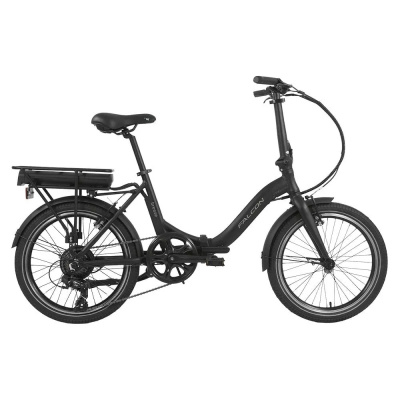
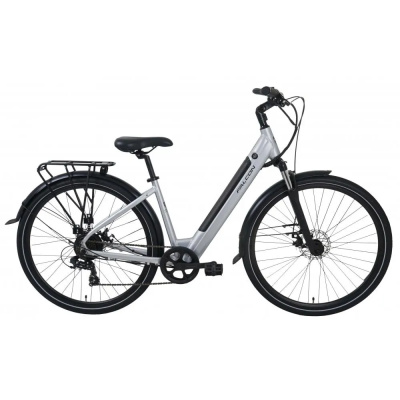
The lineup splits broadly into two camps. Folding models - compact, train-friendly, and light enough to haul up a flight of stairs - target the multi-modal commuter who needs the bike to disappear when it's not in use. Full-sized step-through alloy frame bikes prioritise comfort and carrying capacity, making them the better fit for longer leisure rides or loaded grocery runs. Neither camp asks you to spend mid-drive money to flatten a headwind on the way home.
For buyers who want Falcon electric bikes without overcomplicating things, that's precisely the appeal. Honest motors, sensible geometry, and batteries you can actually charge from a kitchen socket. Not flashy. Effective.
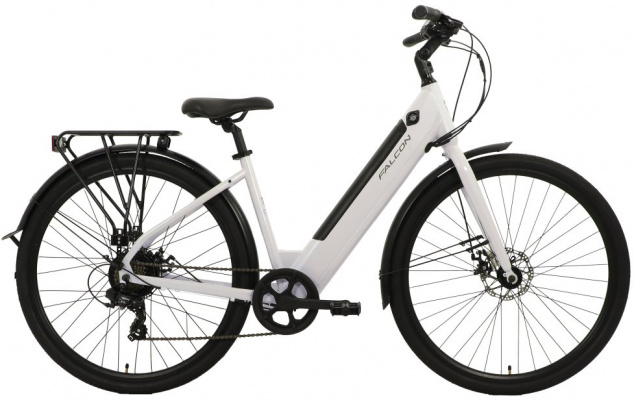
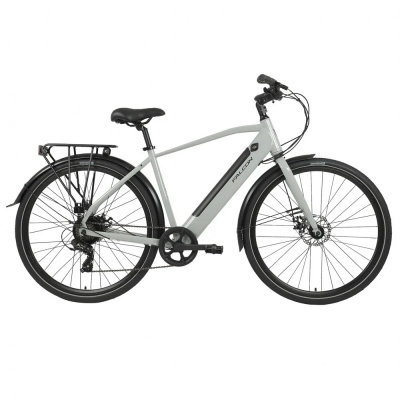
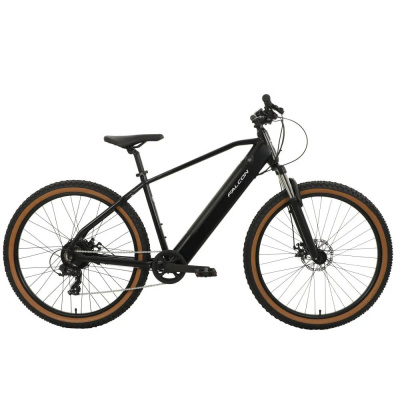
Prices and availability can change quickly. Delivery charges are not always included in listed prices.
Final price, stock status and delivery terms are set by retailer. We may receive a commission on purchases made.
Decoding the Falcon E-Bike Lineup
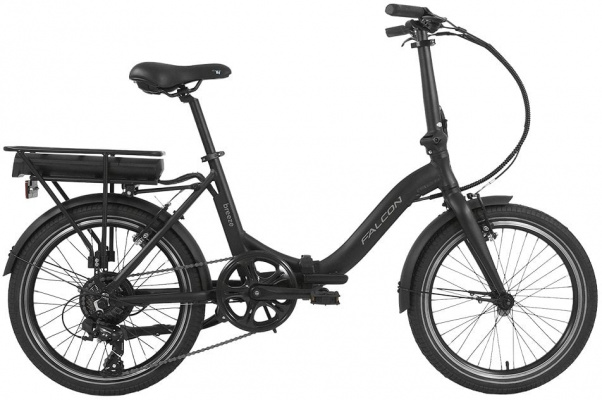
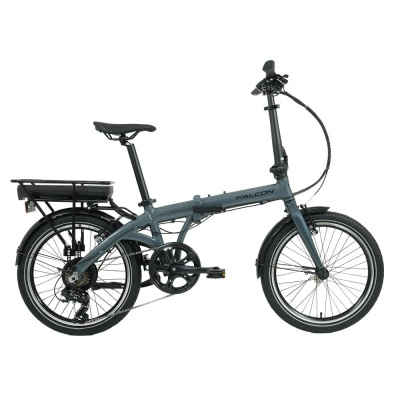
Falcon's commuter e-bike range divides neatly once you know what to look for. The folding models - think compact wheelbases, 20-inch wheels, and folding mechanism designs that collapse the bike down to something you can stand in a hallway - are aimed squarely at riders who mix cycling with public transport. They're not featherweights, so be honest about how many stairs you'll carry one up, but they're manageable and they comply with most UK train operator folding-bike policies without needing a reservation.
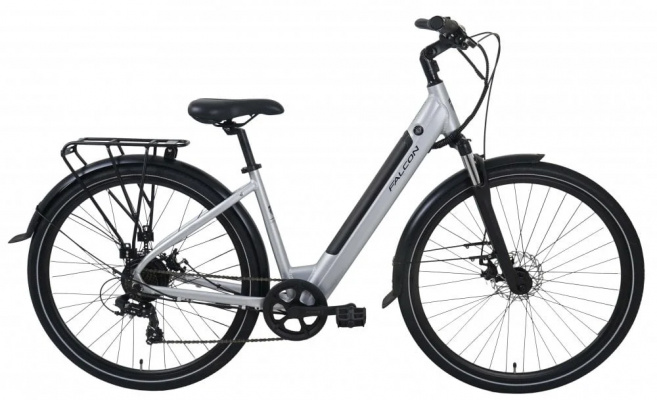
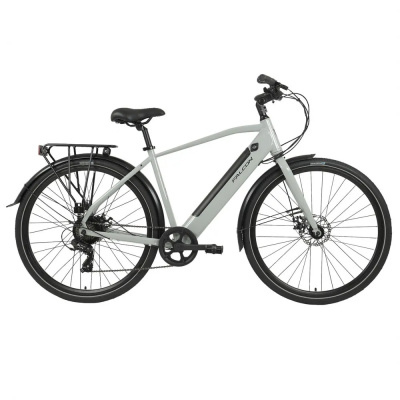
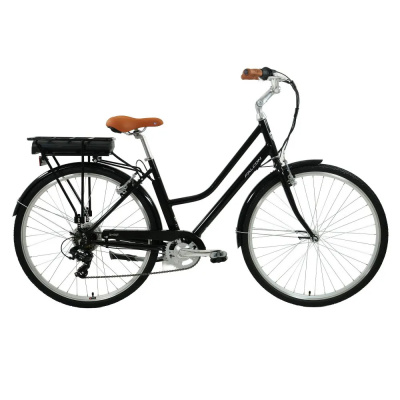
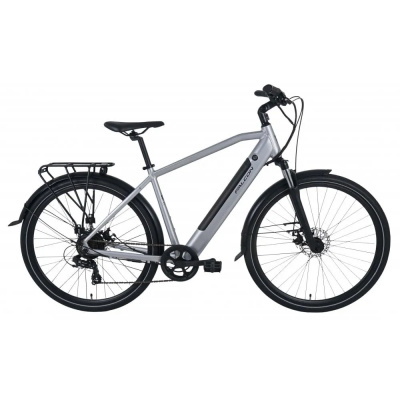
The step-through urban bikes occupy a different space. Larger 700c or 26-inch wheels, upright riding positions, and rack-equipped frames make them better suited to longer point-to-point routes or riders who want a relaxed, confidence-inspiring ride rather than a machine they need to fold and stow. Wider saddles, swept-back bars, and the low standover of the step-through geometry mean getting on and off in stop-start city riding is genuinely easier. That matters on a wet Tuesday in Sheffield more than any spec sheet will tell you.
If you're after Falcon bikes without the motor - perhaps a second bike for drier days or a younger rider in the household - our Falcon Hybrid Bikes page covers the non-assisted urban range, and there's a solid selection of Falcon Kids Bikes worth a look if you're kitting out the whole family.
The Motor and Battery Setup Explained
Falcon builds around 250W rear hub motors across the range - the legal ceiling for UK road use - and that choice is deliberate. Hub motors are simpler than mid-drive systems, have fewer moving parts interacting with your drivetrain, and are significantly cheaper to service if something does go wrong. You won't get the same bottom-bracket torque feel that a Bosch or Shimano Steps mid-drive delivers, but for flat-to-rolling urban mobility use that gap is smaller than the price difference suggests.
The pedal assist system reads your cadence and adds motor support progressively - you're still pedalling, just with the gradient taken out of the equation. Most models offer multiple assist levels, letting you dial back the help on flat stretches to conserve battery and lean on it when the road tips upward. It's an uncomplicated system that works reliably, which is the point.
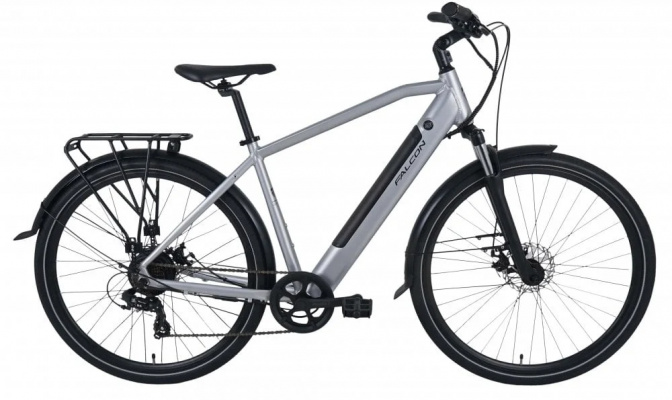
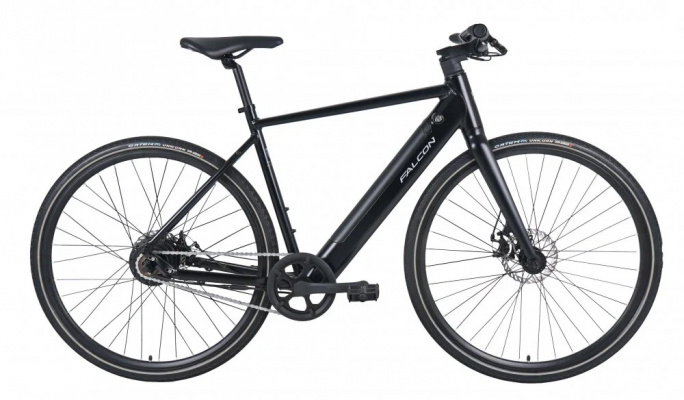
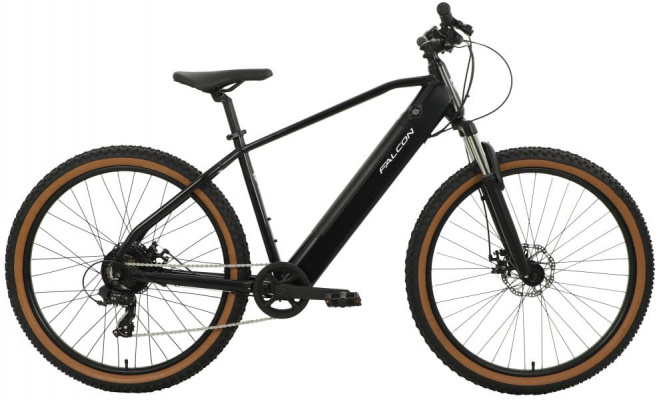
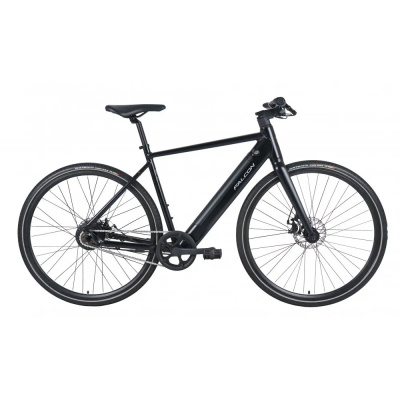
Battery placement on Falcon bikes tends toward pannier rack battery mounts or external downtube positions rather than fully integrated frame designs. Aesthetically, integrated looks cleaner - but rack-mounted batteries are far easier to remove for indoor charging, which matters when your storage is a draughty shed in December. Integrated rear-rack battery mounts also keep weight low and central rather than high on the frame, which helps with handling when the bike is loaded with a bag. The trade-off is bulk; if you're comparing against something like Elops E-Bikes, their integrated designs look neater, but charging flexibility counts for something in day-to-day use.
If you're weighing Falcon against other value-end options, Carrera E-Bikes and Assist E-Bikes sit in a similar bracket and are worth comparing on range claims, battery capacity, and what's included with the bike - lights, mudguards, and racks add up in cost if they're not already fitted.
Living with a Falcon E-Bike in the UK
Range figures on budget e-bikes always carry an asterisk. Falcon's quoted 25 - 40 miles per charge is achievable - on flat ground, light assist, and a fully charged battery that hasn't spent winter in a cold garage. In practice, a hilly commute on full assist with a cold battery will land you toward the lower end of that window. Plan around 20 - 25 miles if your route has any real climbing, and you won't be caught out.
The removable battery design earns its keep in British winters. Lithium cells lose capacity when they're cold - leaving a battery in a freezing shed overnight before a morning commute is a reliable way to shorten both your range and the battery's long-term lifespan. Bring it indoors. Charge it at room temperature. It takes ten seconds to detach and it's genuinely worth doing.
Hub motor connections are another thing worth keeping an eye on. Road salt and winter grime work into connector points over time, and a corroded connection is a common cause of intermittent assist dropout. A quick wipe-down of the motor connector and battery contacts every few weeks during autumn and winter keeps things reliable. It's not a deep maintenance job - a damp cloth and thirty seconds is enough.
For those using a folding Falcon on the train: most UK operators allow fully folded bikes without a reservation, but check your specific route. South Western Railway, for instance, permits folding bikes free of charge when fully folded and bagged or covered. The folding mechanism on Falcon's compact models uses a tool-free, quick-release folding mechanism design - you don't need to carry anything extra, and the fold takes under a minute once you've done it a few times. The weight, typically around 18 - 22kg for a motorised folder, means you'll feel it on a crowded platform, but it's manageable.
Tyre choice is worth a thought if you're riding potholed city streets regularly. Falcon's urban bikes tend to come with reasonably plump tyres, which is sensible - thin, high-pressure rubber punishes broken tarmac. If you find the stock tyres too firm, swapping to something with a slightly higher volume or a puncture-resistant casing is a straightforward upgrade that pays back on a typical UK commute route.
Falcon E-Bikes FAQs
Are Falcon electric bikes any good?
For entry-level commuting and budget-conscious riders, yes. Falcon e-bikes use reliable 250W rear hub motors and solid alloy frames that handle everyday UK riding without drama. They're not premium machines, but they do what they're designed for consistently. If you're after your first e-bike and don't need complex mid-drive tech, they're a sensible place to start.
How long does a Falcon e-bike battery last?
Most Falcon electric bikes manage 25 to 40 miles per charge, though real-world range depends on assist level, rider weight, and how hilly your route is. Cold weather knocks range back noticeably. The good news is the batteries are removable, so you can charge them indoors - which both speeds up charging and protects the cells during winter.
Are Falcon folding e-bikes allowed on UK trains?
Yes. Fully folded Falcon folding e-bikes are permitted on most UK train networks without a prior reservation, which is one of their practical advantages over full-sized bikes. Make sure the bike is completely folded before you board - train operators require this, and some ask for a bag or cover. Check your specific operator's policy before your first trip.