
Dragon Goggles
Dragon MTB goggles have built a serious reputation on the dirt, and once you understand what's behind the lens, it's easy to see why. Dragon brought optical engineering sharpened across snow and motocross into a proper mountain bike package - wide fields of view, impact-resistant Lexan lenses, and their proprietary Lumalens technology that filters light to make contrast pop where flat conditions normally wash everything out. That matters on a gloomy November descent through Welsh woodland, where wet roots and ruts blend into the same muddy brown.
The goggles are built with armored venting - a structured channel system that lets air move without letting mud in - and a Super Anti-Fog coating applied directly to the lens surface, not just a film you'll cook off after three hard climbs. The triple-layer face foam manages sweat and seals against your face properly, even when you're pushing into the wind on an exposed ridge. Add a silicone-backed strap that grips your helmet shell and stays put through rock gardens, and you've got a goggle built around what UK riding actually throws at you. Whether you're racing enduro stages or lapping a bike park in the drizzle, Dragon's range covers the bases without fuss.
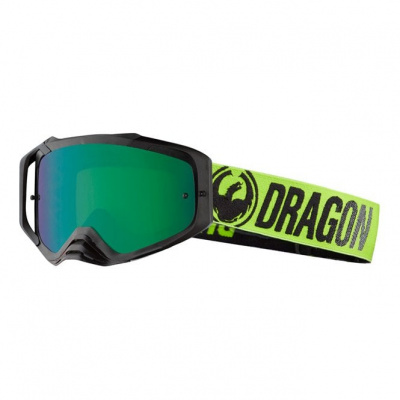
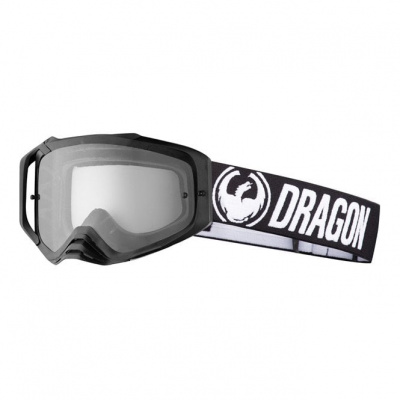
Prices and availability can change quickly. Delivery charges are not always included in listed prices.
Final price, stock status and delivery terms are set by retailer. We may receive a commission on purchases made.
Lens Tech and Weather Performance: Seeing Through the UK Gloom
The centrepiece of Dragon's MTB goggle range is Lumalens technology - a colour-optimised lens treatment that boosts specific wavelengths to sharpen contrast. In practical terms, it's the difference between seeing a wet root as a distinct obstacle and registering it half a second too late. On the kind of low-light, overcast descents you get in Northumberland or the Afan Valley, that contrast lift is genuinely useful, not just a spec-sheet claim.
The Super Anti-Fog coating is bonded directly to the inner face of the Lexan lens during manufacture. That's important because coatings applied as afterthoughts wear off - usually at the worst possible moment, mid-stage, when you're generating the most heat. Dragon's approach keeps the treatment durable across repeated use. Pair that with the armored venting system - rigid vent channels that maintain airflow structure even when mud packs around the frame - and you get a goggle that actually breathes on the climb without inhaling a roost on the way down. It's a proper system, not just holes in foam.
For Dragon mountain bike goggles to perform in high-humidity British conditions, both systems need to work together. Armored venting moves warm, moist air away from the lens surface; the anti-fog coating handles residual condensation. On a wet Scottish trail day where the humidity barely drops and you're sweating through long fire-road climbs, that combination earns its keep.
Understanding the Dragon Fit and Range
Dragon's MTB goggle lineup runs from versatile crossover models to dedicated enduro-specific frames. The Dragon NFX2 sits at the sharper end of the range - a frameless design that strips back the border around the lens to open up peripheral vision. When you're scanning for lines at speed, that unobstructed view to the sides lets you read the trail earlier. It's a meaningful design choice, not an aesthetic one.
The outrigger frame system is worth understanding if you're shopping with a specific helmet in mind. Rather than a solid face frame that can create pressure points or gaps against a helmet's brow pad, outrigger arms flex slightly and bridge the goggle to your helmet's port system. The result is a consistent, gap-free seal whether you're running a full-face like a Leatt or Bell, or a half-shell enduro lid. Most modern Dragon MTB models are designed with this compatibility in mind, so you're not fighting the fit on the hill.
The silicone-backed strap does the unglamorous but critical job of keeping the goggle from sliding up your helmet when you're looking down at a steep chute. It grips the outer shell rather than skating across it. The triple-layer face foam stacks different densities - a firm outer layer for structure, softer middle foam for comfort, and a hypoallergenic microfleece lining against your skin that wicks sweat without irritating riders who run warm. If you're comparing on fit alone, models like Fox goggles and Oakley goggles compete in this space, but Dragon's outrigger approach gives it a particular edge for helmet compatibility across brands.
For Dragon enduro goggles, the NFX and NFX2 are the models most riders gravitate towards. The original NFX suits those who want a more traditional frame feel with a wider strap; the NFX2 is for riders who prioritise that open field of view and don't mind a slightly more minimal frame structure. Both take compatible swap lenses, so you can run a Lumalens Blue Ion in bright conditions and switch to a Lumalens Amber for flat-light days without buying a second goggle.
Care, Cleaning and Tear-Offs for UK Riding
Lexan is tough - it's the same polycarbonate used in riot shields - but the Super Anti-Fog coating on the inner lens surface needs treating with a bit of respect. The rule is simple: never wipe a gritty lens dry. If you've been riding in grit-heavy slop and there's debris on the inside of the lens, rinse it with clean water first. A dry wipe across a lens with fine grit embedded in the foam residue will scratch the coating and compromise the anti-fog performance. Carry a microfibre cloth in your pack; your jersey sleeve is not the right tool for the job.
For the outer lens, Dragon goggles are compatible with tear-offs - thin film layers that stack on the outer lens surface and peel away when your vision is compromised by mud. In a British winter enduro or a proper wet-weather bike park day, tear-offs are genuinely race-practical rather than just a motocross legacy feature. You load them before the stage, peel when visibility drops, and carry on. Roll-off systems - a motorised or pull-cord film canister that rolls clean film across the lens - go further for sustained bad-weather racing, though they add weight and frame bulk that not every rider wants.
If you're not racing and just want clean optics mid-ride, the armored venting does a reasonable job of reducing how much gets on the inner lens in the first place. Keep the foam clean between rides - a quick rinse and air dry, not a machine wash - and the triple-layer foam will hold its shape and continue sealing properly for a long time. Brands like 100% goggles, Smith Optics goggles, and Leatt goggles offer similar tear-off compatibility, so if you're weighing up the full category, lens maintenance and roll-off availability are worth factoring into the decision alongside optics.
One more practical note: store Dragon goggles bag-first into the included bag rather than face-down on a surface. The Lexan outer is scratch-resistant, but it's not scratch-proof, and a car park gravel surface will remind you of that quickly.
Dragon Goggles FAQs
Are Dragon goggles good for mountain biking?
Dragon goggles are well-suited to mountain biking. The Lexan lenses handle impacts well, the Super Anti-Fog coating is durable enough for sustained effort in damp conditions, and tear-off compatibility makes them practical for muddy UK descents. Lumalens colour-optimised lenses add genuine contrast improvement in flat woodland light, which is where most UK trail riding happens.
How do you change the lens on Dragon NFX goggles?
Pull the flexible polyurethane frame outward - top and bottom - to release the lens from its retention grooves. When fitting a new lens, seat it at the nose bridge first, then work around the frame until it clicks into the channels on both sides. It takes a minute once you've done it once. Don't rush it in the car park with cold hands.
Do Dragon MTB goggles fit with full-face helmets?
Yes. Dragon's outrigger frame design and silicone-backed strap are built with helmet compatibility in mind. The outrigger arms flex to bridge across most modern full-face and enduro half-shell brow ports without creating gaps or pressure points. Check your specific helmet's goggle port width, but most current full-face MTB helmets pair well with Dragon's MTB goggle range.