
Leatt Goggles
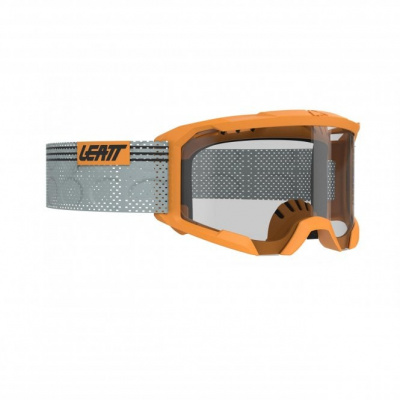
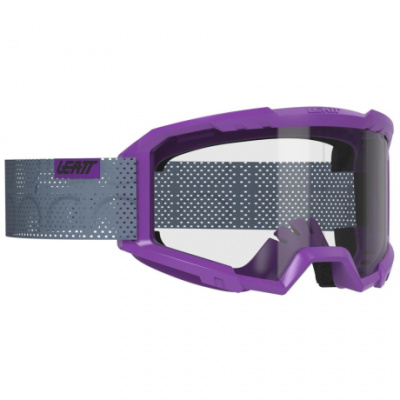
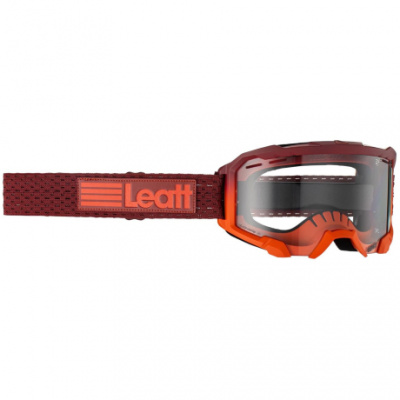
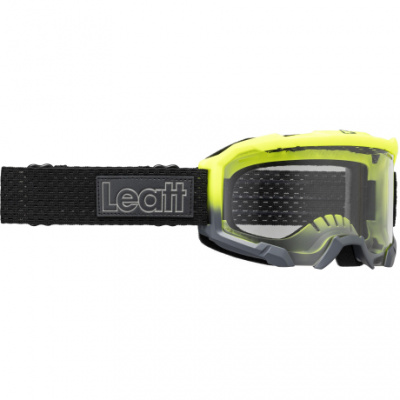
When vision is the difference between committing to a line and binning it, Leatt MTB goggles are worth serious attention. Built around military-spec impact resistance and a 170° WideVision field of view, they're engineered for riders who want clarity and protection at the pointy end of downhill, enduro, and trail riding - not just a goggle that looks the part in the car park.
The headline feature is the bulletproof lens standard. Leatt certifies their lenses to ANSI Z87.1-2015 - the same impact spec used in military eyewear - which means roost, snapped branches, and flying trail debris genuinely can't reach your eyes. That's not marketing language; it's a measurable standard. Pair that with permanent anti-fog dual-pane lens construction and a self-draining open lower frame, and you've got goggles that don't give up when conditions do.
For UK riders specifically, that combination matters. Humid woodland singletrack, Welsh trail centres in October drizzle, Gnar-soaked Scottish descents - fog and mud are constants, not exceptions. Leatt's Leatt Velocity goggles range is designed to handle all of it without asking you to stop and sort yourself out mid-run. Clear or contrast-enhancing lenses add another layer of adaptability for dense forest canopies where light drops off fast.
Prices and availability can change quickly. Delivery charges are not always included in listed prices.
Final price, stock status and delivery terms are set by retailer. We may receive a commission on purchases made.
What Bulletproof Actually Means - and Why It Matters on UK Trails
The term gets used loosely in goggle marketing, so it's worth being precise. Leatt's bulletproof lens certification refers to ANSI Z87.1-2015 compliance - a military and industrial impact standard that tests lenses against high-velocity projectile strikes. In practical terms, a rock chip off a following rider's tyre or a branch whipping back at speed won't punch through. That's the protection you're buying.
Equally important is how those lenses handle the damp. UK woodland riding - think tight Gnar lines in the Tweed Valley or the muddier corners of Afan in autumn - creates persistent humidity that fogs standard single-pane lenses within minutes. Leatt counters this with a permanent anti-fog dual-pane construction: two lens layers with an air gap between them regulate temperature differentials, the same principle as a double-glazed window. Unlike anti-fog coatings that scrub off after a few wipes, this is baked into the lens geometry. It works ride after ride.
VLT - Visible Light Transmission - is the other variable worth understanding. A high-VLT clear or light-rose lens lets through 80 - 90% of available light, which is what you want under dense canopy or on overcast winter days. Lower-VLT lenses (dark tints, mirrors) suit bright open days but can genuinely compromise your reaction time in shadow-heavy forests. If you're riding somewhere like Cannock Chase in November, a high-VLT lens isn't a preference - it's a safety call. Leatt offers a solid spread of lens tints across their range, so match your most common riding environment before you buy.
The self-draining open lower frame design is a detail that earns its keep in UK mud season. Mud and water shed downward rather than pooling in the frame, keeping your line of sight clear when conditions go properly rotten. It's a small thing until you need it.
Breaking Down the Leatt Velocity Range
Leatt organises their goggle lineup in a clear hierarchy, with the Velocity 4.0, 5.0, and 6.5 representing progressively more refined builds rather than fundamentally different products. All share the bulletproof lens platform - the differences sit in frame construction, foam quality, and compatibility with accessories like tear-offs and roll-offs.
The Leatt Velocity 4.0 is the entry point. Frame stiffness is functional rather than exceptional, and the foam is a single-density fleece. It covers the core protection bases well and suits trail and enduro riders who want bulletproof optics without paying for features they won't use. Solid choice if you're upgrading from a budget goggle and want a genuine step forward in lens quality.
Step to the Leatt Velocity 5.0 and you get a more structured frame with better contour to standard MTB helmet profiles, plus dual-density anti-sweat fleece foam - two foam layers with different densities that wick moisture away from your skin while maintaining a comfortable seal. On longer enduro stages where you're sweating hard into a climb before a descent, that makes a real difference to comfort and fog prevention working together.
The Leatt Velocity 6.5 sits at the top. The frame is stiffer and more refined, the outrigger design is built to accept roll-off systems cleanly, and the overall fit precision is noticeably tighter. If you're racing or just want the full package with roll-off compatibility and a premium face foam setup, this is where you go. For downhill days at venues like Fort William or Bike Park Wales, the 6.5's roll-off readiness is a practical asset, not just a spec point. We cover the lens swap and accessory compatibility side of things in more detail in our dedicated Leatt goggle lens guide.
Across the range, Leatt's WideVision 170° field of view is consistent. That peripheral vision matters on fast, open descents where hazards arrive from the side as much as dead ahead. Compared to something like Fox goggles or Oakley MTB goggles, Leatt's field of view is among the widest available at any price point in the bulletproof MTB goggles category - and it's a genuine differentiator rather than a headline number.
Fit, Helmet Compatibility, and OTG Options
Goggle fit comes down to three things: face profile, helmet integration, and whether you wear prescription glasses. Leatt's frame geometry suits medium to wider face profiles well. If you've got a narrower face, try before you buy if you can - a gap between the foam and your cheekbones breaks the seal and kills the anti-fog performance immediately.
Helmet compatibility is generally strong across current MTB full-face and open-face lids. The strap width and buckle placement work with most modern helmets, and Leatt's own helmets are obviously tuned to work with their goggles as a system - worth considering if you're speccing both at once. Check our Leatt helmets page for the full range.
For glasses wearers, Leatt offers OTG (Over The Glasses) variants across several Velocity models. The frame cutouts are generous enough for most standard prescription frames, though larger or sports-specific frames can be hit and miss. If you're OTG, check the listed frame dimensions against your glasses width before ordering - it's the kind of thing that's obvious in a shop but easy to overlook online.
The dual-density anti-sweat fleece foam does most of the comfort work on longer rides, but it's also the part that wears out first. Leatt's foam is replaceable, which extends the life of an otherwise well-specced goggle considerably. Worth noting if you're weighing cost over time.
How They Stack Up and Where the Trade-offs Sit
Leatt's main competition in the Leatt downhill goggles space comes from 100% goggles and Smith MTB goggles. 100% competes closely on field of view and roll-off system quality; Smith leans harder into optical clarity with their ChromaPop lens tech. Leatt's advantage is the bulletproof certification - no competitor matches it at equivalent price points - and the self-draining frame design for properly wet conditions.
The honest trade-offs: Leatt's lens optical quality at the 4.0 level is functional but not class-leading for colour rendition. If pristine colour fidelity matters more to you than impact certification, Smith's lens tech is worth the comparison. The 6.5 closes that gap considerably. Also, the Velocity range runs slightly heavier than some competitors - the robust frame and dual-pane lens add grams. Not a concern for most riders, but worth knowing if you're weight-conscious on a full-day enduro kit build.
If you're pairing new goggles with a full kit refresh, our MTB helmets and MTB gloves pages are worth a look alongside.
Leatt Goggles FAQs
Are Leatt goggles actually bulletproof?
The bulletproof claim refers to ANSI Z87.1-2015 certification - a genuine military and industrial impact standard, not a marketing phrase. It means the lenses are tested to resist high-velocity projectile strikes. In trail riding terms, that translates to real protection against roost, debris, and snapped branches. It's a measurable standard, not a boast.
Do Leatt goggles fit over prescription glasses?
Several Velocity models come in OTG (Over The Glasses) versions with frame cutouts sized for standard prescription frames. Most everyday glasses fit comfortably, but larger or sports-specific frames can be tight. Check the listed OTG frame dimensions against your glasses width before ordering - it's the detail that makes or breaks the fit.
How do I stop my MTB goggles from fogging up?
Leatt's dual-pane lens construction tackles this at a structural level - the air gap between two lens layers prevents the temperature differential that causes fogging, much like double glazing. Unlike anti-fog coatings, it doesn't degrade with cleaning. Beyond the lens, make sure your foam seal sits flush against your face; gaps let warm air in and fog starts there.