
Cube Dropper Posts
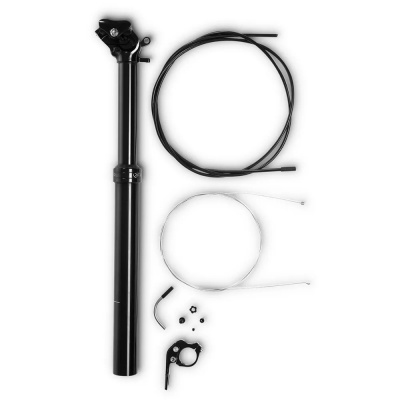
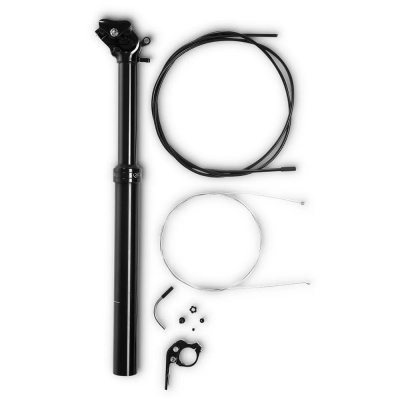
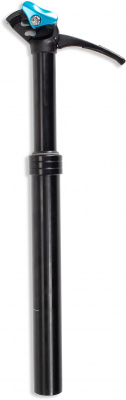
Cube dropper posts sit in a genuinely useful part of the market - capable, well-specified, and priced where most riders actually shop. Built under Cube's RFR (Ready For Race) component line, these posts use sealed alloy hydraulic cartridges and robust wiper seals to keep things moving smoothly whether you're threading Afan's rooty switchbacks or hammering down a gritty Peak District descent. The actuation is precise, lateral play is kept tight, and the remote lever design works cleanly with a 1x drivetrain setup - no cluttered bar.
Travel options cover a practical spread. If you're building up a light trail or gravel rig, shorter-travel models do the job without eating into your insertion depth. Step up to 150mm or beyond and you've got a post that lets you drop the saddle properly for aggressive riding, not just nudge it down an inch. Internal cable routing keeps the cockpit tidy on frames that support it, while external routing options mean older frames aren't left out. The wiper seals handle mud and moisture well, though - like any dropper - they'll need attention through a proper UK winter. Cube droppers won't turn heads at the trailhead, but they'll work quietly and reliably every time you push the lever.
Prices and availability can change quickly. Delivery charges are not always included in listed prices.
Final price, stock status and delivery terms are set by retailer. We may receive a commission on purchases made.
Getting the Fit Right Before You Buy
The most important number on any dropper post is the seat tube diameter. Cube's RFR posts are available in 30.9mm and 31.6mm - the two sizes that cover the vast majority of modern hardtails and full-suspension frames. Get that wrong and the post won't clamp correctly, full stop. If your frame runs a slimmer 27.2mm seat tube, you'll need a shim, which adds a small amount of complexity but is a well-worn solution.
Beyond diameter, check your maximum insertion depth - measured from the seat collar down to the nearest obstruction inside the frame, usually a pivot bolt or weld. A post with 150mm of travel needs sufficient insertion depth below the collar to operate through its full range. Run the numbers before ordering, not after. Stack height matters too: that's the minimum saddle height the post allows at full extension, and it needs to sit within your comfortable pedalling position.
Routing is the other fork in the road. If your frame has internal cable routing ports, a stealth-routed post will thread the cable through the frame for a clean finish. Frames without those ports need an externally routed post - which is perfectly functional, just a bit more visible. Not sure which your frame uses? Check the downtube and seat tube for rubber grommets or cable entry ports. If you're after a post with no height adjustment at all, our Cube saddles category might be the better starting point. And whichever post you choose, double-check your seat clamp - a new post diameter sometimes means a new collar is needed too.
How the RFR Lineup Stacks Up
Cube's dropper offering splits broadly into two tiers. The standard RFR Dropper Post covers external cable routing and keeps costs down - it's the one to consider if you're upgrading from a rigid post for the first time or speccing a second bike that doesn't need to be precious. The cartridge is sealed, the action is dependable, and it works. No complaints for trail days out from the van.
The RFR Pro Inside is where the range gets more interesting. Internal cable routing runs the cable cleanly through the frame, the alloy construction is trimmed for weight without going fragile, and the remote lever is shaped for 1x setups - sitting neatly under the bar where your thumb finds it naturally. That ergonomic design sounds like a small thing until you're mid-descent trying to drop the post one-handed. The smoother actuation of the Pro Inside also comes from lower-friction cable routing mechanisms inside the post itself, which keeps the feel consistent across the lever's range of motion rather than building up resistance as the cable ages.
If you're comparing across brands, RockShox droppers sit at a similar price point to the RFR Pro Inside, while Fox droppers push into premium territory with more refined internals. Brand-X droppers undercut the standard RFR on price if your budget is tight and the ride spec is less critical. The RFR range trades some of that top-end polish for honest value - which, for most riders doing two or three rides a week, is a completely sensible trade.
Keeping It Moving Through a UK Winter
British riding conditions are hard on dropper posts. Grit, mud, and standing water work their way up the stanchion and sit against the wiper seal - the rubber ring at the top of the outer tube that's supposed to keep the internals clean. When that seal gets contaminated, you get stiction: the post moves sluggishly or returns inconsistently. It's not a sign the post is broken, it's a sign it needs cleaning.
After every muddy ride, wipe the stanchion down before retracting the post fully. A light application of suspension-specific silicone lube - not WD-40, which strips the seal - keeps things moving cleanly. If your model uses an air cartridge, check the pressure periodically with a shock pump; a low cartridge is the most common cause of a dropper that's slow to return. Sealed hydraulic cartridges don't need a pressure top-up but still benefit from the same external cleaning routine.
The remote cable is the other thing riders consistently ignore until it's too late. Moisture creeps into the outer housing over a season of wet rides, and the inner cable corrodes or seizes - making the lever feel heavy or unresponsive. Replacing the inner cable annually, and using quality sealed outer housing from the start, costs almost nothing and saves you a mid-ride frustration. PNW Components are worth a look if you want to compare cable-actuated designs with notably light lever pulls. For installation tools and cable cutters, Cube's own tools range has the basics covered without overcomplicating things.
Cube Dropper Posts FAQs
How do I know what size Cube dropper post fits my bike?
Start with your seat tube's internal diameter - most modern frames take a 30.9mm or 31.6mm post. Then measure your maximum insertion depth from the seat collar down to the first obstruction inside the tube. Finally, if you're going for an internally routed model, confirm your frame has the correct cable entry ports before ordering.
Why is my Cube dropper post slow to return?
Nine times out of ten it's one of three things: low air pressure in the cartridge, cable friction from a corroded or kinked inner cable, or grit packed under the wiper seal causing drag. Clean the stanchion, apply silicone suspension lube, replace the inner cable if it's been in a year or more, and check the air pressure with a shock pump if your post has a valve.
Can I fit a Cube dropper post to any mountain bike?
Broadly yes, as long as the seat tube diameter matches and your routing ports suit the model you're choosing. The critical extra check is total post length versus your required saddle height - the post at full extension needs to reach your pedalling position without running out of travel, and at full drop it can't bottom out on internal frame hardware.