
Campagnolo 9 Speed Cassettes
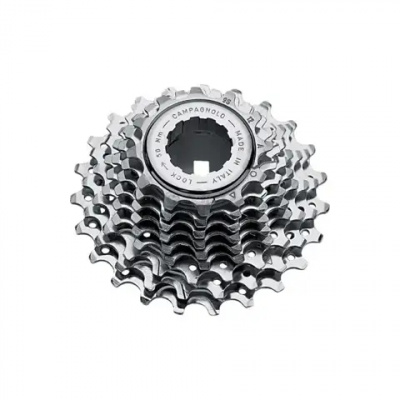
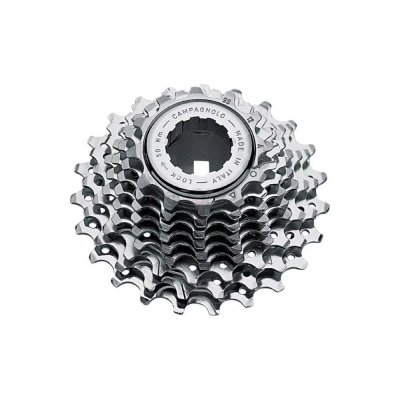
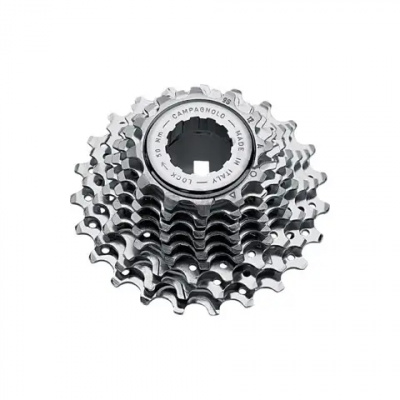
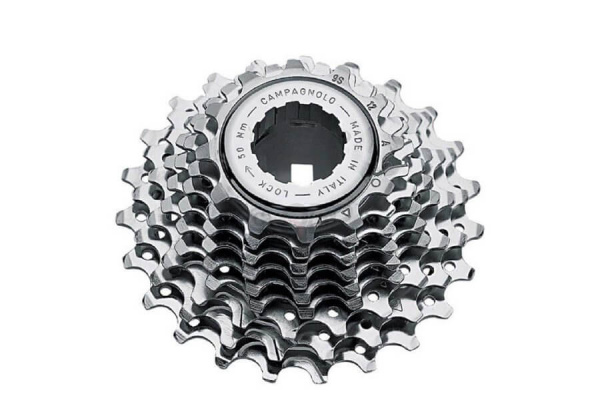
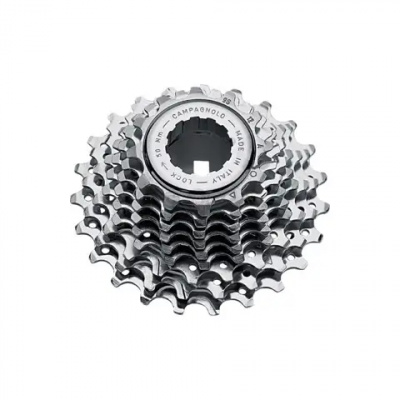
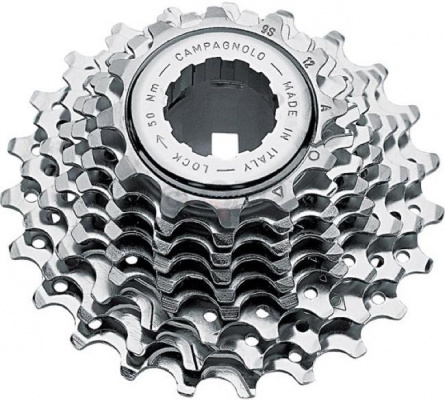
Campagnolo 9 speed cassettes remain the go-to replacement for anyone running a classic Italian groupset and wanting to keep the shifting honest. Whether your bike still wears Veloce, Mirage, Chorus, or Record, a fresh cassette brings back that crisp, positive indexing that made these drivetrains so well regarded in the first place. Modern replacement options carry Campagnolo's Ultra-Drive tooth geometry - a profile engineered for synchronised sprocket timing so the chain seats cleanly even when you're grinding up a long drag out of the saddle.
Construction is steel throughout, with a nickel-chrome finish that genuinely earns its keep on British roads. Gritty winter lanes and persistent damp are hard on exposed metal, and that surface treatment is your first line of defence against surface rust and accelerated wear. It's not decorative; it's practical.
Range-wise, most current 9-speed cassettes top out at 28 or 29 teeth on the largest sprocket - enough for the majority of UK riding - though a Campagnolo 9 speed cassette 13-28 remains one of the most widely fitted ratios for sportive and club riders. Check the listings above to match ratio and retailer, and read on if you need to verify compatibility before you buy.
Prices and availability can change quickly. Delivery charges are not always included in listed prices.
Final price, stock status and delivery terms are set by retailer. We may receive a commission on purchases made.
Fitting a Campagnolo 9 Speed Cassette: Splines, Lockrings, and What to Check First
This is where it pays to slow down before reaching for the lockring tool. Campagnolo's 9-speed history spans two distinct freehub standards, and confusing them is an easy mistake. The older Exa-Drive system used shallow splines - you'll find it on hubs from the mid-to-late 1990s - while current production cassettes are built around the deeper Ultra-Drive spline pattern. The two are not interchangeable. If you're unsure which body your hub has, pull the cassette and count spline depth visually; a shallow engagement is the giveaway for Exa-Drive.
Most riders sourcing a replacement Campagnolo 9 speed cassette today are fitting to a hub with Ultra-Drive geometry, which is the modern standard. That part is straightforward. What catches people out is the lockring. Older 9-speed hubs - particularly those from the late 1990s - use a 26x1mm thread pitch, whereas hubs from roughly 2000 onwards use 27x1mm. The practical advice: don't bin your existing lockring until you've confirmed the thread on your new cassette matches. Swapping over the original lockring is often the simplest fix if there's any doubt, and a decent Campagnolo cassette tool will handle both pitches without drama.
Campagnolo 9 speed cassette compatibility with Shimano hubs is a non-starter - the spline patterns are fundamentally different shapes, and no amount of persuasion changes that. If you're building a wheel from scratch or sourcing a second-hand hub, stick to Campagnolo-standard freehub bodies. Shimano 9 speed cassettes are an excellent choice on Shimano hubs, but they simply won't seat correctly on a Campagnolo body.
Which 9-Speed Cassette Should You Be Fitting?
Campagnolo's current 9-speed range is leaner than it once was. There's no longer a layered hierarchy of Record, Chorus, and Veloce 9-speed options sitting in active production - the market consolidated, and most new cassettes now come under the Veloce banner or as a straightforward Campagnolo 9-speed replacement part. That's not a step backward. The steel sprockets and Ultra-Drive geometry in these modern cassettes match or better the shifting performance of the tiered components they replaced. Record-level 9-speed shifting feel? You're getting very close with a current Veloce or equivalent, and the durability case for steel over alloy is well proven over a British riding season.
The Campagnolo Veloce 9 speed cassette is the most commonly sought replacement and covers the widest range of legacy bikes. It's the sensible default if your groupset is Veloce, Mirage, or a mixed build from that era. If you're running a higher-spec older groupset and want to stay period-correct in feel, the specification difference at the cassette level is marginal - what you're really paying for in older Record cassettes was titanium sprocket carriers and weight, neither of which affects how well the chain shifts. Steel lasts longer under load, full stop.
For ratio choice, the Campagnolo 9 speed cassette 13-28 is the standard fit for most road riders - enough range for rolling hills without going so wide that the gaps between sprockets feel pronounced. Riders heading into steeper ground, say the cols above Bala or the longer ascents in the Cairngorms, might want to consider a 12-29 or 13-29 if their derailleur capacity allows it. Check your rear derailleur's maximum sprocket specification before ordering - older medium-cage Campagnolo derailleurs have limits worth respecting.
For an alternative cassette brand that runs the same Campagnolo freehub spline, Miche 9 speed cassettes are worth a look - Italian-made, genuinely compatible, and often well-priced as a cost-conscious replacement. And if you're weighing up a full drivetrain step up, our Campagnolo 10 speed cassettes page covers the next tier should you want to upgrade rather than replace like-for-like.
Making Your Cassette Last: Drivetrain Care for UK Conditions
The nickel-chrome surface treatment on these cassettes does resist corrosion well, but it's not a reason to skip cleaning. UK grit - particularly the fine sandy residue left by winter road treatment - works like a lapping compound between chain and sprocket. Leave it, and you'll wear through a cassette faster than you'd expect. A thorough drivetrain clean after any wet or gritty ride, followed by a light re-lube, is the single most effective thing you can do to extend the life of your block.
The bigger factor, though, is chain wear. A stretched chain accelerates cassette wear dramatically - the worn links pitch against the unworn sprocket teeth and start cutting a hook profile into them, the classic shark-tooth effect that no amount of cleaning reverses. Check your chain regularly with a wear indicator tool, and replace it before it reaches 0.75% elongation. That threshold is your cassette's warning light. Ignore it and you'll likely need to replace both components together rather than just one. Browse our Campagnolo tools range for chain checkers and compatible lockring tools - the right equipment makes this a five-minute job rather than an afternoon's frustration.
On chain choice, a dedicated C9-compatible chain is non-negotiable for correct shifting with a Campagnolo cassette. The narrow-wide dimensions and side-plate profile of a 9-speed chain are specific enough that running an incorrect chain will blunt the indexing noticeably, even if it doesn't skip outright. Campagnolo's own C9 chain is the reference, but there are compatible options from reputable third-party manufacturers - just confirm 9-speed Campagnolo compatibility before fitting.
Campagnolo 9 Speed Cassettes FAQs
Can I use a Shimano 9 speed cassette on a Campagnolo hub?
No. Campagnolo and Shimano freehub bodies use entirely different spline patterns - a Shimano cassette simply won't seat correctly on a Campagnolo hub. You need a Campagnolo-compatible cassette, either from Campagnolo directly or from a compatible manufacturer such as Miche, which produces cassettes to the same spline specification.
Are all Campagnolo 9-speed cassettes compatible with older hubs?
Mostly, but check the detail. Modern 9-speed cassettes use the deeper Ultra-Drive spline and won't fit the older shallow Exa-Drive freehub bodies found on some late-1990s wheels. Lockring thread pitch is also worth checking - older hubs may use 26x1mm rather than the current 27x1mm. Confirm both spline pattern and lockring thread before ordering.
What chain should I use with a Campagnolo 9 speed cassette?
Use a dedicated 9-speed chain confirmed as compatible with Campagnolo - the Campagnolo C9 chain is the benchmark. The side-plate dimensions and pitch are specific to the system, and running the wrong chain will compromise indexing. Replace the chain before it reaches 0.75% wear to avoid accelerating sprocket wear on the cassette.