
Cafe Du Cycliste Socks
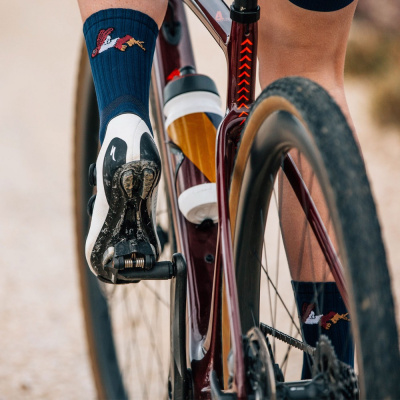
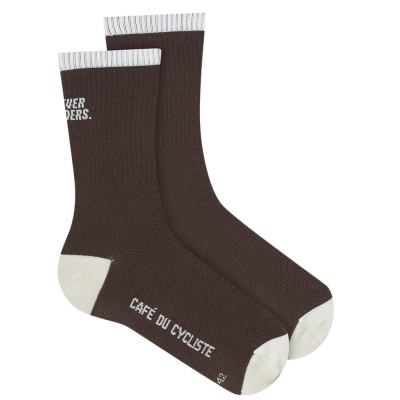
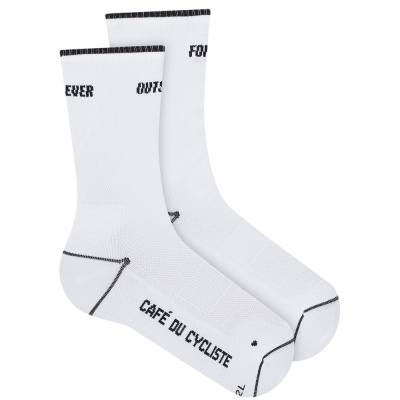
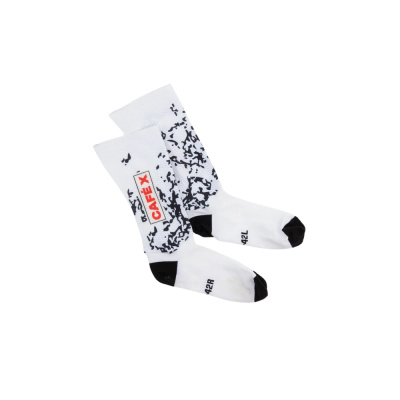
Cafe du Cycliste socks bring the same considered design that made the Nice-based brand a fixture in serious cyclists' kit bags to the most overlooked piece of clothing you'll pull on. And yes, it matters more than you think. A bad sock bunches, traps heat, and turns a four-hour road ride into a blister-fest inside your shoes before you've cleared the first climb.
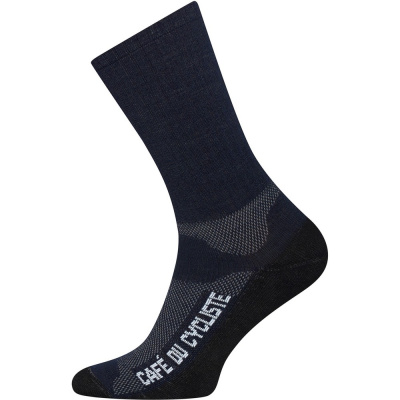
The range splits cleanly across seasons. Summer options use Meryl Skinlife yarns - a technical synthetic that wicks moisture away fast, fights odour through long warm days, and breathes well enough for those muggy August climbs where your feet are cooking inside carbon-soled shoes. Winter brings Merino wool blends into the picture, offering natural thermoregulation that keeps feet warm even when road spray has soaked through and the temperature has dropped sharply on a descent.
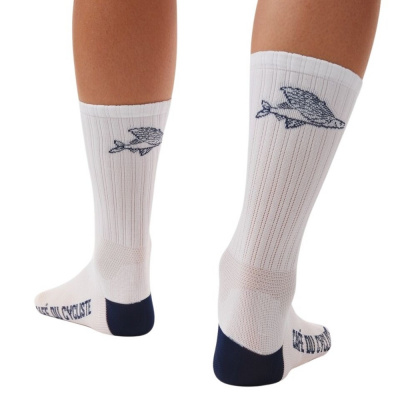
Both categories share the same construction principles: seamless toe boxes that remove friction hotspots, elastane-reinforced arch bands for a compressive hold that keeps the sock in place, and cuff options from classic mid-height to low-profile aero cuts. Whether you're building a summer kit for fast road miles or trying to survive a damp Yorkshire winter out and back, there's a sock here that fits the brief.
Prices and availability can change quickly. Delivery charges are not always included in listed prices.
Final price, stock status and delivery terms are set by retailer. We may receive a commission on purchases made.
What the Fabrics Actually Do at Different Temperatures
The division between Cafe du Cycliste's summer and winter cycling socks is more than a marketing label - the yarns behave genuinely differently, and that difference is felt from the first hour on the bike.
Summer socks lean on Meryl Skinlife, a nylon-based yarn with an integrated anti-bacterial treatment woven into the fibre structure itself rather than applied as a coating. That matters because coatings wash out. The anti-odour performance holds over repeated washes, which is exactly what you need if you're riding five days a week through July. More immediately useful on a humid climb is the moisture-wicking behaviour - sweat is pulled away from the skin and dispersed across the sock's surface quickly, preventing the clammy, waterlogged feeling that creates friction and, eventually, blisters. If you've ever finished a sportive with the soles of your feet feeling raw, this is the fix. Breathability here is genuinely good rather than claimed-on-the-label good, which makes these a sound choice for road rides from April through September in UK conditions.
The Merino wool blend socks work differently. Merino's real trick is thermoregulation - the fibre absorbs moisture vapour rather than repelling it, releasing warmth back to the foot as it does so. Crucially, Merino retains that warming behaviour even when it gets wet, which is exactly the situation you face on a damp November ride through the Dales when road spray has found its way past your overshoes. You won't be dry, but you will be warm. It's a meaningful distinction. The blended construction - Merino combined with synthetic fibres - also helps the socks hold their shape and dry faster than pure-Merino options, making them practical for back-to-back winter riding days.
For riders comparing options, Assos socks take a similarly technical approach to fibre selection, while Fingerscrossed socks offer another premium European take on the summer-weight category worth setting alongside these.
Fit, Cuff Heights, and Getting the Size Right
Cafe du Cycliste runs a compressive fit across the range, which divides opinion until you've worn a properly fitted pair. The arch band - elastane woven into the mid-foot - grips without pinching and, more practically, stops the sock migrating inside your shoe during a long ride. Anyone who's spent a century stop pulling their sock back up at every feed zone will understand why this matters.
The seamless toe box is less glamorous but arguably more impactful. Traditional toe seams sit directly on the skin and create a pressure ridge that, repeated over thousands of pedal strokes, becomes a blister. The seamless construction removes that friction point entirely. Inside a stiff-soled road shoe where there's nowhere for pressure to go, that's a genuine comfort gain.
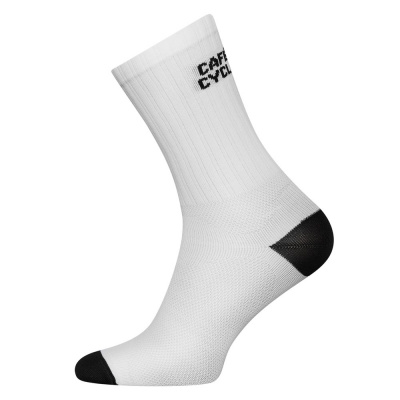
Cuff height splits across classic and aero cuts. The classic mid-cuff height - typically sitting around 16 - 18cm - is the standard road-cycling look and works well with Cafe du Cycliste leg warmers for seamless coverage in cooler conditions. The lower aero cut sits closer to the ankle and suits riders who prioritise a cleaner look at the shoe interface, or who find taller cuffs uncomfortable in heat.
On sizing: these run true to size with a snug, race-oriented feel. If you're between sizes, go smaller. A sock that's slightly loose in a cycling shoe will bunch under the ball of the foot, and that's precisely the friction source you're trying to avoid. Check the size chart against your shoe size rather than your usual sock size, as the compressive construction can feel tighter than a casual sock of the same labelled size.
If you're pairing these with Cafe du Cycliste footwear, the fit logic extends naturally - Cafe du Cycliste road shoes and gravel shoes are cut with a similarly precise last, so the sock thickness choices made for each range reflect the internal volume of those shoes specifically. Worth noting if you're building a matched kit.
MAAP socks sit in the same premium bracket and are a fair point of comparison if you want to see how the fit and construction philosophy differ across brands at this level.
Working These Into a UK Riding Wardrobe
The practical question for UK riders is which sock to reach for and when, and the answer is less complicated than brands often make it sound. Above around ten degrees and you're in summer-sock territory. Below that - or any ride where you're expecting sustained road spray - switch to Merino.
For deep winter miles, pair the Merino socks with overshoes rather than relying on the sock alone to handle cold and wet. The sock manages thermoregulation; the overshoe blocks wind and deflects water. That combination covers most of what a British winter throws at you, including the specific misery of a long Welsh valley descent where it's dry at the top and soaking at the bottom. On days where temperatures are borderline, Cafe du Cycliste bib tights combined with the Merino socks gives you coverage from hip to toe without needing to overthink it at six in the morning.
Care is where people go wrong with technical socks, especially Merino blends. Wash at 30 degrees on a gentle cycle - not a standard wash cycle, which agitates fibres enough to cause pilling and distortion. Avoid fabric softener entirely; it coats the fibres and degrades the moisture-wicking behaviour that you're paying for. Air dry rather than tumble drying, particularly with Merino blends where heat causes shrinkage and breaks down the elastane that gives you that compressive arch hold. None of this is difficult, but skipping any of it shortens the life of a sock that should last you a couple of seasons if treated properly. Turn them inside out before washing to reduce surface wear, and wash them after every ride - Meryl Skinlife's anti-bacterial properties slow odour but they're not a substitute for cleaning.
Cafe Du Cycliste Socks FAQs
Are Cafe du Cycliste socks true to size?
Generally, yes - they fit true to size but with a compressive, race-oriented feel that's snugger than a standard sock. If you're sitting between sizes, go smaller. A sock with any excess fabric will bunch under the ball of your foot inside a cycling shoe, and that's exactly the friction point you want to avoid.
Which Cafe du Cycliste socks are best for UK winters?
The Merino wool blend socks are the right call for British winter riding. Merino thermoregulates and - importantly - retains warmth even when damp from road spray, which is the real test on a wet January ride. Pair them with a decent set of overshoes for full cold-weather protection.
How should I wash my Cafe du Cycliste cycling socks?
Wash at 30 degrees on a gentle cycle, inside out. Skip the fabric softener - it coats the fibres and kills the moisture-wicking performance over time. Air dry always, especially the Merino blends, where tumble-dryer heat causes shrinkage and degrades the elastane that holds the arch support in shape.