
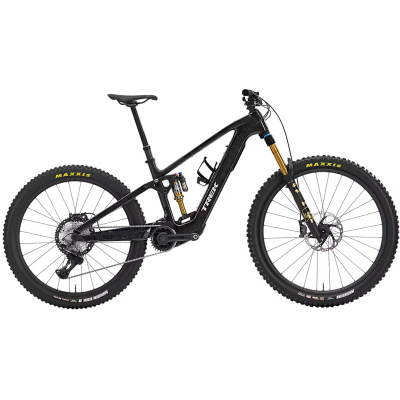
Trek Fuel+ MX 9.8
The Trek Fuel+ MX 9.8 is a premium carbon, mid-power trail e-MTB with a 60 Nm TQ motor, removable 580 Wh battery and agile mixed-wheel suspension layout.
- TQ HPR60, 60 Nm: Meaningful climbing assistance without losing the need for rider input
- Removable 580 Wh battery: Take on longer trail days and charge away from the bike
- 29/27.5 MX wheels: Front-wheel confidence with a nimble, clearance-friendly rear end
- 160 mm / 150 mm travel: Substantial suspension for technical trails and repeat laps
- Carbon Gen 2 chassis: A premium frame with genuine EX, MX and LX-style configuration potential
- Three drivetrain options: Pick cable SRAM, cable Shimano or Shimano Di2 to suit your preferences
Trek Fuel+ MX 9.8 Deals
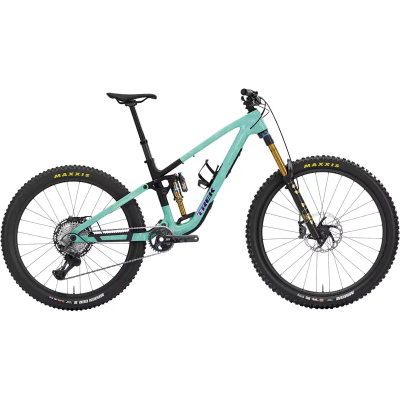
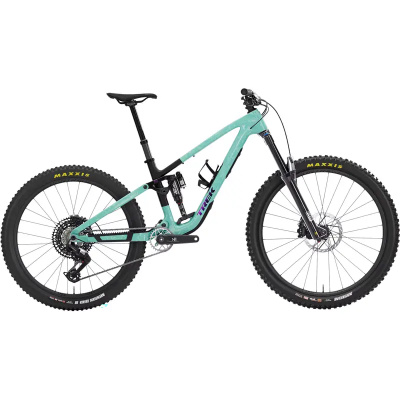
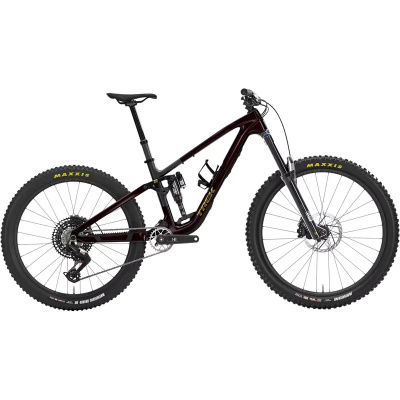
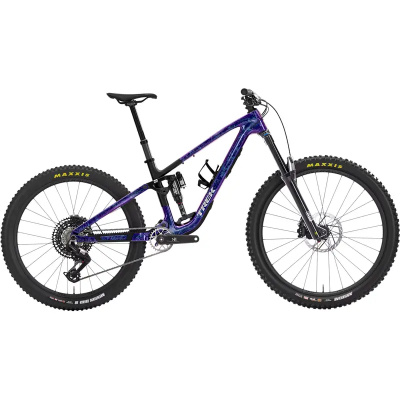
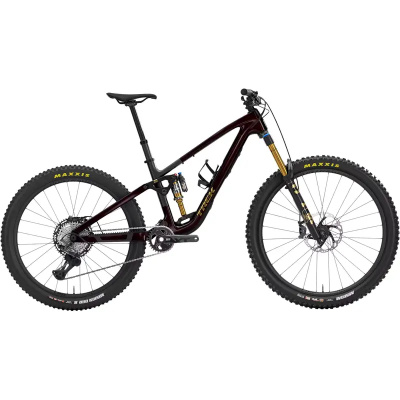
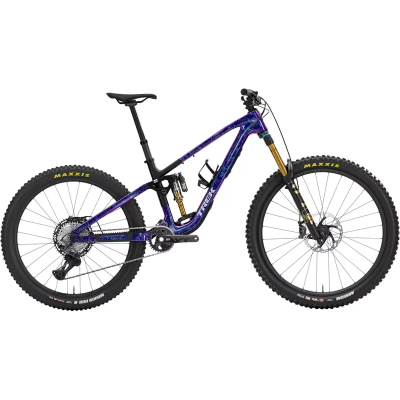
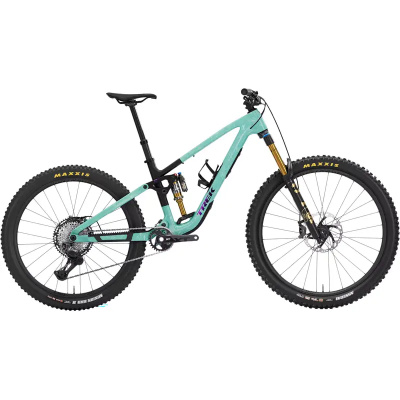
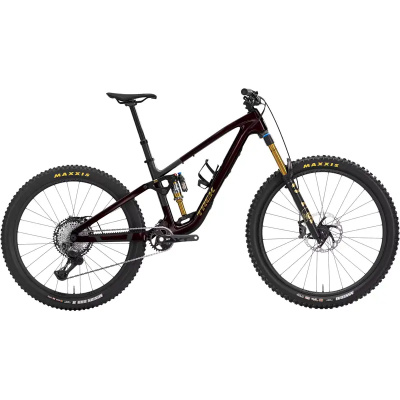
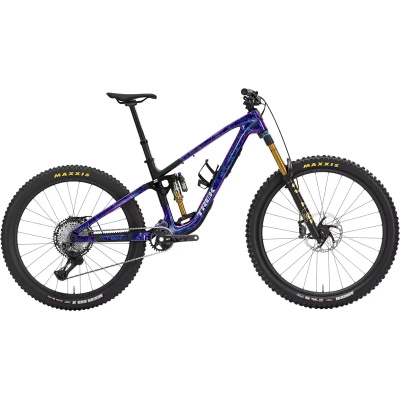
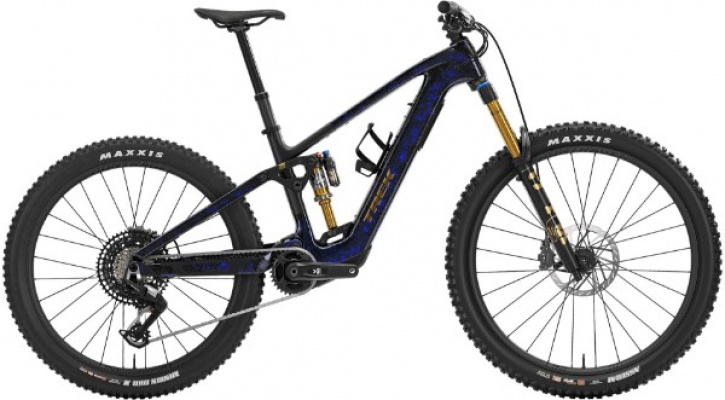

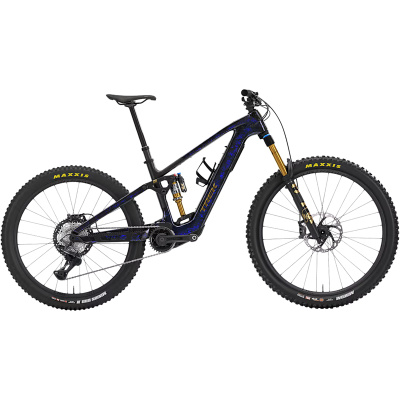
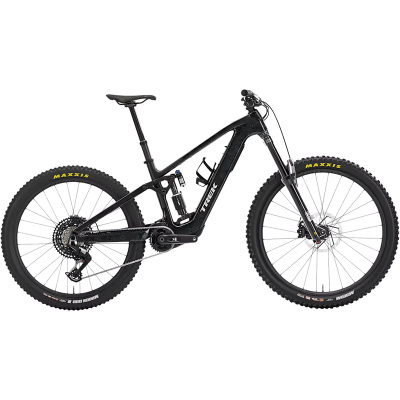
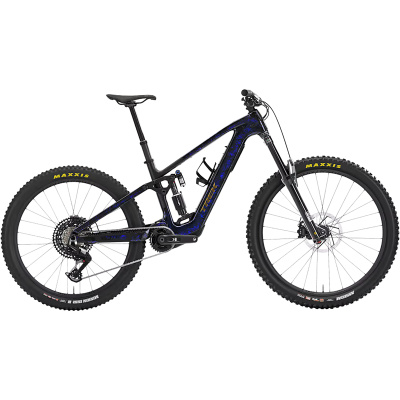
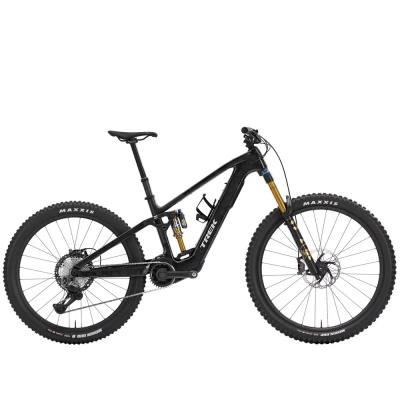
Prices and availability can change quickly. Delivery charges are not always included in listed prices.
Final price, stock status and delivery terms are set by retailer. We may receive a commission on purchases made.
Bikesy's Verdict
The Trek Fuel+ MX 9.8 is a compelling choice for an experienced trail rider who wants to climb farther and fit in more laps without losing the quick reactions and rider involvement of a conventional mountain bike. Its TQ HPR60 motor, removable 580 Wh battery, carbon frame and lively 29/27.5 MX layout make a very capable package, while the Eagle 90, XT and XT Di2 options let you choose the shifting system that suits you. It will not keep pace with the strongest full-power bikes on maximum-assistance climbs, and a future wheel-format conversion needs more than a new rear wheel. For active riders who value playful handling and meaningful configuration options, the Fuel+ MX 9.8 is a seriously appealing e-MTB.
Pros
- 60 Nm TQ HPR60 assistance keeps climbing help feeling rider-driven
- Removable 580 Wh battery suits longer rides and off-bike charging
- Mixed 29-inch front and 27.5-inch rear wheels favour quick, active handling
- OCLV Mountain Carbon Gen 2 frame can be reconfigured between EX, MX and LX-style setups
- Choice of SRAM mechanical, Shimano mechanical or Shimano electronic shifting
Cons
- Mid-power assistance will not match a full-power e-MTB on maximum-assistance climbs
- The playful MX setup is less planted than a longer-travel, more plough-focused bike
- Changing wheel format requires matched hardware and e-system recalibration
The Trek Fuel+ MX 9.8 is a premium full-suspension electric trail bike for riders who want more climbing help without swapping the lively feel of a mountain bike for the heft and forceful shove of a full-power e-MTB. Its TQ HPR60 motor delivers 60 Nm, and the 580 Wh battery gives the bike the capacity for long loops and repeat laps. It still rewards proper gear choice and a steady cadence on steep climbs, which will suit riders who enjoy putting something into the ride rather than simply pressing a button and hanging on.
Current Trek Fuel+ MX 9.8 Gen 2 builds
The current UK Fuel+ MX 9.8 is part of the Fuel+ Gen 2 family. It uses an OCLV Mountain Carbon frame, a removable battery and the stock MX layout of a 29-inch front wheel with a 27.5-inch rear. There are three distinct builds: Eagle 90 with cable-operated SRAM shifting, mechanical XT with cable-operated Shimano shifting, and XT Di2 with electronic Shimano shifting. The original UK RRP was £7,625 for Eagle 90 and mechanical XT, rising to £8,075 for XT Di2.
The build name matters here. The carbon chassis, motor proposition and mixed-wheel format remain the same idea, but the shifting, braking equipment, rear-wheel driver and tyre specification differ. Mechanical SRAM and mechanical Shimano are the straightforward choices at the same original RRP, while XT Di2 directs the extra £450 towards electronic shifting and integrated Smart Box wiring rather than a different frame.
MX frame, wheels and ride character
In stock form, the Fuel+ MX 9.8 has a 160 mm fork, 150 mm of rear travel and a 205 x 60 mm shock. The 29-inch front wheel brings reassuring rollover and grip, while the smaller rear wheel creates useful clearance when the trail gets steep or tight. Combined with the 64.2° MX head angle, it is a layout that encourages deliberate line choice, pumping through dips and changing direction rather than simply relying on mass to blast through everything in its path.
There is plenty of adjustability in the platform, including an adjustable leverage-rate position, Active Braking Pivot suspension and an interchangeable rocker link and lower shock mount. It can be reconfigured around EX, MX or LX-style priorities, but turning it into a full-29 setup is not a quick rear-wheel swap. It needs the matching rocker, lower shock mount, rear wheel and appropriate suspension parts, followed by a retailer e-system recalibration for the new wheel diameter.
The frame has guided internal cable routing, a Universal Derailleur Hanger, downtube protection and shuttle protection. It also accepts an optional TQ Range Extender, although that is not supplied with the bike. The published maximum combined weight for bike, rider and cargo is 136 kg, and this is a trail machine rather than a rack-equipped option for daily cargo duties.
Eagle 90, XT or XT Di2?
Fuel+ MX 9.8 Eagle 90 Gen 2: Choose this version if cable-operated SRAM Eagle 90 Transmission is your preference. Its published build uses SRAM Maven Bronze four-piston brakes with 200 mm rotors, Fox Factory 36 GRIP X2 suspension and a Fox Factory Float X shock. It is the mechanical SRAM route into the 9.8 chassis.
Fuel+ MX 9.8 XT Gen 2: Mechanical XT is the natural pick for riders who prefer Shimano's cable-operated 12-speed shifting. It carries Shimano XT four-piston brakes and the same Fox Factory 36 GRIP X2 fork and Float X shock pairing. Its original UK RRP matched the Eagle 90 build, making this chiefly a decision about your preferred shifting and braking family.
Fuel+ MX 9.8 XT Di2 Gen 2: The XT Di2 model adds Shimano XT electronic shifting, Shimano XT M8220 four-piston brakes with 203 mm rotors, and Smart Box integration. It is the right version for someone who values electronic shifting enough to justify the £450 original-RRP step over the two mechanical options. Riders who favour simpler cable-operated servicing can save that money with Eagle 90 or mechanical XT.
Battery care and UK ownership
The removable 580 Wh battery can be charged away from the bike, handy when your storage space has no convenient socket. With the supplied 4 A charger, plan on approximately three to four hours for charging. Assistance reduces below 10% charge, so leave a sensible margin for the final climb home rather than expecting a near-empty battery to feel like a freshly charged one.
Muddy winter rides call for the usual useful habits: wash grit from the chainstay guard, keep the drivetrain lubricated, and include pivots and motor-mount bolts in periodic servicing. The chain can touch the replaceable chainstay guard in the 10-tooth sprocket, which is intentional, but the guard is a consumable part worth inspecting as it wears. Riders planning longer days can add the optional Range Extender with the recommended side-load cage and retention strap.
Key Features & Benefits
- Mid-power system with familiar pedalling feel: The HPR60's 60 Nm output helps flatten long climbs while leaving you involved in gear selection, cadence and line choice. It suits riders who want an assisted mountain-bike experience rather than full-power uplift pace.
- Stock MX suspension layout: A 160 mm Fox Factory 36 fork and 150 mm rear travel give the bike the composure for demanding natural trails, while the smaller rear wheel helps it move around beneath you on steep turns and trail features.
- Configurable suspension platform: The interchangeable rocker link and lower shock mount allow a future change in wheel format and travel priorities. It is a proper workshop conversion with matched parts, not a token wheel-size tweak.
- Practical energy storage: The 580 Wh battery removes for indoor charging and the frame accepts the optional TQ Range Extender for rides that call for more capacity. A lower-capacity 360 Wh battery is also compatible with the required end-cap hardware.
- Build choice without changing the core bike: Eagle 90 and mechanical XT offer two cable-shifted routes at the same original UK RRP, while XT Di2 adds electronic shifting and Smart Box integration for riders who place value on that extra technology.
Geometry
Fuel+ Gen 2 MX geometry
| Size | Reach | Stack | Effective top tube | Head angle | Seat angle | Chainstay | Wheelbase | Standover |
|---|---|---|---|---|---|---|---|---|
| S | 42.6 cm | 62.7 cm | 56.0 cm | 64.2° | 77.7° | 44.0 cm | 120.4 cm | 75.8 cm |
| M | 45.6 cm | 62.7 cm | 59.0 cm | 64.2° | 77.5° | 44.0 cm | 123.4 cm | 75.2 cm |
| L | 482 mm | 641 mm | 61.9 cm | 64.2° | 77° | 440 mm | 126.6 cm | 75.5 cm |
| XL | 507 mm | 654 mm | 65.2 cm | 64.2° | 76.6° | 444 mm | 1301 mm | 75.9 cm |
| XXL | 52.7 cm | 66.8 cm | 68.2 cm | 64.2° | 76.1° | 44.9 cm | 133.2 cm | 76.9 cm |
Alternatives to the Trek Fuel+ MX 9.8
The Specialized Turbo Levo SL 2 Comp is a close carbon mixed-wheel alternative. Both bikes have 150 mm of rear travel, but Trek publishes a 60 Nm motor and 580 Wh battery where the Specialized has 50 Nm and 320 Wh. The Trek uses a 160 mm fork across its stock MX range. The Specialized has a 150 mm fork in S1 and a 160 mm fork from S2 to S6.
The Yeti MTe is another premium option for riders considering a lively assisted trail bike. In Freehub's direct ride comparison, the Yeti offered more rear-suspension traction and support, while the Fuel+ MX 9.8 had the stronger case for riders who value the ability to change between EX, MX and LX-style configurations on one frame platform.
What Freehub found on the Fuel+ MX 9.8 Eagle 90 Gen 2
Freehub Magazine reviewer Cy Whitling rode a size L Fuel+ MX 9.8 Eagle 90 Gen 2 and found the stock MX format intuitive, balanced and easy to move around. On rolling trails, it responded well to pumping, carrying speed and using side hits. The smaller rear wheel helped it feel playful on steep, tight sections, giving it a more active descending character than a bike designed chiefly to stay glued to the ground.
Climbing performance was also a positive in the test. Whitling did not feel the need to use a suspension lockout and found that the bike transferred power effectively, although it worked best when ridden with momentum rather than at a slow crawl through technical obstacles. The HPR60 motor was described as quiet and clearly stronger than the earlier HPR50, while remaining a mid-power system that asks more from the rider than a full-power e-MTB.
Freehub's test bike developed a creak traced to loose motor-mounting bolts. That was an observation from one bike rather than a model-wide fault, but it reinforces the value of including motor-mount bolts in routine workshop checks.
Full Specification
Fuel+ MX 9.8 Gen 2 shared platform
| Specification | Details |
|---|---|
| Frame | OCLV Mountain Carbon full-suspension frame with removable battery, Active Braking Pivot, Universal Derailleur Hanger, guided internal routing, adjustable leverage rate, interchangeable rocker link and lower shock mount, plus downtube and shuttle protection |
| Stock MX suspension | 160 mm single-crown fork, 150 mm rear travel and 205 x 60 mm shock |
| Wheel format | 29-inch front / 27.5-inch rear across every stock size |
| Published frame tyre-width limit | Up to 2.5 inches / 63.5 mm |
| Frame standards | Boost110 front, Boost148 rear, Universal Derailleur Hanger, standard ZS headset, 34.9 mm seatpost, standard e-bike ISIS crank interface, 55 mm chainline and maximum 34-tooth single chainring |
| Bottle and Range Extender provision | All sizes accept a bottle and the aftermarket Range Extender. Published bottle limits: S 620 ml; M to L 769 ml; XL 1005 ml |
| Maximum combined weight | 136 kg for bike, rider and cargo |
| Configuration potential | The platform can be converted to EX or LX configurations with the correct matched parts |
Current UK build specifications
| Specification | Fuel+ MX 9.8 Eagle 90 Gen 2 | Fuel+ MX 9.8 XT Gen 2 | Fuel+ MX 9.8 XT Di2 Gen 2 |
|---|---|---|---|
| Original UK RRP | £7,625 | £7,625 | £8,075 |
| Motor and battery | TQ HPR60, 60 Nm, 350 W peak capability, removable 580 Wh battery, 4 A charger and colour display | TQ HPR60, 60 Nm, 350 W peak capability, removable 580 Wh battery, 4 A charger and colour display | TQ HPR60, 60 Nm, 350 W peak capability, removable 580 Wh battery, 4 A charger, colour display and Smart Box integration |
| Fork | Fox Factory 36 GRIP X2, 160 mm | Fox Factory 36 GRIP X2, 160 mm | Fox Factory 36 GRIP X2, 160 mm |
| Rear shock | Fox Factory Float X, 205 x 60 mm | Fox Factory Float X, 205 x 60 mm | Fox Factory Float X, 205 x 60 mm |
| Shifter | SRAM Eagle 90, 12-speed | Shimano XT M8100, 12-speed | Shimano XT Di2 M8250 |
| Rear derailleur | SRAM Eagle 90 T-Type | Shimano XT M8100 | Shimano XT Di2 M8260 |
| Crankset and chainring | SRAM Eagle 90 e-MTB, 160 mm; 32-tooth T-Type ring | E*thirteen E*spec Plus, 160 mm; 32-tooth steel ring | E*thirteen E*spec Plus, 160 mm; 32-tooth steel ring |
| Cassette | SRAM XS-1275 T-Type, 10-52-tooth | Shimano XT M8200, 10-51-tooth | Shimano XT M8200, 10-51-tooth |
| Chain | SRAM GX Eagle T-Type | Shimano Ultegra/XT M8100 | Shimano Ultegra/XT M8100 |
| Brake levers and calipers | SRAM Maven Bronze four-piston | Shimano XT four-piston | Shimano XT M8220 four-piston |
| Rotors | SRAM HS2, 200 mm front and rear | Rotor specification varies by displayed build | Shimano RT86, 203 mm front and rear |
| Rims | Bontrager Line Comp 30, tubeless ready | Bontrager Line Comp 30, tubeless ready | Bontrager Line Comp 30, tubeless ready |
| Front hub | Boost110 | Boost110 | Boost110 |
| Rear hub | Boost148 Rapid Drive 108; use the exact displayed offer before ordering a freehub or spare wheel | Boost148 Rapid Drive 108, Micro Spline | Boost148 Rapid Drive 108, Micro Spline |
| Tyres | Maxxis Assegai 29 x 2.5 inches front; Maxxis Minion DHR II 27.5 x 2.5 inches rear | Maxxis mixed-wheel trail tyres; casing and compound vary, so use the displayed offer's specification | Maxxis Assegai 29 x 2.5 inches EXO+ MaxxGrip front; Maxxis Minion DHR II 27.5 x 2.5 inches DoubleDown MaxxGrip rear |
| Handlebar | Race Face ERA carbon, 800 mm | Race Face ERA carbon, 800 mm | Race Face ERA carbon, 800 mm |
| Stem | Bontrager Elite, 45 mm | Bontrager Elite, 45 mm | Bontrager Elite, 45 mm |
| Grips | Trek Line Elite lock-on | Trek Line Elite lock-on | Trek Line Elite lock-on |
| Saddle | Verse Short Comp, 145 mm | Verse Short Comp, 145 mm | Verse Short Comp, 145 mm |
| Pedals | Sold separately | Not included | Not included |
| Published weight | 19.51 kg claimed, size M; 20.38 kg measured by Freehub on a size L test bike | 19.72 kg, size M | 19.79 kg, size M |
Size-specific dropper post mapping
| Frame size | Dropper travel |
|---|---|
| S | 150 mm |
| M | 170 mm |
| L | 200 mm |
| XL | 200 mm |
| XXL | 200 mm |