
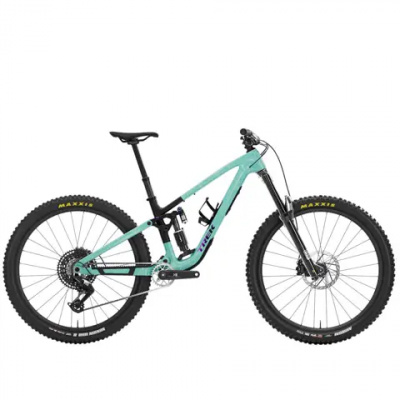
Trek Fuel+ LX 9.8
A premium long-travel carbon e-MTB with 160/170 mm Fox Factory suspension, 60 Nm TQ assistance and three drivetrain choices for committed trail riders.
- 160/170 mm suspension: More margin for steep, rough descents and repeat laps
- Fox Factory damping: High-end fork and coil-shock package across every build
- TQ HPR60 motor: 60 Nm of discreet, measured climbing assistance
- 580 Wh removable battery: Useful capacity for longer trail missions and indoor charging
- Full 29-inch LX layout: Composed rolling speed and confident line-holding
- Three drivetrain choices: Choose SRAM mechanical, Shimano mechanical or XT Di2
Trek Fuel+ LX 9.8 Deals
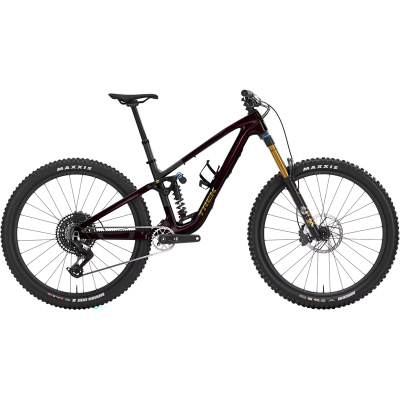
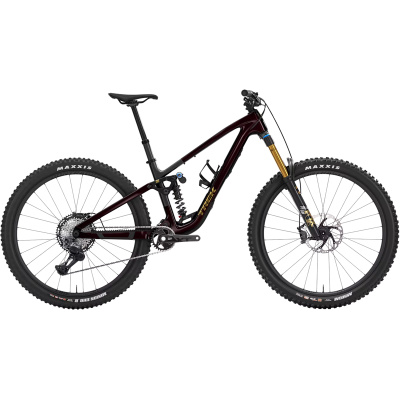
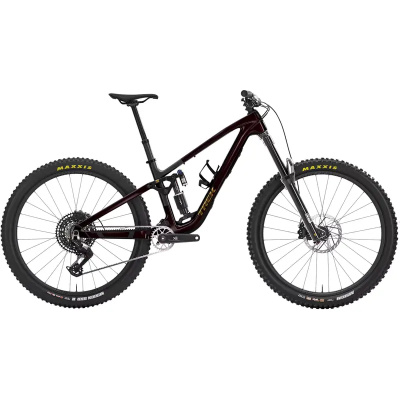

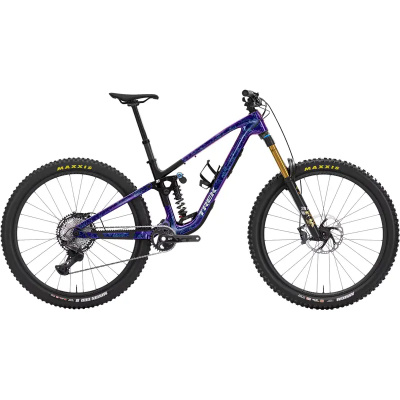
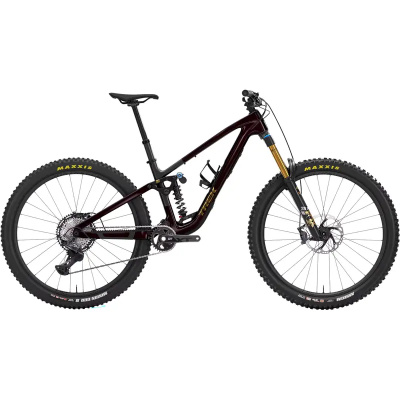
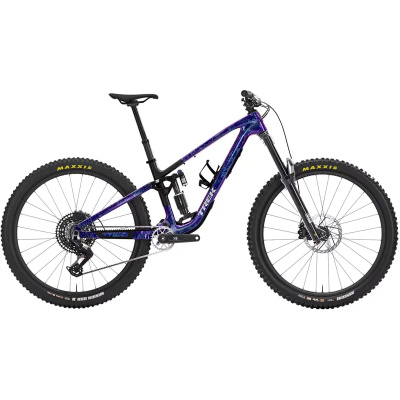
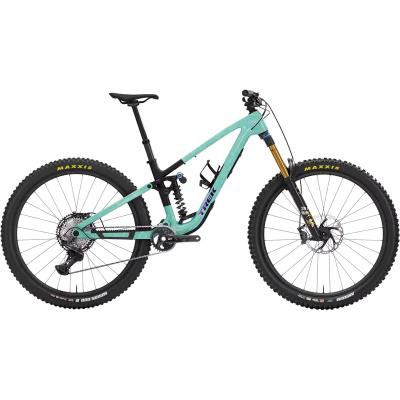
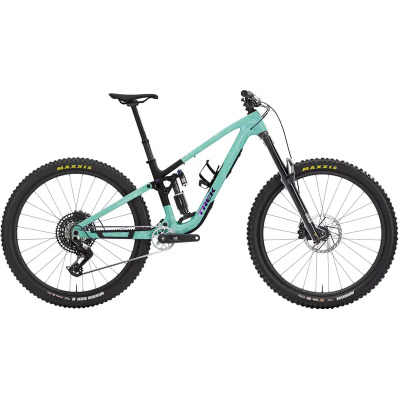
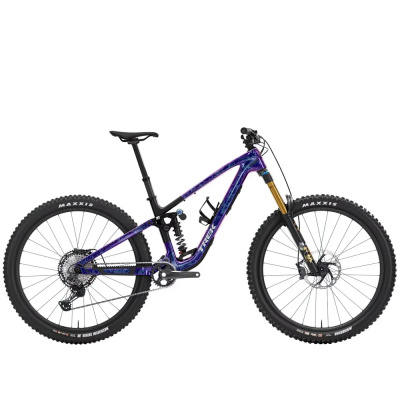
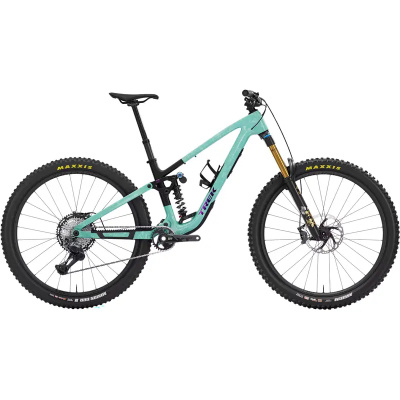
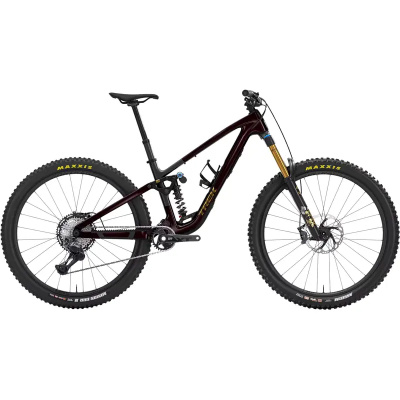
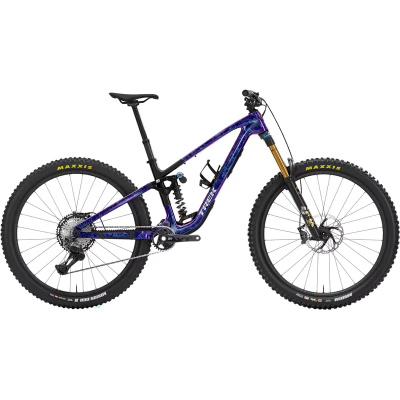
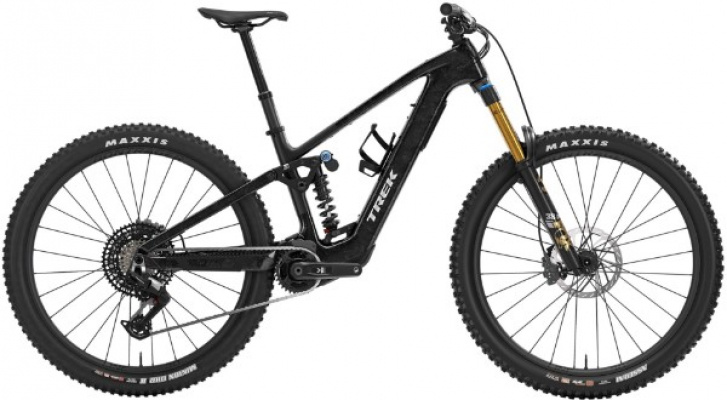
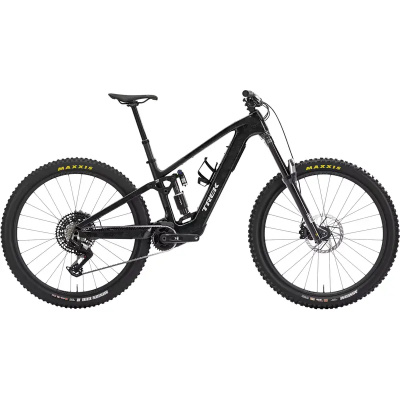
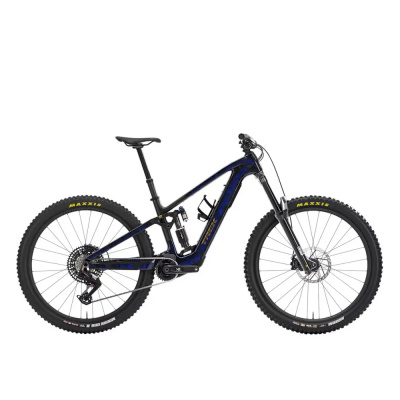
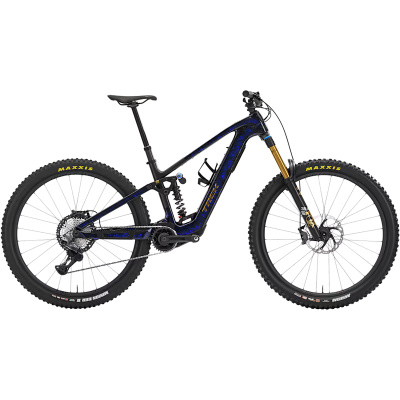
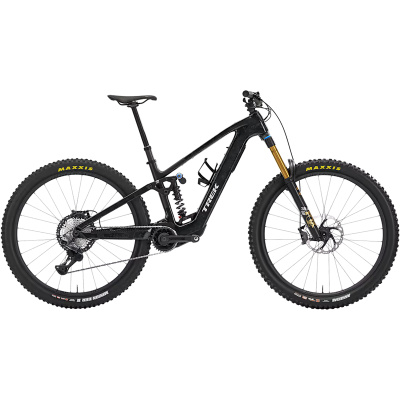
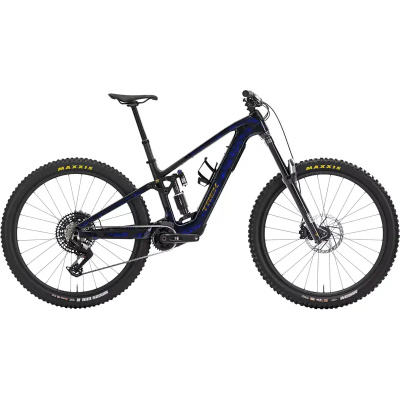
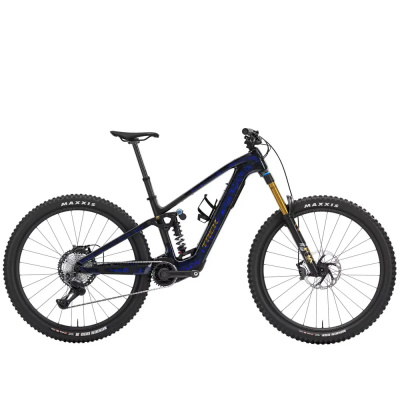
Prices and availability can change quickly. Delivery charges are not always included in listed prices.
Final price, stock status and delivery terms are set by retailer. We may receive a commission on purchases made.
Bikesy's Verdict
The Trek Fuel+ LX 9.8 is a cracking choice for committed riders who want to climb under their own steam, then enjoy the confidence of a genuinely long-travel carbon e-MTB on rough, steep descents. Its 160/170 mm suspension package, full 29-inch wheels, 580 Wh battery and measured TQ assistance make a persuasive combination for big trail days without the dominant character of a full-power machine. Eagle 90, XT and XT Di2 let you choose the shifting system that suits you without changing the premium chassis underneath. Give the coil shock the setup attention it deserves, factor in the substantial lifting weight, and the LX has the depth to be a rewarding long-term trail bike.
Pros
- OCLV Mountain Carbon frame with Fox Factory long-travel suspension on every current build
- 160 mm rear and 170 mm front travel give the LX a confident descending focus
- TQ HPR60 assistance and removable 580 Wh battery suit long, self-powered trail days
- Choice of SRAM mechanical, Shimano mechanical or Shimano electronic shifting
- Gen 2 frame can be professionally reconfigured for other Fuel+ layouts
Cons
- Coil-spring rate and damping need careful setup, and another spring may be needed
- Published size-M weights of 20.68 kg to 20.88 kg still matter for stairs and vehicle racks
- The mid-power motor prioritises natural support over maximum full-power shove
The Trek Fuel+ LX 9.8 is the long-travel, full-29-inch version of Trek's mid-power electric mountain bike platform. It is aimed at confident intermediate to expert riders who want more composure on steep, rough descents, yet still prefer measured assistance and familiar mountain-bike handling over the hard-driving character of many full-power e-MTBs. Every current build pairs an OCLV Mountain Carbon frame with Fox Factory suspension, while Eagle 90, XT and XT Di2 give you three genuinely different ways to shift.
Current UK offers and prices
The current UK range starts at an original RRP of £7,800 for the Eagle 90 and mechanical XT builds, while the XT Di2 build has an original RRP of £8,250. Current offers sit alongside this guide, but the useful comparison is not simply the price: identify the listed drivetrain, brakes and rear freehub before deciding which bike is in front of you.
Eagle 90 uses SRAM's cable-operated T-Type system, 200 mm rotors and an XD freehub. Both Shimano versions use Micro Spline rear freehubs and 203 mm rotors, with the choice between conventional XT cable shifting and XT Di2 electronic shifting. Pedals are sold separately on every version, so allow for them in the ready-to-ride budget.
The latest Fuel+ LX 9.8
The current UK model is the Fuel+ LX 9.8 Gen 2. Some retailer listings use 2026 and others 2027, but those labels do not mark different generations of this bike. Gen 2 is the useful identifier, with LX denoting the platform's longest-travel, full-29-inch setup. It sits alongside the shorter-travel EX and mixed-wheel MX configurations, rather than being a separate annual refresh of an older LX model.
The Gen 2 chassis can support those alternative Fuel+ configurations, but changing from LX to EX or MX takes the appropriate rocker link, lower shock mount, shock, fork setup and wheel combination. It is a proper workshop conversion, not a rear-wheel swap undertaken on a whim.
Long-travel support with measured assistance
At the heart of the LX is a carbon full-suspension frame with 160 mm of rear travel, a 170 mm Fox Factory 38 GRIP X2 fork and a Fox DHX2 coil shock. That is a serious package for repeated technical descents and rough natural trails, where the extra suspension margin can make a long day feel less punishing. The full 29-inch wheel format, slack 63.4° or 63.5° head angle and size-tuned rear-centre lengths point towards calm, committed steering at speed rather than quick-fire agility on mellow loops.
A coil shock rewards proper setup. Each frame size receives a different stock spring, but rider weight, kit and preferred sag may still call for another spring and careful damping adjustment. Get that right and the suspension should stay sensitive and supportive through repeated hits. Get it wrong and the bike will not show its best side, especially when climbing or loading the wheels through turns.
The TQ HPR60 motor supplies 60 Nm of torque and 250 W continuous rated power, backed by a removable 580 Wh battery. It is intended to add a quiet, natural-feeling push rather than dominate the ride, so you still have a hand in how the bike climbs. There is no single honest mileage prediction because assistance mode, climbing, rider weight, temperature, tyres and trail conditions all change consumption. A compatible 160 Wh range extender is available separately for longer outings, with its mount and connection cable also required.
Published complete-bike weights are 20.88 kg for the Eagle 90 in size M and 20.68 kg for the XT Di2 in size M, both stated with tubeless sealant and no inner tubes. The XT build does not have a published claimed weight. These are manageable figures for a long-travel e-MTB, but still substantial when lifting onto a vehicle rack, carrying up steps or storing the bike. The removable battery can help with charging and transport, while any rack still needs a suitable load rating.
Eagle 90, XT or XT Di2?
Eagle 90 is the choice for riders who want robust, cable-operated SRAM shifting. Its Eagle 90 T-Type derailleur uses replaceable links, skid plates and cage assemblies, which is a welcome repairability angle for anyone likely to clip rocks. The 10-52T cassette gives it the widest stated gear range of the three, and its 200 mm SRAM Maven Bronze brakes suit the bike's descending brief.
XT keeps things mechanical but changes the feel and standards. It uses cable-operated Shimano XT shifting, a 10-51T cassette, Shimano XT four-piston brakes and 203 mm rotors. Choose it if Shimano's conventional shift action is your preference and you would rather keep the drivetrain free of electronic operation. At the same original RRP as Eagle 90, this is primarily a controls, maintenance and freehub-standard decision.
XT Di2 brings an electronic Shimano XT Di2 rear derailleur and wireless shifter, while retaining the same core carbon chassis, motor, battery and suspension package as the other current builds. Its higher original RRP pays for electronic shifting rather than more travel or battery capacity. It makes sense for riders who specifically value that operation; it is not automatically the better-value option for everyone.
Switching between the SRAM and Shimano families later is possible, but it involves the appropriate freehub body or rear wheel plus a complete compatible cassette, chain, shifter and rear derailleur. Picking the shift system you already enjoy using is normally the cleaner route from day one.
Living with it through a British winter
This is a premium e-MTB with moving pivots, a coil shock, a high-performance fork and a powerful drivetrain, so a little regular care pays off. After wet or gritty rides, clean the drivetrain, linkage area and frame guards, then lubricate the chain correctly. Avoid pressure washing around bearings and electrical connections. Mechanical Eagle 90 and XT builds also benefit from routine shift-cable care, while XT Di2 and the TQ system bring authorised-dealer software support into normal ownership.
Keep an eye on tubeless sealant, tyre condition, pivot play and suspension setup, especially after a run of muddy rides. The battery removes for convenient indoor charging, and the optional extender need only come along when the planned ride warrants it. Frame-bag space and provision for a compatible extender add useful all-day flexibility, but neither accessories nor pedals arrive as part of the standard bike.
How Gen 2 differs from the Fuel EXe Gen 1
The Fuel+ Gen 2 platform moves well beyond the earlier Fuel EXe Gen 1. That predecessor used a 50 Nm TQ HPR50 motor, a 360 Wh battery and 140 mm rear with 150 mm front travel in its standard form. Gen 2 brings the 60 Nm HPR60, a 580 Wh battery and a colour display on 9.8 builds, alongside a wider choice of configurations. The LX is therefore a new 160/170 mm long-travel interpretation of the platform, not merely a previous Fuel EXe with a component update.
Key Features & Benefits
- OCLV Mountain Carbon chassis: The same premium carbon frame, guided internal routing, protective guards and UDH interface underpin all three current builds, so drivetrain preference does not mean compromising the core bike.
- Size-tuned coil and frame details: Stock coil springs, dropper travel and rear-centre length change across the size range, giving each frame a more considered starting point for suspension setup and riding position.
- Long-travel LX configuration: The combination of a 170 mm Fox 38 fork, 160 mm rear wheel travel and 29-inch wheels favours reassurance when the trail becomes steep, rooty and repeatedly rough.
- Optional 160 Wh range extender: Extra battery capacity can be added for longer days without carrying it on every normal ride. The extender, mount and connection cable are separate purchases.
- Configuration-ready Gen 2 platform: With the right rocker link, lower shock mount, suspension parts and wheel setup, the frame can be rebuilt around EX or MX priorities rather than left with compromised geometry.
Geometry
Fuel+ LX Gen 2 geometry
| Size | Reach | Stack | Effective top tube | Head angle | Seat angle | Chainstay | Wheelbase | Standover |
|---|---|---|---|---|---|---|---|---|
| S | 41.8 cm | 63.3 cm | 56.3 cm | 63.4° | 77° | 44.4 cm | 121.3 cm | 76.3 cm |
| M | 44.8 cm | 63.3 cm | 59.3 cm | 63.4° | 76.7° | 44.4 cm | 124.3 cm | 75.7 cm |
| L | 47.3 cm | 64.7 cm | 62.2 cm | 63.4° | 76.3° | 44.4 cm | 127.5 cm | 76 cm |
| XL | 49.8 cm | 66.1 cm | 65.5 cm | 63.5° | 75.9° | 44.7 cm | 131 cm | 76.4 cm |
| XXL | 51.8 cm | 67.4 cm | 68.4 cm | 63.5° | 75.4° | 45.2 cm | 134.1 cm | 77.3 cm |
Alternatives to Consider
The Specialized Turbo Levo SL Comp Carbon is another carbon light-assist e-MTB, but it uses a published 320 Wh battery and 50 Nm motor against the Trek's 580 Wh and 60 Nm. Its stock travel is 150 mm at the rear and 150-160 mm at the front depending on size, where the Fuel+ LX 9.8 has 160 mm rear and 170 mm front travel. The Specialized offers a mixed-wheel format, while the Trek is the more aggressive full-29-inch option.
Orbea's Rise LT M10 brings different flexibility to the decision. It has 150 mm rear and 160 mm front travel, plus a choice of 420 Wh or 630 Wh batteries and RS assistance modes rated at 60 Nm or 85 Nm. The Trek instead holds to a 580 Wh battery and 60 Nm TQ system, while adding 10 mm at each end of the suspension.
What independent reviewers found
Freehub Magazine's test team characterised the Fuel+ Gen 2 platform as closer to an unassisted-bike ride experience than a typical full-power e-MTB, while finding the battery capacity reassuring for longer exploration. That supports the Fuel+ LX 9.8's appeal for riders who want useful climbing help without losing the sense of contributing to the ride.
Pinkbike's Dario DiGiulio tested the shorter-travel Fuel+ EX with XT Di2, describing that version as lively on easier trails while retaining capability when things became more serious. The LX is not the same bike: it adds more travel, a coil shock and slacker stock geometry, so its emphasis shifts further towards descending composure rather than the EX's sharper all-round feel.
Full Specification
Current Fuel+ LX 9.8 platform
| Feature | Specification |
|---|---|
| Configuration | Fuel+ Gen 2, LX configuration |
| Frame | OCLV Mountain Carbon full-suspension frame with removable battery, Active Braking Pivot, UDH interface, guided internal routing, protective guards and interchangeable suspension hardware |
| Intended use | Aggressive long-travel electric trail riding, with an emphasis on technical descending, repeated climbing and all-day trail access |
| Rear travel | 160 mm |
| Front travel | 170 mm |
| Fork | Fox Factory 38 GRIP X2 |
| Rear shock | Fox DHX2 coil, 205 mm x 65 mm |
| Wheel format | 29-inch front and rear in every offered size |
| Maximum frame tyre size | 29 x 2.50 inches |
| Axles | Boost110 15 mm front and Boost148 12 mm rear thru-axles |
| Crank interface | TQ HPR60 drive unit with ISIS crank interface |
| Accessory provision | Space for a compatible range extender, long dropper posts and frame bags; accessories are not supplied |
| System weight limit | 136 kg combined bicycle, rider and cargo |
Current build comparison
| Specification | Eagle 90 build | XT build | XT Di2 build |
|---|---|---|---|
| Original UK RRP | £7,800 | £7,800 | £8,250 |
| E-bike system | TQ HPR60, 60 Nm, 250 W continuous rated power, 580 Wh removable battery, 4A charger and colour display | TQ HPR60, 60 Nm, 250 W continuous rated power, 580 Wh removable battery, 4A charger and colour display | TQ HPR60, 60 Nm, 250 W continuous rated power, 580 Wh removable battery, 4A charger and colour display |
| Shifting | SRAM Eagle 90 cable-operated, 12-speed | Shimano XT M8100 cable-operated, 12-speed | Shimano XT Di2 M8250 wireless shifter with Shimano XT Di2 M8260 electronic e-MTB rear derailleur |
| Rear derailleur | SRAM Eagle 90 T-Type Full Mount | Shimano XT M8100 long cage | Shimano XT Di2 M8260 electronic e-MTB derailleur |
| Gearing | 1 x 12, 10-52T | 1 x 12, 10-51T | 1 x 12, 10-51T |
| Crankset | SRAM Eagle 90 e-MTB, 160 mm, 32T | E*Thirteen E*spec Plus, 160 mm, 32T | E*Thirteen E*spec Plus, 160 mm, 32T |
| Cassette | SRAM XS-1275 T-Type, 10-52T | Shimano XT M8200, 10-51T | Shimano XT M8200, 10-51T |
| Chain | SRAM GX Eagle T-Type | Shimano Ultegra/XT M8100 | Shimano Ultegra/XT M8100 |
| Brakes | SRAM Maven Bronze four-piston | Shimano XT M8220 four-piston | Shimano XT M8220 four-piston |
| Rotors | SRAM HS2, 200 mm front and rear | Shimano RT86, 203 mm front and rear | Shimano RT86, 203 mm front and rear |
| Rims | Bontrager Line Comp 30 Tubeless Ready | Bontrager Line Comp 30 Tubeless Ready | Bontrager Line Comp 30 Tubeless Ready |
| Rear hub and freehub | Rapid Drive 108, XD, Boost148 | Rapid Drive 108, Micro Spline, Boost148 | Rapid Drive 108, Micro Spline, Boost148 |
| Tyres | Maxxis Assegai 29 x 2.5-inch front; Maxxis Minion DHR II 29 x 2.5-inch rear | Maxxis Assegai 29 x 2.5-inch front; Maxxis Minion DHR II 29 x 2.5-inch rear | Maxxis Assegai 29 x 2.5-inch front; Maxxis Minion DHR II 29 x 2.5-inch rear |
| Handlebar | Race Face ERA carbon, 800 mm, 40 mm rise | Race Face ERA carbon, 800 mm, 40 mm rise | Race Face ERA carbon, 800 mm, 40 mm rise |
| Stem | Bontrager Elite, 45 mm | Bontrager Elite, 45 mm | Bontrager Elite, 45 mm |
| Grips | Trek Line Elite lock-on | Trek Line Elite lock-on | Trek Line Elite lock-on |
| Saddle | Verse Short Comp, 145 mm | Verse Short Comp, 145 mm | Verse Short Comp, 145 mm |
| Pedals | Sold separately | Sold separately | Sold separately |
| Claimed weight | 20.88 kg in size M with tubeless sealant and no inner tubes | Not confirmed | 20.68 kg in size M with tubeless sealant and no inner tubes |
Size-specific factory setup
| Size | Fox DHX2 coil spring | Dropper travel | Chainstay |
|---|---|---|---|
| S | 250 lbs | 150 mm | 44.4 cm |
| M | 350 lbs | 170 mm | 44.4 cm |
| L | 400 lbs | 200 mm | 44.4 cm |
| XL | 450 lbs | 200 mm | 44.7 cm |
| XXL | 500 lbs | 200 mm | 45.2 cm |