
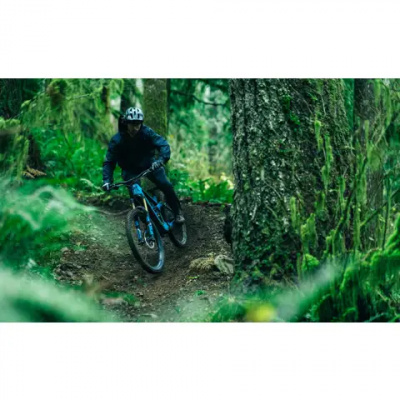
Transition Relay Carbon
A premium lightweight carbon eMTB with a removable 430 Wh Fazua battery, in 160mm Eagle 90 or 170mm PNW Eagle 90 form.
- Fazua Ride 60: 60 Nm and 450 W in Boost, with a more natural feel than a full-power motor.
- Removable Energy 430: Unclip the 430 Wh pack to charge indoors or lighten the bike for the car.
- 160mm or 170mm setup: Air-sprung trail travel, or a coil PNW build aimed at steep descents.
- Carbon GiddyUp frame: Long-travel support in a chassis you can still move and place.
- Eagle 90 Transmission: Cable-operated 10-52t shifting, with derailleur parts you can replace.
- XS to XXL fit: Shorter cranks and 27.5-inch wheels on XS, longer droppers as the sizes grow.
Transition Relay Carbon Deals

Prices and availability can change quickly. Delivery charges are not always included in listed prices.
Final price, stock status and delivery terms are set by retailer. We may receive a commission on purchases made.
Bikesy's Verdict
The Transition Relay Carbon is the long-travel eMTB for riders who still want to muscle the bike, choose a line and feel the tyres working. Its regular Eagle 90 build, with an official UK RRP of £8,599, pairs 160mm of air suspension with dual 29-inch wheels from SM upwards and a mechanical drivetrain with replaceable derailleur parts. The PNW build is the one for steep, rough descents you ride often: more travel, a coil shock, a stiffer fork and stronger brakes. A 430 Wh pack and 60 Nm of assistance ask more of you than a full-power system, and every charge means lifting the battery out. Riders who like that balance get a carbon bike that makes bigger hills possible while keeping the trail feel on the way down.
Pros
- The battery comes out without tools, so you can charge indoors, travel lighter and ride the odd unassisted mile.
- Long-travel handling stays lively rather than planted and heavy like a full-power eMTB.
- The same carbon frame can run a 160mm dual-29 setup or a 170mm mixed-wheel setup.
- Eagle 90 shifts under load, needs no shifter battery and has replaceable derailleur parts.
- XS to XXL sizing includes shorter cranks, smaller wheels on XS and longer droppers for taller riders.
Cons
- 60 Nm and 430 Wh feel modest on long days or repeated assisted laps, and there is no dedicated extender. Lower assistance and a planned charge keep it workable.
- Every charge means removing the battery. Make the unclip part of the storage routine and keep the contacts dry.
- The chassis passes more feedback through than a plusher eMTB, which you notice on long rough rides. Tyre pressure, shock setup and the PNW coil soften that.
The Transition Relay Carbon is a premium lightweight electric mountain bike for riders who want enduro-length travel and a real shove on the climbs, without the bulk or the dominant motor feel of a full-power eMTB. Picture a trail-centre loop where the assistance keeps you with quicker friends on the way up, then a descent where you still want to pick a line and move the bike. Two builds share the carbon frame. The Relay Carbon Eagle 90 is the 160mm air-sprung trail bike, with dual 29-inch wheels from SM upwards. The Relay PNW Carbon Eagle 90 is the 170mm coil-sprung build for days when the steep, rough descents are the reason you went out.
This is the current UK model, on the Relay Carbon platform produced from 2023 to 2026. The Eagle 90 specification carries no official model year, so a year printed on a listing doesn't mean a different frame.
Assistance that still leaves you a bike to ride
The chassis is carbon, with Transition's GiddyUp suspension and Speed Balanced Geometry. On the regular build the head angle is 64 degrees, the wheelbase is long and the effective seat angle is steep, so the bike stays calm at speed and puts you in a useful place to pedal. The PNW head angle is a fraction slacker, and reach is slightly shorter in the same size label. You're looking at a stable long-travel bike, not a nervous short-travel one.
It is at its best with committed intermediate and expert mountain bikers. Less experienced riders can use it, but the price, the speed and the setup choices make more sense once your trail skills are already there.
The Relay uses a Fazua Ride 60 mid-drive, with 60 Nm, 250 W continuous output and 450 W in Boost. Fazua designs the motor to decouple once you are above the assistance limit, so on easier spins it gets out of the way more than a full-power motor tends to. Jamie Darlow rode a size LG Relay Carbon GX AXS for MBR, the earlier wireless 160mm build. He found that chassis lively and easy to move between lines, and it passed more feedback through than a plush, isolating eMTB. You will notice that on a long rough ride. Tyre pressure and shock setup are the first things to adjust if it wears on you. The PNW coil, longer travel, ZEB fork and smaller rear wheel are the factory package when those descents are steep and keep coming.
The lower shock flip chip is how one frame accepts either rear-wheel size. LOW is for a 29-inch rear wheel and HIGH is for a 27.5-inch rear wheel. The rear end is 12mm x 148mm with SRAM UDH, so the Eagle Transmission derailleur mounts without a conventional hanger. Moving between the 160mm dual-29 setup and the 170mm mixed-wheel setup needs the matching rear wheel, a 205mm x 60mm or 205mm x 65mm shock, a 160mm or 170mm fork, the right chip position and often a chain-length change. The frame can be converted, but it costs more than a simple wheel swap.
XS isn't a scaled-down version of the larger bikes. Both builds give that size dual 27.5-inch wheels, the HIGH chip, a 37mm fork offset and 160mm cranks. Larger sizes use 165mm cranks and a 44mm fork offset. Vivid and Float X2 shock bodies only clear this carbon frame in the LOW, 29-inch position, so a large aftermarket shock isn't automatically a fit with a 27.5-inch rear wheel. Dual-crown forks aren't approved. There are no ISCG tabs, so a normal frame-mounted chain guide isn't a direct fit, though a Relay-compatible bash spider can add impact protection. The PNW includes that spider. The regular Eagle 90 uses a direct-mount 32t ring instead.
Eagle 90 or the PNW Eagle 90
Relay Carbon Eagle 90 is the build for a mixed week: a trail-centre climb, some natural singletrack, and descents that are technical without being the entire day. Travel is 160mm at both ends, with a RockShox Lyrik Select+ and a Super Deluxe Select+ air shock, 205mm x 60mm. SRAM Maven Bronze brakes run 200mm rotors front and rear, and the tyres are a Maxxis Assegai 2.5-inch front with a Minion DHR II 2.4-inch rear, on DT Swiss E 1900 wheels. Gears are mechanical SRAM Eagle 90 Transmission, 1x12, with a 10-52t cassette and a 32t chainring, so you still have a climbing gear when assistance is low or the battery is out. The official UK RRP is £8,599. Claimed weight for a size MD is 19.55 kg with the battery and 17.28 kg without it, which you notice when the bike has to go on a rack or up a stairwell.
PNW Carbon Eagle 90 is the descending build. Travel is 170mm, the fork is a RockShox ZEB Ultimate, and the shock is a Vivid Coil Ultimate at 205mm x 65mm. From SM to XXL you get a mixed wheelset, 29-inch front and 27.5-inch rear, plus a 220mm front rotor on SRAM Maven Silver brakes. XS stays with 200mm rotors and dual 27.5-inch wheels. Schwalbe Magic Mary and Big Betty Super Trail Soft tyres, both 2.4 inches, and a factory bash spider around the 32t e-ring, are there for repeated rock and root strikes. Claimed weight for a size MD is 20.21 kg with the battery and 18.00 kg without it. Ride this build when steep, rough descents are a regular part of the week. For mellower loops, the Eagle 90 is the more willing bike.
Charging, wet rides and workshop time
Every charge starts with the battery out of the frame. Transition and Fazua put a full charge at about 3.5 hours on the supplied 3 A charger, so the tool-free Fazua Energy 430 can come indoors while the bike stays in a garage, a shed or a shared hallway. There's no port for charging the complete bike, and Transition doesn't currently offer a dedicated Relay range extender. At 430 Wh the pack is modest next to full-power eMTBs. How far it takes you depends on the mode, the gradient, how much you pedal and the temperature. Boost suits a short, awkward step in the climb, and it spends the pack quickly if you leave it on. Drop the assistance, or use Fazua's adjustable support, when the day is long.
Remove the pack and the Relay is still an electric bike, because the Ride 60 stays fitted. You can pedal without assistance, which helps on a tarmac link or any journey where a lighter bike is easier to lift. It won't ride like a bike that was never electric.
Dry the battery and the charging contacts after a wet ride. Fazua rates the system IP54, enough for rain and spray, not a pressure washer pointed at the connectors. Leave some room around the tyres too. A 2.6-inch maximum is the published limit, not a target, and sticky UK mud will fill a tight rear end long before a dry-day measurement says you have space.
Servicing is the usual pivots, suspension and chain, plus firmware checks and e-bike diagnostics. Eagle 90 is cable-operated, so there's no shifter battery, and replacement links, guards and cage parts can make a crashed derailleur cheaper to repair. Change the chainring size or the flip-chip position and the chain setup needs checking again. Internal cables are reached through the battery opening, which is worth knowing before a housing change.
Bottle space depends on the size. MD, LG, XL and XXL take a normal bottle. XS and SM take a 450ml Fidlock bottle, and may need a Fidlock Twist Base Adapter depending on the shock. There is also a gear accessory mount under the top tube.
Deore, GX and AXS bikes on this frame
Deore, GX, GX AXS, XO AXS and PNW GX offers use this same carbon platform. They are earlier component builds, not a previous frame generation. Relay Carbon Deore was the more affordable 160mm option, with Shimano Deore equipment and a simpler suspension package. Relay Carbon GX was the previous mechanical build on the 160mm chassis, with a historical UK RRP of £8,599. GX AXS was a wireless build with Fox suspension. Relay Carbon XO AXS was the previous premium wireless 160mm build, historically £9,999. Relay PNW Carbon GX was the earlier mechanical version of the 170mm mixed-wheel setup, historically £8,999.
None of those matches the Eagle 90 specification. A GX-labelled bike can still be a sound buy when the suspension, brakes, drivetrain and wheels on that offer are what you actually want. The kit listed with the offer is what you are buying.
Most mixed weeks belong on the Eagle 90: climbs you can share with a quicker group, descents you can still play on, and a battery that unclips for a charge at home. The PNW is the better companion when those descents are steep, rough and frequent enough to use the coil, the ZEB and the larger front rotor. You get the hills covered, and you still get to ride the bike yourself.
Key Features & Benefits
- Two ways to run the same carbon frame: Eagle 90 is 160mm, air-sprung and dual 29-inch from SM up. PNW is 170mm, with a ZEB, a coil shock and a 27.5-inch rear wheel except on XS. A later swap needs the matching fork, shock and flip-chip position.
- Charge it in the house, ride it without the pack: The Energy 430 comes out without tools and needs about 3.5 hours for a full charge on the supplied 3 A charger. Pedal assistance disappears with the pack, but the motor does not, and there is no Relay extender to add for a bigger day.
- Brakes and tyres matched to the build: Maven Bronze and 200mm rotors with Maxxis Assegai and Minion DHR II tyres on the trail build. Maven Silver, a 220mm front rotor from SM up, Schwalbe Super Trail tyres and a factory bash spider on the PNW.
- Cockpit and cranks that change with size: XS gets 160mm cranks, a 120mm dropper and less bar rise. Larger sizes get 165mm cranks, longer droppers and higher bars, so the contact points are not one setting stretched across every rider.
Geometry
Published measurements for each factory configuration.
160mm Relay configuration
| Size | Wheel size | Reach (mm) | Stack (mm) | Effective top tube (mm) | Head angle (degrees) | Seat angle (degrees) | Chainstay (mm) | Wheelbase (mm) | Seat tube (mm) | Head tube (mm) | BB drop (mm) | Estimated BB height (mm) |
|---|---|---|---|---|---|---|---|---|---|---|---|---|
| XS | 27.5-inch front / 27.5-inch rear | 410 | 590 | 523 | 64 | 79.7 | 436 | 1167 | 380 | 100 | 15 | 340 |
| SM | 29-inch front / 29-inch rear | 430 | 615 | 553 | 64 | 79.1 | 442 | 1208 | 390 | 100 | 25 | 350 |
| MD | 29-inch front / 29-inch rear | 460 | 628 | 586 | 64 | 78.4 | 442 | 1244 | 410 | 115 | 25 | 350 |
| LG | 29-inch front / 29-inch rear | 485 | 637 | 614 | 64 | 77.8 | 448 | 1280 | 430 | 125 | 25 | 350 |
| XL | 29-inch front / 29-inch rear | 510 | 646 | 642 | 64 | 77.3 | 448 | 1309 | 460 | 135 | 25 | 350 |
| XXL | 29-inch front / 29-inch rear | 535 | 655 | 671 | 64 | 77 | 448 | 1338 | 490 | 145 | 25 | 350 |
170mm PNW configuration
| Size | Wheel size | Reach (mm) | Stack (mm) | Effective top tube (mm) | Head angle (degrees) | Seat angle (degrees) | Chainstay (mm) | Wheelbase (mm) | Seat tube (mm) | Head tube (mm) | BB drop (mm) | Estimated BB height (mm) |
|---|---|---|---|---|---|---|---|---|---|---|---|---|
| XS | 27.5-inch front / 27.5-inch rear | 405 | 588 | 532 | 63.6 | 79.3 | 436 | 1172 | 380 | 100 | 11 | 343 |
| SM | 29-inch front / 27.5-inch rear | 422 | 615 | 564 | 63.3 | 78.4 | 440 | 1211 | 390 | 100 | 25 | 350 |
| MD | 29-inch front / 27.5-inch rear | 452 | 634 | 597 | 63.3 | 77.7 | 440 | 1247 | 410 | 115 | 25 | 350 |
| LG | 29-inch front / 27.5-inch rear | 477 | 643 | 631 | 63.3 | 77.1 | 446 | 1282 | 430 | 125 | 25 | 350 |
| XL | 29-inch front / 27.5-inch rear | 502 | 652 | 665 | 63.4 | 76.6 | 446 | 1312 | 460 | 135 | 25 | 350 |
| XXL | 29-inch front / 27.5-inch rear | 527 | 661 | 696 | 63.4 | 76.3 | 446 | 1341 | 490 | 145 | 25 | 350 |
Alternatives to Consider
The Specialized Turbo Levo SL 2 is the other premium carbon lightweight eMTB to have on the list. Its motor is rated at 50 Nm, against 60 Nm on the Relay, and the main battery is an integrated 320 Wh pack rather than a 430 Wh unit you can unclip and take indoors. Specialized offers an optional 160 Wh extender. Transition doesn't currently offer a dedicated extender for the Relay. Line the component levels up before you decide which of these premium builds is the smarter buy.
The Orbea Rise LT takes a different route through the same sort of riding. It runs 160mm at the front and 150mm at the rear, while the Relay is 160mm at both ends in regular form and 170mm at both ends as a PNW. Orbea's RS+ assistance is rated at 85 Nm, so it is the stronger motor, and the battery choice is 420 Wh or 630 Wh, with an optional 210 Wh extender. The Relay answers with a tool-free removable pack and a choice between a trail setup and the descending-focused PNW, rather than with a larger battery.
What MBR found on the GX AXS bike
Jamie Darlow's first ride for MBR used a size LG Relay Carbon GX AXS. That is the earlier wireless 160mm build on this carbon platform, not the mechanical Eagle 90 specification.
Battery removal was exceptionally simple on that test. Riding without the pack, he could not detect meaningful drag from the motor, which stayed in the frame. He also described a lively, playful bike that was easy to move between lines and encouraged an energetic style, rather than the planted feel of a heavy eMTB. The same connection sent more buzz through than a plusher, more isolating bike, so comfort on a long rough ride is the compromise.
That test bike developed an internal rattle Darlow believed was cable-related, and the bash spider contacted the crank. Those points come from one early test bike. The regular Eagle 90 build uses a different direct-mount chainring, so the crank contact does not describe that trail specification.
Full Specification
Shared carbon platform
| Detail | Specification |
|---|---|
| Frame | Carbon full-suspension chassis with GiddyUp suspension and Speed Balanced Geometry |
| Rear travel options | 160mm with a 205mm x 60mm air shock, or 170mm with a 205mm x 65mm coil shock |
| Rear axle | 12mm x 148mm SRAM UDH |
| Motor interface | Fazua Ride 60 |
| Battery access | Tool-free battery door |
| Headset standard | 56mm/66mm zero-stack |
| Seatpost diameter | 31.6mm |
| Seat clamp | 37.0mm |
| Routing | Internal, accessible through the battery opening |
| Flip chip | Rear-wheel flip chip |
| Mounts and bottles | Gear accessory mount under the top tube. MD to XXL accept a normal bottle. XS and SM take a 450ml Fidlock bottle and may need an adapter. |
| Sizes and fork offset | XS, SM, MD, LG, XL, XXL. XS uses smaller wheels, shorter fork dimensions and a 37mm offset. Other sizes use a 44mm fork offset. |
| Tyre clearance guidance | 29 x 2.6 inches on the Relay; 27.5 x 2.6 inches at the PNW rear |
Relay Carbon Eagle 90
| Component | Specification |
|---|---|
| Official UK RRP | £8,599 |
| Frame | Relay Carbon, 160mm |
| Fork | RockShox Lyrik Select+, 160mm |
| Shock | RockShox Super Deluxe Select+, 205mm x 60mm |
| Motor | Fazua Ride 60, 60 Nm, 250 W continuous, 450 W peak Boost |
| Battery | Tool-free removable 430 Wh |
| Drivetrain | Mechanical SRAM Eagle 90 Transmission, 1x12 |
| Shifter | SRAM Eagle 90 MMX Single Click |
| Rear derailleur | SRAM Eagle 90 Transmission |
| Cassette | SRAM XS-1275 T-Type, 10-52t |
| Chain | SRAM GX Eagle Transmission |
| Crankset | RaceFace Aeffect ETOR, 165mm; XS 160mm |
| Chainring | 32t |
| Bottom bracket | Fazua Ride 60 system interface |
| Brakes | SRAM Maven Bronze |
| Rotors | SRAM Centerline, 200mm front and rear |
| Wheels | DT Swiss E 1900 Spline 30; DT Swiss 370 Ratchet LN hubs; DT Swiss Champion spokes |
| Tyres | Maxxis Assegai 3C EXO+ 2.5-inch front; Maxxis Minion DHR II 3C EXO+ 2.4-inch rear |
| Wheel size | Dual 29-inch from SM to XXL; dual 27.5-inch on XS |
| Handlebar | ANVL Mandrel Alloy 35, 800mm, size-specific rise |
| Stem | ANVL Swage, 40mm |
| Headset | FSA No.55R |
| Grips | ODI Elite Flow Lock-On |
| Seatpost | OneUp Dropper, 120-240mm according to size |
| Saddle | SDG Bel Air 3 LUX |
| Flip chip as supplied | HIGH on XS; LOW on SM to XXL |
| Claimed weight | 19.55 kg with battery, 17.28 kg without, size MD |
Relay Carbon Eagle 90 size details
| Size | Wheels | Flip chip | Crank (mm) | Dropper (mm) | Bar rise (mm) | Fork |
|---|---|---|---|---|---|---|
| XS | 27.5-inch front / 27.5-inch rear | HIGH | 160 | 120 | 20 | 37mm offset, 558mm axle-to-crown |
| SM | 29-inch front / 29-inch rear | LOW | 165 | 150 | 20 | 44mm offset |
| MD | 29-inch front / 29-inch rear | LOW | 165 | 190 | 30 | 44mm offset |
| LG | 29-inch front / 29-inch rear | LOW | 165 | 210 | 30 | 44mm offset |
| XL, XXL | 29-inch front / 29-inch rear | LOW | 165 | 240 | 40 | 44mm offset |
Relay PNW Carbon Eagle 90
| Component | Specification |
|---|---|
| Frame | Relay Carbon, 170mm |
| Fork | RockShox ZEB Ultimate, 170mm |
| Shock | RockShox Vivid Coil Ultimate, 205mm x 65mm |
| Motor | Fazua Ride 60, 60 Nm, 250 W continuous, 450 W peak Boost |
| Battery | Tool-free removable 430 Wh |
| Drivetrain | Mechanical SRAM Eagle 90 Transmission, 1x12 |
| Shifter | SRAM Eagle 90 MMX Single Click |
| Rear derailleur | SRAM Eagle 90 Transmission |
| Cassette | SRAM XS-1275 T-Type, 10-52t |
| Chain | SRAM GX Eagle Transmission |
| Crankset | RaceFace Aeffect ETOR, 165mm; XS 160mm |
| Chainring | 32t e-ring with factory bash spider |
| Bottom bracket | Fazua Ride 60 system interface |
| Brakes | SRAM Maven Silver |
| Rotors | SRAM HS2; XS 200mm front and rear; SM to XXL 220mm front and 200mm rear |
| Wheels | DT Swiss E 1900 Spline 30; DT Swiss 370 Ratchet LN hubs; DT Swiss Champion spokes |
| Tyres | Schwalbe Magic Mary Super Trail Soft 2.4-inch front; Schwalbe Big Betty Super Trail Soft 2.4-inch rear |
| Wheel size | 29-inch front / 27.5-inch rear from SM to XXL; dual 27.5-inch on XS |
| Handlebar | ANVL Mandrel Alloy 35, 800mm, size-specific rise |
| Stem | ANVL Swage, 40mm |
| Headset | FSA No.55R |
| Grips | ODI Elite Flow Lock-On |
| Seatpost | OneUp Dropper, 120-240mm according to size |
| Saddle | SDG Bel Air 3 LUX |
| Flip chip as supplied | HIGH on all sizes |
| Claimed weight | 20.21 kg with battery, 18.00 kg without, size MD |
Relay PNW Carbon Eagle 90 size details
| Size | Wheels | Crank (mm) | Dropper (mm) | Bar rise (mm) | Front rotor (mm) | Fork |
|---|---|---|---|---|---|---|
| XS | 27.5-inch front / 27.5-inch rear | 160 | 120 | 20 | 200 | 37mm offset, 568mm axle-to-crown |
| SM | 29-inch front / 27.5-inch rear | 165 | 150 | 20 | 220 | 44mm offset |
| MD | 29-inch front / 27.5-inch rear | 165 | 190 | 30 | 220 | 44mm offset |
| LG | 29-inch front / 27.5-inch rear | 165 | 210 | 40 | 220 | 44mm offset |
| XL, XXL | 29-inch front / 27.5-inch rear | 165 | 240 | 40 | 220 | 44mm offset |