
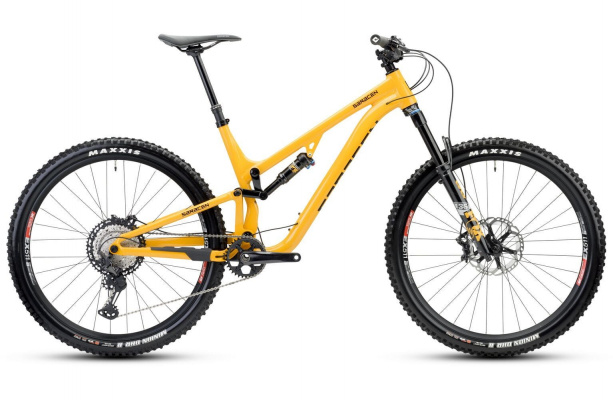
Saracen Ariel 30 Elite
Climb capably, descend confidently, and tackle varied trail terrain all day without wishing you'd brought another bike.
- Full-suspension alloy trail bike for varied terrain
- 130 - 150 mm travel balances climb and descent
- Dropper post and 1x drivetrain keep things simple
- Stable geometry inspires confidence on technical trails
- Hydraulic disc brakes with 180 mm rotors
- Tubeless-ready wheels suit modern trail tyres
Saracen Ariel 30 Elite Deals

Prices and availability can change quickly. Delivery charges are not always included in listed prices.
Final price, stock status and delivery terms are set by retailer. We may receive a commission on purchases made.
Bikesy's Verdict
The Ariel 30 Elite is a proper trail bike that doesn't ask you to compromise. You'll climb without cursing the weight, descend with confidence that grows every ride, and cover varied terrain without wishing you'd brought something else. The geometry and suspension work together to keep you balanced and in control, whether you're threading tight singletrack or letting it run on open descents.
It's built for riders who want one bike that handles the full spectrum of trail riding - long days, technical sections, and everything in between. The spec is solid, the frame is tough, and the ride feel is engaging without being exhausting. If you're after a versatile, confidence-inspiring trail machine that rewards effort without punishing mistakes, this bike delivers.
Pros
- Versatile trail performance across climbs, descents, and varied terrain
- Confidence-inspiring geometry with stable handling on technical sections
- Durable alloy construction and well-chosen components for the price
- Dropper post and 1x drivetrain simplify trail focus
Cons
- Heavier than dedicated XC machines if you're chasing lightweight speed
- Less aggressive than full enduro bikes when you're riding the gnarliest descents regularly
About the Saracen Ariel 30 Elite
The Ariel 30 Elite sits in that sweet spot where trail ambition meets all-day practicality. Saracen's built this alloy full-suspension machine for riders who want a bike that climbs without complaint, then rewards you on the way down with composure and grip. It's not chasing podiums or Instagram lines - it's chasing the kind of riding where you string together climbs, descents, and everything in between without wishing you'd brought something else.
The Elite trim means you're getting quality suspension from RockShox or Fox, a wide-range 1x drivetrain from Shimano's Deore or SLX stable (or SRAM's NX Eagle), and hydraulic disc brakes that haul you down reliably. The frame uses modern Boost spacing and internal cable routing, and there's a dropper post to drop your centre of gravity when the trail pitches. It's the sort of spec that works hard without fuss, leaving you to concentrate on line choice rather than mechanical drama.
Saracen's suspension design - typically a four-bar layout - aims for that tricky balance between pedalling efficiency and bump absorption. You'll feel it on long fire-road grinds where the platform keeps things taut, then again when you hit a rock garden and the rear end stays glued. The geometry leans modern: slacker head angle for stability, steeper seat angle to keep your weight forward on climbs, and a longer reach that plants you in the cockpit rather than perched on top of it. It's a bike that feels like it knows what it's doing, even when you're still figuring out the trail.
Saracen Ariel 30 Elite geometry
The numbers translate to a bike that sits you in a confident, slightly forward position when you're seated and climbing. That steeper seat angle keeps your hips over the pedals, so you're driving through the cranks rather than fighting the bike's tendency to tip you backwards on steep pitches. When you stand, the longer reach gives you room to move - shift your weight back for descents, lean into corners, or pump through compressions without feeling cramped.
Up front, the slacker head angle means the fork isn't diving into every rut or root. The bike tracks straight when you want it to, but it's not so slack that you're wrestling it through tight switchbacks. The wheelbase stretches out enough to smooth high-speed chatter and keep the bike planted when the trail gets rough, but it's not so long that you're planning every turn three metres in advance. If you've ridden older trail bikes that felt twitchy downhill or sluggish in corners, this geometry will feel like a step forward - more stable without sacrificing the ability to flick the bike around when the singletrack tightens.
The Boost rear end (148 mm spacing) stiffens the back triangle, so power transfer feels direct and the rear wheel doesn't wander under load. Combined with the suspension kinematics, you get a bike that pedals with purpose but doesn't punish you when the trail gets choppy. It's geometry that works with the suspension, not against it.
Component choices & upgrades
The stock build is well sorted. Shimano Deore or SLX shifting is crisp and reliable, the wide-range cassette gives you gears for steep grinds and fast descents, and the hydraulic brakes - likely Shimano MT400 or MT500 series - offer predictable power with 180 mm rotors front and rear. The dropper post does its job without fuss, and the alloy cockpit is sturdy enough to take a beating. For most riders, this spec will do everything you ask of it for a long time.
That said, if you're pushing harder or riding more demanding terrain, a few upgrades can sharpen the bike's edge. Swapping to a higher-tier fork or shock - say, a RockShox Pike or Fox 36 up front, or a Float DPX2 out back - brings finer damping adjustments and more control through rough sections. If you're racing or chasing times, a lighter wheelset with wider rims (around 30 mm internal) will support burlier tyres and cut rotational weight. Tyres themselves are an easy win: something grippier or faster-rolling, depending on your local dirt, can transform how the bike feels without touching a spanner to the frame.
Grips, saddle, and pedals are personal - swap them if the stock kit doesn't suit your hands, sit bones, or shoe pins. But don't feel pressured to upgrade just because you can. The Ariel 30 Elite's stock build is already capable; upgrades should follow your riding, not the other way around.
Where the Saracen Ariel 30 Elite excels
This bike is outstanding at varied trail riding where you're mixing climbs, descents, and everything in between. If your local loops involve long fire-road approaches, technical singletrack descents, and the odd rooty climb, the Ariel 30 Elite will feel at home. It's confident on descents - stable over rough ground, composed through corners, and forgiving when you misjudge a line. The suspension soaks up impacts without feeling vague, and the geometry keeps you centred even when the trail gets steep or loose.
It's also very good at all-day adventures. The bike pedals efficiently enough that you won't curse it on long climbs, and the suspension platform means you're not bouncing energy away on smoother sections. The dropper post and modern geometry make it easy to shift your weight and adapt to changing terrain, so you're not fighting the bike when the trail switches from climb to descent and back again.
Where it's not ideal: dedicated XC racing. If you're chasing lightweight speed on smooth, fast courses, the Ariel 30 Elite's weight and travel will feel like overkill. It's also not a full-blown enduro smasher - if you're riding bike parks every weekend or tackling the gnarliest, steepest lines, you'll want more travel and burlier components. But for the vast majority of trail riding - the kind where you're out for hours, covering varied ground, and grinning more than grimacing - this bike delivers.
Saracen Ariel 30 Elite FAQs
What is the intended use of the Saracen Ariel 30 Elite?
It's designed for all-mountain and trail riding, with a focus on versatility. You'll get a bike that climbs capably, descends confidently, and handles varied terrain without feeling out of its depth. It's built for enthusiast riders who want one bike that does it all, from local singletrack to more demanding descents.
What type of suspension does the Saracen Ariel 30 Elite have?
Full suspension, typically using a four-bar linkage design (often Horst-link or similar). The fork offers around 130 - 150 mm of travel, with a quality air shock at the rear providing 120 - 130 mm. The suspension is tuned to balance pedalling efficiency with bump absorption, so you're not sacrificing climb performance for descending comfort.
Is the Saracen Ariel 30 Elite good for climbing?
It's capable rather than exceptional. The steeper seat angle and suspension platform mean you can pedal efficiently on long climbs, and the bike doesn't wallow or bob excessively. You might feel some suspension movement on smoother climbs if you don't engage a lockout, but it's not a deal-breaker. If you're a dedicated XC climber chasing every gram, you'll want something lighter - but for trail riding where climbs are part of the ride, not the whole ride, it does the job well.
What are the typical components found on a Saracen Ariel 30 Elite?
Expect a 1x drivetrain from Shimano (Deore or SLX) or SRAM (NX Eagle), with an 11- or 12-speed cassette offering a wide range. Hydraulic disc brakes (Shimano MT400/MT500 or SRAM Level/Guide) with 180 mm rotors, a dropper seatpost, and tubeless-ready wheels with alloy rims. The fork and shock come from RockShox or Fox, and the cockpit is alloy with lock-on grips.
What is the weight of the Saracen Ariel 30 Elite?
Full suspension trail bikes at this spec level typically weigh between 14 and 16 kg. The alloy frame and durable components add a bit of heft compared to carbon race machines, but the trade-off is robustness and value. If you're not racing, the weight is rarely noticeable on the trail.
What tyre clearance does the Saracen Ariel 30 Elite offer?
It'll accommodate modern trail tyres in the 2.3 - 2.5-inch range, tubeless-ready and mounted on rims with an internal width of around 25 - 30 mm. That's enough clearance for grippy, voluminous rubber without worrying about mud clogging the frame. You've got room to experiment with tyre choice depending on your local conditions.
Is the Saracen Ariel 30 Elite a good bike for enduro riding?
It's capable at the lighter end of enduro - think local enduro races or aggressive trail riding rather than full-blown bike park days. The geometry and suspension offer confidence on technical descents, but if you're tackling the gnarliest, steepest lines every weekend, you'll eventually want more travel and burlier components. For most riders mixing trail and enduro-style riding, it's more than enough bike.
Key Features & Benefits
- Four-bar full-suspension design with 130 - 150 mm travel: Balances pedalling efficiency on climbs with plush bump absorption on descents, so you're not compromising one for the other
- Modern trail geometry with slack head angle and steep seat angle: Keeps you stable and confident on technical descents while maintaining efficient climbing posture
- 1x drivetrain with wide-range cassette: Simplifies shifting and chain retention, giving you gears for steep grinds and fast descents without front-mech faff
- Dropper seatpost: Lets you drop your centre of gravity instantly for descents and technical sections, then return to efficient climbing position
- Boost spacing (148x12 mm rear) and tubeless-ready wheels: Stiffens the rear end for direct power transfer and supports modern trail tyres for grip and puncture resistance
Saracen Ariel 30 Elite 2024 and 2023 differences
The 2024 model likely featured similar suspension travel and geometry, but component specifications may have differed - earlier Shimano or SRAM drivetrain generations, potentially older-generation forks or shocks, and minor aesthetic updates. The core ride character and frame design remained consistent, with the Elite trim maintaining its focus on quality suspension and reliable componentry.
The 2023 Ariel 30 Elite may have offered slightly different suspension configurations or even a 2x drivetrain option on some builds, reflecting the transition period before 1x drivetrains became universal on trail bikes. Geometry tweaks across model years are typically incremental - small adjustments to head angle, reach, or seat angle to refine handling - but the overall platform has remained stable. If you're considering an older model, expect similar ride characteristics with slightly less refined components and possibly narrower rim profiles or older tyre standards.
Alternatives to Consider
Within Saracen's own range, the Ariel Pro offers a step up in suspension and componentry if you're chasing more refined damping and lighter weight, while the Ariel Sport drops the spec and price for riders who want the same frame platform with more budget-conscious kit. Both share the core geometry and suspension design, so you're choosing how much performance you need rather than a different ride character.
Cross-brand, the Specialized Stumpjumper Alloy and Trek Fuel EX 7 sit in similar territory - versatile trail bikes with modern geometry, capable suspension, and solid component choices. The Giant Trance 2 brings slightly more travel and a playful feel, while the Cube Stereo 150 Race leans a touch more enduro with burlier suspension and geometry. The Santa Cruz Hightower Alloy R offers a more progressive suspension feel and a bit more refinement, though it typically commands a higher price. Each of these bikes balances climb and descent differently, so your choice hinges on whether you prioritise pedalling efficiency, descending confidence, or all-day comfort.
Reviews
Balanced ride characteristics define this bike across varied terrain. The suspension platform absorbs impacts without feeling vague, and the geometry keeps the rider centred through technical sections. Climbs are tackled with reasonable efficiency - there's some suspension movement on smoother ascents, but engaging the lockout tightens things up when needed. Descents reveal the bike's real strength: it tracks confidently over rough ground, holds a line through corners, and forgives the occasional misjudged root or rock.
Robust alloy construction inspires trust when the trail gets rowdy. The frame takes a beating without complaint, and the Boost rear end delivers stiffness that translates to direct power transfer. When you're out of the saddle hammering through a climb or pumping through compressions, the bike responds predictably. Weight is noticeable if you're used to lighter XC machines, but on trail it's rarely a hindrance - the bike's stability and composure more than compensate.
Component choices hit the mark for this price point. Shimano or SRAM drivetrains shift cleanly, the dropper post operates smoothly, and the hydraulic brakes offer predictable modulation with enough power for steep, loose descents. Tyres and wheels are tubeless-ready, so setting up for lower pressures and better grip is straightforward. We appreciate how the bike doesn't demand immediate upgrades - it works as delivered, leaving you free to ride rather than tinker.
Full Specification
| Spec | Value |
|---|---|
| Bike Type | Full Suspension Mountain Bike |
| Frame Material | Aluminium Alloy |
| Frame Design | Full Suspension, Horst-link or similar four-bar suspension design |
| Rear Axle Type | 148x12mm Boost |
| Front Axle Type | 110x15mm |
| Drivetrain | 1x (one-by) |
| Cassette | 11-speed or 12-speed, 10-50T or 10-51T/52T range |
| Crankset | Alloy, 170mm or 175mm arm length |
| Brakes | Hydraulic Disc |
| Brake Rotors | 180mm front and rear |
| Fork Travel | 130mm - 150mm |
| Fork Type | Air-sprung with rebound damping and compression adjustments |
| Rear Shock Travel | 120mm - 130mm |
| Rear Shock Type | Air with rebound damping and lockout lever |
| Wheels | 29" or 27.5" |
| Rims Internal Width | 25mm - 30mm |
| Tyres | Tubeless-ready, 2.3" to 2.5" width |
| Handlebar Width | 760mm - 800mm |
| Handlebar Rise | Slight rise with backsweep |
| Stem Length | 35mm - 50mm |
| Seatpost | Dropper seatpost |
| Approximate Weight | 14kg - 16kg |